

How to Evaluate the Bottom of a Dog Bed
When a dog bed starts sliding across the floor or wearing through at the corners, the bottom is usually the last thing anyone checks. But learning how to evaluate the bottom of a dog bed can save you money, protect your flooring, and prevent your dog from slipping. As of 2026, the underside of a bed tells you more about its real-world durability than the plush top ever will.
In our research, the most common failure point isn’t the cushion. It’s the base. Per the American Veterinary Medical Association, slippery floors are a leading cause of injuries in older dogs, so that non-slip layer does serious safety work.
The good news is you don’t need to be a fabric expert to judge whether a bed’s bottom will last.
Yes, the bottom of a dog bed deserves just as much attention as the top. Look for a base that grips the floor firmly and prevents sliding. Check the material for waterproofing and seam strength. Consider your floor type and your dog’s habits before choosing. A worn or peeling bottom will ruin the bed faster than a flattened cushion. If the underside is damaged, the whole bed becomes unsafe and harder to clean.

Why the Bottom of a Dog Bed Matters More Than You Think
The bottom of a dog bed is the part that takes the most constant abuse. Every time your dog jumps on, the full weight lands on the base. Every time they shift in their sleep, friction rubs the underside.
Over time, that adds up.
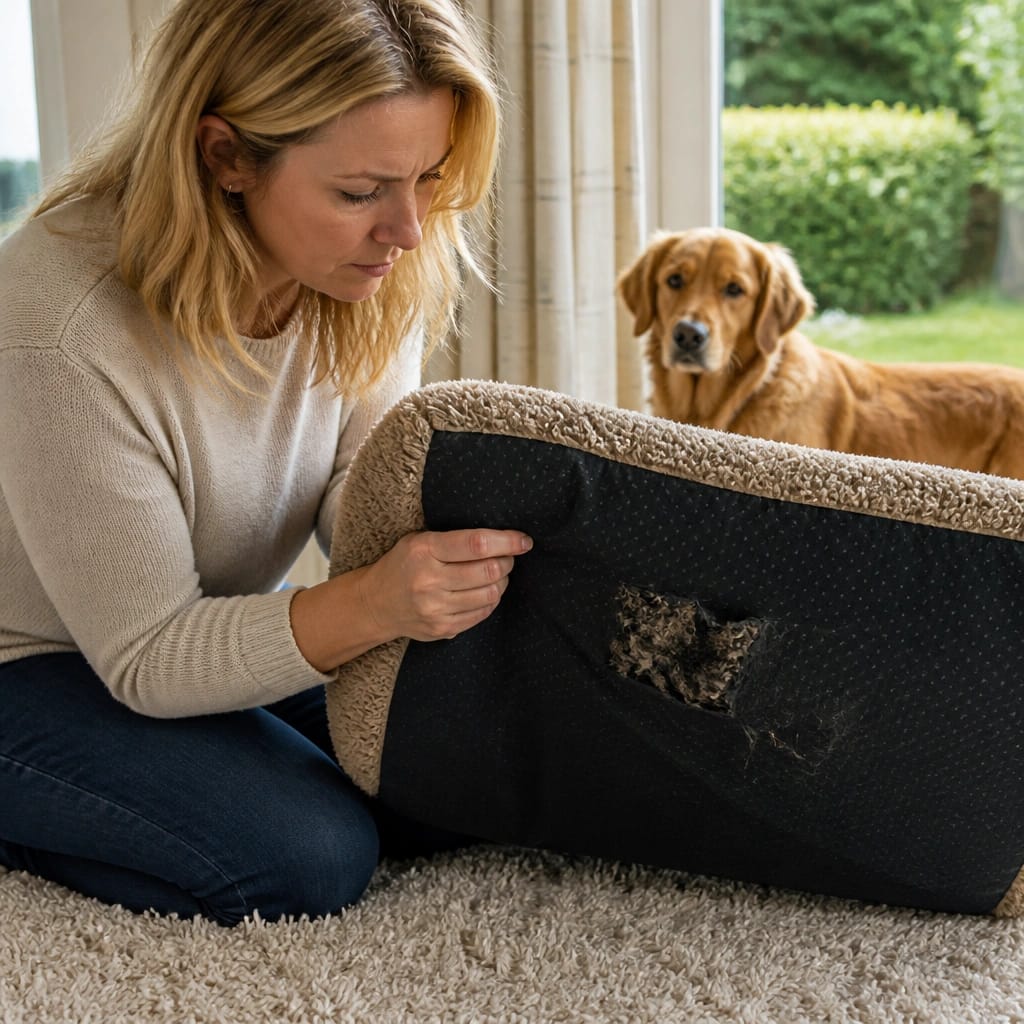
Most owners flip the bed over only when they notice movement. By then, the backing may already be peeling, torn, or soaked through. Once moisture reaches the foam inside, the bed is done.
A good bottom does four things:
- Keeps the bed from sliding on smooth floors
- Blocks moisture from seeping upward or downward
- Protects the seams and foam from wear
- Gives older or injured dogs a stable surface to step onto
If any of those fail, the bed isn’t just less comfortable. It becomes a slipping hazard or a sanitation problem. That’s why the underside deserves the same careful look you give the top fabric.
Floor Type and Bed Placement: The First Condition
Where the bed sits changes what you need from its bottom. A bed works differently on hardwood than it does on thick carpet.
If you have hardwood, laminate, or tile, you need a bottom with genuine grip. Look for rubberized backing, silicone dots, or a textured coating that grabs smooth surfaces. Beds with plain fabric bottoms will slide with every entry and exit.
This is also where choosing the right spot matters. A bed placed near a doorway or in a high-traffic hallway gets shoved around more than one tucked into a corner.
On carpet, slip resistance matters less, but moisture resistance becomes more important. Accidents and spilled water can soak through the bed and into the carpet. That leads to odors that are nearly impossible to remove.
| Floor Type | What to Look For | Why It Matters |
|---|---|---|
| Hardwood / laminate | Rubberized or textured backing | Prevents sliding |
| Tile | Extra grip, waterproof base | Slippery when wet |
| Carpet | Water-resistant material | Blocks stains and odors |
| Concrete | Thick, insulating bottom | Keeps cold and damp out |
If your dog’s bed sits on a hard floor, test the bottom with your hand first. A backing with traction should feel rough or sticky. Smooth polyester won’t cut it.
Your Dog’s Habits: What Changes the Evaluation
Your dog’s behavior decides how tough the bottom needs to be. A calm senior dog is easy on a bed. A digger or chewer is a whole different story.
If your dog scratches, paws at the bed, or circles before lying down, the bottom takes constant punishment. That digging action can catch on the backing and pull seams apart. For these dogs, look for double-stitched edges and a cover that wraps fully around the base.
Nesting and pawing behavior is normal, but it shouldn’t destroy a bed in a month.
For chewers, the bottom is just as tempting as the top. Many dogs will flip a bed over and chew exposed corners. If that’s your situation, a standard woven fabric bottom won’t last.
You’ll want chew-resistant fabric choices such as ballistic nylon or reinforced canvas.
And if your dog is incontinent, leaking, or still being house-trained, the underside has to block moisture completely. A water-resistant base isn’t enough. You need a fully waterproof bottom layer that stops liquids before they reach the floor.
Inspecting the Bottom: What to Look For
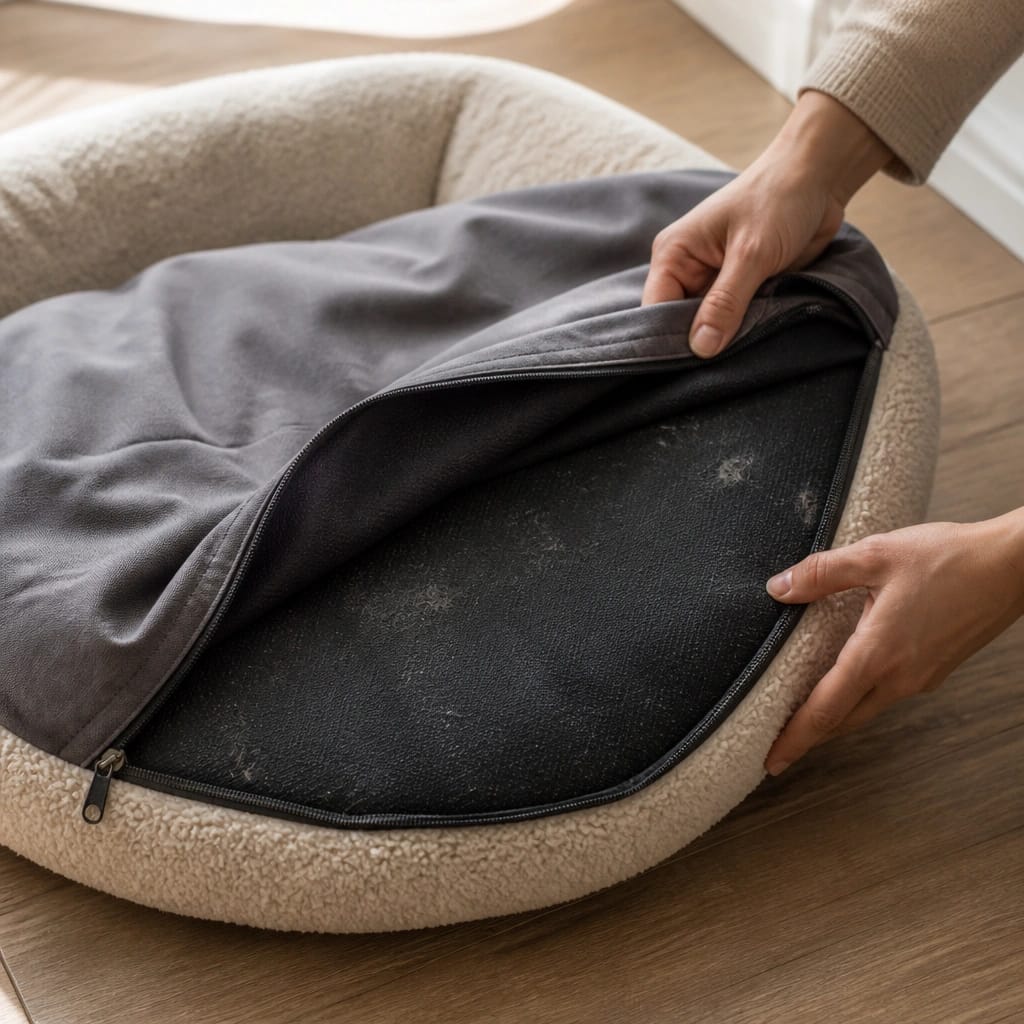
To evaluate a bed bottom properly, you have to look at it like you’re buying the bed. Not just the top. Here’s a simple process.
Turn the bed over and lay it flat. Start with the overall fabric. Does anything look shiny, thin, or flaky?
A good protective backing should feel continuous and solid.
Next, run your hand across the surface. You’re checking for rough patches, peeling edges, or hollow spots where the foam has shifted. A bed with a removable cover should let you inspect the underside of the base separately.
Then check the seams. The bottom seam is the most stressed part of the whole bed. Look at the corners first.
That’s where the fabric is pulled tightest. Are the threads intact? Is there puckering or separation?
If you see foam poking through, the bottom is already failing.
Finally, check the zipper. A zipper on the underside should sit flat, be covered by a fabric flap, and have no exposed teeth. A damaged zipper means the cover can’t be washed properly.
And a cover you can’t wash is a built-in hygiene problem. If you’re comparing models, pay attention to how the bottom connects to the rest of the bed. A fully sewn base is sturdier than one that just hangs loose.
Waterproof bed construction often includes an inner liner plus an outer bottom, which doubles the protection.
How to Test for Slip Resistance
You don’t need a lab to test how well a bed stays put. A simple home test works. Place the bed on your hardest floor.
Press down firmly in the center with both hands. Then push sideways.
If the bed slides easily, the bottom has poor grip. If it resists movement, the backing is doing its job. That’s the same force your dog applies when jumping in and out.
You can also test with your dog nearby. Let them jump on and off normally. Then measure how far the bed has moved with a tape measure or just eyeball it.
If it shifts more than a couple of inches, that’s a problem.
For an even more honest test, wet the floor slightly. That mimics what happens after a water spill or a dog tracking in rain. A good non-slip bottom should still hold.
If it turns slippery when wet, that’s a red flag. Add a rug pad underneath or look for a bed with a dedicated waterproof base. For dogs with joint issues or mobility problems, stable footing becomes even more critical.
Waterproof vs. Water-Resistant: Which Do You Need?
If your dog has accidents or drinks heavily, choose a fully waterproof bottom. Water-resistant fabric just delays soaking. It won’t protect the floor during a real leak.
A waterproof base usually has a sealed liner or TPU coating.
For senior or incontinent dogs, this isn’t optional. Moisture that reaches the foam will ruin the bed and stain your floor. Check the manufacturer’s wording.
“Water-resistant” and “waterproof” are not the same thing.
Bottom Materials Compared: PVC, TPU, Oxford, and Canvas
| Material | Grip | Water Resistance | Durability |
|---|---|---|---|
| PVC | Strong | Excellent | Can crack over time |
| TPU | Good | Excellent | Flexible, long-lasting |
| Oxford | Moderate | Needs coating | Very durable |
| Canvas | Low | Needs treatment | Tough but holds moisture |
PVC is the most common budget option. TPU costs a bit more but lasts longer. Oxford and canvas work best when treated with a waterproof layer.
If you’re washing the bed often, TPU resists peeling far better than PVC.
Identifying Wear, Tears, and Weak Seams
Start with the corners. That’s where the fabric stretches hardest. Look for foam poking through, frayed threads, or a peeling backing.
Small tears grow fast once a paw catches an edge.
Check the zipper too. A broken zipper means the cover can’t be washed properly. And a cover that traps dirt defeats the whole purpose of a removable bottom.
For Chewers and Diggers: Extra Bottom Considerations
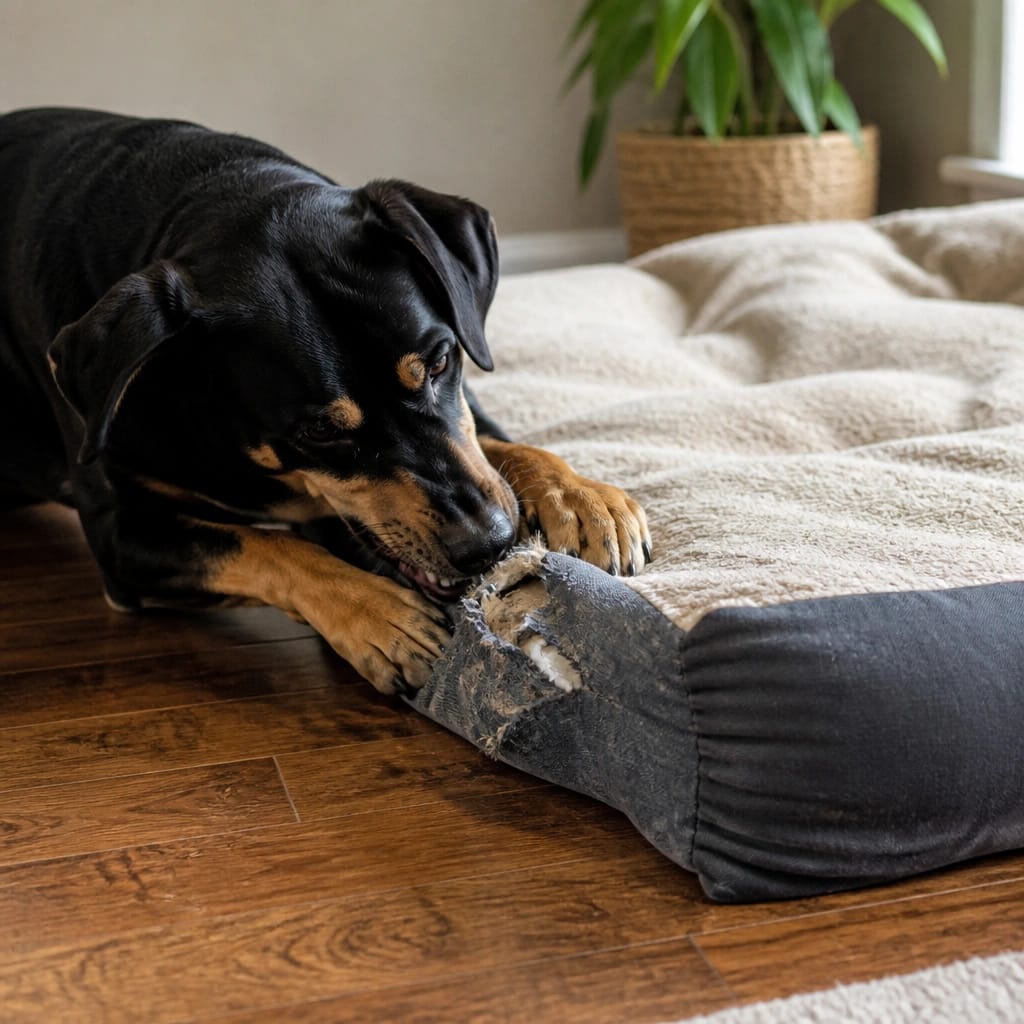
Diggers need reinforced seams and a thick base fabric. Chewers will attack exposed zippers and loose edges. A fully enclosed cover protects the underside.
If your dog flips the bed, the bottom becomes a target.
For heavy chewers, skip PVC backing. Some dogs peel it off in strips. Ballistic nylon or ripstop canvas holds up much better against teeth.
You’ll also want to remove the bed for a few days if your dog is in a chewing phase.
Step-by-Step Guide to Evaluating a Bed’s Underside
- Turn the bed over on a clean, flat surface.
- Run your hand across the whole bottom to feel for thin spots.
- Check all seams, especially the corners.
- Press down and push sideways to test grip.
- Look for moisture stains or mold.
- Read the care label for washing and drying instructions.
Do this check before you buy. Do it again after every few washes. The bottom of a bed wears out silently.
Catching a problem early usually means a simple repair instead of a full replacement.
Common Mistakes When Checking the Bottom
Most owners only feel the top cushion. That’s mistake number one. Another is confusing water-resistant with waterproof.
And many people skip the corners entirely.
Troubleshooting: Sliding, Smell, and Moisture Under the Bed
If the bed slides, add a rug pad underneath. If you smell mildew, the bottom trapped moisture. Let it dry completely before use.
For persistent odor, wash the cover on a gentle cycle.
When to Repair, Replace, or Recycle the Bed
Repair small tears and worn seams early. Replace the bed when foam is exposed or the backing peels. Recycle the whole bed when the foam is compressed and unsupportive.
Final Decision Guide: Keep, Repair, or Replace
If the bottom grips, stays dry, and holds its shape, keep it. If it slips or leaks, try a non-slip pad first. If the seams are blown, replace the bed.
Frequently Asked Questions
How often should I check the bottom of a dog bed?
Every few months, or after each wash. Early detection prevents bigger damage.
Can I wash the bottom of a dog bed?
Only if the care label says so. Many covers are washable, but the backing may not be. Always air dry to protect the coating.


