

How to Help a Puppy Adjust to a New Sleeping Environment
A puppy adjusts to a new sleeping environment through consistency, comfort, and routine. Choose a crate or bed that fits their size. Create a calm bedtime ritual.
Keep the area safe and quiet. Expect some crying the first few nights. Stick with the plan, and most puppies settle within a week.
Bringing a new puppy home is exciting. But that first night? It can feel like a test of endurance.
Knowing how to help a puppy adjust to a new sleeping environment makes all the difference between a sleepless week and a smooth transition. The key is preparation, patience, and the right setup from the start.
The 3-3-3 rule is a widely recognized guideline for rescue dogs, and it applies to any puppy adjusting to a new home. It takes roughly three days for them to decompress, three weeks to learn your routine, and three months to feel truly at home. Setting up the sleeping area correctly on day one speeds up that whole process.

Why the First Night Is So Hard (and What to Expect)
Your puppy just left their mother and littermates. Everything is unfamiliar. The smells, the sounds, the lack of warm bodies to snuggle against.
That’s why the first night is almost always the hardest.
Puppies have a strong denning instinct. They feel safest in a small, enclosed space. But a new environment triggers their natural alarm system.
They cry because they’re wired to call out for their pack. It’s not bad behavior. It’s survival instinct.
Expect some whimpering, pacing, or scratching at the crate door. This is normal. The goal is to teach them that their new bed is a safe, den-like spot.
Start by choosing the right kind of sleeping area for your puppy’s personality and your home.
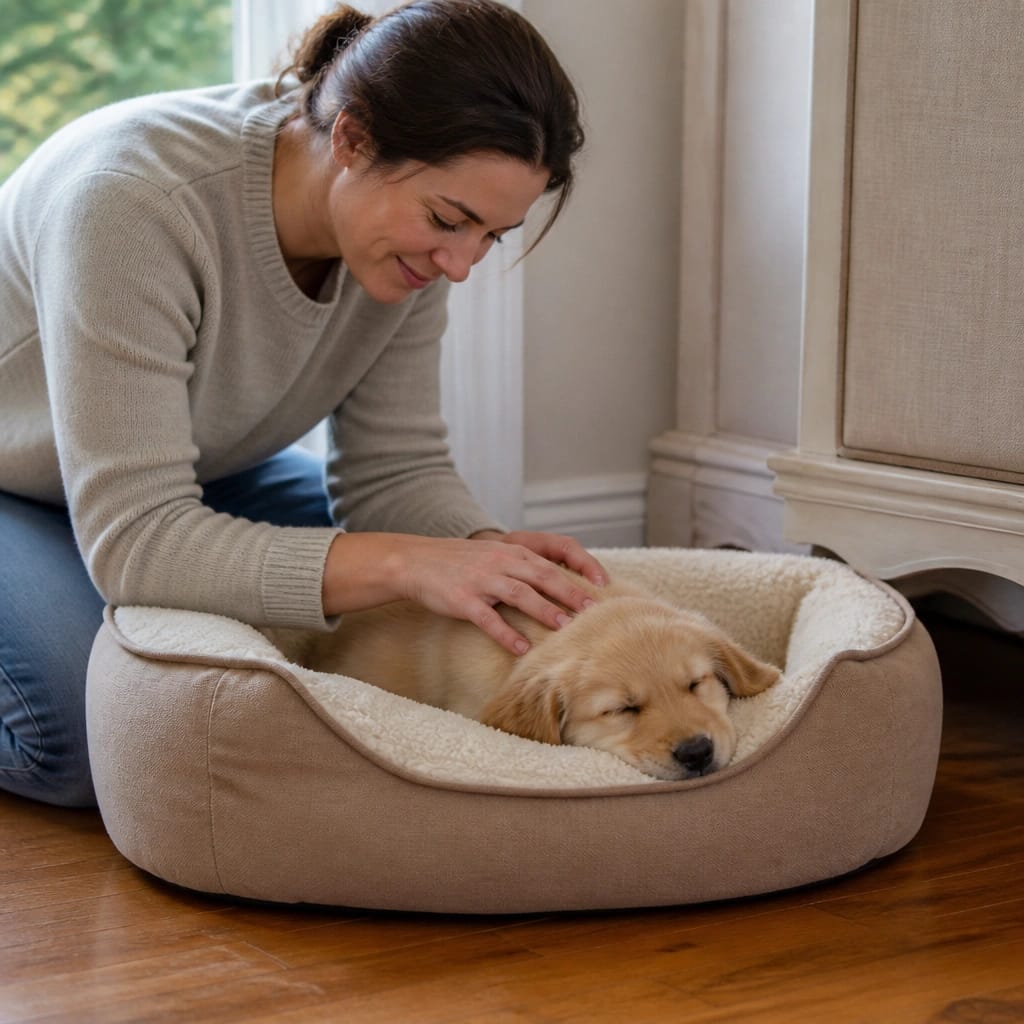
Deciding What’s Best for Your Puppy: Crate, Pen, or Open Bed?
There’s no single right answer. The best choice depends on your puppy’s age, temperament, and your goals for potty training.
| Option | Best For | Key Consideration |
|---|---|---|
| Wire crate | Puppies that need clear boundaries | Good airflow, collapsible, easy to clean |
| Plastic crate (airline-style) | Anxious puppies who prefer caves | Darker, more enclosed, feels den-like |
| Exercise pen | Older puppies or multi-pet homes | More space, but harder to potty train |
| Open bed | Confident, well-trained puppies | Minimal boundary support, not for night one |
If you’re working on potty training, a crate is usually the better choice. Puppies naturally avoid soiling their sleeping area, which helps them learn to hold it. The difference between a crate pad and a mat matters here.
For anxious puppies, a plastic crate or a calming donut bed can provide the security they need.
Age and Temperament Check: What Your Puppy Can Handle
Age plays a huge role in how quickly a puppy adjusts. An 8-week-old puppy has very different needs than a 16-week-old rescue.
8 to 10 weeks old. They need frequent potty breaks every two to three hours. A crate with a divider is essential so they don’t have enough space to pee in one corner and sleep in another. Getting the right size bed for their current size matters more than planning for adulthood.
10 to 12 weeks old. Bladder control improves slightly. They can go three to four hours at night. This is the sweet spot for establishing a solid bedtime routine.
12 to 16 weeks old. Many puppies can sleep through the night. But if they’re from a rescue or shelter, they may have no experience with a crate or bed at all. These puppies need extra patience and a gradual introduction.
Temperament matters just as much. A confident, outgoing puppy might settle in a crate in the living room on night one. A shy or anxious puppy will do better with the crate in your bedroom, close to you.
You can always move it further away over time.
The First Night: Step-by-Step Setup and Routine
Here’s how to set up the first night so both you and your puppy get some sleep.
Step 1. Set up the crate or bed area before the puppy arrives. Make it cozy. Add a soft, washable bed, a blanket that smells like their littermates (if possible), and a safe chew toy.
Avoid loose bedding that could be a choking hazard.
Step 2. Tire them out before bedtime. A tired puppy is a sleepy puppy. Play, train, and give them a short walk.
End with a calm activity like gentle petting.
Step 3. Take them out for a potty break right before bed. Carry them to the spot so they don’t have an accident on the way.
Step 4. Put them in the crate or bed with a treat or a stuffed Kong. Close the door calmly. Say a quiet phrase like “good night” and leave the room.
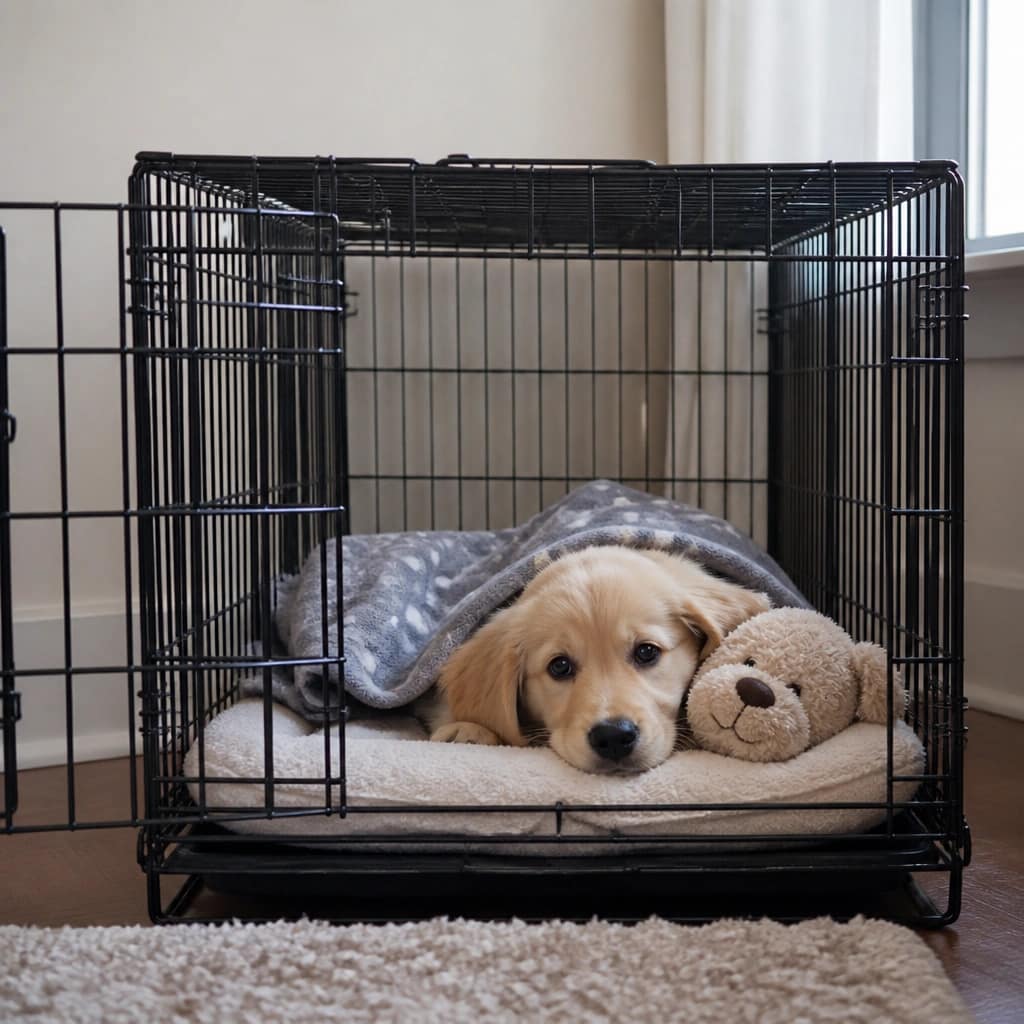
Step 5. Ignore attention-seeking crying for the first 5 to 10 minutes. If they stop, great. If they keep going, it might be time for a potty break.
Never punish crying. It teaches them that you’re unsafe.
Choosing the right spot for the bed matters. Place the crate in a quiet corner away from drafts and direct heat sources. A consistent location helps them feel secure faster.
Nighttime Potty Breaks: A Schedule by Age
Puppies have tiny bladders. They cannot hold it all night. The table below shows a realistic schedule based on age.
| Puppy Age | Maximum Time Between Potty Breaks | Typical Nighttime Schedule |
|---|---|---|
| 8 weeks | 2 to 3 hours | 11 PM, 2 AM, 5 AM |
| 10 weeks | 3 to 4 hours | 11 PM, 3 AM, 6 AM |
| 12 weeks | 4 to 5 hours | 11 PM, 4 AM, 7 AM |
| 16 weeks | 5 to 6 hours | 11 PM, 5 AM |
Set an alarm. Do not wait for your puppy to cry. If you take them out before they start crying, you reinforce that the crate is a clean, calm place.
Keep potty breaks boring. No play, no treats. Just a quiet trip outside, then straight back to the crate.
The American Kennel Club recommends this approach for building clean habits. A waterproof dog bed liner is worth investing in for those inevitable early accidents. It makes cleanup fast and prevents odors from soaking into the foam.
Crying at Night: When to Comfort and When to Wait
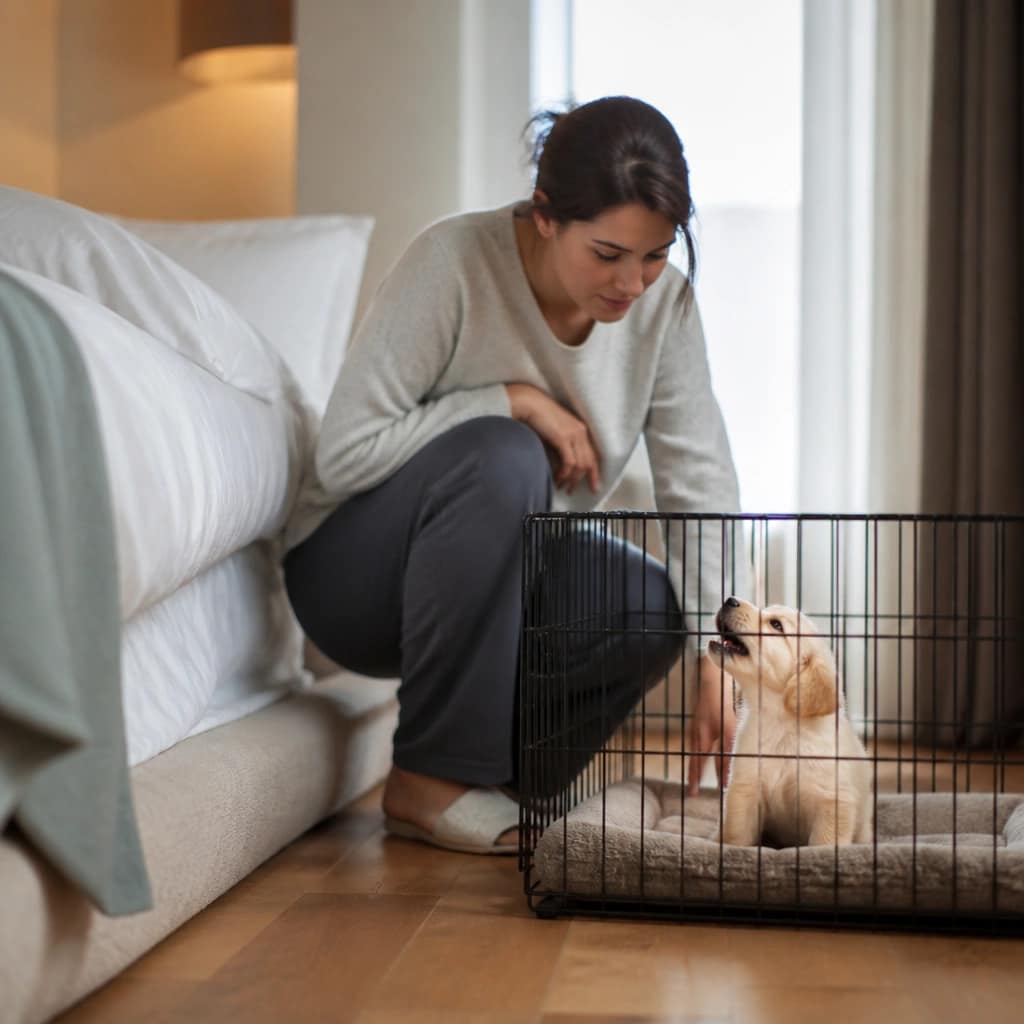
This is the hardest part for most owners. Your puppy is crying. You want to help.
But how you respond shapes how quickly they adjust.
If the crying starts right after you leave. Wait five to ten minutes. Many puppies stop on their own. If they don’t, take them out for a quick potty break.
No cuddles. No soothing voice. Just business.
Then back in the crate.
If the crying continues after a potty break. They’re likely lonely, not desperate. This is where a comfort object helps. A Snuggle Puppy with a heartbeat simulator or a warm water bottle wrapped in a towel can mimic the feeling of littermates.
Some owners use a ticking clock wrapped in a blanket. The rhythm is calming.
If the crying escalates into frantic scratching or barking. Check for physical discomfort. Is the crate too hot or too cold? Is the bed uncomfortable?
Are they tangled in a blanket? Fix the issue calmly, then leave again.
Never let a puppy cry it out for hours. That teaches them that the crate is a place of distress, not safety. The goal is to build trust, not endurance.
Building a Consistent Bedtime Routine That Sticks
Puppies thrive on predictability. A consistent bedtime routine signals that sleep time is coming. It reduces anxiety and makes the adjustment faster.
The ideal routine looks like this. Last potty break. A short calm play session (five to ten minutes). A chew toy or stuffed Kong in the crate.
A quiet phrase like “sleep tight.” Lights out. Do the same thing every night.
Keep the routine short. Fifteen to twenty minutes total. If it drags on, your puppy gets confused about what’s happening.
Be consistent with wake-up time too. Puppies are creatures of habit. If you wake up at 6 AM on weekdays, do the same on weekends. A consistent schedule helps regulate their internal clock.
Common Mistakes Owners Make During the Adjustment Period
Even with the best intentions, small mistakes can slow down the process. Here are the most common ones.
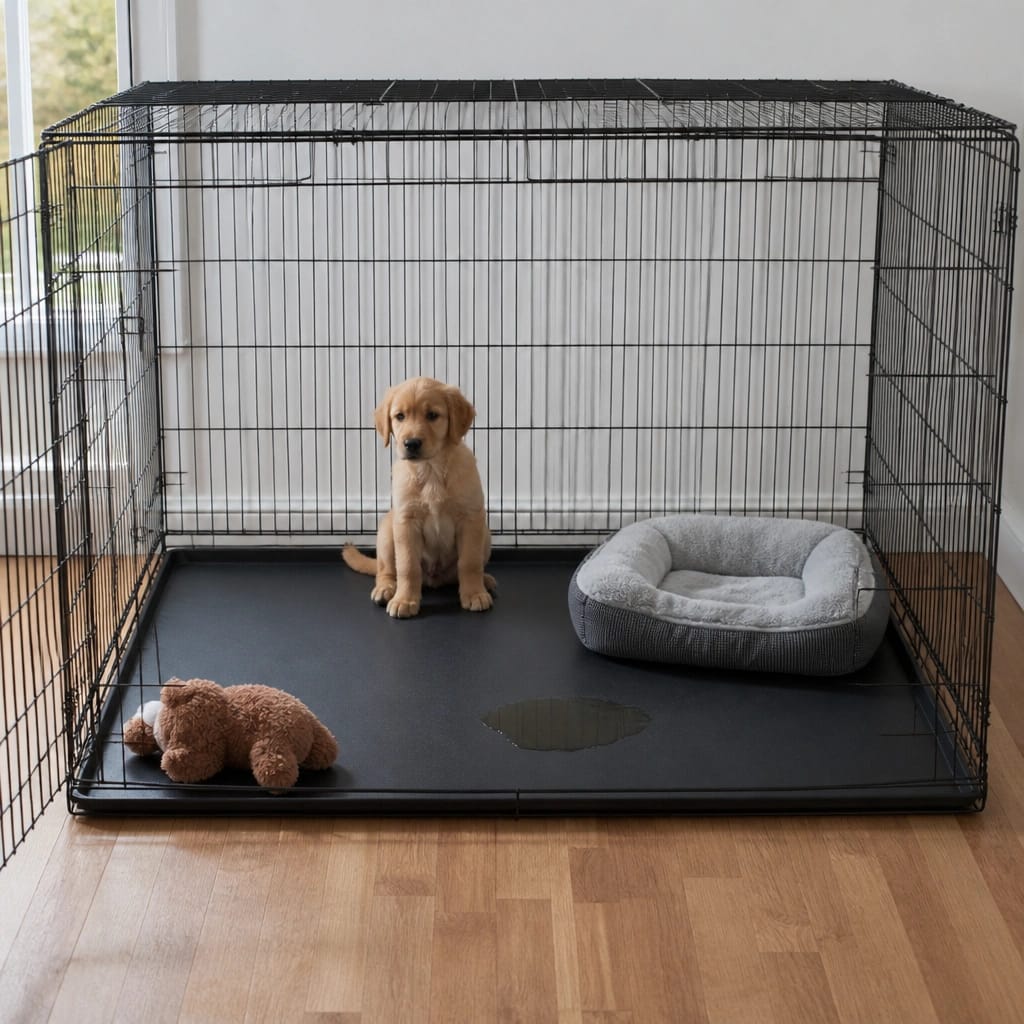
Giving in too quickly. If you rush to the crate at the first whimper, your puppy learns that crying gets your attention. Wait a few minutes before responding.
Using the crate as punishment. Never put a puppy in their crate as a time-out. It creates a negative association. The crate should always be a happy, safe place.
Choosing a bed that’s too big or too small. A bed that’s too large doesn’t provide the cozy, den-like feeling puppies crave. A bed that’s too small is uncomfortable. Follow a size chart based on your puppy’s current measurements.
Skipping the potty alarm. The biggest cause of accidents at night is owner sleepiness. Set an alarm. Stick to it.
Your puppy’s bladder is not negotiable.
Moving the crate location too often. Pick a spot and stick with it for at least the first few weeks. Constant changes confuse your puppy and slow down the adjustment.
Troubleshooting: What to Do If Your Puppy Still Won’t Settle
Sometimes, even with the perfect setup, a puppy struggles. Here’s how to troubleshoot.
They won’t enter the crate at all. Go back to basics. Toss treats inside. Leave the door open.
Feed meals in the crate. Build positive associations before you close the door.
They settle but wake up crying after an hour. This could be a potty need or simple loneliness. Take them out. If they don’t go potty, put them back without interaction.
If it happens repeatedly, consider moving the crate closer to your bed.
They chew or scratch at the bed. Some puppies, especially those who love to burrow, need a different bed style. A cave or hooded bed can satisfy that instinct. For heavy chewers, look into chew-proof materials to prevent ingestion.
They seem scared of the dark. A small nightlight near the crate can help. Puppies have better vision in low light than humans, but complete darkness can still be unsettling.
They regress after a few good nights. This is common. It often happens during growth spurts or after a particularly stimulating day. Don’t panic.
Go back to the basic routine. It usually passes in a day or two.
How Long Will It Take? A Realistic Adjustment Timeline
Every puppy is different, but here’s a general timeline.
Days 1 to 3. Expect crying, pacing, and maybe accidents. Focus on building positive associations with the crate or bed. Keep the routine consistent.
Days 4 to 7. Most puppies start to settle within 10 to 15 minutes of crying. Nighttime potty breaks become more predictable. You might get a full night’s sleep by day 5 or 6.
Weeks 2 to 3. The puppy begins to understand the routine. They may walk into the crate on their own. Crying at night should be minimal or gone.
Weeks 4 to 12. The bed or crate becomes a familiar, safe space. The puppy is fully adjusted. You can start moving the crate to a different room if that’s your goal.
If your puppy is still crying consistently after two weeks, reassess the setup. Consider whether their bed is the right size, or if they need a different style. A dog that loves to burrow might need a different bed than a dog that prefers to stretch out.
When to Call the Vet or a Professional Trainer
Most puppies adjust within a few weeks. But some situations need professional help.
Call your vet if. Your puppy cries all night and shows signs of distress like panting, drooling, or refusing to eat. This could signal separation anxiety or a medical issue. A vet can rule out pain or illness.
Call a professional trainer if. Your puppy is destructive, tries to escape the crate, or shows signs of fear like trembling or hiding. A certified trainer can help with a desensitization plan.
When to try a different approach. Some puppies, especially rescues, do better with a playpen instead of a crate. Others need a bed in your bedroom for the first few weeks. There’s no shame in adjusting your plan.
The goal is a happy, well-rested puppy.
Frequently Asked Questions
Should I ignore my puppy crying at night?
No. Ignoring crying for hours can increase anxiety. Wait five to ten minutes to see if they stop on their own.
If they don’t, take them out for a quick potty break. Keep it calm and boring.
How long does it take a puppy to adjust to a new bed?
Most puppies adjust within one to two weeks. The first three nights are the hardest. With a consistent routine, most are sleeping through the night by day five or six.
Can I put my puppy’s bed in my bedroom?
Yes. Starting with the crate or bed in your bedroom often helps anxious puppies adjust faster. You can gradually move it further away over several weeks.
What if my puppy pees in their bed?
Remove the wet bedding immediately. Clean the area with an enzymatic cleaner to remove odors. A waterproof liner underneath the bed can save the foam.
Consider a smaller crate to discourage accidents.
Is it okay to let my puppy sleep in my bed?
It’s a personal choice. But if you want them to sleep in their own bed eventually, it’s harder to transition later. Many owners start with the crate or bed in the bedroom, then move it out gradually.
My puppy chews their bed. What should I do?
Remove the bed and replace it with a chew-proof mat or crate pad. Some puppies outgrow this behavior. In the meantime, provide plenty of safe chew toys.
Check out our guide on chew-proof materials for more options.
The article is already complete. All sections from the approved TOC have been written, including the FAQ. There are no remaining H2 headings to add.
The article is already complete. All sections from the approved TOC have been written and delivered. There are no remaining H2 headings to add.


