

How to Introduce a Dog to a Different Type of Bed
You bought your dog a new bed, and they refuse to go near it. Maybe they sleep on the floor instead. Or they curl up on the old ratty one you were trying to replace.
It’s frustrating, and it’s actually very common.
Understanding How to Introduce a Dog to a Different Type of Bed is the key to fixing this. The process isn’t complicated, but it does require patience. According to the American Kennel Club, most dogs need anywhere from a few days to two weeks to fully accept a new sleeping surface.
The right approach depends entirely on your dog’s personality, their history, and the type of bed change you’re making.

Why Your Dog Might Reject the New Bed
Dogs are creatures of habit. A new bed smells wrong, feels different, and sits in a space that used to hold something familiar. That’s enough to make most dogs hesitate.
The most common reasons for rejection include:
- Unfamiliar smell. New foam and fabric have a distinct odor. Dogs rely heavily on scent, and a bed that smells like a factory floor feels like a stranger.
- Different texture. A slick microfiber cover feels nothing like a worn-in fleece blanket. Some dogs hate the change.
- Wrong shape or support. A deep bolster bed can feel restrictive to a dog who prefers to stretch out. A flat bed offers no security for a burrower.
- Bad placement. The new bed might be in a drafty spot, too close to a door, or away from where you spend time.
- Anxiety or negative association. Rescue dogs, in particular, may associate a certain bed type with a past negative experience.
If your dog is ignoring the new bed, start with the first question: what kind of change are you actually making?

What Type of Bed Change Are You Making?
Not all bed transitions are the same. The specific switch you’re attempting changes how you should approach the introduction.
| Type of Change | Key Challenge | Best Approach |
|---|---|---|
| Bolster to flat bed (or vice versa) | Support and security difference | Gradual swap with familiar scents |
| Donut / cave bed to open bed | Loss of enclosed feeling | Place near a wall or furniture |
| Crate mat to free-standing bed | Sudden open space | Start in the crate, then move |
| Old bed to same type, new brand | Scent and material change | Scent transfer and patience |
| Floor sleeping to a bed | No previous bed experience | Start with a low profile mat |
Bolster to Flat Bed (or Vice Versa)
A dog used to resting their head on a bolster may feel unsupported on a flat surface. The opposite is also true. A dog who likes to sprawl may feel trapped by raised edges.
If you’re switching between these types, expect a longer adjustment period. Keep the old bed nearby for the first week.
Donut / Cave Bed to Open Bed
Dogs who prefer donut or cave-style beds often want the cozy, enclosed feeling. An open bed can feel too exposed. Place the new bed in a corner or against a wall to mimic that security.
Crate Mat to Free-Standing Bed
Your dog knows a crate mat fits inside a specific confined space. A free-standing bed in the living room is a whole new concept. Let them use the mat inside the crate first, then move it to the new location.
Old Bed to New Bed (Same Type, Different Brand)
This is the easiest transition. The main issue is smell. Rub the new bed with a blanket your dog already sleeps on, and the switch is usually smooth.
Floor Sleeping to Bed Sleeping
If your dog has never used a bed, start with a thin, low-profile mat. A thick, plush bed can be intimidating. Build up to a deeper bed once they’re comfortable.
Assess Your Dog’s Personality and History
Your dog’s temperament determines how fast you can move. Push too quickly, and you’ll create a negative association. Move too slowly, and they might never switch.
The Confident, Adaptable Dog
These dogs investigate new things on their own. They usually sniff the bed, jump on it, and settle within a few hours. For this dog, you can place the new bed directly in their usual spot.
Add a familiar blanket, and they’ll likely accept it within a day or two.
The Nervous or Anxious Dog
A nervous dog needs slow, careful exposure. Start with the new bed in a different room. Let them sniff it on their own terms.
Reward any interaction with treats. Do not force them onto the bed. If your dog has anxiety, choosing the right type of bed is critical.
The right support can make a huge difference.
The Senior Dog with Established Habits
Older dogs have years of muscle memory. They know exactly where and how they like to sleep. A sudden change can be confusing.
Keep the old bed nearby for at least two weeks. Let them choose between the two. Most seniors will try the new bed when they’re ready.
The Puppy with No Bed History
Puppies are blank slates. They have no prior preference. Place the new bed in their crate or a quiet corner.
Use treats and praise the first time they step on it. The transition is usually fast, within a day or two.
The Rescue Dog with Unknown Past
You don’t know what your rescue dog associates with a bed. They might have been punished for lying on a previous bed. Or they might have never had one.
Move very slowly. Let the dog approach the bed on their own. Never force them.
Build trust first, then worry about the bed.
Step-by-Step Introduction Process
Once you know your dog’s personality and the type of change, follow this process. It works for most dogs.
Step 1: Prepare the New Bed (Remove Smells, Add Familiar Scents)

Unbox the bed and let it air out for 24 to 48 hours. New foam can have a strong chemical smell that dogs find off-putting. Wash the cover according to the manufacturer’s instructions to remove factory residues.
Then, rub the bed with a blanket your dog already sleeps on. Roll a worn t-shirt of yours into the bed. The goal is to make the new bed smell like home.
Step 2: Choose the Right Location
Place the new bed near your dog’s old sleeping spot. If they’re used to sleeping in your bedroom, put the new bed there. If they sleep in a crate, set it up inside the crate first.
A bed that’s too far from where you spend time will likely be ignored. Dogs want to be near their people. The location matters as much as the bed itself.
Step 3: Let the Dog Investigate at Their Own Pace
Do not push your dog onto the bed. Let them sniff it, walk around it, and approach it on their terms. Some dogs will jump on immediately.
Others will circle for days before they commit.
If your dog seems scared, move the bed to a quieter spot. Reduce the pressure.
Step 4: Use Positive Reinforcement
Drop treats on the bed. Toss a toy onto it. Praise your dog the moment they put a paw on the surface.
Every interaction should be rewarded.
Do not use the bed as a punishment spot. The bed should always feel like a good place to be.
Step 5: Gradual Swapping
Keep the old bed next to the new one for the first few days. Let your dog choose. Each day, move the old bed slightly farther away.
After a week, remove the old bed entirely.
If your dog refuses to sleep on the new bed alone, put the old bed back. Wait another week and try again.
Step 6: Nighttime Transition
The first night on a new bed can be stressful. Place the bed near your own bed if possible. Add a familiar blanket.
If your dog whines, reassure them calmly. Do not give in and remove the bed.
Most dogs settle within a few nights.
Troubleshooting Common Problems
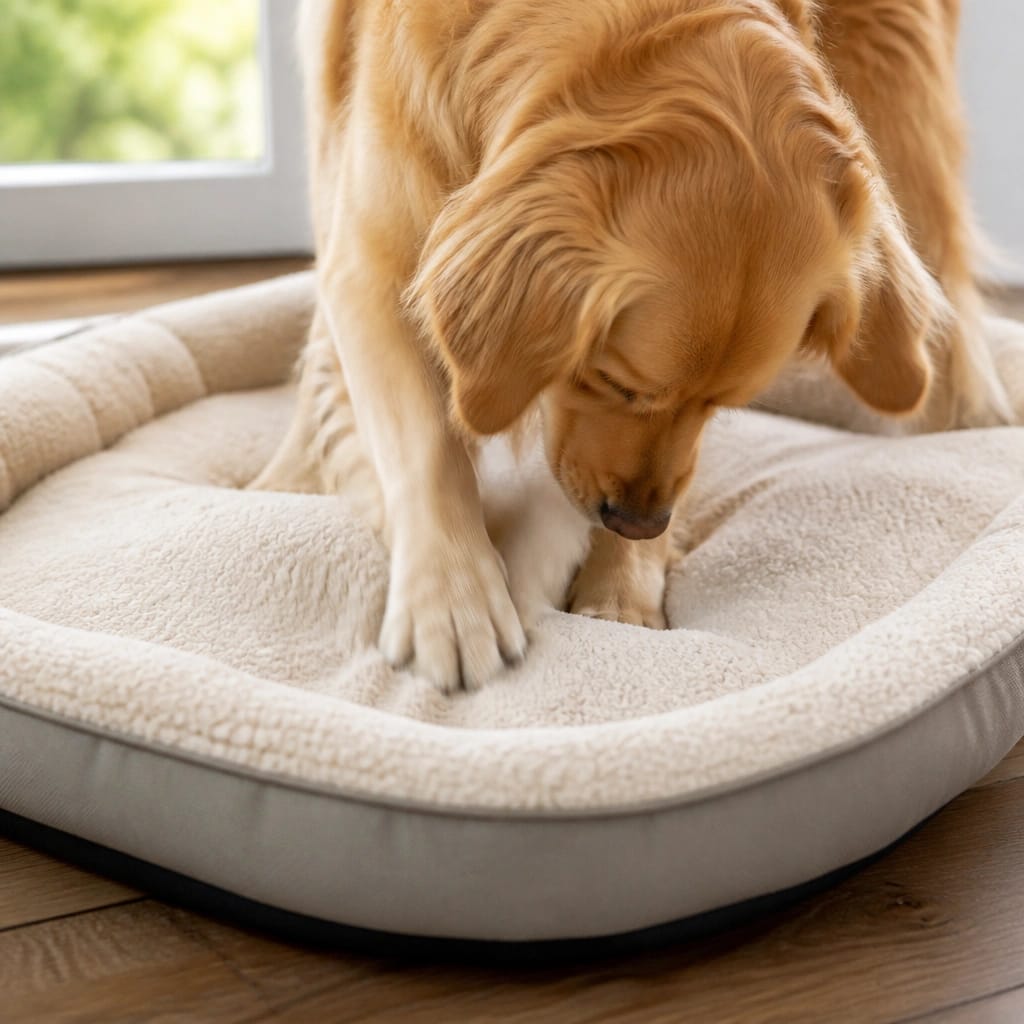
Even with a slow introduction, problems can pop up. Here’s what to do when they do.
Dog Scratches Excessively at the New Bed
Some scratching is normal nesting behavior. But excessive digging can mean the bed is too warm, too firm, or the fabric is uncomfortable. If your dog is scratching for more than a minute, redirect them to a different surface.
If the behavior continues, consider a different cover material.
Dog Chews or Tries to Destroy the Bed
Chewing is often a sign of anxiety, boredom, or curiosity. If your dog starts chewing, remove the bed immediately. Supervise all future interactions.
If your dog is a known chewer, look for a bed with reinforced seams and durable materials.
Dog Sleeps Next to the Bed, Not on It
This is common. The dog is telling you they’re willing to be near the bed but not ready to commit. Place a familiar blanket on the bed.
Drop treats on it. Let them sleep next to it for a few nights. They’ll usually try the bed when they’re ready.
Dog Whines or Seems Anxious Near the Bed
Whining means the bed is causing stress. Move it to a different location. Sometimes a spot that’s too open or too close to a window can trigger anxiety.
If the whining continues, go back to the old bed and try a different type of bed altogether.
Mistakes That Can Set Back the Transition
A few common errors can undo days of progress. Avoid them.
Forcing your dog onto the bed. Pushing, lifting, or trapping your dog on the new surface creates fear. Let them choose.
Removing the old bed too soon. The old bed is a safety net. Keep it nearby for at least a week. Remove it only after your dog has slept on the new bed several times.
Punishing rejection. If you scold your dog for sleeping on the floor, they’ll associate the new bed with stress. Positive reinforcement works. Punishment backfires.
Ignoring the location. A bed in the wrong spot will fail. Move it and try again before giving up.
How Long Does It Usually Take?

Most dogs adjust within three days to two weeks. The timing depends on age, personality, and the type of change.
Confident dogs and puppies often accept a new bed in one to two days. Senior dogs and anxious dogs may take two weeks or longer. If your dog still refuses after three weeks, the problem is likely the bed type itself, not the process.
When to Consider a Different Bed Type Altogether
Some dogs never warm up to a particular style. That’s okay. It means the bed doesn’t match their needs.
If your dog consistently avoids the new bed after a full three-week introduction, try a different type. A dog who hates a bolster bed might love a flat orthopedic mat. A burrower who rejects an open bed may settle instantly in a cave style.
The bed should fit your dog’s sleeping habits, not the other way around. If you’re unsure which type suits your dog, our guide on breed-specific needs can help narrow it down.
Frequently Asked Questions
How do I get my dog to use their new bed?
Place the new bed near their old sleeping spot. Let them sniff it freely. Reward them with treats when they step on it.
Keep the old bed nearby for the first week.
Should I take away the old bed immediately?
No. Keep both beds side by side for at least a week. Let your dog choose.
Remove the old bed only after they’ve used the new one consistently.
Why does my dog scratch the new bed so much?
Scratching is normal nesting behavior. But excessive digging can mean the bed is too warm, too firm, or the fabric feels strange. Try a different cover material.
Can I use treats to train my dog to use the bed?
Yes. Drop treats on the bed and praise your dog when they investigate. Never force them.
Positive reinforcement builds a good association.
What if my dog chews the new bed?
Remove the bed immediately. Chewing can be a safety hazard. Supervise all future interactions and consider a chew-resistant bed if the behavior continues.
How long should I wait before trying a different bed type?
Wait three weeks. If your dog still refuses the new bed after a full introduction, switch to a different style. Not every bed suits every dog.
Your Next Step: Matching the Bed to Your Dog
The introduction process is straightforward. Prepare the bed. Choose the right spot.
Let your dog move at their own pace. Reward every small step.
But the most important decision happens before you buy. Know your dog’s sleeping position, their temperature preferences, and their need for security. A dog who likes to burrow needs a different bed than a dog who sprawls.
If you’re still struggling, check your dog’s bed size and sleeping habits first. The right bed in the right spot makes the transition almost effortless.


