

How to Clean a Dog Bed After a Dog Has Been Sick
Start by figuring out whether the illness was contagious. Remove the bed cover and wash it in hot water with a disinfectant if needed. Never put foam cores in a washing machine. Spot-clean foam with an enzymatic cleaner and let everything dry completely before reassembling. Toss the bed if odors persist after cleaning.
How to clean a dog bed after a dog has been sick is a question every owner faces eventually. When your dog gets sick, their bed becomes ground zero for the mess. Cleaning it properly matters more than just removing stains.
It’s about stopping bacteria and viruses from sticking around.
Research shows that common household pathogens can survive on fabric surfaces for days or weeks. The approach you take depends on what your dog had and what kind of bed you own. As of 2026, veterinary guidelines recommend a two-step process: sanitize the cover and gently clean the foam core.
Here’s what actually works.

Why a Sick Dog’s Bed Needs a Different Cleaning Approach
A regular wash routine won’t cut it here. Vomit, diarrhea, and saliva carry bacteria and viruses that can linger in fabric. If your dog had something contagious, those pathogens can reinfect them or spread to other pets in your home.
Heat and the right disinfectant are your main tools. The CDC recommends using water at 140°F or higher to kill common pathogens on washable fabrics. That’s hotter than most standard warm cycles, so you’ll need to check your machine settings.
Foam is the tricky part. You can’t machine-wash it without destroying the structure. That means you need a separate cleaning strategy for the cushion inside.
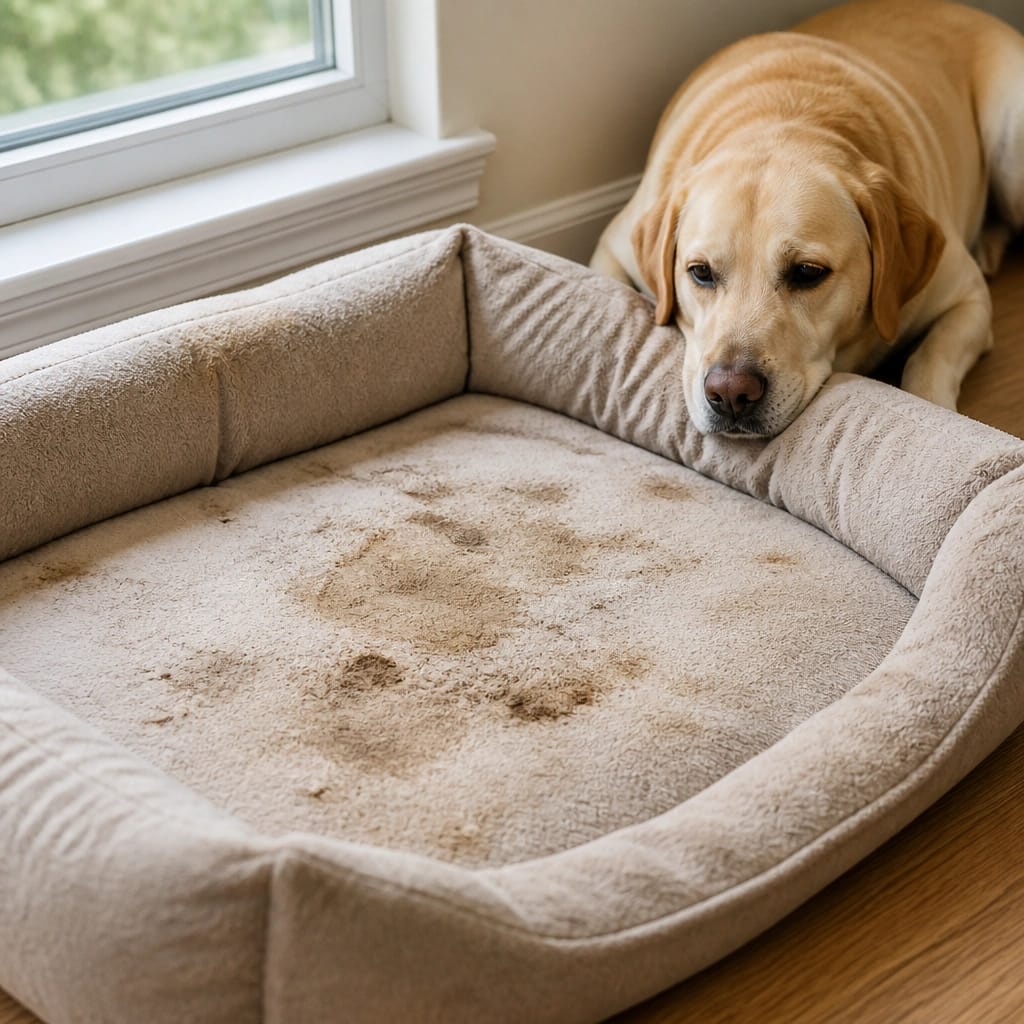
The First Question: Was the Illness Contagious?
This single factor changes everything. If your dog had a contagious condition like parvovirus, kennel cough, or giardia, you need to disinfect the bed thoroughly. If it was a simple upset stomach from eating something wrong, a deep clean with an enzymatic cleaner is usually enough.
Cleaning a Bed After a Contagious Illness
For contagious illnesses, you need to kill the pathogens. The AVMA recommends using a bleach solution of one part bleach to ten parts water for hard surfaces. For fabric covers, use hot water (140°F minimum) and a laundry sanitizer or bleach that’s safe for the fabric.
Wash the cover separately from other laundry. Dry it on the highest heat setting the fabric allows. For the foam core, mix a disinfectant spray approved for the specific pathogen and mist the surface lightly.
Let it air dry completely before putting the cover back on.
If you use a crate bedding setup, the same rules apply. Remove the pad and wash it following the same hot water protocol.
Cleaning a Bed After a Non-Contagious Upset Stomach
When the illness wasn’t contagious, focus on stain removal and odor elimination. Enzymatic cleaners break down the proteins in vomit and diarrhea. Apply the cleaner directly to the stain, let it sit for 15 minutes, then blot with a clean cloth.
Wash the cover in cold water first to prevent protein stains from setting. Then run a second wash with hot water and detergent. This two-step approach removes both the stain and any lingering bacteria.
Step-by-Step Guide: How to Wash a Dog Bed Cover

Here’s the process that works for most removable covers.
Step 1: Remove the cover. Unzip it fully and pull it away from the foam. Check for any stains that need pre-treatment.
Step 2: Pre-treat stains. Apply an enzymatic cleaner to any visible marks. Let it soak for 15 to 30 minutes.
Step 3: Choose your wash settings. For contagious illnesses, use hot water (140°F) and a laundry sanitizer. For non-contagious messes, start with cold water then rewash on hot.
Step 4: Add an extra rinse. This removes all cleaning residue that could irritate your dog’s skin.
Step 5: Dry thoroughly. Tumble dry on low heat or air dry until completely dry. Damp covers can grow mold.
Using a waterproof liner underneath the cover makes cleanup much easier. The liner catches most of the mess before it reaches the foam.
How to Clean a Foam Dog Bed Core (Without Ruining It)

Foam acts like a sponge. Submerging it in water ruins the structure and creates a breeding ground for mold. Here’s how to clean it safely.
Spot-clean the foam using a mild detergent or enzymatic cleaner. Spray the cleaner onto a clean cloth, not directly onto the foam. Gently blot the stained area.
Never scrub or soak the foam.
For deep odor removal, sprinkle baking soda over the foam surface. Let it sit for a few hours, then vacuum it off. Sunlight is a natural disinfectant, so place the foam outside in direct sun for a few hours if weather permits.
For tougher stains that have soaked into the foam, you may need a more targeted approach. Our guide on removing deep-set stains from memory foam covers the specific techniques for that situation.
Common Mistakes That Ruin a Dog Bed or Leave It Unsanitary
Here are the most common errors we see in our research.
| Mistake | Why It’s a Problem |
|---|---|
| Machine-washing foam | Destroys foam structure, creates mold risk |
| Using hot water on vomit stains | Sets the protein stain permanently |
| Skipping the disinfectant step | Pathogens survive and can reinfect your dog |
| Not drying completely | Moisture leads to mold and bacteria growth |
| Using fabric softener | Reduces absorbency and can irritate skin |
Avoid these and your bed will last longer and stay safer for your dog.
When to Throw the Bed Away and Start Fresh

Some beds can’t be saved. If the foam has deep stains, a lingering odor, or visible mold, it’s time to replace it. Odors that return after cleaning mean bacteria have penetrated the foam core.
Check the manufacturer’s care label. If the bed doesn’t have a removable cover and the foam is stained, replacement is usually the safest option. Consider different bed styles with removable, washable covers for easier future cleanup.
Frequently Asked Questions
Can I use vinegar to disinfect a dog bed?
Vinegar is a good deodorizer but not a strong disinfectant. It won’t kill parvovirus or other hardy pathogens. Use it for odor removal only, not for sanitizing after a contagious illness.
What temperature kills bacteria on a dog bed?
Water at 140°F (60°C) kills most common bacteria and viruses. Check your washing machine’s hot water setting and use a thermometer to verify the temperature if you’re unsure.
How long does it take a foam dog bed to dry?
Foam can take 24 to 48 hours to dry completely. Place it in a warm, well-ventilated area. Point a fan at it to speed up the process.
Never reassemble the bed while the foam is still damp.
Is bleach safe for dog bed covers?
Bleach is safe for white cotton covers. For colored fabrics, use a color-safe bleach or laundry sanitizer. Always test a small hidden area first.
Rinse thoroughly to remove all residue.
How often should I clean a dog bed after illness?
Clean the bed immediately after each accident or vomiting episode. Once your dog has recovered, do one final deep clean and sanitize before returning the bed to normal use.
Your Cleaning Decision Guide
Here’s how to decide what to do based on your situation.
If the illness was contagious: Use hot water, a disinfectant, and dry on high heat. Spot-clean the foam with a pathogen-specific disinfectant.
If the illness was mild: Use an enzymatic cleaner, wash in cold then hot water, and dry thoroughly.
If the foam is stained or smelly after cleaning: Replace the bed.
If you want easier cleanup in the future: Look for beds with removable, machine-washable covers and a waterproof liner.
The right cleaning method depends on the situation. But the core rule stays the same. Clean quickly, dry completely, and when in doubt, toss it out.
When to Throw the Bed Away and Start Fresh
Some beds simply can’t be saved. If the foam has deep stains, a lingering odor, or visible mold, it’s time to replace it. Odors that return after cleaning mean bacteria have penetrated the foam core.
Check the manufacturer’s care label. If the bed doesn’t have a removable cover and the foam is stained, replacement is usually the safest option. Consider different bed styles with removable, washable covers for easier future cleanup.
Frequently Asked Questions
Can I use vinegar to disinfect a dog bed?
Vinegar is a good deodorizer but not a strong disinfectant. It won’t kill parvovirus or other hardy pathogens. Use it for odor removal only, not for sanitizing after a contagious illness.
What temperature kills bacteria on a dog bed?
Water at 140°F (60°C) kills most common bacteria and viruses. Check your washing machine’s hot water setting and use a thermometer to verify the temperature if you’re unsure.
How long does it take a foam dog bed to dry?
Foam can take 24 to 48 hours to dry completely. Place it in a warm, well-ventilated area. Point a fan at it to speed up the process.
Never reassemble the bed while the foam is still damp.
Is bleach safe for dog bed covers?
Bleach is safe for white cotton covers. For colored fabrics, use a color-safe bleach or laundry sanitizer. Always test a small hidden area first.
Rinse thoroughly to remove all residue.
How often should I clean a dog bed after illness?
Clean the bed immediately after each accident or vomiting episode. Once your dog has recovered, do one final deep clean and sanitize before returning the bed to normal use.
Your Cleaning Decision Guide
Here’s how to decide what to do based on your situation.
If the illness was contagious: Use hot water, a disinfectant, and dry on high heat. Spot-clean the foam with a pathogen-specific disinfectant.
If the illness was mild: Use an enzymatic cleaner, wash in cold then hot water, and dry thoroughly.
If the foam is stained or smelly after cleaning: Replace the bed.
If you want easier cleanup in the future: Look for beds with removable, machine-washable covers and a waterproof liner.
The right cleaning method depends on the situation. But the core rule stays the same. Clean quickly, dry completely, and when in doubt, toss it out.


