

Travel Dog Bed vs Regular Dog Bed: When to Use Each
You’re packing for a weekend trip, and your dog’s regular bed eats up half the trunk. The question of Travel Dog Bed vs Regular Dog Bed: When to Use Each comes down to more than just size. It’s about comfort, portability, and what your dog actually needs on the road versus at home.
Manufacturer specifications tell us that travel beds typically weigh between 1 and 5 pounds. Regular home beds often tip the scales at 15 to 25 pounds. That weight gap matters when you’re already juggling luggage, crates, and camping gear.
Let’s break down exactly when each type earns its spot.
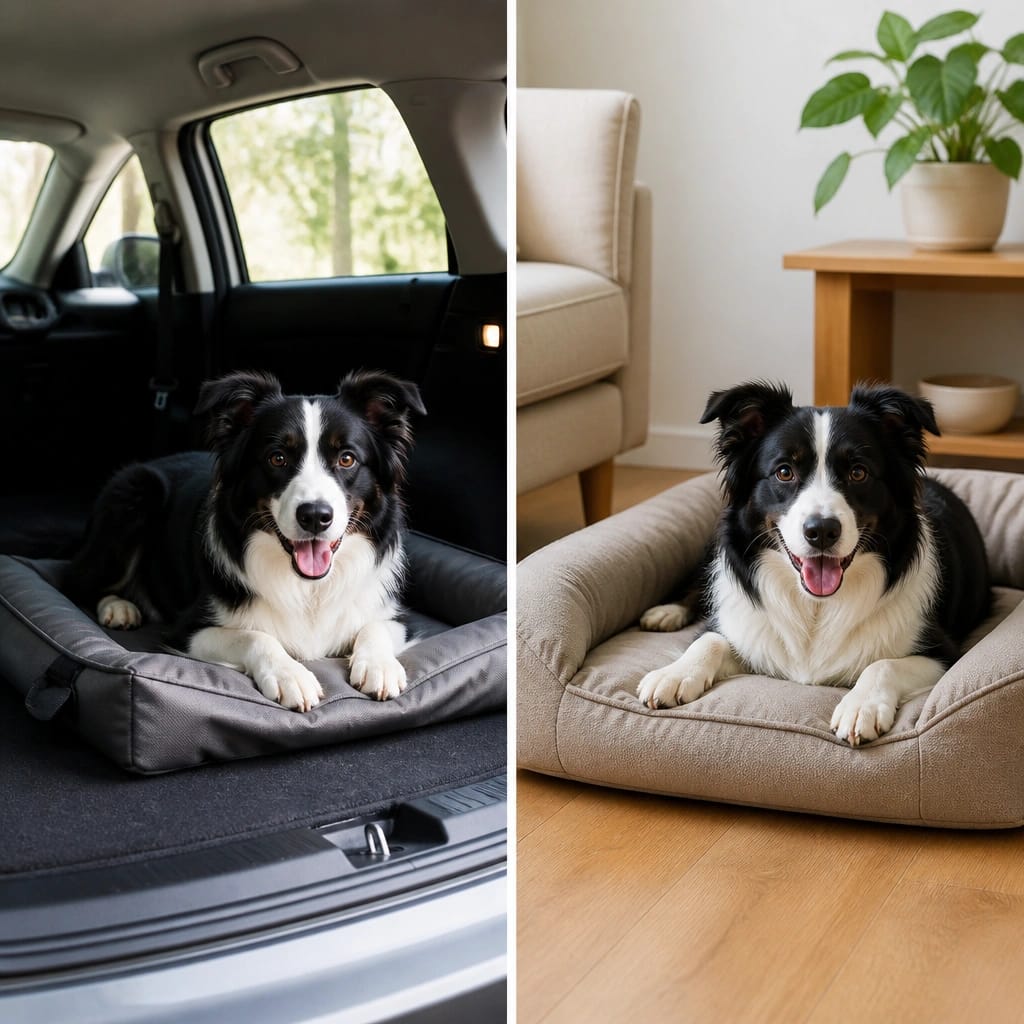
A travel dog bed works best for trips, crates, and tight spaces. A regular dog bed belongs at home where comfort and durability matter most. Use a travel bed when you need to pack light.
Use a regular bed for daily sleeping and joint support. The right choice depends on where your dog sleeps most.
Why This Comparison Matters for Dog Owners
Many people buy one bed and expect it to work everywhere. That’s a recipe for a bed that’s either too bulky to travel with or too thin for daily use. Understanding the difference saves you money and keeps your dog comfortable in every situation.
The decision also affects your dog’s sleep quality. A bed that’s right for the hotel floor might not support a senior dog’s joints at home. A thick orthopedic bed that works great in the living room becomes a nightmare to pack for a camping trip.
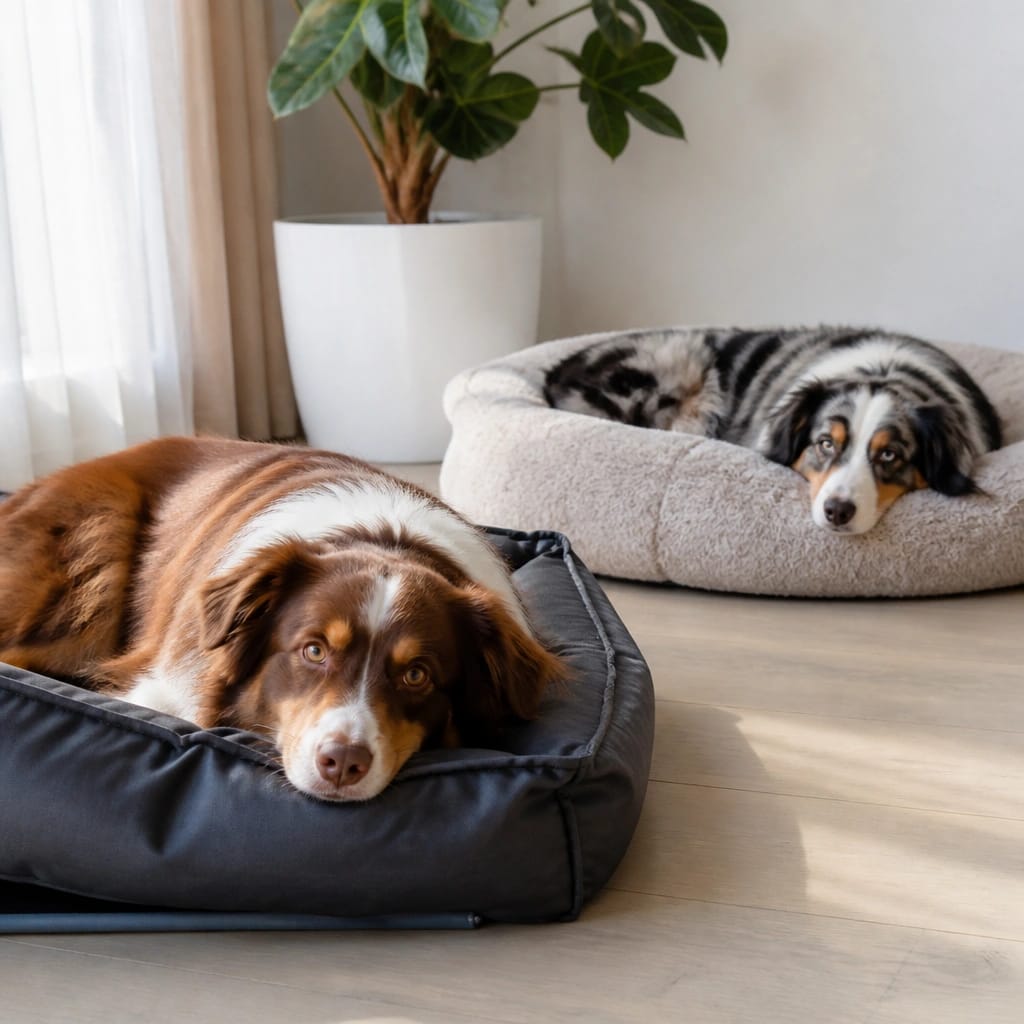
Getting the comparison right means your dog sleeps better, and you travel lighter.
This is especially important for dogs who spend time in crates at home and on the road. Using a travel bed as a crate liner can simplify your packing, while a regular bed offers better support for longer periods of rest. For more on crate setups, understanding the difference between a padded crate insert and a basic mat helps clarify your options.
What Makes a Dog Bed a “Travel” Bed
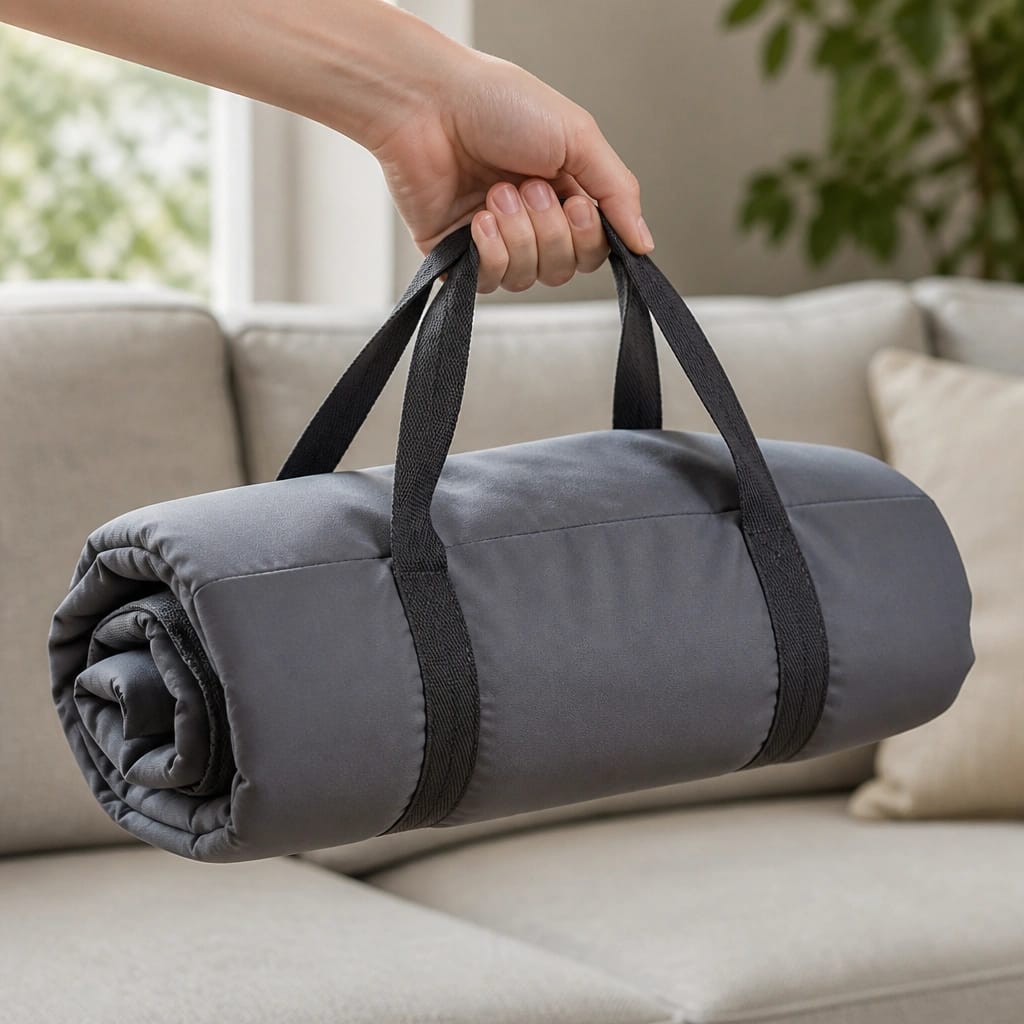
Travel beds are built for portability first. They use thinner foam, usually 1 to 3 inches thick, and lightweight fillings like polyester fiberfill or shredded foam. The whole thing compresses into a carrying case or rolls up into a compact cylinder.
The fabric is often lightweight polyester or Oxford nylon. Many models include a waterproof bottom layer to protect against wet ground or hotel carpet. A non-slip base keeps the bed from sliding on smooth car floors or tile.
These beds are easy to machine wash and dry quickly. That’s a real advantage when your dog comes back from a muddy hike. Some elevated cots use a mesh fabric that dries in minutes and keeps dogs cool in hot weather.
But travel beds compromise on support. The thinner foam offers less pressure relief for joints. That’s fine for a weekend trip but not ideal for a dog who sleeps 12 hours a day on the same surface.
What Makes a Regular Dog Bed Different
Regular home beds are built for comfort and durability. They use thicker foam, typically 3 to 6 inches, often in high-density memory foam or orthopedic grades. The foam provides better weight distribution and joint support for daily use.
The covers are heavier and more durable. You’ll find thicker microfiber, canvas, or fleece. Many home beds have bolsters or raised rims that give dogs a place to rest their heads.
These designs are great for dogs who like to curl up with something to lean against.
The downside is weight and bulk. A large orthopedic bed can weigh 20 pounds or more. It fills a whole suitcase or duffel bag.
That’s impractical for travel, even if your dog loves the bed at home.
Regular beds also take longer to clean. The thick foam core can’t go in the washing machine. You’re usually limited to spot cleaning or removing the cover.
If you’re dealing with accidents, waterproof materials are a must for the home setup.
Travel Dog Bed vs Regular Dog Bed: Side-by-Side Comparison
| Feature | Travel Dog Bed | Regular Dog Bed |
|---|---|---|
| Weight | 1 to 5 pounds | 15 to 25 pounds |
| Foam thickness | 1 to 3 inches | 3 to 6 inches |
| Packed size | Fits in a carry bag | Takes up a trunk |
| Portability | High | Low |
| Joint support | Moderate | High |
| Washability | Often fully machine washable | Cover only, spot clean |
| Durability | Moderate (lighter fabric) | High (heavier materials) |
| Best use | Trips, crates, car rides | Daily home sleeping |
This table shows the core trade-offs. A travel bed wins on portability and easy cleaning. A regular bed wins on comfort and long-term support.
Neither is universally better. The right choice depends entirely on where and how often you use it.
For example, if you travel every weekend, a travel bed is almost essential. If you only take one trip a year, borrowing a travel bed or using a thick blanket might be enough. The key is matching the bed to the frequency and type of use.
If you’re unsure about sizing for either option, referring to proper sizing guidance based on your dog’s measurements helps avoid buying a bed that’s too small or too large. A bed that’s the wrong size defeats the purpose of any type.
When a Travel Bed Makes More Sense
A travel bed is the right call for any situation where you need to pack light. Road trips, air travel, and camping all demand a bed that compresses small and weighs next to nothing.
If you fly with your dog, a travel bed fits inside a carry-on or airline crate. Most airlines require dogs to stay in an approved carrier during the flight. Adding a thin travel bed inside gives them comfort without violating size restrictions.
Hotel stays are another perfect use case. A travel bed keeps your dog off unfamiliar carpets and bedding. That matters for hygiene, but it also helps anxious dogs feel more secure.
The bed carries familiar scents from home.
Crate training at home also benefits from a travel bed. A thin, washable pad fits standard crate dimensions without overfilling the space. The American Kennel Club recommends keeping crate bedding thin to prevent puppies from using it as a bathroom spot.
Travel beds are easier to clean when accidents happen.
When a Regular Bed Is the Better Choice
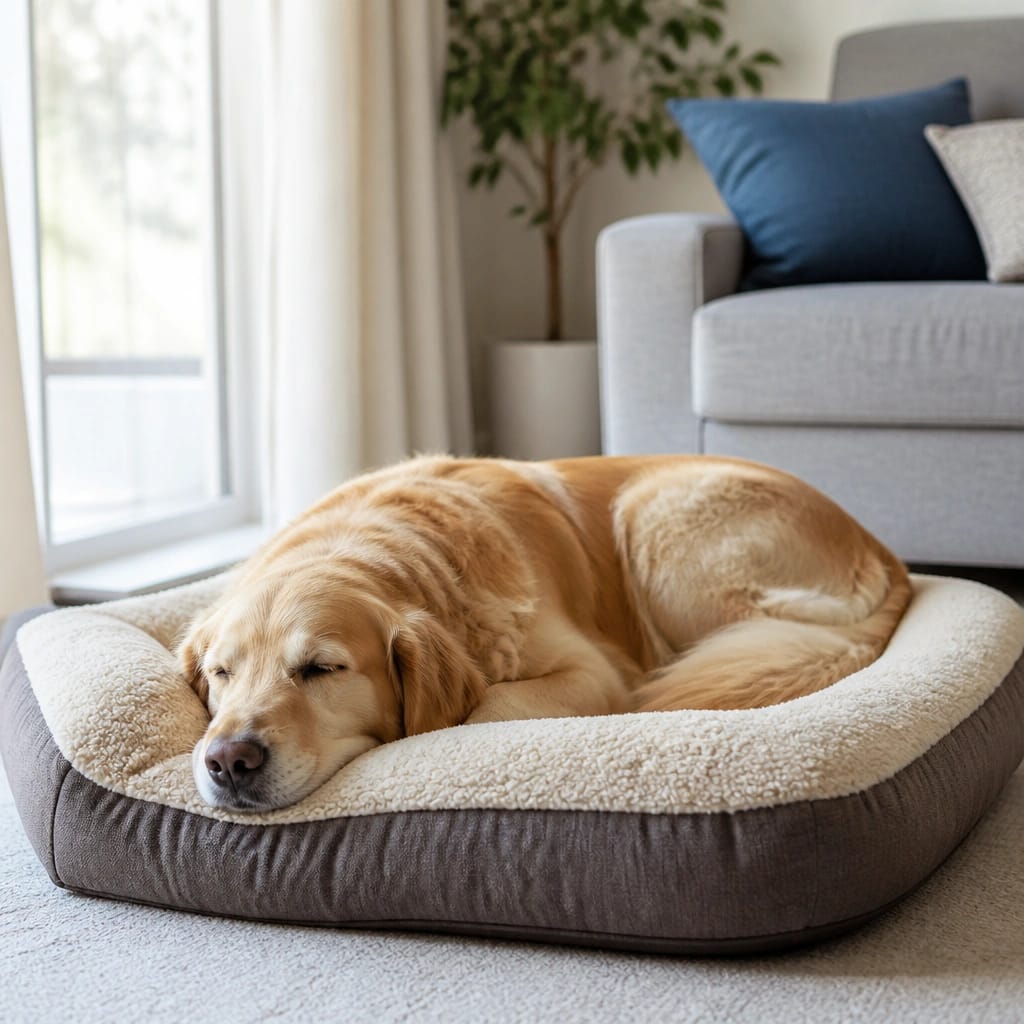
A regular home bed belongs in the living room, bedroom, or anywhere your dog spends most of the day. The thick foam and durable construction support joints during long sleep sessions.
Senior dogs with arthritis or hip dysplasia need the extra support. A travel bed’s 2-inch foam won’t provide enough pressure relief for a dog who sleeps 12 to 14 hours daily. Orthopedic memory foam at 4 to 6 inches makes a real difference for joint health.
Dogs who chew or dig at their bedding also need a regular bed. The heavier fabrics and reinforced seams handle more abuse. If your dog scratches before lying down, a travel bed’s lightweight fabric won’t last long.
Explore beds with raised rims if your dog prefers to lean against something while sleeping.
The same applies to dogs who sleep sprawled out. A travel bed is often too small for large breeds to stretch fully. A regular bed gives them the full surface area they need.
What About Using One Bed for Both
Some owners try to use one bed for everything. That usually leads to compromise in both directions. A travel bed used daily at home wears out faster and offers less support.
A regular bed taken on trips becomes a burden.
The exception is a crate pad that stays in the crate at home and comes along on trips. Many travel beds double as permanent crate liners. That works because the crate limits the bed size and the thin profile fits perfectly.
For dogs who travel frequently, a dedicated travel bed is worth the investment. Use it for trips and keep a separate regular bed at home. That way each bed does its job without compromise.
For occasional travelers, a thick blanket or towel can work in a pinch. It’s not ideal for comfort, but it beats hauling a 20-pound bed for one weekend trip.
How to Choose Based on Your Dog’s Needs
Start with your dog’s size and weight. A travel bed must be large enough for your dog to stretch out. Measure your dog from nose to tail and add 6 to 12 inches for the minimum bed length.
Check proper sizing guidance for your dog’s measurements before buying either type.
Next, consider your dog’s age and health. Puppies and healthy adult dogs can handle a travel bed’s thinner foam. Senior dogs or breeds prone to joint issues need the thicker foam of a regular bed.
Sleeping style matters too. Curlers can fit on smaller travel beds. Sprawlers need more surface area.
Dogs who burrow or nest prefer donut-style beds at home but may refuse a flat travel bed.
Finally, evaluate your travel frequency. If you travel more than once a month, a quality travel bed pays for itself. If you travel once or twice a year, a blanket or a budget travel bed is enough.
Common Mistakes Dog Owners Make
The biggest mistake is buying a travel bed that’s too small. Many owners guess the size and end up with a bed their dog barely fits on. Always measure your dog before ordering.
Another common error is choosing a travel bed without a waterproof layer. Wet paws, mud, accidents, and spills happen on every trip. A waterproof bottom protects the bed and the surface underneath.
Skipping the non-slip base is also a problem. A travel bed that slides around on a hotel floor or car seat stresses your dog out. Look for rubber dots or silicone grip on the bottom.
Some owners ignore their dog’s chewing habits. If your dog is a chewer, a lightweight travel bed won’t last a week. Look for ripstop fabric or reinforced seams for aggressive chewers.
For more on this, the guide on chew-resistant materials covers what to look for.
Finally, don’t assume a travel bed works for daily crate use. It can, but only if the foam density is high enough. Thin foam that compresses flat offers no support for long-term use.
Frequently Asked Questions
Can I use a regular bed for travel?
You can, but it’s usually not practical. A regular bed for a large dog weighs 15 to 25 pounds and takes up significant space. It works for car trips with plenty of room but fails for air travel or camping.
How long does a travel bed last?
With regular travel use, expect 1 to 3 years. The lighter fabric and thinner foam wear out faster than a home bed. Chewing or frequent washing shortens that lifespan.
Is a travel bed supportive enough for senior dogs?
Not for daily use. A 2-inch travel bed lacks the foam density needed for joint support. Use it only for short trips.
Stick to a thicker orthopedic bed for everyday sleeping.
Do I need a separate bed for the crate?
A travel bed works well as a crate liner. It fits standard crate dimensions and is easy to clean. Just make sure the foam density is adequate if your dog spends hours in the crate daily.
Final Verdict: Which One Should You Buy
Buy a travel bed if you travel more than once a month or need a crate liner. Buy a regular bed for daily home use and joint support. Most dogs benefit from having both.
Use the travel bed for trips and the regular bed at home. That way each bed serves its purpose without compromise.


