

How Household Traffic Affects Dog Bed Placement
Household traffic tells you where to put the bed. High traffic areas stress many dogs. Low traffic zones feel safer.
Watch where your dog naturally rests. Place the bed there. Adjust if they avoid it.
You bought the perfect dog bed. Plush foam, washable cover, the works. But your dog still sleeps on the cold floor.
Or they park themselves right in the hallway where everyone trips over them. How household traffic affects dog bed placement is the missing piece in this puzzle.
The American Kennel Club points out that dogs are den animals. They instinctively seek quiet, safe spots for rest. When a bed sits in a busy walkway, it fights that instinct.
That’s why location matters just as much as the bed itself. Let’s walk through what traffic patterns mean for your dog and how to find the right spot.

The Problem: Why Your Dog Ignores Their Bed (or Gets in the Way)
You might blame the bed. But the real issue is often placement. Dogs read their environment differently than we do.
A spot that seems fine to you might feel exposed or chaotic to them.
If your dog’s bed is in a high traffic zone, they may avoid it. They might choose a quieter corner of the room instead. Or they might lie in the middle of the floor, right where people walk.
That’s not stubbornness. It’s them trying to find a comfortable spot.
The problem is especially common in open plan homes. The living room, kitchen, and hallway blend together. There’s no clear quiet corner for the bed.
Our research shows that dogs in these layouts often sleep less soundly.
Getting the location right starts with understanding traffic patterns. If you’ve ever wondered about placement options, check out our guide on where a dog bed should go in the house.
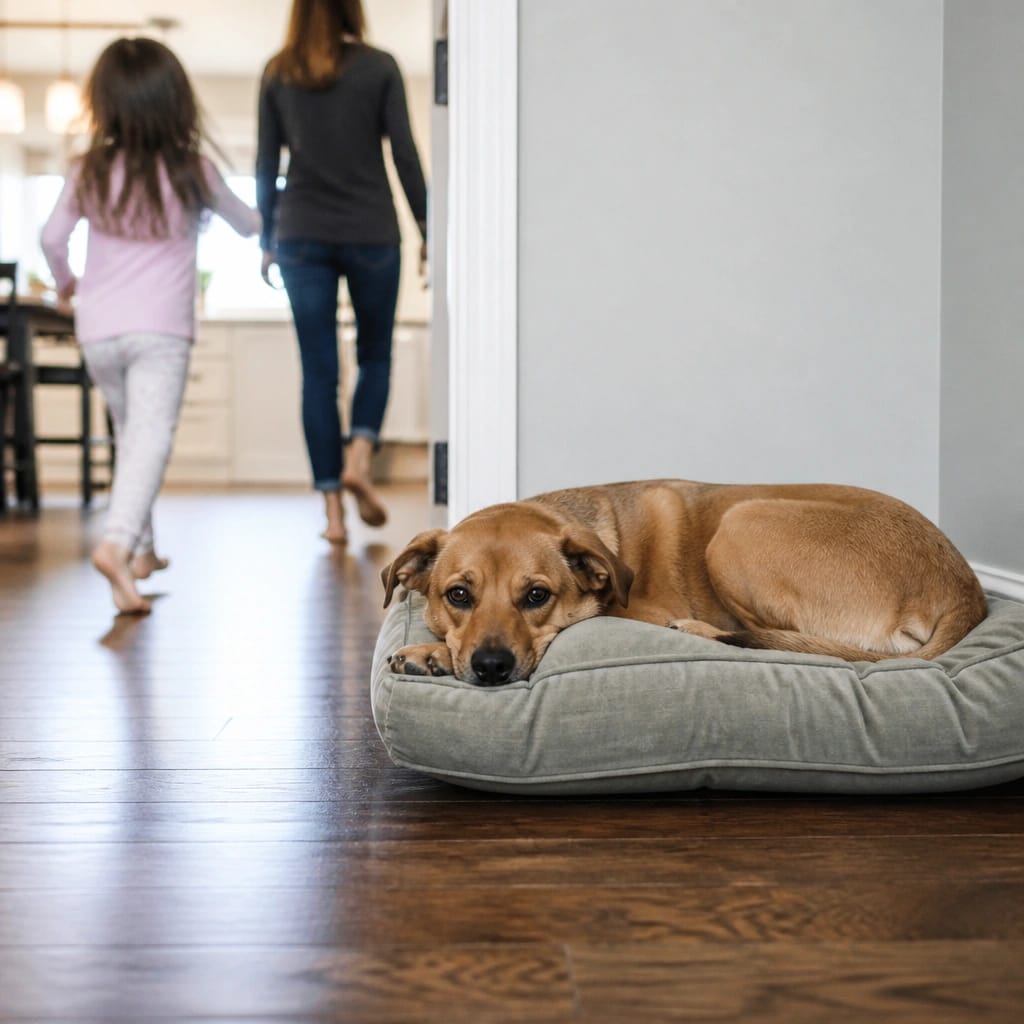
How Household Traffic Actually Affects Your Dog’s Sleep and Behavior
Traffic isn’t just about footsteps. It’s about noise, vibration, and sudden movement. Dogs have sensitive hearing.
They pick up on the thud of footsteps, the creak of floorboards, and the whoosh of a door opening.
When a bed is in a busy path, your dog never fully relaxes. They stay in light sleep, ready to jump up. Over time, this can lead to sleep deprivation.
A tired dog is more irritable, more anxious, and less trainable.
High traffic areas also cause stress behaviors. Some dogs pace or pant. Others scratch at their bed or dig excessively.
This isn’t destructive. It’s a sign of discomfort. If you see this, our article on why dogs dig or scratch at their bed covers the reasons.
On the other hand, a well placed bed in a quiet zone lets your dog enter deep sleep. That’s when real recovery happens. Deep sleep supports their immune system, joint health, and mood.
The American Kennel Club confirms that proper rest is critical for canine behavior and health.
The 3 Main Traffic Zones in Your Home
Think of your home as having three traffic zones. Each one affects your dog differently.
High Traffic Zones
These are the main walkways. Hallways, kitchen paths, stairs, and the space between the couch and TV. People walk through these areas constantly.
Dogs here get stepped on, nudged, and interrupted. Most dogs will avoid sleeping here.
But some confident dogs enjoy being in the action. They want to see everyone. For them, a high traffic zone can work if the bed is out of the direct path.
Think against a wall, not in the middle of the room.
Medium Traffic Zones
These areas see regular use but not constant flow. Living rooms, home offices, and bedrooms when people are awake. These are often good spots.
Your dog can see you without being in the way.
Medium traffic zones work well for most dogs. They get the social connection they want without the stress of constant movement.
Low Traffic Zones
These are the quiet corners. Guest rooms, landings, corners of the master bedroom, or a spot under a window. Low traffic zones are ideal for anxious dogs, seniors, and puppies.
Dogs that choose these spots on their own are telling you something. Listen to them. A bed in a low traffic zone often gets used more than a fancy bed in a busy area.
Some dogs even prefer the floor over a bed in a bad spot. Our article on why dogs sleep on the floor instead of their bed explains this further.

Decision Tree: Finding the Right Spot Based on Your Dog and Home
You can’t just guess. Use this simple decision tree.
Branch 1: Is Your Dog Anxious or Skittish?
If your dog startles easily, hides during storms, or avoids guests, place their bed in a low traffic zone. A corner of the bedroom or a quiet den works best. Consider a cave style bed for extra security.
Our guide on beds for anxious dogs covers the best options.
Branch 2: Is Your Dog Social and Confident?
If your dog loves being the center of attention, a medium traffic zone is better. The living room or home office lets them be near you without getting stepped on. Avoid direct hallways.
Put the bed against a wall.
Branch 3: Is Your Dog a Puppy or Senior?
Puppies need easy access to their bed for potty training. Place it near the door to the yard. But not in a high traffic path.
Seniors with joint pain need quiet, warm spots away from drafts. A low traffic zone is best for them.
Branch 4: Does Your Dog Guard or Resource Guard?
If your dog growls or snaps when approached on their bed, placement matters even more. Put the bed in a low traffic zone where they won’t feel threatened. Avoid corners that trap them.
Give them an escape route. This reduces guarding behavior.
Matching Bed Type to Traffic Zone
Not every bed works in every zone. The style of bed matters almost as much as the location.
Bolster Beds for Medium Traffic Zones
Bolster beds have raised edges. They create a sense of enclosure. In a medium traffic zone, that bolsters confidence.
Your dog feels protected while staying part of the action. These beds don’t work well in high traffic zones. People trip over the edges.
Our guide on bolster dog beds goes into more detail.
Cave and Donut Beds for Low Traffic Zones
Cave beds and donut beds are designed for security. They wrap around your dog. They work best in quiet corners or bedrooms.
Anxious dogs often prefer them. For a full breakdown, check out our article on calming donut dog beds and our cave hooded dog bed guide.
Elevated Beds for High Traffic Zones
Elevated beds lift your dog off the floor. They’re visible to people walking by. That reduces tripping.
They also keep your dog cooler. They work well for confident dogs who want to stay in the action. Just make sure the bed is out of the direct walking path.

Special Situations: Multi-Dog Homes, Kids, and Open Plan Layouts

Some homes need extra planning. Multi-dog households have their own traffic. Each dog has a different personality.
Place beds in separate zones so they don’t compete for space. A quiet bed for the anxious dog. A social bed for the confident one.
Homes with young children are unpredictable. Kids move fast and loud. Put the dog’s bed in a spot where children don’t run.
A corner of the living room works. A bedroom corner works better. This gives your dog an escape.
Open plan layouts are the hardest. There are few walls and no clear rooms. Use furniture to create zones.
Place the bed behind a sofa or under a console table. That breaks the line of sight and creates a quiet pocket.
Common Mistakes in Dog Bed Placement
Putting the bed in a hallway is the most common mistake. Hallways are high traffic. Your dog gets stepped on.
They learn to avoid the bed.
Blocking the doorway is another. Your dog can’t get out easily. They feel trapped.
That raises anxiety.
Ignoring your dog’s choice is a big one. If they sleep in a specific spot, put the bed there. Don’t force a location because it looks better.
Our article on why dogs sleep on the floor instead of their bed covers this exact issue.
Placing the bed near a heat source or draft is also common. Radiators and AC vents make the bed uncomfortable. Your dog will move.
Frequently Asked Questions
Should I put my dog’s bed in the hallway?
No. Hallways are high traffic zones. Dogs get stepped on and interrupted.
They won’t use the bed. Choose a corner or a quiet room instead.
Can I move my dog’s bed around the house?
Yes. Many owners use multiple beds. One in the living room and one in the bedroom.
This lets your dog follow you without being in the way.
What if my dog refuses to use their bed no matter where I put it?
Check the bed size and material first. Then look at traffic. Move the bed to a low traffic zone for a few days.
If they still avoid it, consider a different bed style.
Is it okay to have multiple dog beds in different rooms?
Absolutely. It’s one of the best solutions. Each bed can match the traffic zone of its room.
A quiet bed in the bedroom. A social bed in the living room.
How do I know if my dog is stressed by traffic?
Watch for signs. Pacing, panting, lip licking, and avoiding the bed are all cues. If you see these, the bed is probably in the wrong zone.
Your Next Step: Test, Observe, and Adjust
You don’t have to get it right on the first try. Place the bed in one zone. Watch your dog for three days.
Do they use it? Do they seem relaxed? If not, move it.
Try a low traffic zone first. Then a medium zone. See which one they prefer.
Most dogs will show you within a week. For more placement tips, read our guide on where a dog bed should go in the house. If you’re wondering about pillows, our article on whether dogs need a pillow can help too.
The right placement makes a good bed great. The wrong placement makes a great bed useless. Trust your dog’s behavior.
They’ll tell you where they want to sleep.


