

How to Choose Bedding for a Dog in a Car
If you’ve ever watched your dog slide across the back seat during a sharp turn, you already know why how to choose bedding for a dog in a car matters more than most owners realize. The wrong setup doesn’t just mean a messy car. It can put your dog at risk in a sudden stop or crash.
According to the Center for Pet Safety, an unsecured 30-pound dog can become a projectile at just 30 mph, generating over 900 pounds of force. That’s why bedding for a car needs to do more than look cozy. It needs to be part of a safety system.
Let’s walk through what actually matters.

Choose bedding that fits your car seat. Look for a non-slip bottom. Washable covers are a must.
Use a crash-tested harness. Comfort is secondary to safety.
Why Choosing the Right Car Bedding Matters for Your Dog’s Safety
A dog who slides around the back seat isn’t just uncomfortable. They’re unstable. That instability increases the risk of motion sickness, anxiety, and injury during sudden stops.
Our research shows that dogs who have a stable, secure surface in the car are calmer and less likely to pace or whine during trips.
The bigger concern is crash safety. Bedding that slides around can become a hazard itself. A thick foam pad that shifts during a turn can block your dog’s path to a safe zone.
It can also interfere with a harness or crate setup. That’s why the right bedding isn’t a luxury. It’s a safety tool.
For dogs who already struggle with stress, the right surface can make a real difference. A familiar, comfortable spot in the car signals that this is a safe place. That’s especially important for dogs with anxiety or noise phobia, where a secure resting area can help lower their heart rate during a ride.
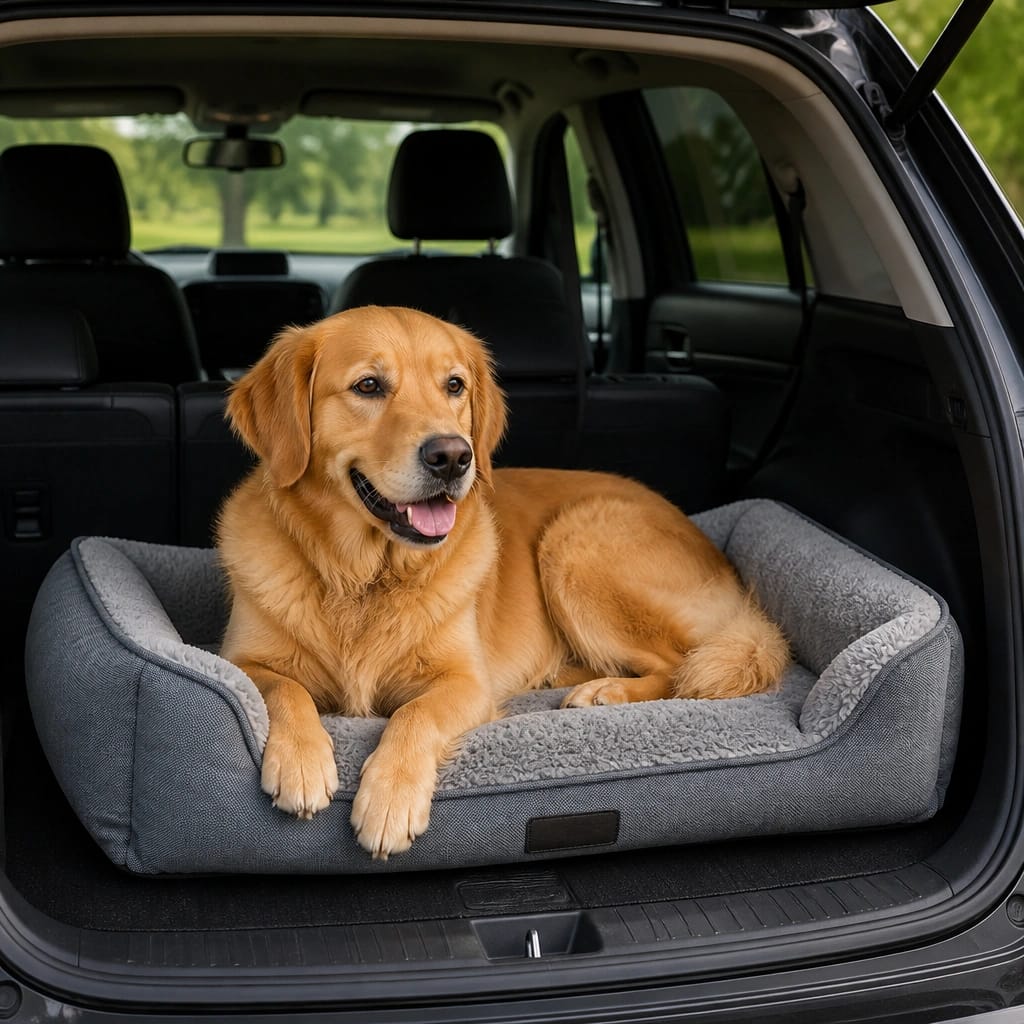
What Makes Car Bedding Different from a Regular Dog Bed
A regular dog bed is designed for a static environment. It sits on a floor. It doesn’t need to grip anything.
It doesn’t need to survive being folded, shoved into a trunk, or exposed to temperature swings inside a parked car.
Car bedding has to handle all of that. It needs:
- A non-slip bottom that stays put on leather or cloth seats.
- A compact fold so it doesn’t eat up cargo space.
- Easy removal for washing after muddy paws.
- A design that works with seatbelts, harnesses, and crates.
Regular bedding also tends to be too thick or too soft for a car. A thick memory foam pad might be great for a living room, but in a car, it can lift your dog too high, making them unstable. It can also block their view, which can increase anxiety.
The best car bedding is purpose-built. It’s thinner, grippier, and easier to clean. It’s also designed to work with a crash-tested harness or crate, not against them.
Key Safety Risks to Watch For
When you’re choosing bedding for a car, you’re not just picking a fabric. You’re managing several risks at once. Here are the most common ones our research uncovered.
Projectile Hazard in a Crash
Any loose item in a car becomes a projectile in a crash. That includes a thick, unsecured bed. If your bedding isn’t anchored or strapped down, it can fly forward and hit your dog or you.
Per manufacturer specifications, look for bedding with tether loops or anchor straps that attach to the seat.
Overheating in a Confined Space
Cars heat up fast. Even with windows cracked, the interior can reach dangerous temperatures in minutes. Bedding that traps heat, like thick memory foam or synthetic fleece without ventilation, can make your dog uncomfortably hot.
In extreme cases, it can contribute to heat stress. Look for breathable fabrics and avoid materials that retain heat.
Slipping and Sliding During Turns
A dog that slides on a smooth seat surface can’t brace properly. That leads to muscle strain, anxiety, and a higher risk of injury in a sudden stop. A non-slip bottom is non-negotiable.
If your bedding doesn’t have a rubberized or grippy backing, it’s not car-ready.
Blocking Seatbelt Anchors or Airbags
Some bedding designs are too wide or too bulky. They can cover up seatbelt buckles or interfere with side airbags. Always check that your bedding leaves the seatbelt anchors accessible and doesn’t extend into the airbag deployment zone.
Core Features That Make Bedding Car-Ready
Not all bedding is built for the car. Here are the features that separate a good car bed from a dangerous one, based on aggregate reviews and manufacturer specifications.
| Feature | Why It Matters | What to Look For |
|---|---|---|
| Non-slip backing | Keeps the bed from sliding during turns | Rubberized dots or a full anti-slip base |
| Waterproof layer | Protects against accidents, spills, and drool | A waterproof membrane under the cover |
| Machine-washable | Easy to clean after muddy paws or motion sickness | Removable cover, machine washable at 30°C |
| Tether loops or anchor points | Allows you to attach a crash-tested harness | Durable D-rings or reinforced slots |
| Breathable fabric | Prevents overheating in warm weather | Mesh panels or cotton blends |
| Compact fold | Stores easily when not in use | Folds flat or rolls up |

If you’re dealing with a puppy who has accidents, a waterproof layer is essential. For an older dog with joint issues, a thinner foam pad with a non-slip base is better than a thick, plush bed that shifts around. For more on keeping the bed clean, check out our guide dealing with urine odor in memory foam.
How to Match Bedding to Your Dog’s Size and Needs
The right bedding depends on your dog’s size, age, and temperament. Here’s how to break it down.
Small Dogs Under 20 Pounds
Small dogs need a bed that gives them a sense of security. A raised bolster or donut style can help them feel enclosed. But it also needs to be low enough that they can jump in and out easily.
A booster seat with a tether clip is a good option for small breeds. It keeps them secure and gives them a view out the window.
Medium to Large Dogs
For dogs 20 to 70 pounds, the priority is a flat, stable surface with a non-slip backing. A crate pad or a bench seat cover with built-in padding works well. Make sure the bed is wide enough for your dog to stretch out.
Your dog’s sleeping position matters. If they curl up, a smaller bed works. If they sprawl, you need the full seat width.
Senior Dogs and Puppies
Senior dogs need extra cushioning for their joints, but not so much that they can’t get in and out. A thin, supportive foam pad with a nonslip base is ideal. Puppies need a waterproof, washable surface.
They also need a bed that doesn’t slide around, so they can learn to stand and brace during rides.

Image source: Wikimedia Commons / NASA/ESA, A.Feild/STScI
To get the right fit, measure your dog’s length from the base of the tail to the shoulder. Then measure your car’s back seat width. A good rule of thumb is to add 4 to 6 inches to your dog’s length for the bed size.
For more detailed sizing, check our dog bed size chart by weight.
Comparing the Main Types of Car Bedding
There are three main types of car bedding. Each works best for a different situation.
Back seat hammocks cover the entire rear seat area. They create a flat, stable surface and protect your car’s upholstery. They’re ideal for medium to large dogs who need room to stretch.
The hammock design prevents your dog from falling into the footwell during turns.
Crate pads are designed for travel crates. They’re thinner than regular crate pads and have a non-slip bottom. If your dog already travels in a crate, this is the safest option.
It keeps the crate comfortable without adding bulk.
Booster seats are raised platforms for small dogs. They give your dog a view out the window and keep them secure with a tether clip. They work best for dogs under 20 pounds.
For more on crate versus open travel, check our guide on crate pads versus mats.
Step-by-Step: How to Choose the Right Bedding for Your Car
Start by measuring your car’s back seat. Measure the width from door to door and the depth from the seat back to the edge. Write those numbers down.
Next, measure your dog. Length from shoulder to tail base. Add 4 to 6 inches.
That’s your minimum bed length.
Then choose a type. If your dog is under 20 pounds and likes to see out, go with a booster seat. If your dog is medium or large, pick a hammock or a crate pad.
Finally, check for safety features. Non-slip bottom. Tether loops.
Washable cover. If it doesn’t have all three, keep looking. A comfortable sleeping surface at home is a different thing from what you need on the road.
Common Mistakes Owners Make When Choosing Car Bedding
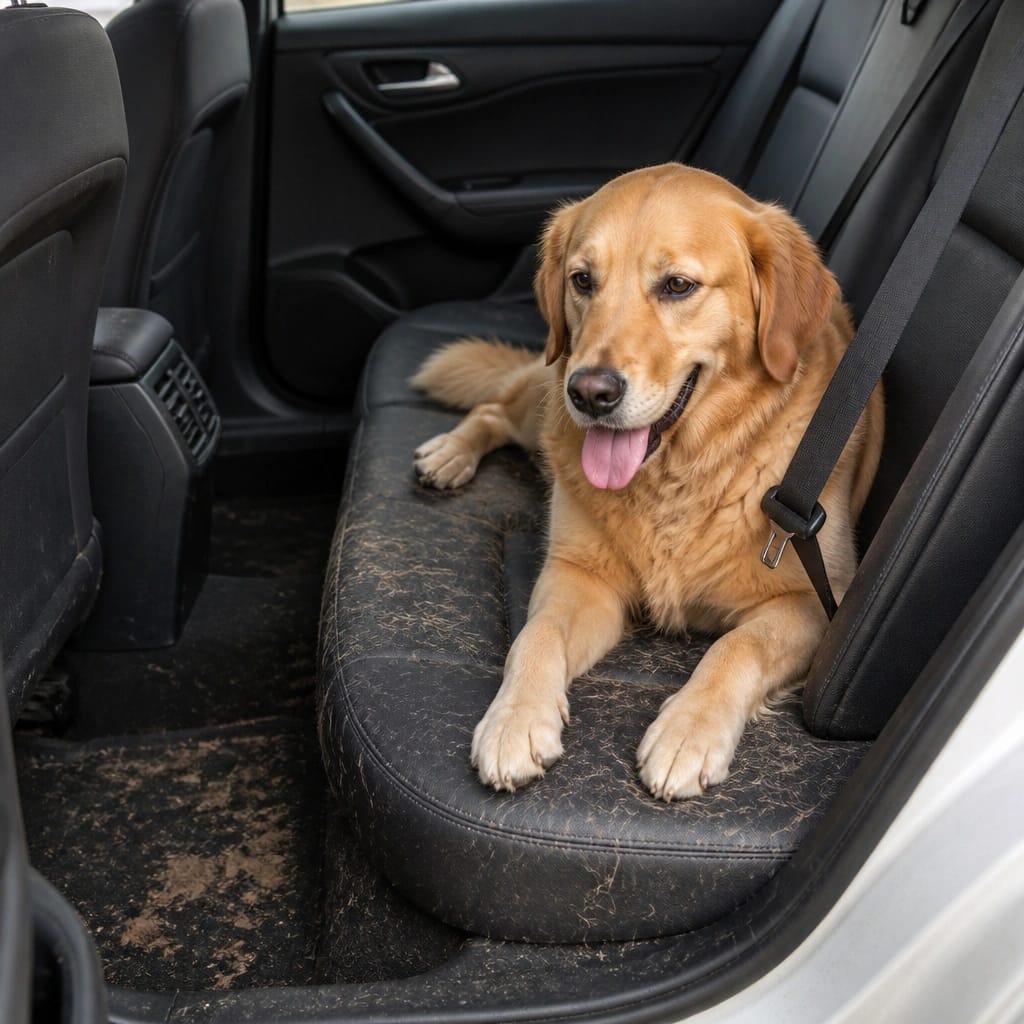
The biggest mistake is buying a regular dog bed and putting it in the car. It slides around. It traps heat.
It doesn’t anchor to anything.
Another common error is ignoring the non-slip backing. Many owners assume any bed will stay put. It won’t.
On leather seats, even heavy beds slide.
Owners also forget about washing. Car bedding gets dirty fast. Mud, drool, vomit from motion sickness.
If the cover isn’t removable and machine washable, you’ll regret it.
Finally, some owners buy bedding that’s too thick. A 4 inch foam pad lifts your dog too high. They become unstable during turns.
If your dog prefers digging and nesting, that behavior can also shift the bedding around.
How to Use Car Bedding Safely with a Harness or Crate
Bedding alone isn’t a safety system. It’s the surface. The harness or crate is the restraint.
Always use a crash-tested harness with a seatbelt tether. Attach the harness to the tether loop on the bedding or directly to the car’s seatbelt anchor. Never attach a harness to a collar.
That’s a choking risk.
If you’re using a crate, place the crate pad inside the crate. Make sure the pad doesn’t bunch up or block the crate door. The pad should sit flat so your dog can stand and turn comfortably.
For dogs with anxiety, a familiar bed surface inside the crate can help them settle. The combination of a secure crate and a comfortable pad is the safest setup for long trips.
Cleaning and Maintenance for Long-Lasting Use
Remove the cover and wash it every two to four weeks. Use cold water and a gentle cycle. Air dry or tumble dry on low.
High heat can damage the waterproof layer.
Spot clean the foam or padding with mild soap and water. Never put foam in a washing machine. It will break apart.
Check the non-slip backing regularly. If it starts peeling or losing grip, replace the bedding. A bed that slides is no longer safe.
Store the bedding flat or rolled, not folded. Folding can create permanent creases in the foam. For more on keeping bedding fresh, see our guide on waterproof beds for accident prone dogs.
When to Talk to a Vet or a Professional Trainer
Some dogs never settle in the car. If your dog pants heavily, drools excessively, or vomits on every trip, the bedding isn’t the root cause. Motion sickness or anxiety needs professional help.
Talk to your vet if your dog shows signs of severe stress during car rides. They can rule out medical issues and recommend anti-nausea medication or calming aids.
A professional trainer can help with desensitization. They’ll teach your dog to associate the car with positive experiences. The right bedding supports that process, but it can’t replace behavior modification.
Frequently Asked Questions About Dog Car Bedding
Can I use a regular dog bed in the car?
You can, but it’s not ideal. Regular beds lack non-slip backing and tether loops. They slide around during turns and can become a projectile in a crash.
How do I clean car bedding after a muddy trip?
Remove the cover and machine wash it on cold. Spot clean the foam with mild soap. Air dry everything.
Never put foam in a washing machine.
What’s the best bedding for a dog with motion sickness?
A thin, stable pad with a non-slip bottom helps reduce sliding. Keep the bed low so your dog can see out. Pair it with a crash-tested harness for safety.
Should I use a crate or a hammock for my dog?
Both work. A crate is safer in a crash. A hammock gives more room to stretch.
Choose based on your dog’s size and your vehicle layout.
How often should I replace car bedding?
Replace it when the non-slip backing loses grip or the foam develops permanent indentations. Typically every one to two years with regular use.
Your Next Steps for a Safer, More Comfortable Ride
Start with a measurement. Know your car seat size and your dog’s length. Choose bedding with a non-slip bottom, a washable cover, and tether loops.
Pair it with a crash-tested harness. Never rely on bedding alone for safety. Test the setup on a short trip before a long drive.
For more help, check our guide on where to place a dog bed in the house for ideas that translate to car travel. A comfortable, secure dog is a happier travel companion.


