

What Causes a Dog Bed to Tear?
What causes a dog bed to tear? It’s rarely one single thing. Most tear damage comes from a blend of normal dog behavior and the bed’s own construction.
Digging, scratching, and chewing do the visible damage, but weak seams and thin fabric make it easier. As of 2026, many budget dog beds still use the same lightweight polyester covers with basic stitching.
That matters because the fix depends on the actual cause. A chew hole and a seam split need different solutions. Our research suggests most owners replace a bed before its time simply because they misdiagnose the problem.
The good news? Once you know what you’re looking for, you can stop most tears before they start.
Dog beds tear because dogs scratch, dig, chew, and drag them around. They also tear because many beds have weak seams and thin fabric. That fabric can’t handle daily wear. Washing on hot cycles speeds up the damage. If you match the cause to the right fix, most tears are preventable.
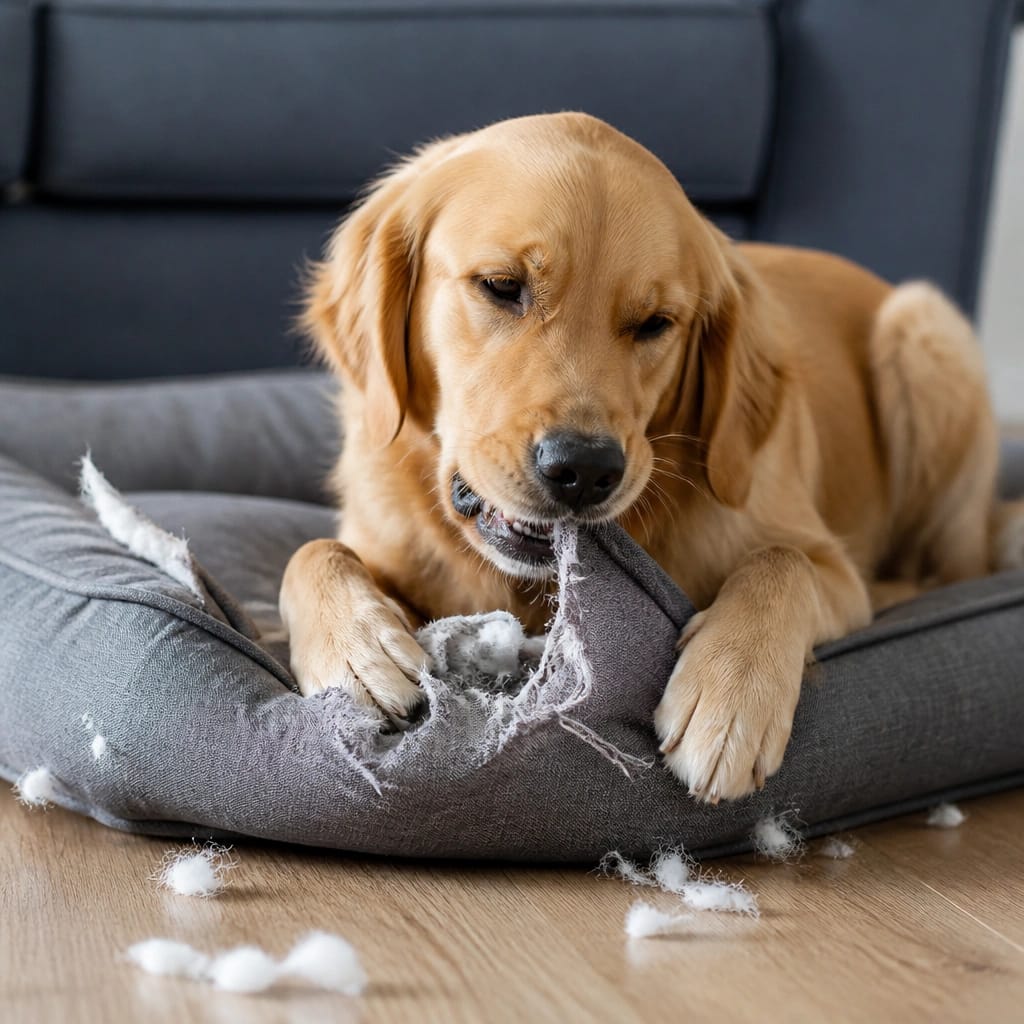
Why Your Dog Bed Keeps Tearing
Your dog isn’t trying to ruin a bed. Most of the time, they’re following instincts older than your couch. Digging is nesting behavior.
Chewing is an outlet for teething, boredom, or stress. Add a bed made from thin fabric and single-row stitching, and a small tear becomes a giant hole in under a week.
Beds don’t fail all at once. They fail slowly. A nail snags a thread.
The thread pulls. A seam gives. Then stuffing comes out, and now your dog has something even more interesting to chew.
That’s how a tiny weak point becomes a destroyed bed.
If your dog paws before lying down, that’s a strong clue. The habit of digging and scratching at their bed comes from the same nesting instinct that drives wild dogs to flatten grass. You can work with that instinct once you understand the underlying urge.
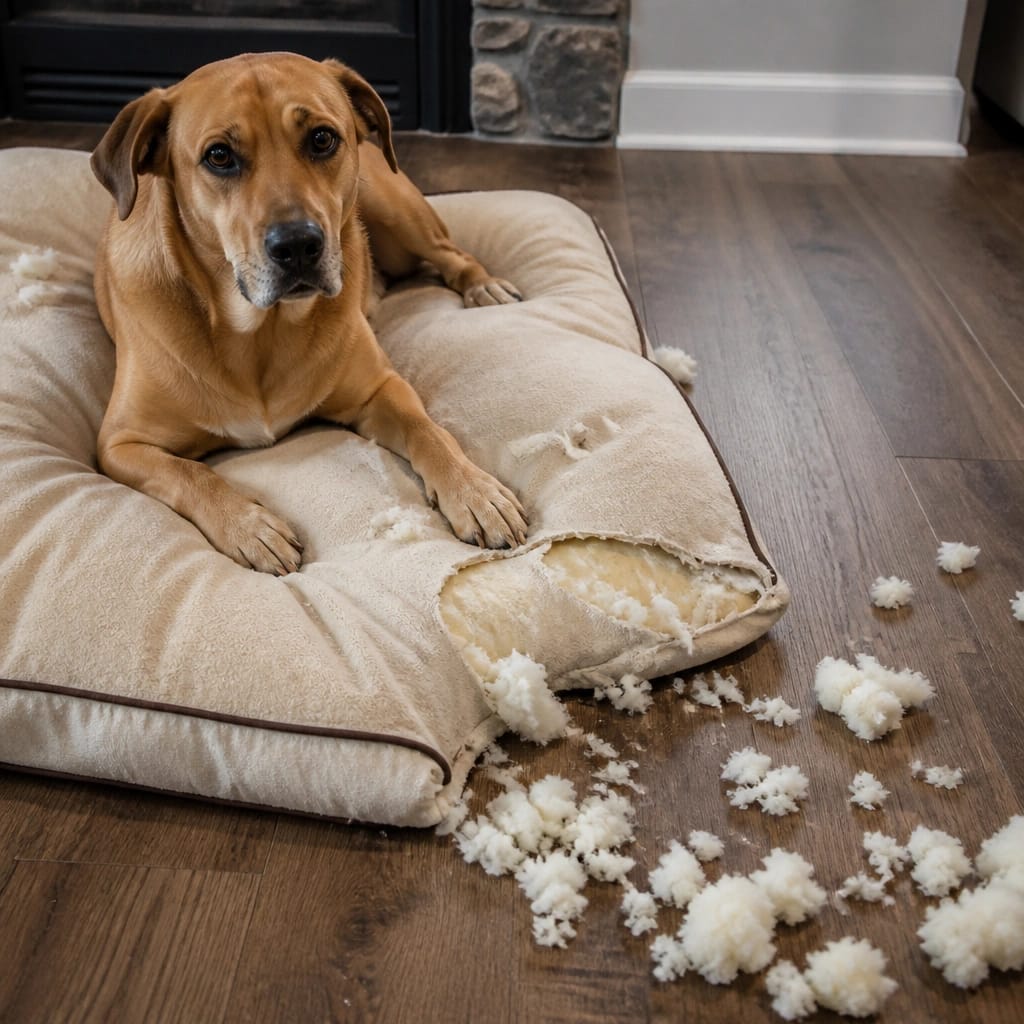
The 5 Main Causes of Dog Bed Damage
Here’s what actually causes the damage, starting with the most common culprit.
Digging and Nesting Behavior
Dogs circle, paw, and scratch before lying down. It’s not spite. It’s an instinct to make the sleeping area safer and more comfortable.
The problem is that nails catch on fabric. A few seconds of enthusiastic digging can pull a thread that turns into a hole.
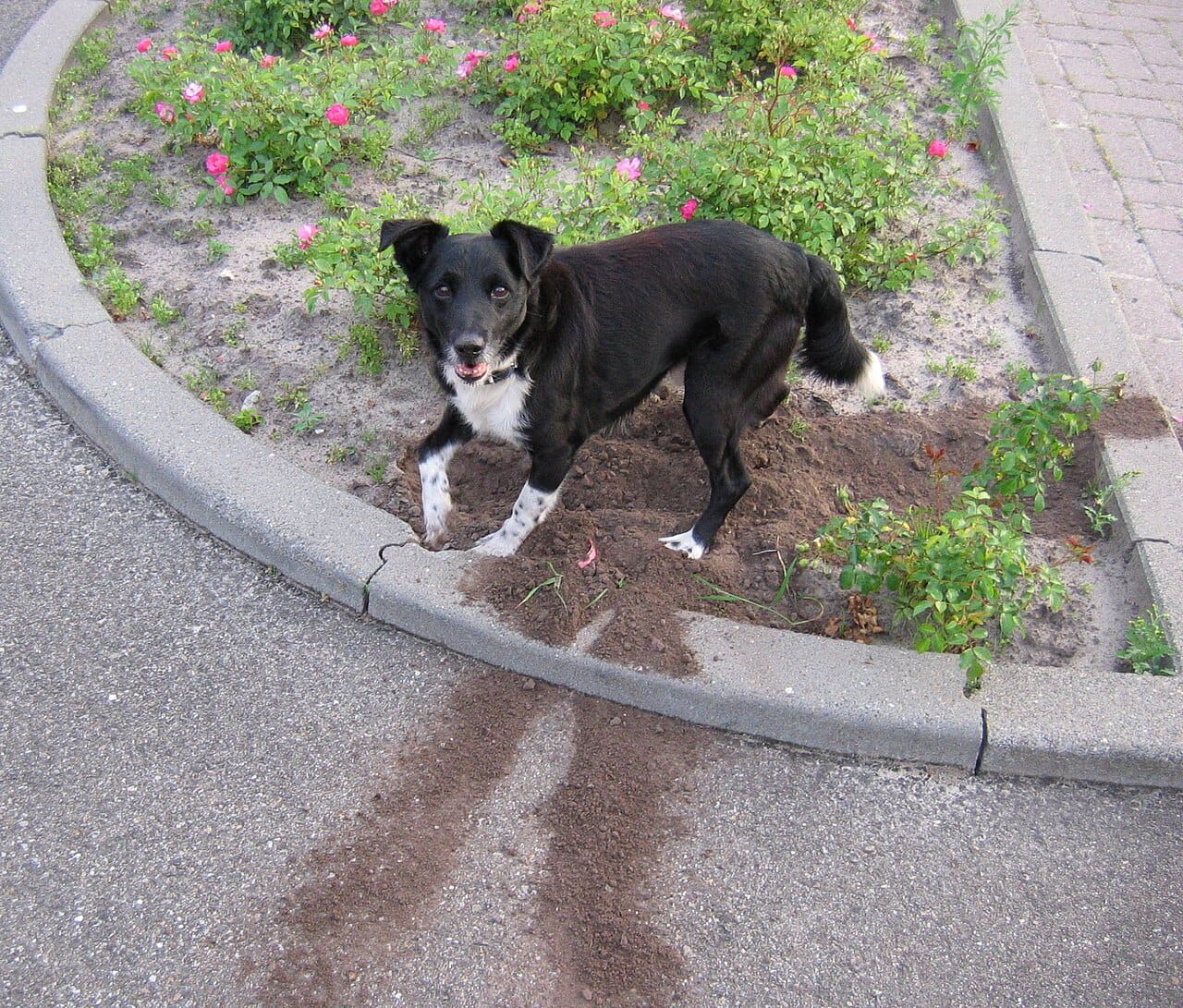
Image source: Wikimedia Commons / Wikimedia Commons contributor (CC BY)
If you see worn patches in the center or along a bolster, this is usually the cause. The damage tends to concentrate in one spot, right where your dog’s front paws do the work.
Chewing and Mouthing
Puppies chew because their mouths hurt. Adult dogs chew because they’re bored, anxious, or just like the texture. Chewing damage is usually easy to spot: torn seams, shredded fabric, punctures, or missing stuffing.
If your dog chews their bed, pay attention to when. If it only happens while you’re away, separation anxiety may be involved. Our post on licking and chewing their bed covers the behavioral side in more depth.
Veterinary sources like the American Veterinary Medical Association note that destructive chewing can also be a stress signal, not just a bad habit.
Weak Seams and Zippers
Sometimes the bed is the problem. Many covers are sewn with a single straight stitch. That seam is the first place to fail when your dog climbs on and off, turns around, or drags the bed.
Zippers fail too. A zipper can pop, crack, or get mangled in the wash. If your tear follows the seam line or sits right next to the zipper, the construction is likely the real culprit.
Fabric Wear and Washing Damage
Even gentle dogs eventually wear out a bed. Thin polyester breaks down with repeated pressure, stretching, and washing. Hot water and high-heat drying make the fibers brittle.
The result is a bed that looks fine until you pull it out of the dryer with a new tear.
Look for thinning fabric, pilling, or cracks in the surface. That’s a sign the material has reached the end of its life.
The Wrong Bed Size
A bed that’s too small forces your dog to adjust constantly. They circle more, paw more, and press against the bolsters. That extra friction puts stress on the seams and fabric.
If your dog’s body hangs off the edge or their head rests on the floor, the bed is undersized. A quick measurement fixes this. You can compare your dog’s length to standard sizes using our bed size chart by weight.
How to Tell What’s Actually Causing the Damage
Before you buy a new bed or blame your dog, look at the damage. The pattern tells you more than the size of the hole.
| Clue | Likely Cause | Best Fix |
|---|---|---|
| Worn patch in the middle | Digging and nesting | Redirect digging, trim nails |
| Torn seams or shredded edges | Chewing | Remove bed when unsupervised, provide toys |
| Tear along the stitching line | Weak seams | Repair and reinforce, buy sturdier next time |
| Fabric thinning after washing | Wash damage | Wash cold, air-dry, replace if needed |
| Damage near bolsters, body hangs off | Wrong size | Move up a size |
If you see more than one pattern, that’s common. A dog with a small bed may chew out of frustration, and a weakened seam can tear during a normal dig. Start with the most obvious clue and fix that first.
What to Do About Each Cause
For Diggers and Nesters
Give your dog something they’re allowed to dig at. A separate blanket works well. Many dogs will happily dig at the blanket and leave the bed alone.
Keep their nails shorter. Long nails catch fabric far more easily. Trim every two to four weeks and you’ll remove the hook effect that starts most holes.
Also think about where the bed sits. If your dog digs more in high-traffic areas, try placing it somewhere calmer. Sometimes moving the bed to a calmer spot does more than any repair.
For Chewers and Mouthy Puppies
Supervision is the first step. When your puppy is free, keep an eye on them. When you’re gone, remove the bed or use a crate-safe alternative.
Give them chew toys before they settle. If the bed disappears from their mouth, replace it with something appropriate. That simple swap teaches them what’s allowed and what isn’t.
If the chewing is tied to anxiety, a behavioral fix matters more than fabric. You may need a tougher cover while you work on the root cause. Our guide to chew-proof materials covers the fabric options that survive determined chewers.
For Beds That Fail in the Wash
Switch to cold water and a gentle cycle. Heat is the enemy of polyester. Skip fabric softeners and bleach, too.
Air-dry the cover whenever you can. If you must use a dryer, use low heat. That alone can double the life of a cover.
For Poorly Constructed Beds
Patch small tears before they spread. Turn the cover inside out and resew the seam with heavy-duty thread. A second row of stitches can reinforce a stress point.
If the bed is already fraying in multiple spots, replace it. There’s a limit to what a repair can do. The next tear is already waiting.
Common Mistakes That Make Tears Worse
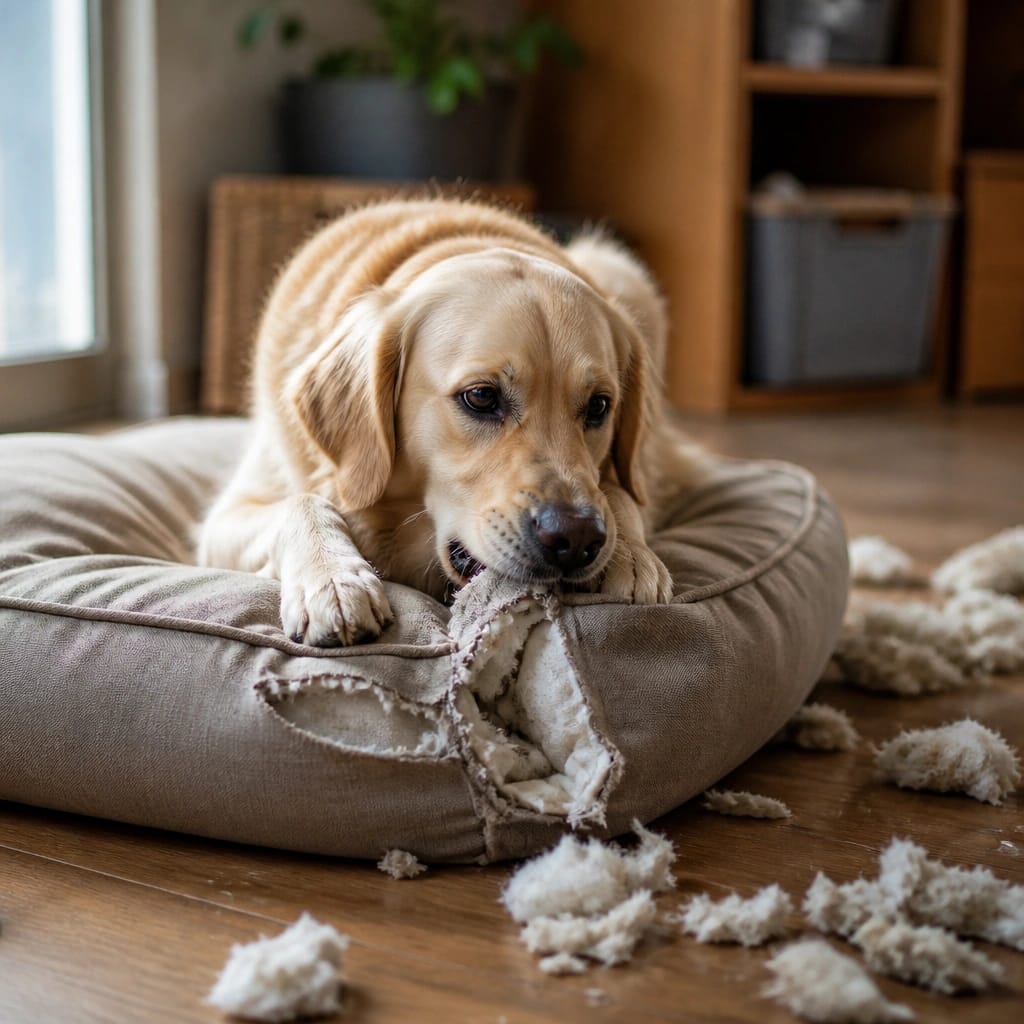
- Ignoring small tears until they spread. That’s how a pull becomes a hole.
- Using hot water and fabric softener. Both break down synthetic fibers.
- Letting nails get long. They act like hooks on the weave.
- Giving a bored chewer free access to the bed when you’re gone. If they shred it, remove it unless you’re supervising.
The American Veterinary Medical Association recommends managing destructive chewing by preventing access in the first place. That’s safer than relying on tougher fabric alone.
How to Wash and Care for a Dog Bed Without Ruining It
Cold water, gentle cycle, mild detergent. Close the zipper and turn the cover inside out. Air-dry or use low heat.
High heat is what kills most covers.
Image source: Wikimedia Commons / User:Itub (CC BY-SA)
Vacuum the bed weekly. Dirt and fur grind into the fibers and speed up wear.
When to Repair vs. Replace a Torn Dog Bed
Repair if the tear is small, the fabric is still strong, and your dog doesn’t eat stuffing. Turn the cover inside out and sew a reinforced seam. Replace if there are multiple tears, foam is crumbling, or the bed has gone through the washer too many times.
A bed that’s falling apart is a hazard, not a fixer-upper.
FAQs
How do I stop my dog from tearing up their bed?
Stop the behavior that causes it. For diggers, trim nails and offer a blanket. For chewers, supervise the bed and provide better toys.
If anxiety is driving it, address the anxiety first.
Is it safe to glue a torn dog bed?
No. Glue can crack, and some adhesives are toxic if swallowed. Sewing a patch is safer and holds better.
Why does my dog tear the bed only when left alone?
That pattern points to separation anxiety or boredom. Try crate training, more exercise, and leaving a safe chew toy.
What is the most tear-resistant dog bed material?
Ballistic nylon and tight-weave canvas are the strongest common choices. Look for a high denier rating, like 600D or more.
The Bottom Line
Most tears start with a dog doing something natural. Digging, chewing, and nesting are not spite. Weak seams and thin fabric simply make the damage worse.
Match the clue to the cause, wash the bed the right way, and repair small tears early. That’s how you keep a bed alive for years instead of months.


