

How to Protect a Puppy Bed From Chewing?
Choose a bed made from chew-resistant materials like ballistic nylon or heavy canvas. Remove the bed when you cannot supervise your puppy. Use a taste deterrent on the edges and corners.
Redirect chewing to appropriate toys. Address the root cause, whether it is teething, boredom, or anxiety.
Your puppy’s bed is probably the most chewed-up item in your house right now. Learning how to protect a puppy bed from chewing is about more than saving money on replacements. It’s about keeping your pup safe, healthy, and well-rested during a critical developmental stage.
As of 2026, veterinary reports continue to show that fabric and foam ingestion is one of the top reasons puppies visit emergency clinics during teething. The good news is that with the right approach, you can break the cycle before it becomes a habit. Here’s what actually works.

Understanding Why Puppies Chew Their Beds
Puppies explore the world with their mouths. That is not a behavior problem. It is normal development.
Most puppies go through a serious teething phase between 3 and 6 months of age. Their gums are sore, and chewing brings relief.
Boredom is another big driver. A puppy that does not get enough physical exercise or mental stimulation will find something to do. Often that something is the corner of their bed.
Separation anxiety can also trigger chewing. Your puppy’s scent is all over that bed. When they are stressed, chewing that familiar fabric can be self-soothing.
Understanding the root cause helps you choose the right solution. A teething puppy needs different support than one that chews because they are left alone too long. If you want to dig deeper into the specific reasons, our article on why puppies chew in the first place covers the full range of causes.

The Real Risks: Why This Matters for Safety
This is not just about a ruined bed. Ingesting fabric, foam, or stuffing can cause serious health problems. Intestinal blockages are a real risk.
They require emergency surgery. Choking is another immediate danger, especially with small pieces of fabric or zipper pulls.
Some bed materials contain chemicals or flame retardants that are not safe to ingest. Even if your puppy passes the material, those chemicals can cause stomach upset or more serious issues.
The American Veterinary Medical Association (AVMA) recommends supervising puppies around any bedding until they are past the destructive chewing stage. That is not overly cautious. It is standard safety advice.
The cost of a few replacement beds is far lower than an emergency vet visit.
Step 1: Choose the Right Bed Material
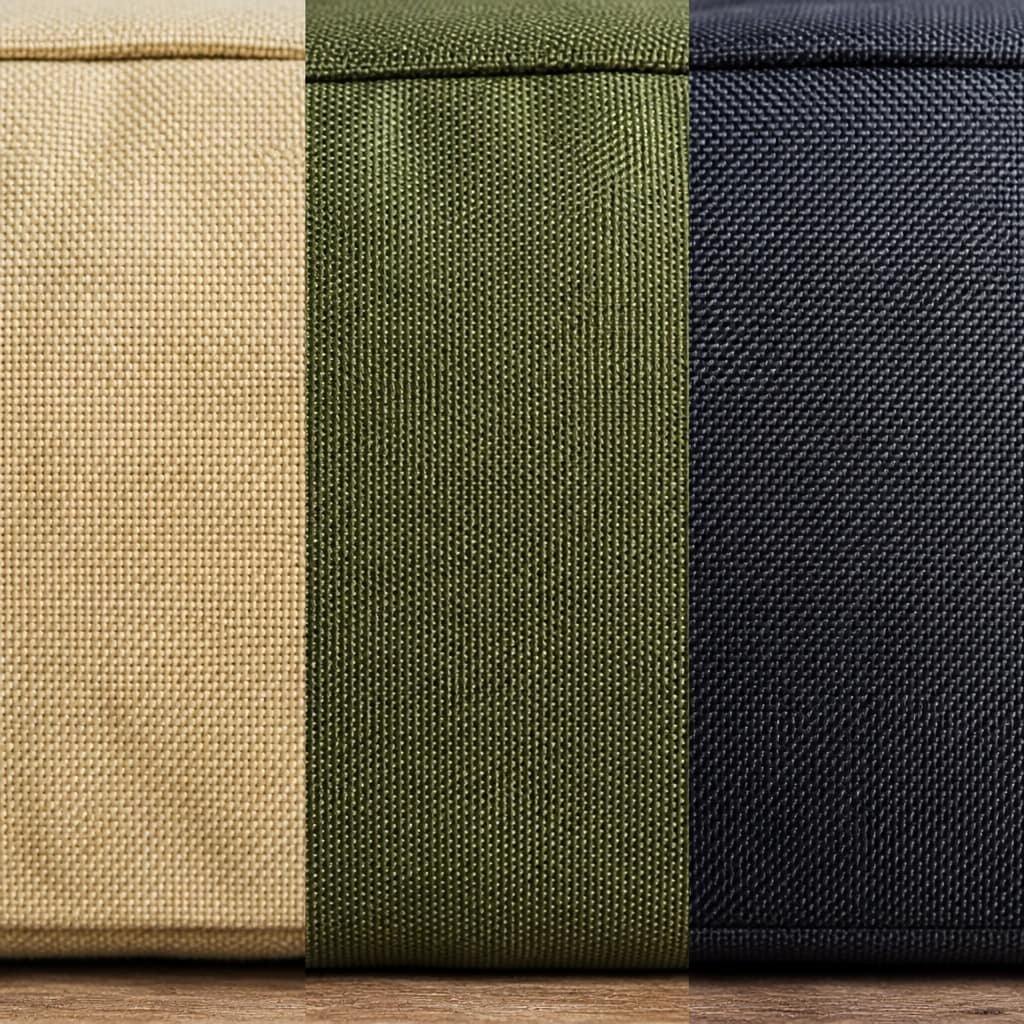
The material your bed is made from matters more than any other factor. You cannot train a puppy to stop chewing overnight. But you can buy time by choosing a bed that survives the early attempts.
Fabric Types and Their Durability
Not all fabrics are equal. Here is how the most common options stack up:
| Fabric Type | Durability Level | Best For |
|---|---|---|
| Heavy canvas | High | Moderate chewers, general use |
| Ballistic nylon | Very high | Strong chewers, persistent puppies |
| Cordura (1000D) | Very high | Heavy chewers, outdoor use |
| Standard polyester | Low | Non-chewers, adult dogs only |
| Fleece | Low | Light use, supervised only |
Ballistic nylon and Cordura are the most durable options available as of 2026. They are the same materials used in military gear and heavy-duty luggage. A determined puppy can still damage them, but it takes much longer.
What “Chew-Proof” Actually Means
No bed is truly chew-proof. The term “chew-resistant” is more accurate. Manufacturers use it to describe beds made from high-denier fabrics with reinforced seams and heavy-duty zippers.
These beds can withstand normal puppy chewing for longer. But a determined dog with strong jaws can still destroy them.
The goal is not to find an indestructible bed. It is to find a bed that gives you enough time to redirect the behavior before the bed is destroyed. That is a more realistic and safer approach.
For a deeper look at durable fabric options, our guide on chew-resistant materials covers the full range.
Remember that choosing the right bed dimensions matters too. A bed that is too small can frustrate your puppy. A bed that is too large may feel less secure.
Proper sizing reduces the urge to chew.
Step 2: Use Taste Deterrents the Right Way
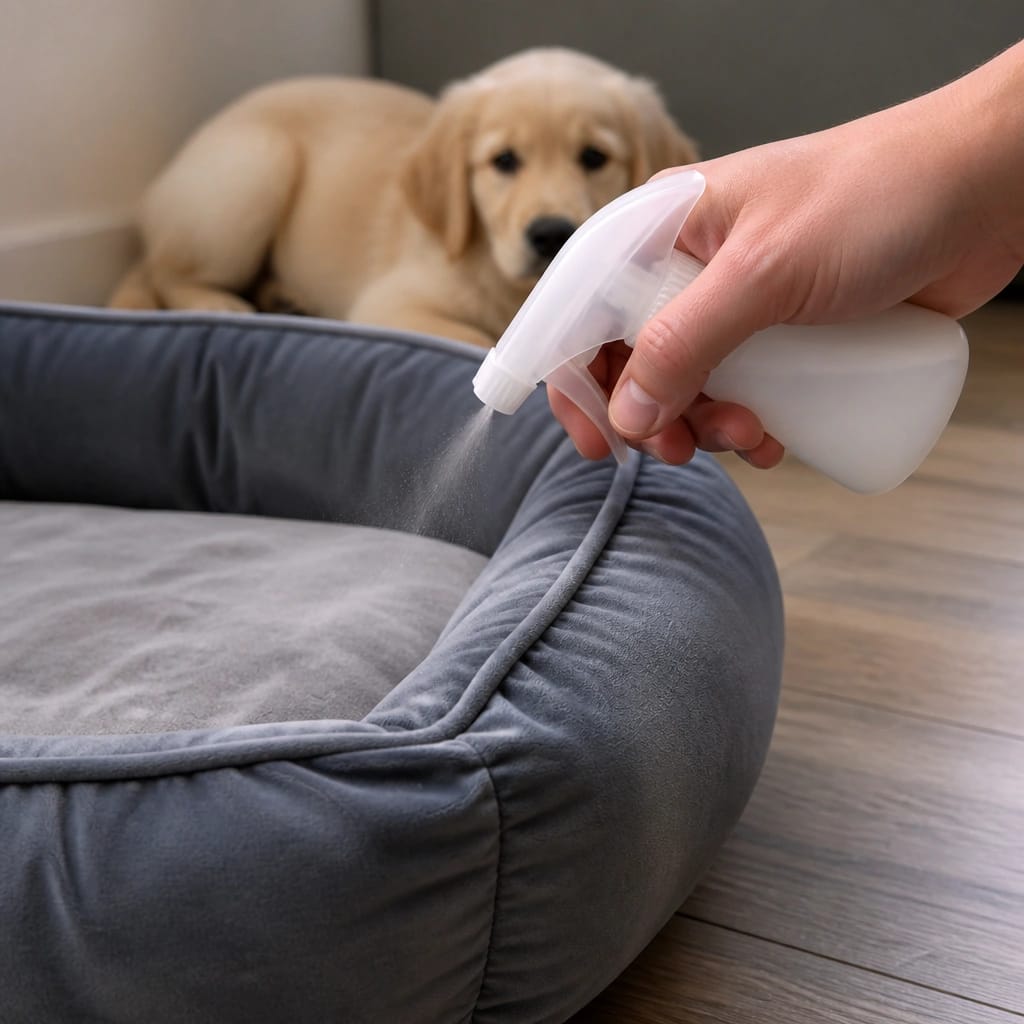
Taste deterrents are sprays or gels that make the bed taste bad. Most use bitter apple extract or similar bittering agents. They work well as a training aid.
But they are not a standalone solution.
Apply the deterrent to the edges and corners of the bed. That is where puppies usually start chewing. Reapply after each wash.
Rain or moisture can also wash it off if the bed is used outdoors.
Some puppies are not bothered by the taste. If your puppy licks the deterrent and keeps chewing, try a different formula. Citrus-based deterrents work for some dogs.
Vinegar solutions can work for others. The key is testing until you find one that your puppy avoids.
Taste deterrents are most effective when combined with supervision and redirection. Spray the bed. Let your puppy sniff it.
If they start chewing, interrupt and offer a toy instead. The deterrent adds an extra layer of discouragement.
Step 3: Manage the Environment
Management is your best friend during the puppy stage. You cannot watch your puppy every second. Setting up the environment so the bed is not accessible when you are not looking is the smartest thing you can do.
Crate Management During Teething
During the teething phase, remove the bed from the crate when you are not home. Leave a crate bedding option like a thin mat or pad instead. These are less satisfying to chew and less dangerous if ingested.
The American Kennel Club recommends this approach for puppies under 6 months.
When you are home and can supervise, put the bed back in the crate. Reward your puppy for lying on it calmly. This builds a positive association with the bed while keeping them safe.
Supervision and When to Remove the Bed
Watch for the warning signs. If your puppy starts mouthing the corner of the bed, that is your cue to intervene. Do not wait until they have a mouthful of fabric.
Interrupt the behavior with a clap or a verbal cue. Then redirect to a chew toy.
If you cannot supervise, remove the bed entirely. This is not punishment. It is safety management.
Your puppy does not need a bed in the crate every minute of the day. A bare crate floor is safe. A destroyed bed with ingested stuffing is not.
As your puppy gets older and the chewing instinct fades, you can gradually reintroduce the bed for longer periods. Start with short supervised sessions. Build up to full days.
Some puppies are ready by 8 months. Others need closer to a year.
Also consider where to place the crate in your home. A quiet, low-traffic area reduces anxiety. A calmer puppy is less likely to chew destructively.
Step 4: Redirect the Chewing Instinct
Redirection is more effective than punishment. When you catch your puppy chewing the bed, interrupt calmly. Then immediately offer a chew toy.
The right toy matters. Teething puppies need something soft enough to soothe sore gums. Rubber toys, frozen washcloths, and puppy-specific teething rings work well.
Bully sticks and other natural chews give a satisfying outlet for the urge to chew.
Keep a variety of toys near the bed or crate. That way you can redirect quickly. Reward your puppy every time they switch to the toy.
Positive reinforcement builds the habit you want.
A tired puppy chews less. Make sure your puppy gets enough physical exercise and mental stimulation. Puzzle toys, training sessions, and short walks burn energy.
A well-exercised puppy is more likely to nap on their bed than chew it.
When to Rule Out Medical or Behavioral Issues

Sometimes chewing is not just teething or boredom. If your puppy chews excessively despite your best efforts, a medical issue could be involved. Dental pain, gastrointestinal problems, or nutritional deficiencies can trigger chewing.
Consult your veterinarian if the chewing seems compulsive or if your puppy is chewing on non-food items like rocks or metal. A vet can rule out medical causes and recommend next steps.
For severe cases, a veterinary behaviorist can help. Some puppies develop anxiety-related chewing that needs professional treatment. This is not common, but it is worth knowing about.
Common Mistakes That Make Chewing Worse
Punishing your puppy for chewing the bed can backfire. It creates fear and anxiety. That often increases destructive behavior.
Stick to redirection and positive reinforcement.
Leaving the bed in the crate when you are gone for hours is another mistake. A bored puppy will chew. Remove the bed until your puppy is reliable.
Using the wrong size bed also causes problems. A bed that is too small is uncomfortable. A bed that is too large does not feel secure.
Getting the right bed size helps reduce the urge to chew.
Troubleshooting: If Your Puppy Still Chews the Bed
Step back and reassess. Is your puppy getting enough exercise? Are they left alone too long?
Is the bed material too soft? Change one variable at a time and see what helps.
Try a different bed style. Some puppies prefer donut-style beds that they can curl into. Others do better with a bolster style that provides head support.
The right shape can reduce chewing.
If nothing works, go back to basics. Remove the bed entirely for a few weeks. Use a crate pad or mat instead.
Reintroduce the bed slowly with supervision.
Frequently Asked Questions
What is the best material for a puppy bed?
Heavy canvas, ballistic nylon, and Cordura are the most durable options. These fabrics resist chewing longer than standard polyester or fleece.
At what age do puppies stop chewing their bed?
Most puppies stop destructive chewing between 6 and 9 months. Some continue until 12 months. It depends on the individual dog.
Is it safe to use bitter apple spray on a puppy bed?
Yes, bitter apple spray is safe for most puppies. Apply it to the edges and corners. Reapply after washing.
Should I remove the bed from the crate at night?
If your puppy chews at night, remove the bed. A bare crate floor is safe. Reintroduce the bed during supervised daytime naps.
Can a puppy get sick from eating bed stuffing?
Yes. Ingested stuffing can cause intestinal blockages. This requires emergency veterinary care.
Supervision is the best prevention.
When should I see a vet about chewing?
If your puppy chews compulsively, ingests non-food items, or shows signs of pain, see a vet. Rule out medical causes before assuming it is behavioral.
Putting It All Together: Your Action Plan
Protecting a puppy bed from chewing comes down to four steps. Choose a durable material. Use taste deterrents.
Manage the environment. Redirect the behavior consistently.
Start with a chew-resistant bed made of ballistic nylon or heavy canvas. Remove it when you cannot supervise. Apply a taste deterrent to the edges.
Keep a variety of chew toys nearby.
Be patient. Puppy chewing is normal. It will pass.
Focus on safety first. A few temporary adjustments now will save you stress and vet bills later. Your puppy will grow out of this phase.
The bed will survive.


