

How Does Aging Affect a Dog’s Sleep?
Aging makes dogs sleep longer overall, but less deeply. They wake more at night. They nap more during the day. They may pace or seem confused after dark. Pain, arthritis, and age-related cognitive decline all play a role. Talk to your vet if the changes seem sudden or severe.
If you’re wondering how does aging affect a dog’s sleep, you’re in good company. The short answer is that age reshapes both how much dogs sleep and how restorative that sleep is. They doze more, but they wake more easily.
They also lose precious deep-sleep time.
Our research lines up with what veterinarians report. As of 2026, most adult dogs sleep 12 to 14 hours a day. Senior dogs often need 16 to 18 hours, but their sleep is much more fragmented.
That combination explains why an older dog can seem exhausted yet restless all night long.
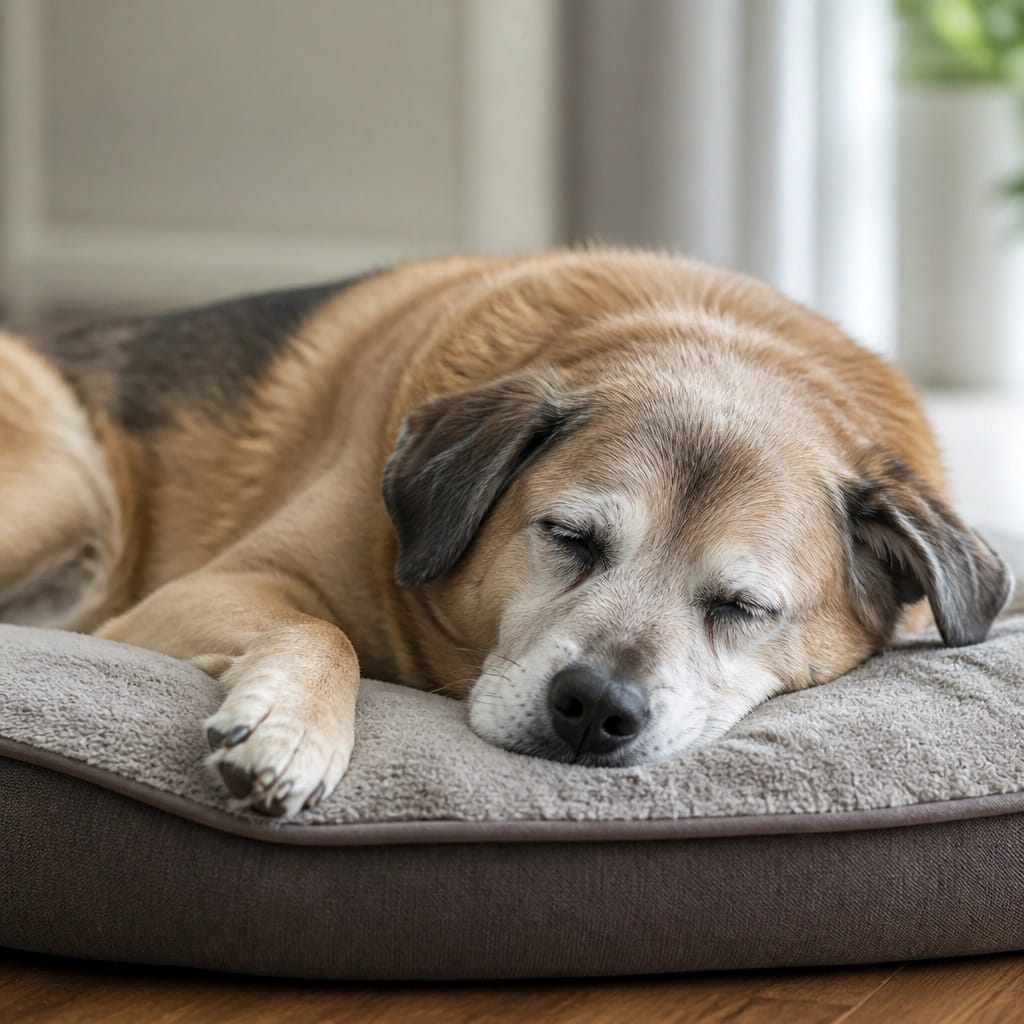
Why Sleep Changes in Senior Dogs Matter
Sleep changes aren’t just a nuisance. They can be early warnings of health issues. When a senior dog starts pacing at night or skipping their usual snooze spots, pay attention.
The American Veterinary Medical Association points out that shifts in sleep patterns can signal underlying problems. That’s why understanding what’s normal matters.
Also think about where you put their bed. A quiet, warm corner is easier for an old dog to settle into than a busy hallway. If you’re not sure, this guide on picking the right location helps.
What Normal Aging Does to a Dog’s Sleep-Wake Cycle
Think of your dog’s sleep-wake cycle as a 24-hour clock. That clock slows down with age. The body produces less melatonin, the hormone that regulates sleep.
The result is lighter, more fragmented sleep.
Senior dogs also spend less time in slow-wave and REM sleep. Those are the phases that actually restore the brain and body. So they wake up groggy, even after many hours in bed.
That’s why a senior can doze all day yet still seem tired.
Some also start showing new preferences. They ignore the expensive bed and choose the cold bathroom floor. That’s not always confusion.
Sometimes it’s their joints, not their brain. But it can also be a sign of cognitive change.
How Much Sleep Do Senior Dogs Actually Need?
| Age group | Typical sleep per day | Nighttime pattern |
|---|---|---|
| Adult | 12 to 14 hours | Long, solid stretches |
| Senior | 14 to 18 hours | Frequent wake-ups, light sleep |
These numbers come from owner surveys and veterinary clinical observations. They’re not rigid. A 12-year-old dachshund might need less than an 8-year-old Great Dane.
Body size, breed, and health all shift the numbers.
One thing matters more than the total. That’s how the dog feels during waking hours. If they’re bright for short walks but collapse between outings, their sleep is probably doing its job.
If they seem disoriented or painful at night, dig deeper.
The correct bed size helps keep seniors comfortable for longer stretches. An undersized bed can leave joints hanging off the edge. That cuts sleep quality.
Physical Causes: Arthritis, Pain, and Mobility Issues
Dogs hide pain. It’s a survival instinct. So you won’t always see limping.
What you’ll see is restlessness. They circle the bed. They shift.
They sigh. They stand up and lie down again. That cycle is a classic pain signature.
Osteoarthritis affects a large share of senior dogs. It makes the joints swell and stiffen. Lying down on a hard surface hurts.
Rolling over hurts. Even climbing into a high raised bed becomes a struggle.

That’s why many older dogs stop using their main bed and start sleeping on the floor. The floor is cold and hard, which worsens stiffness. But at least there’s no step to climb.
This pattern is so common that owners often learn about it the hard way.
A low-profile orthopedic bed is usually the answer. It’s easier to step into and gives joints cushioning. You can also add gentle warmth for extra relief.
Studies and owner reports show that warmth can soothe arthritic joints and help dogs settle deeper.
Cognitive Causes: Canine Cognitive Dysfunction and Sundowning
Cognitive dysfunction isn’t just confusion. It’s a real neurological condition. The dog’s brain starts to change.
Memory, learning, and spatial awareness all decline.
One of the clearest signs is sundowning. As daylight fades, restlessness spikes. A dog that sleeps peacefully all day starts pacing at 7 p.m.
They may stare at walls. They may bark at nothing. They may forget where they are and look for an exit that isn’t there.
This is not naughtiness. The dog is genuinely disoriented. Punishment makes it worse.
Instead, keep the environment predictable. Feed at the same time. Walk at the same time.
Use a consistent bedtime.
A snug, enclosed bed can help. It mimics a den and gives anxious dogs a safe cave. Many owners report it reduces nighttime pacing.
Other Age-Related Factors: Vision, Hearing, and Bladder Control
Diminished vision changes how dogs sleep. A dog that can’t see well at night is more hesitant to move around. They may circle longer before lying down.
They might startle awake if you approach silently.
Hearing loss works the opposite way. Some deaf seniors sleep deeply and rarely stir. Others become anxious because they can’t hear familiar sounds.
Both extremes are normal. Watch for sudden shifts rather than the change itself.
Bladder control is another factor. Older dogs produce more urine at night. Their sphincter muscles weaken with age.
This leads to accidents that owners often mistake for house-training failure. If you’re dealing with this, a waterproof dog bed liner protects the foam and keeps nightly cleanup simple.
Normal Aging vs. Warning Signs: Knowing the Difference
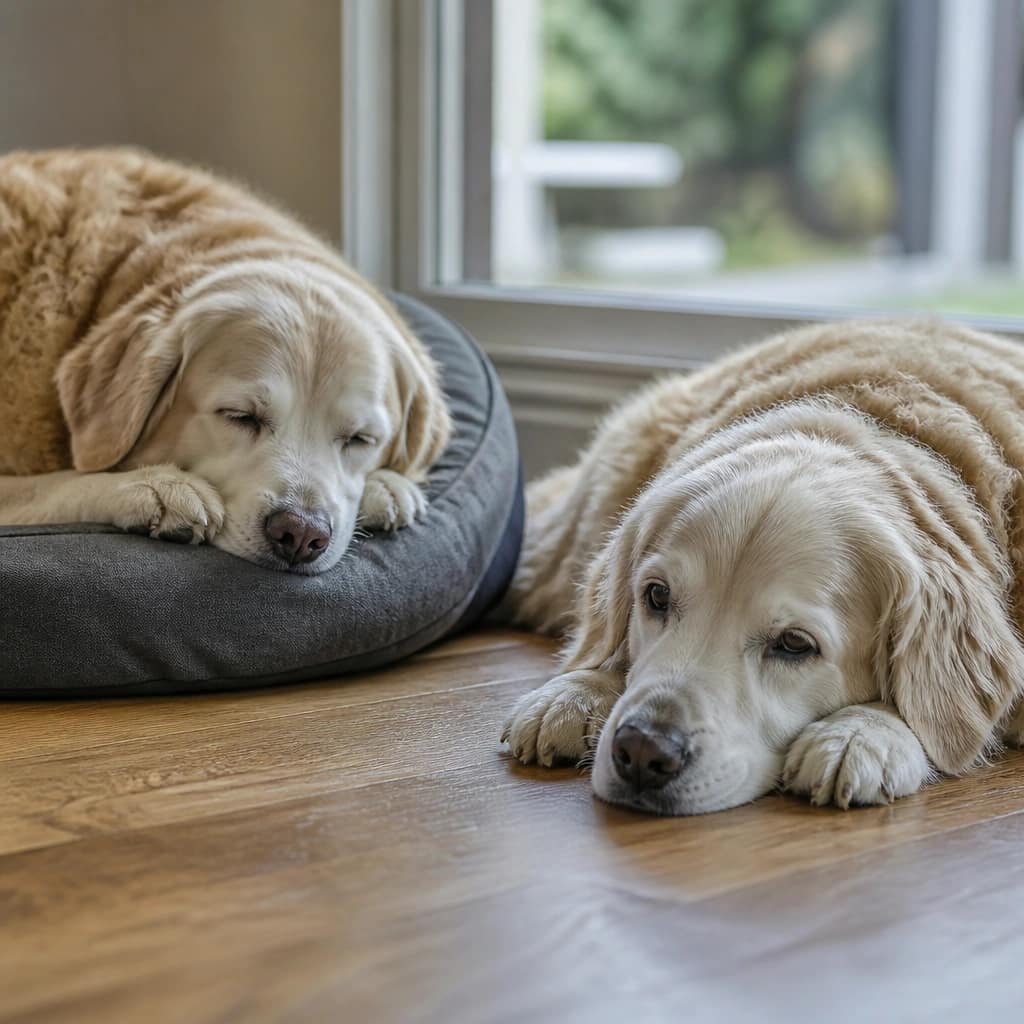
Not every change is a red flag. But some symptoms deserve a veterinarian’s attention.
| Normal aging | Warning sign |
|---|---|
| Naps longer during the day | Cries or paces for hours at night |
| Needs a middle-of-the-night potty break | Forgets where the door is, stands facing a wall |
| Takes longer to settle into a comfy position | Gets stuck in corners, can’t turn around |
| Prefers a softer or warmer sleeping spot | Sleeps on hard tile despite a soft bed nearby |
The biggest red flag is disorientation. A senior that stands staring at nothing, gets stuck behind furniture, or seems lost in a familiar room needs a vet check, not just a new bed.
Also monitor for excessive panting, trembling, or restlessness that doesn’t ease with comfort. Those point to pain, not age. Treating that pain can dramatically improve sleep quality.
How to Help Your Senior Dog Sleep Better
Nighttime Routines That Actually Work
Keep the schedule identical every day. Dinner, last walk, and lights-out at the same time. Predictable routines feel safe to aging dogs.
They lower anxiety before bed.
Take them out for a final potty break right before you sleep. That empties the bladder and cuts middle-of-the-night wake-ups. If they still need an overnight break, use a dim nightlight on the path outside.
They’ll find their way back more easily.
Daytime Habits That Support Better Sleep
Use the day to tire them out gently. Two shorter walks beat one long one for senior joints. Mental games like sniffing mats also burn energy without straining hips.
Don’t let them nap all evening. Wake them for a light dinner and a short stroll. This resets their circadian rhythm and helps them sleep longer at night.
If they seem anxious, a donut-style bed with raised edges can provide that cozy, secure feeling they’re looking for.
Choosing the Right Bed for an Aging Dog
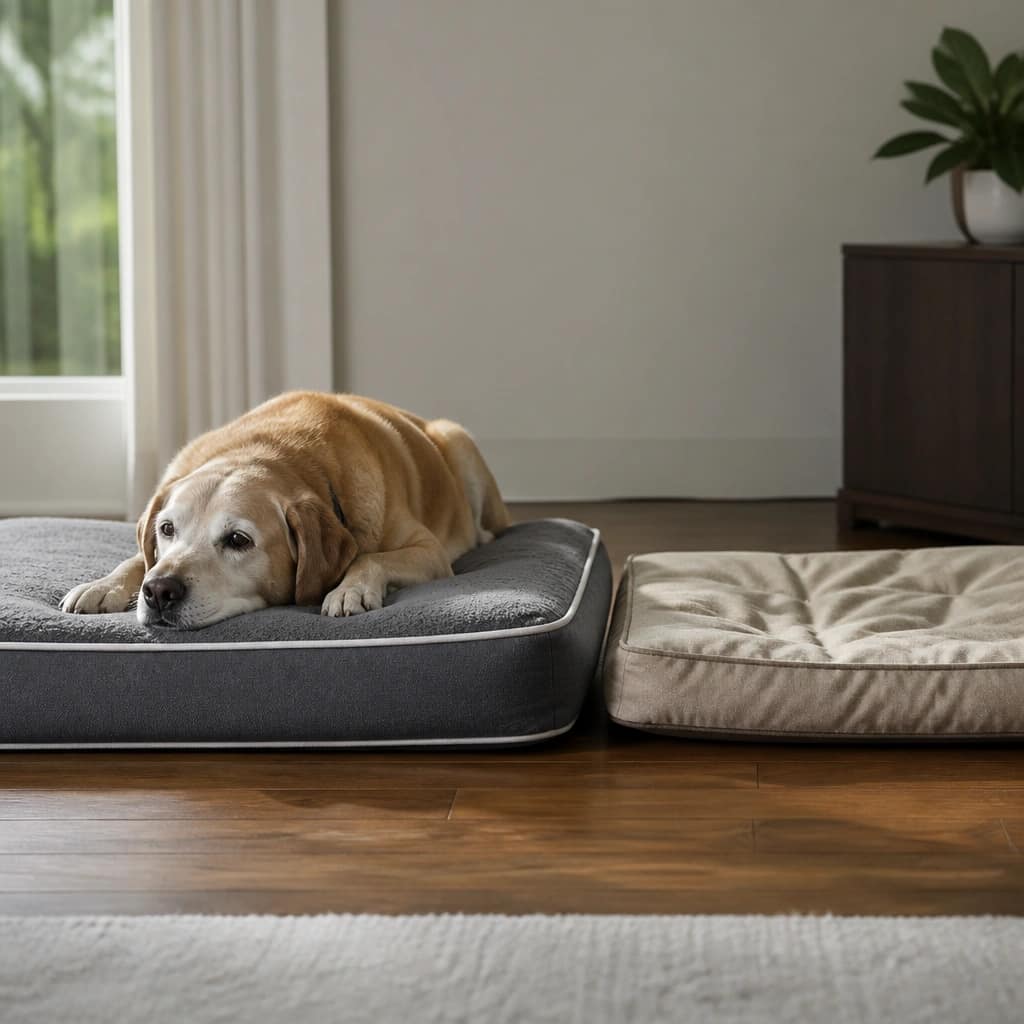
A senior dog’s bed needs three things: low entry, thick support, and easy cleaning. High-sided beds can be hard for stiff legs to climb into. So can raised cots.
A flat, low-profile orthopedic mattress is often the safest pick.
Support, Firmness, and Easy Access
Memory foam molds to sore hips and elbows. It distributes weight evenly. That reduces pressure on painful points and lets your dog sleep longer without shifting.
Firmness matters more than depth. A bed that’s too soft lets joints sink to the floor. A medium- firm foam, about 4 to 6 inches thick, gives the best balance for most seniors.
If your dog oves between spots a lot, place their bed in a quiet corner where they won’t be disturbed.
Orthopedic Beds vs. Standard Beds for Seniors
| Orthopedic bed | Standard bed |
|---|---|
| Memory or supportive foam | Polyester fiberfill |
| Keeps joints aligned | Lets joints sink |
| Holds shape for years | Flattens quickly |
Standard beds work fine for puppies. Senior dogs need the support that orthopedic foam provides. The difference shows up in how long they settle and how quickly they fall asleep.
Adjusting the Sleep Environment for Safety and Comfort
The bedroom, not just the bed, needs a senior-proofing pass. Move the bed to a spot away from drafts. If your home has hard floors, put a rug or mat underneath so the bed doesn’t slip.
Add nightlights. Older dogs with weaker eyes see better with soft illumination. Nightlights also reduce disorientation if they wake and need to walk somewhere.
Senior dogs struggle with thermoregulation. They get cold faster than they used to. In winter, a heated pad can soothe arthritis.
But if they have mobility issues, opt for a bed with rails. That way they can rest their head and feel secure without having to climb out.
Common Mistakes Owners Make With Senior Dog Sleep
The biggest mistake is ignoring sudden changes. Gradual shifts are normal. Abrupt ones aren’t.
Don’t assume “old age” explains everything.
Another common error: forcing a dog to use a bed they can’t climb into. If they struggle, meet them where they are. Move the bed to the floor.
Try a no-sew blanket bed they can sink into. Also, don’t let arthritis go untreated. Pain relief transforms sleep quality, so talk to your vet early.
When to Call the Vet About Sleep Changes
Call your vet if your dog paces all night, gets lost in corners, or cries without comfort. Those signals point to more than aging. They can indicate pain or cognitive dysfunction.
Medication and management plans can genuinely help.
Also reach out if sleep changes arrive suddenly, along with vomiting, loss of appetite, or weakness. That combination needs prompt attention.
Frequently Asked Questions
Why does my senior dog pace at night?
Pacing often means confusion, pain, or a full bladder. Try a late-night potty break and a quiet, dim room. If pacing persists, ask your vet about cognitive support.
Should I wake my senior dog from bad dreams?
Let them sleep. Waking an old dog suddenly can startle them. If they’re restless, soothe them with a calm voice instead.
Is it normal for my old dog to sleep more during the day?
Yes. Senior dogs nap more but sleep less deeply. That’s why they need those extra daytime hours.
What This Means for You and Your Senior Dog
Aging changes everything, including sleep. The good news is that most age-related sleep issues are manageable. With the right bed, a steady routine, and a vet’s guidance, your senior dog can still rest well.
Watch the changes, adapt the environment, and enjoy the quiet moments while they last.


