

How to Size a Dog Bed for a Mixed-Breed Dog
Sizing a dog bed for a mixed-breed dog is rarely as simple as picking a size based on weight. Purebred size charts assume standard proportions, and mixed breeds love to break those assumptions. To get the right fit, you need to know how to size a dog bed for a mixed-breed dog by measuring the actual animal in front of you.
As of 2026, most manufacturer specifications still build their size charts around breed averages for purebred dogs. That leaves mixed-breed owners guessing. The good news is the fix is straightforward: you measure your dog’s body length and stretch allowance, then compare those numbers against the bed’s usable sleeping surface rather than its outer dimensions.
Mixed-breed dogs come in unpredictable shapes. Weight-based size charts often miss the mark. The correct approach is to measure your dog from nose to tail base while standing. Add 4 to 6 inches for stretching room. Then compare that number to the bed’s interior sleeping surface, not its overall size. That simple process works for every mixed breed.

Why Sizing a Bed for a Mixed-Breed Dog Is Tricky
Mixed-breed dogs don’t fit neatly into the small, medium, large, and extra-large categories that most bed manufacturers use. A dog can weigh 50 pounds and have the short legs of a corgi with the long back of a dachshund. Another mixed breed might have a deep chest like a greyhound but a compact frame like a bully breed.
That unpredictability is the core problem. If you rely only on weight, you can end up with a bed that’s too short for your dog’s spine or too narrow for their shoulders. If you rely on breed labels, you’re working with guesswork.
The label “Labrador mix” tells you almost nothing about how long that dog actually is.
The better approach is to measure. Measuring removes the guesswork and gives you a number you can compare directly against manufacturer specifications. That’s why the rest of this guide focuses on exactly what to measure and how to use those numbers.
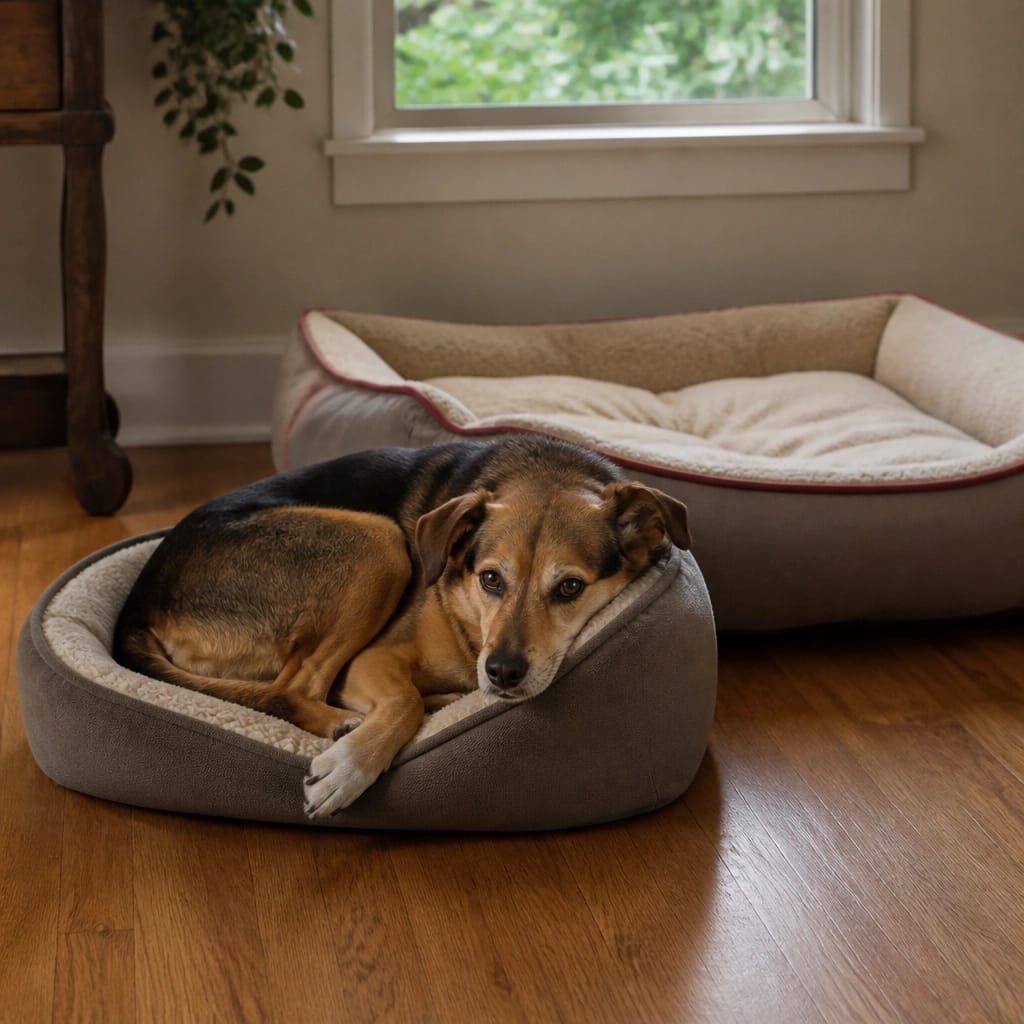
The Simple Rule: Measure the Dog, Not the Label
Here’s the entire principle in one sentence: your dog’s bed should be sized from their body length, not their weight, breed name, or age.
The standard rule we recommend is simple. Measure your dog from the tip of their nose to the base of their tail while they’re standing. That gives you their core body length.
Then add 4 to 6 inches. That extra room allows for natural stretching and shifting during sleep.
If your dog stretches out fully when they sleep, lean toward the larger end of that range. If your dog curls up tightly, the smaller end is usually fine.
Here’s a quick reference for what to use in your decision:
| What to use | Why it works | What to skip |
|---|---|---|
| Nose-to-tail length | Matches the bed’s sleeping surface directly | Weight alone |
| Leg length and chest depth | Affects width needs for stretch-style sleepers | Breed label alone |
| Preferred sleeping position | Determines whether you need extra length or a cozier fit | Age, which is misleading for adults |
The bottom line: if you measure the dog, the label becomes irrelevant.
What to Measure (and What to Ignore)
Not every measurement matters equally. Some numbers are critical, and a few will actively mislead you if you rely on them.
3.1 Nose-to-Tail Length: The One That Matters Most
This is your primary number. Run a flexible measuring tape from the tip of your dog’s nose to the base of their tail, not the tip of the tail. The tail base is where the spine ends, and that’s the part of your dog that needs to rest on the bed.
Write that number down. It’s the anchor for every size decision you’ll make.
3.2 Why Weight-Based Charts Fail Mixed Breeds
Weight-based charts assume a typical body shape for each weight range. A 60-pound golden retriever has a different body length than a 60-pound boxer mix and a very different shape than a 60-pound pit bull mix.
Manufacturer specifications do tend to include weight ranges, but those ranges are rough guides. For a mixed-breed dog, weight tells you more about how much support the bed needs than how long the bed should be. Use length as your primary measurement.
3.3 The Dog’s Unique Build: Long Backs, Deep Chests, Short Legs
Mixed breeds often carry surprising proportions. A short-legged dog with a long back needs a longer bed than its weight might suggest. A deep-chested dog needs extra width, especially if they sleep on their side.
A dog with a very heavy build needs thicker support, which is where a memory foam bed becomes more valuable than a simple filled cushion.
Step-by-Step: How to Measure Your Dog for a Bed
Grab a soft fabric measuring tape, the kind used for sewing. A rigid metal tape measure can be awkward with a wiggly dog.
- Stand your dog on a flat surface. Have them stand naturally with their head in a normal position, not stretched or hunched.
- Hold the tape at the tip of the nose. Keep it level along the spine.
- Measure to the base of the tail. Stop where the tail connects with the body. Do not extend to the tail tip.
- Write down that number. This is your base length.
- Add 4 to 6 inches. You now have your minimum bed length.
- Measure your dog stretched out. Wait until they’re napping and lying fully extended. Measure from their nose to the tip of their hind paws. If that number is larger, use it instead.
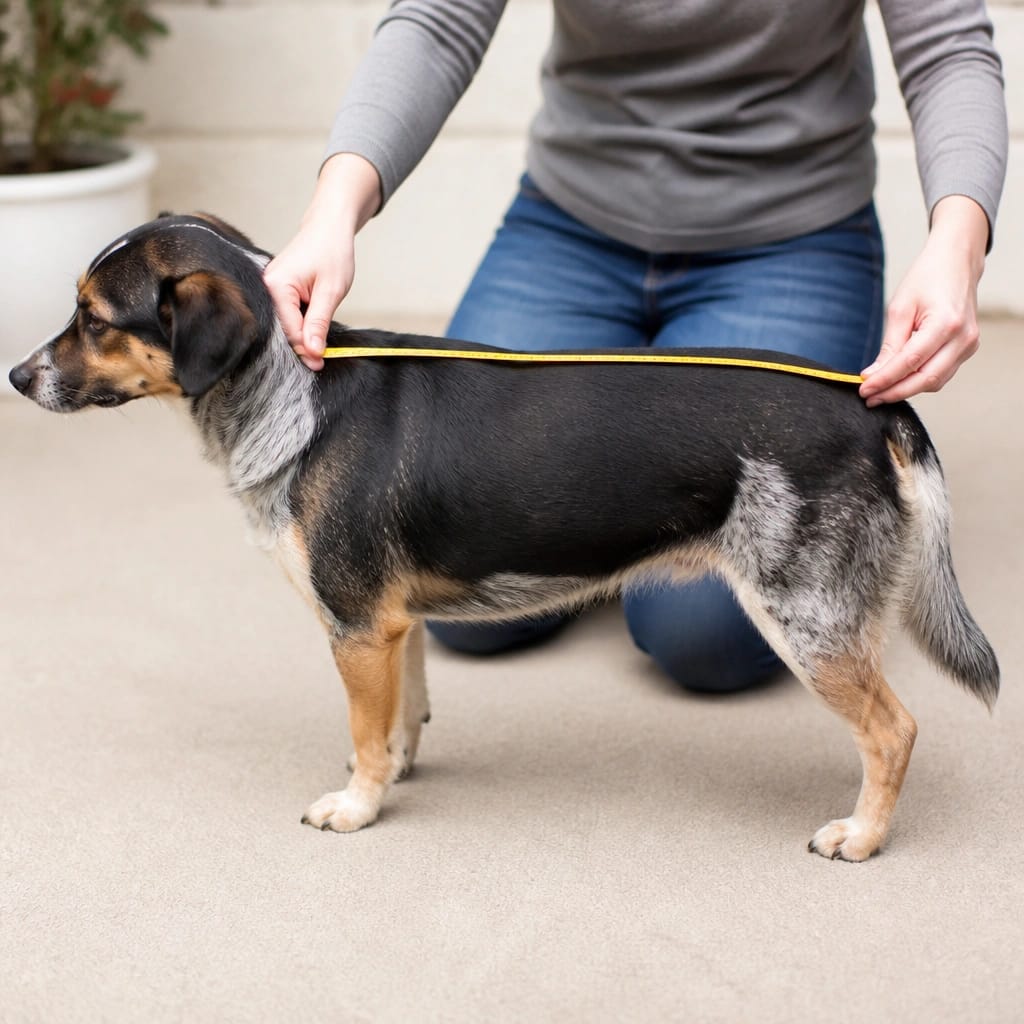
That last step matters more than most people think. Dogs that sleep stretched out need more length than a standing measurement provides. When in doubt, the American Kennel Club’s general guidance on dog health and comfort supports using the longer measurement for a better fit.
Choosing the Right Size for Your Dog’s Sleeping Style
Your dog’s preferred sleeping position decides how much extra room they need beyond the base measurement.
5.1 The Curler
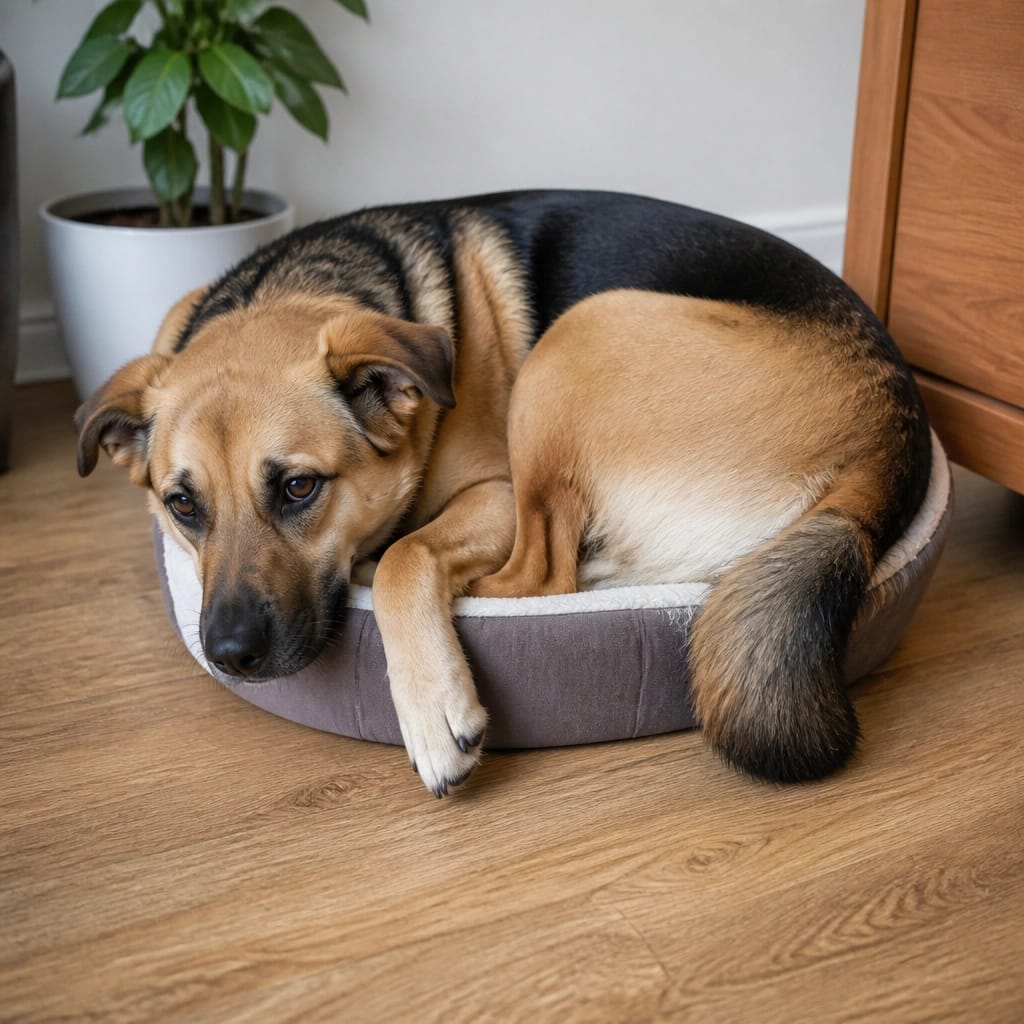
Some dogs curl into a tight ball, with their nose tucked toward their tail. These dogs do well with a donut-style bed, which supports that curled shape naturally. Look at our guidance on the calming donut style if this sounds like your dog.
They often need less length than a stretcher, so the standard 4-inch allowance usually works fine.
5.2 The Full-Length Stretcher
Dogs that flop onto their side with legs extended take up the most space. They need the full 6-inch allowance at minimum, and often more. A bolster-style bed can work well for these dogs if they like resting their head against a raised edge, but make sure the interior sleeping surface still accommodates their full length.
5.3 The Nest-Digger
Dogs that circle, dig, and scratch before lying down want a bed with enough room to perform their full ritual. If the bed is too small, they’ll give up and lie on the floor. This behavior is completely normal, as we explain in our article on why dogs love to burrow, and it means you should size up by at least one category.
The safest approach for most mixed breeds is to size up. A bed that’s slightly too large is rarely a problem. A bed that’s too small creates a dog sleeping awkwardly on the floor beside it.
That’s the failure we want to help you avoid.
Bolster Beds vs. Flat Beds vs. Donut Beds: Which Fits Better?
Bolster beds suit dogs that rest their head on raised edges. Flat mats give stretch sleepers the most room. Donut beds fit curlers.
Always measure the interior space, not the outer rim.
How to Size a Bed for a Crate or Kennel

Measure the crate floor first. The bed should cover the full area without folding at the walls. In wire crates, leave a couple of inches of clearance on each side.
Special Cases: Puppies, Senior Dogs, and Unusual Proportions
Puppies need adult-size planning. Ask your vet for a growth estimate. Seniors need thicker, lower-profile support.
For long backs or deep chests, measure the widest point too. See our indoor vs outdoor bedding guidance for more.
Common Sizing Mistakes to Avoid
Buying by weight is the biggest mistake. Another is trusting outer dimensions over the usable sleep surface. Fill also compresses, which shrinks your dog’s space.
The American Kennel Club stresses proper measurement for dog comfort.
Expert Tips for Getting the Right Fit the First Time
Measure Twice, Buy Once
A tape measure costs pennies. A wrong bed costs more.
Check the Usable Surface, Not the Outer Dimensions
Bolsters and thick padding reduce floor space.
Account for Fill Compressing Over Time
Memory foam outlasts polyfill. Our complete guide on dog beds explains material longevity.
Frequently Asked Questions
What size bed does a 50-pound mixed-breed dog need?
Measure nose-to-tail length first. Weight alone can’t tell you. A long-backed dog may need a large bed, while a compact one might fit a medium.
Should I size up for a puppy mixed breed?
Yes. Estimate adult size with a vet’s growth chart or the parents. A slightly large bed is better than buying twice.
How much extra room should a dog bed have?
Add 4 to 6 inches beyond body length. Stretch sleepers need more. The dog should switch positions without hanging off the edge.
What happens if the bed is too small?
The dog circles, digs, then sleeps on the floor. That’s why some dogs sleep on the floor instead of their bed. Joints may stiffen over time.
Final Size Guide: From Measurement to Bed Choice
Measure nose-to-tail base. Add 4 to 6 inches. Compare to the bed’s interior surface.
Match the shape to the sleeping style. When in doubt, size up. That’s the whole process.


