

Why Do Dogs Change Sleeping Spots During the Day?
Have you ever watched your dog start the morning on the couch, shift to the tile floor by noon, then curl up in the crate by evening? The question “Why Do Dogs Change Sleeping Spots During the Day?” crosses most dog owners’ minds at some point. It looks random.
It’s actually a mix of instinct, comfort, and temperature control.
In our research, we looked at canine sleep cycles and daily rest patterns. Dogs typically sleep 10 to 14 hours a day, and they shift positions and locations to match their needs. As of 2026, veterinary sources agree that most spot-switching is completely normal.
But sometimes it points to discomfort, anxiety, or health problems. Let’s walk through what’s really going on and when you should look closer.
Dogs change sleeping spots during the day for comfort, temperature, and security. They may move to a cooler floor when warm. They may choose a soft bed when cold. They also switch spots to avoid noise or traffic. Most of the time, this is perfectly normal. Sudden or constant switching can point to pain or anxiety.

Why Dogs Move Between Sleeping Spots
Dogs change sleeping spots for practical reasons, not because they’re being finicky. They’re hunting for the right temperature, the safest corner, and the most supportive surface. When a dog moves from a bed to the floor, they’re usually cooling down.

When they move from a cool floor to a soft couch, they might want warmth or cushioning. If your dog cycles through several spots and seems relaxed, that’s normal. The pattern only becomes a concern when your dog paces, pants, or refuses to settle anywhere.
What Your Dog Is Really Doing When It Switches Spots
Your dog isn’t just fidgeting. Each move serves a purpose.

Comfort and Temperature Regulation
Unlike humans, dogs don’t sweat all over. They release heat through panting and their paw pads. That’s why a dog that’s too warm will head for a tile floor, a shady spot, or even the bathtub.
If your dog rotates to the coolest surface in the house during warm afternoons, they’re doing exactly what they should.
Nesting Instinct and Security
Dogs are den animals. They naturally seek spots that feel safe and protected. That might be a corner, under a table, or in an open crate.
They also like places that smell like you. That’s why your dog might move from their own bed to your laundry pile. For extra context, we’ve covered why some dogs completely skip their own bed in favour of your space.
Searching for the Right Surface
Different surfaces feel different to paws and joints. A dog with aching hips might prefer thick carpet. A dog with a thick coat might prefer hard flooring.
Rotating between surfaces lets them find the right pressure relief for that moment. It’s the same instinct that drives digging and circling before lying down.
How To Tell Normal Behavior From a Problem
Most spot-switching is harmless. But there’s a line between normal and worrisome.
| Normal behavior | Warning signs |
|---|---|
| Settles into each spot quickly | Paces between spots for minutes |
| Deep, relaxed breathing | Panting without exercise or heat |
| Rotates between a few familiar places | Hides in new, out-of-reach areas |
| Moves after room temperature changes | Moves constantly all day long |
If your dog checks most of the warning signs, it’s worth a closer look. We’ll cover what to check first below.
What To Check First: Environment and Routine
Before you worry about health, look at the room itself. Small changes in the environment often explain the shifting.
- Room temperature: If a nearby vent or draft is blowing, your dog will move.
- Sunlight: Dogs follow sunny patches for warmth, then leave when it gets too hot.
- Noise: Traffic, appliances, or kids playing can push a dog to a quieter spot.
- Foot traffic: A peaceful family room in the morning can become busy by afternoon.
- Floor type: Hardwood, tile, carpet, and rugs all feel different to a resting dog.
Sometimes the fix is as simple as moving their bed. The location matters more than many owners realize. We’ve written about the best placement for a dog bed and why it affects napping.
Your Dog’s Age and Health: A Quick Decision Guide
Age and health are the biggest factors in how often a dog changes sleeping spots.

If your dog is a puppy: Puppies nap in short bursts all day. They often collapse wherever they are, then move when they need the toilet or want a new temperature. That’s normal.
If your puppy is under four months, you’ll probably see lots of spot-switching because their sleep cycles are short. A good rule is matching the bed size to their current weight, not their adult size. We have a bed size guide by weight and a separate breakdown for puppy vs adult bed sizes.
If your dog is a healthy adult: Most adults settle into a routine. They may have a morning spot, an afternoon spot, and a night spot. That’s not a problem.
However, if an adult dog suddenly avoids their usual bed altogether, check the bed itself. Old, flattened foam loses support. Sometimes replacing the bed solves everything.
If your dog is a senior: Frequent moving can be a sign of joint pain or arthritis. A dog with sore hips may rotate between surfaces to find one that hurts less. If the restlessness comes with stiffness, limping, or whining when they stand up, it’s time for a vet visit.
The American Veterinary Medical Association advises having a vet assess sudden sleep changes in older dogs. Also consider whether anxiety is at play. If your dog settles in strange spots during storms or loud noises, an anxiety-friendly bed might help them feel more secure.
Matching the Sleeping Area to Your Dog
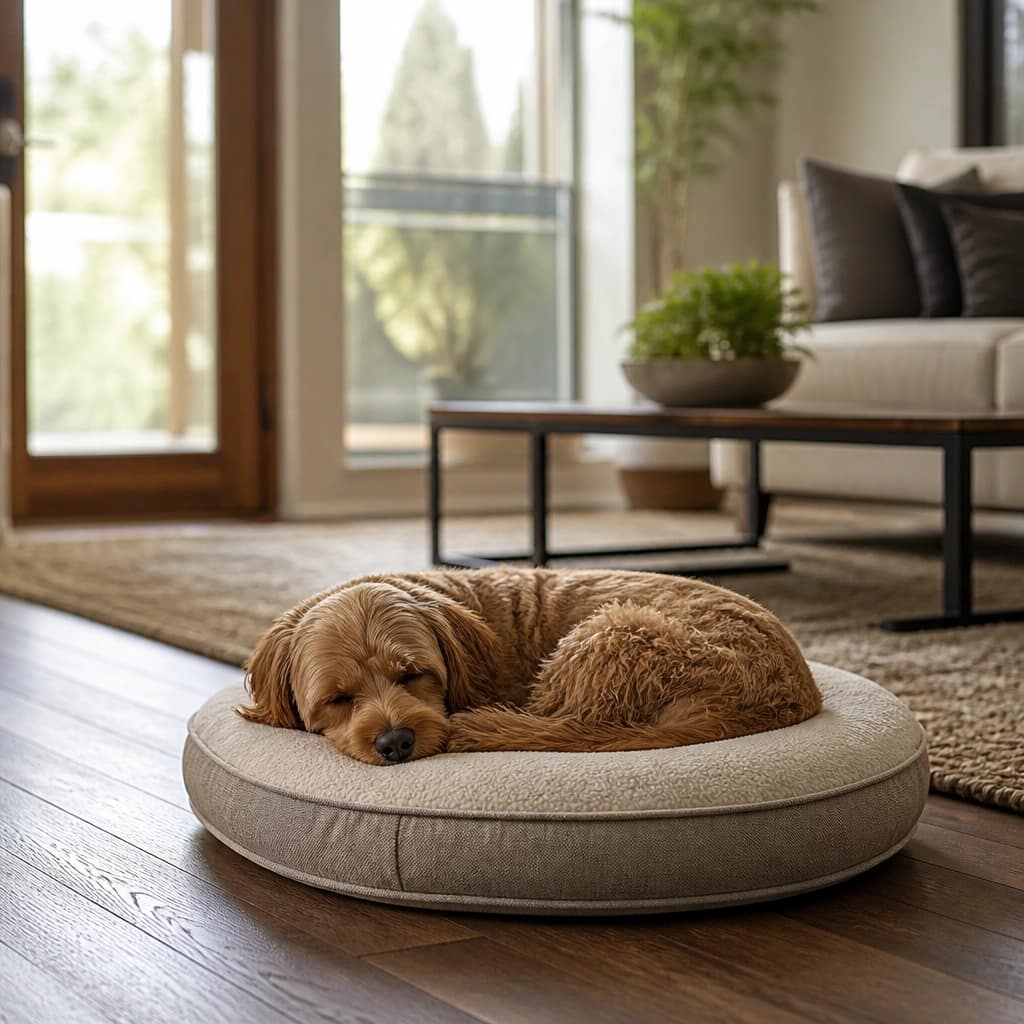
If your dog rotates past their bed but never settles in it, look at the bed first. Old foam loses support, and a dog that once loved their bed will suddenly avoid it. Most memory foam beds start flattening within two years.
If the bed has lost shape, consider replacing it. Our dog bed size chart by weight helps you confirm the surface is big enough for your dog.
When a New Bed Helps
A fresh, supportive bed can fix the issue if your dog avoids their old one. Just check the size and fill.
When the Bed Isn’t the Issue
If your dog moves between cool and warm spots all day and sleeps well, the bed isn’t the problem. Some dogs simply want options.
Common Mistakes Owners Make
It’s easy to turn normal behavior into a worry. Here are the mistakes we see most often:
- Forcing one sleeping spot. Dogs like options, especially when room temperatures change.
- Ignoring the bed’s age. A bed can look fine but offer no support.
- Confusing restlessness with anxiety. Watch for pacing and panting before assuming stress.
- Skipping the vet for sudden changes. A well-trained dog that suddenly can’t settle may be in pain.
Dog Sleeping Spot FAQs
Is it normal for my dog to change sleeping spots every day?
Yes. Most dogs rotate between a few favorite spots depending on temperature, noise, and comfort. It’s normal behavior, not a sign your dog is unhappy.
Why does my dog sleep on the floor instead of their bed?
The floor is often cooler. Dogs with thick coats or warm bodies move to tile or hardwood to drop their temperature. If the bed looks fresh and supportive, your dog just prefers coolness.
Can anxiety cause a dog to change sleeping spots?
Yes. Anxious dogs often pace and move between spots because they can’t settle. If the restlessness comes with panting, lip licking, or hiding, consider the environment or an anxiety-friendly bed.
When should I worry about my dog changing sleeping spots?
Worry when the moving won’t stop. If your dog paces for long periods, seems stiff, cries, or refuses to settle, call your vet. Sudden changes in older dogs can signal joint pain or other health issues.
What To Do Next: A Simple Observation Plan
Write down where your dog sleeps for three days. Note the time, the spot, and the room temperature. After that, look for a pattern.
Most owners spot the reason quickly.
If you see restless pacing, whining, or trouble getting up, skip the guessing and call a vet. If the dog simply moves and sleeps well, relax. They’re just doing what dogs have always done.


