

Should You Buy a Large Bed for a Puppy?
It depends on a few factors. A large bed works for big breed puppies who sleep stretched out. It’s also fine if you use an adult-sized crate. But a large bed can backfire during crate training. The right size balances comfort with future needs. Measure your puppy before deciding.
Should You Buy a Large Bed for a Puppy? It’s a question that trips up almost every new dog owner. Buy too big and you risk a puppy who feels insecure or uses the extra space as a bathroom.
Buy too small and you’ll be shopping again in a few weeks.
The American Kennel Club notes that large breed puppies can take up to 18 months to reach full skeletal maturity. That long growth timeline makes the bed size decision more complicated than it seems. Let’s break down what actually determines whether a large bed is the right call for your puppy.
The Real Problem: Why Bed Size Matters for a Growing Puppy

A puppy’s bed is more than just a place to sleep. It’s their safe space, their den, and sometimes their training tool. Get the size wrong and it affects all three.
If the bed is too large, a puppy may feel exposed and insecure. That’s especially true for young puppies who are used to the warmth and safety of their littermates. A massive bed can feel overwhelming rather than comforting.
If the bed is too large during crate training, you’re asking for trouble. Puppies instinctively avoid soiling their sleeping area. But when there’s enough extra space to use one corner as a bathroom, that instinct breaks down.
A large bed in a crate can actually encourage accidents.
On the other hand, a bed that’s too small means your puppy can’t stretch out comfortably. And you’ll be buying another one in a few weeks. The sweet spot is somewhere in between.
That’s why figuring out the right proportions early on saves you money and hassle.
How a Puppy’s Sleeping Position Affects the Right Bed Size
Your puppy’s preferred sleeping position tells you a lot about what size bed they need. Watch how they sleep for a few nights and you’ll have your answer.
Puppies who curl up in a tight ball need less surface area. A donut or nest-style bed with raised edges works well for them. These puppies can comfortably fit in a smaller bed even as they grow.
Puppies who sleep stretched out on their side or belly need more room. They extend their legs and take up significant space. A bed that’s too short forces them to curl up when they’d rather be sprawled out.
Puppies who stretch need a bed that’s at least as long as their body from nose to tail. Add a few inches for comfort. That’s your minimum usable length.
If you notice your puppy has unusual sleeping habits and preferences, pay attention to whether they’re trying to find more space.
The Two Main Factors That Decide the Answer
Two factors determine whether a large bed makes sense for your puppy. Get these right and the decision becomes clear.
Current Size vs. Estimated Adult Size
The most obvious factor is size. A Chihuahua puppy will never need a large bed. A Great Dane puppy will outgrow a small bed in weeks.
Estimate your puppy’s adult size based on their breed or breed mix. The American Kennel Club provides breed standards that include weight ranges. Use those as a guide.
If your puppy is a large breed who will reach 50 pounds or more, buying a large bed now makes sense. If they’re a small breed who will top out at 20 pounds, stick with a smaller bed. You can use a detailed sizing guide to compare different weights and measurements.
Crate Training vs. Open-Floor Sleeping
Where your puppy sleeps changes the equation. A bed for a crate is different from a bed for a living room corner.
In a crate, the bed should fit the crate floor. No extra space for accidents. In an open area, you have more flexibility with size.
| Scenario | Large Bed Works? | Why |
|---|---|---|
| Large breed, open floor | Yes | Room to grow, no crate constraints |
| Small breed, crate | No | Too much space, potty accidents |
| Large breed, crate | Depends | Must match crate size, not bed size |
| Medium breed, open floor | Maybe | Depends on adult size and sleeping position |
Decision Branches: When Buying Large Makes Sense
Let’s look at the scenarios where buying a large bed is the smart move. These are clear-cut cases where bigger is better.
Large Breed Puppies in Open Spaces
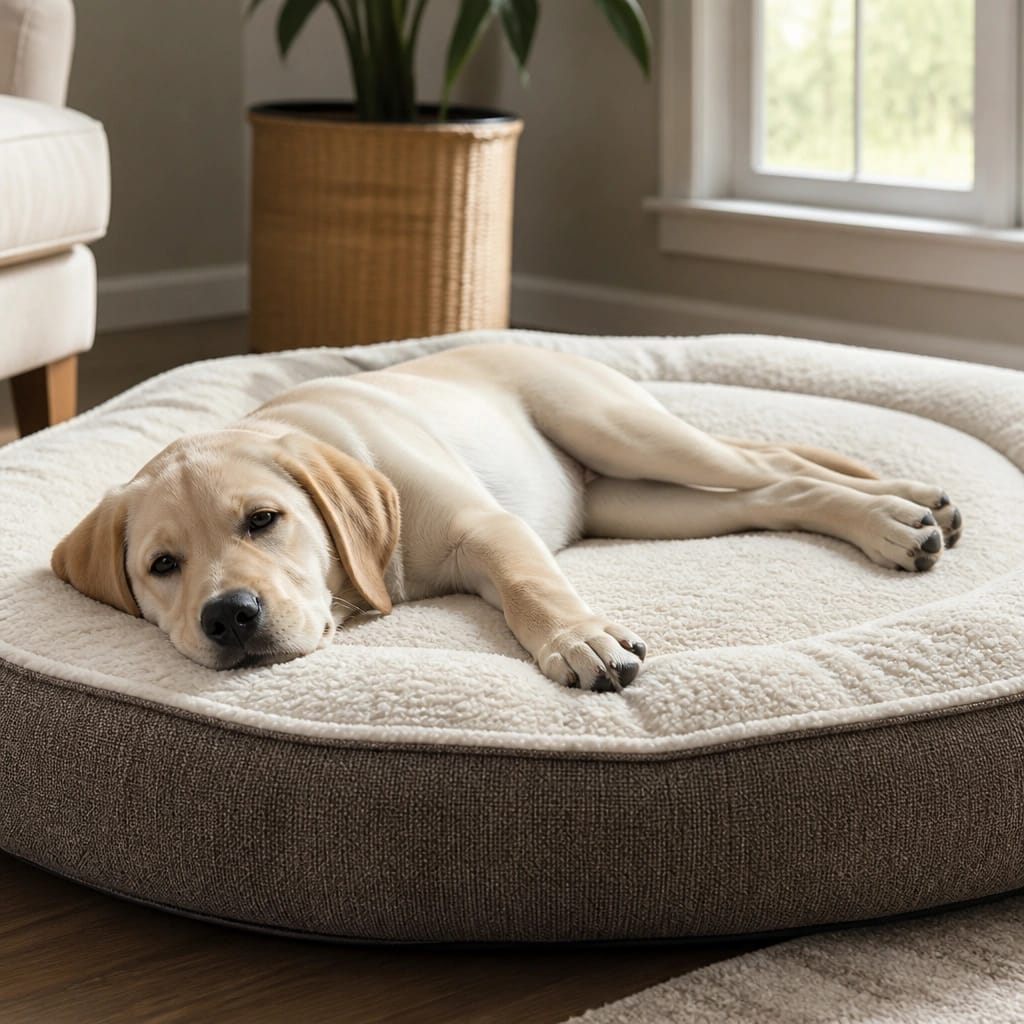
If your puppy is a large breed and sleeps in an open area, buy the large bed. A Labrador retriever puppy will nearly double in size over the first year. A large bed now means you don’t have to buy another one later.
Puppies Who Stretch Out When They Sleep
If your puppy stretches out when they sleep, go larger. A bed that’s too short forces them into a curled position they don’t prefer. Measure from nose to tail and add 4 to 6 inches.
That’s your target length.
When You’re Already Using an Adult-Sized Crate
If you’ve already bought an adult-sized crate, match the bed to the crate. A 36-inch crate needs a 36-inch bed. Don’t size down just because your puppy is small.
A bed that fits the crate floor is always better than a small bed that slides around. Think about choosing the right spot for the crate too, since that affects how much space you’re working with.
Decision Branches: When You Should Buy a Smaller Bed
Now let’s look at the scenarios where a smaller bed makes more sense. These situations are just as common.
Small Breed Puppies Who Stay Small
If your puppy is a small breed, buy a bed that fits their current size. A French bulldog or a Pomeranian will never need a large bed. A small or medium bed will serve them well into adulthood.
Crate Training Phase (Potty Training)
If you’re actively crate training, keep the bed small. A bed that fills the crate floor leaves no extra space for accidents. This reinforces the instinct to hold it until they’re let out.
Once potty training is solid, you can size up. Crate-specific bedding options like thin pads or mats work better than thick beds during this phase.
Puppies Who Prefer Curled-Up Sleeping
If your puppy sleeps curled up, a smaller bed works fine. They don’t need the extra length. A donut bed or a nest-style bed with raised edges gives them the security they crave.
These beds often come in smaller sizes that fit perfectly.
The “Grow-With-Me” Approach: Is There a Middle Ground?
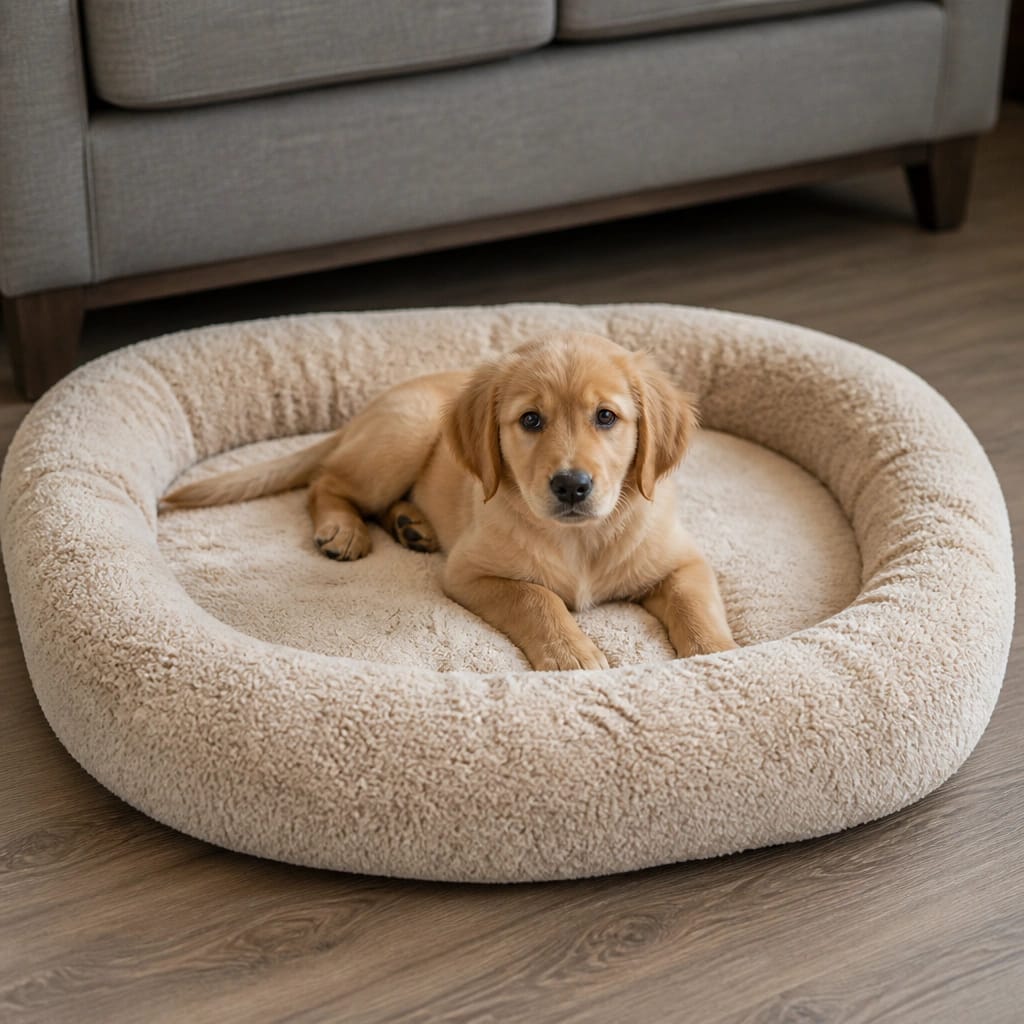
You don’t always have to choose between too big and too small. A “grow-with-me” approach works for many owners. The idea is to buy a bed that fits your puppy now but can still work later.
Some beds have removable inserts or adjustable bolsters. Take out a layer of foam to give a small puppy a snug fit. Add it back as they grow.
This gives you the cost savings of a large bed without the insecurity of too much space.
Another option is a medium-sized bed for a large breed puppy. It won’t last forever, but it will last through the first year. By the time your puppy outgrows it, they’ll be past the crate training phase and ready for a full-sized adult bed.
This middle path balances cost, comfort, and training needs.
If you’re handy, you can also purchase a DIY no-sew option that’s easy to size up later. A simple fleece bed costs next to nothing and can be replaced as your puppy grows.
How to Measure Your Puppy and Pick the Right Size
Measuring your puppy correctly is the most important step. Here’s how to do it in under a minute.
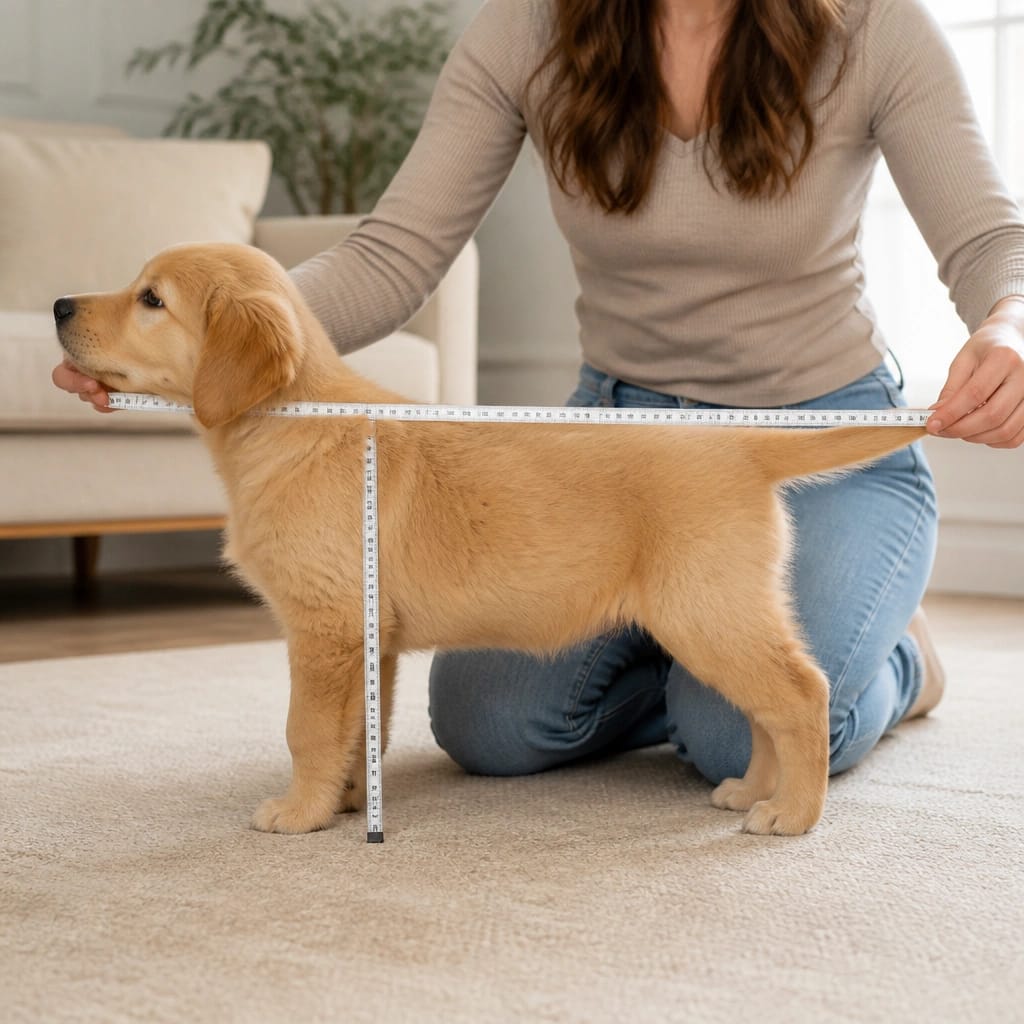
Step 1: Measure nose to tail base. Use a soft measuring tape. Run it from the tip of your puppy’s nose to the base of their tail. Write down the number.
Step 2: Measure shoulder width. While your puppy is standing, measure across their shoulders at the widest point. Add 2 to 3 inches for comfort.
Step 3: Add 4 to 6 inches to the length. This gives your puppy room to stretch out. If your puppy curls up, add 2 to 3 inches instead.
Step 4: Estimate adult size. Use a breed weight chart or ask your vet. If your puppy will reach 50 pounds or more, plan for a large bed. If they’ll stay under 25 pounds, a small or medium bed is fine.
Step 5: Match crate size. If using a crate, the bed must fit the crate floor. Measure the crate interior length and width. The bed should be slightly smaller to allow for proper fit.
Common Mistakes Owners Make With Bed Size
Mistakes happen. Here are the most common ones so you can avoid them.
Buying too large for a crate. This is the biggest mistake. A bed that’s too large in a crate leaves space for accidents. Keep the bed snug against the crate walls.
Buying a bed that’s too small for a stretcher. Some puppies love to stretch out. A bed that’s too short forces them into an uncomfortable position. Watch your puppy sleep before buying.
Ignoring the material. A large bed with thin foam won’t support a growing puppy’s joints. Look for orthopedic foam at least 3 inches thick for large breeds. Chew-proof materials matter too if your puppy is a chewer.
Forgetting about washability. Large beds are harder to wash. A removable cover that fits in a standard washing machine is a must. Measure your machine’s drum before buying a large bed.
Assuming one size fits all breeds. A Chihuahua and a Great Dane need different beds. Don’t use the same size for every puppy. Match the bed to the breed and individual needs.
Best Practices for Transitioning From Puppy to Adult Bed
When the time comes to switch to an adult bed, do it gradually. A sudden change can confuse your puppy.
Start by placing the new bed next to the old one. Let your puppy sniff it and explore it. After a few days, move the old bed out of the room.
Keep the new bed in the same spot your puppy is used to.
If your puppy resists the new bed, try placing a piece of your clothing on it. Your scent makes it feel familiar. You can also use treats or toys to encourage them to lie down on it.
The transition is easier if you choose a style your puppy already prefers. If they loved their donut bed as a puppy, an adult-sized donut bed will feel familiar. Keep the same shape and material for a smooth switch.
Frequently Asked Questions
Can I use a large bed for a small puppy?
You can, but it’s not ideal for crate training. In an open area, a large bed is fine if your puppy doesn’t seem overwhelmed. Watch for signs of insecurity like avoiding the bed or sleeping elsewhere.
What’s the best bed size for a Labrador puppy?
A Lab puppy will reach 55 to 80 pounds as an adult. Buy a large bed (36 to 42 inches) if you’re not using a crate. If you’re crate training, match the bed to the crate size and upgrade later.
How often should I replace my puppy’s bed?
Replace it when your puppy has outgrown it or when the bed shows signs of wear. A high-quality bed can last through the first year. Cheaper beds may need replacement sooner.
Should I use a waterproof liner for a puppy bed?
Yes. Puppies have accidents. A waterproof liner protects the foam and makes cleanup easier.
Look for a bed with a removable waterproof cover or add a liner underneath.
What if my puppy chews their bed?
Chewing is common in teething puppies. Choose chew-resistant fabrics and supervise your puppy. If chewing continues, provide safe chew toys and redirect the behavior.
Final Verdict: What to Do for Your Specific Situation
Buying a large bed for a puppy isn’t a simple yes or no. It depends on three things: your puppy’s breed size, their sleeping position, and whether you’re crate training.
For large breed puppies sleeping in open areas, buy the large bed now. You’ll save money and avoid transitions. For small breed puppies or crate training, stick with a smaller bed that fits the crate floor. Upgrade later when your puppy is fully grown.
For everyone else, use the grow-with-me approach. Buy a medium bed that’s slightly larger than your puppy needs now. Add a waterproof liner.
Plan to replace it when your puppy reaches 75% of their adult size. Watch your puppy’s sleeping habits, measure carefully, and choose a bed that supports their growth without compromising their comfort or training.


