

7 Signs Your Dog’s Bed Is the Wrong Size
The 7 signs your dog’s bed is the wrong size show up during sleep. Watch for hanging limbs, tight curls, and floor sleeping. Size the bed by body length, not by weight.
Add 4 to 6 inches to your dog’s nose-to-tail measurement.
If your dog keeps circling, sighing, and flopping down half on the bed, you might have a sizing problem. The 7 signs your dog’s bed is the wrong size are easier to spot than you think. Most owners guess by weight.
That is the biggest mistake we see.
As of 2026, manufacturer sizing guides consistently recommend measuring stretched length, not weight. A 60-pound retriever and a 60-pound bulldog need completely different beds. We dug through current bed specs, vet guidance, and owner reports to give you a simple process.
Let’s walk through the signs first.
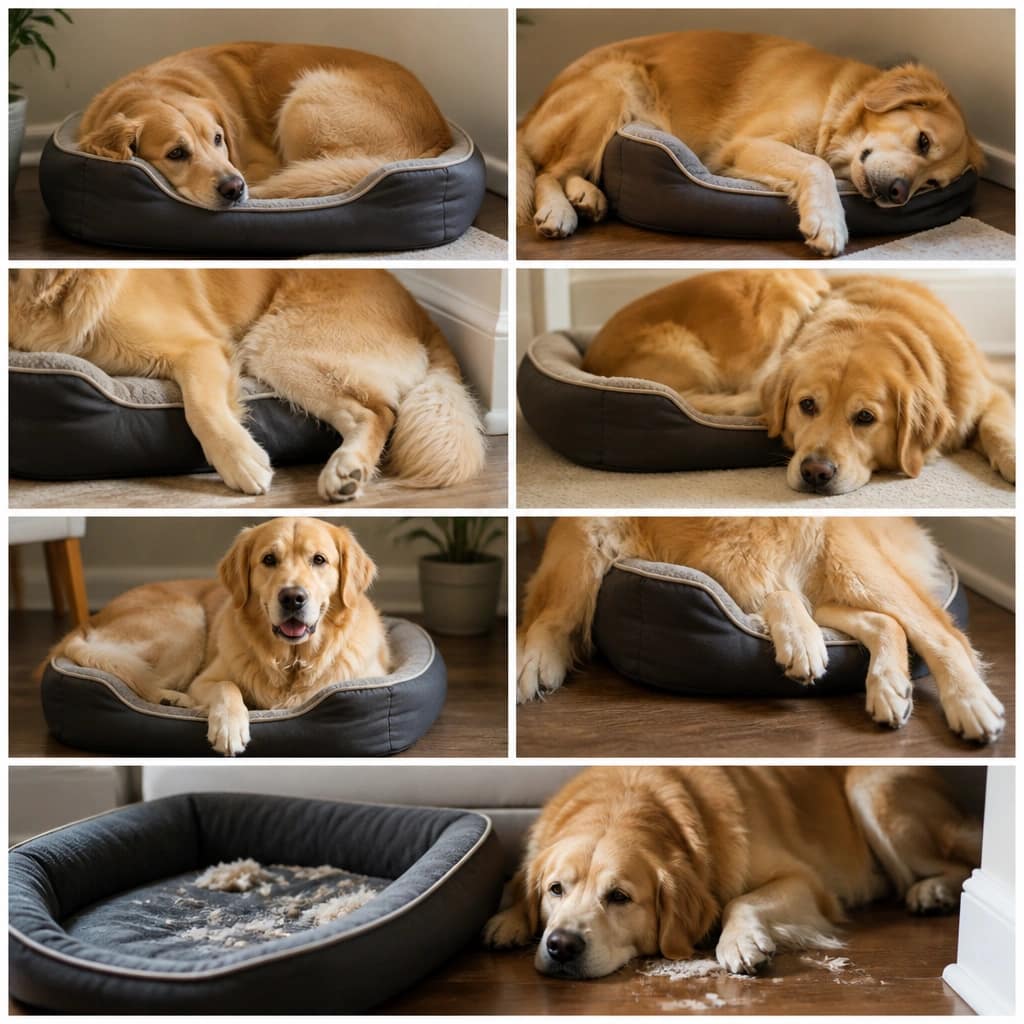
Why Bed Size Matters for Your Dog’s Sleep and Joints
Sleep quality depends on full body support. When a bed is too small, joints press against hard flooring or crate trays. That pressure makes your dog shift all night.
Over time, poor support adds strain, especially for senior dogs.
Manufacturer specs confirm the fix. A properly sized bed gives a dog room to stretch without touching the edges. As of 2026, most leading bed brands have moved to length-based sizing guides.
Weight alone never predicts frame size.
The American Veterinary Medical Association highlights supportive rest as part of senior dog care. A bed that fits is the first step. For a deeper look at materials and shapes, see our complete dog bed guide.
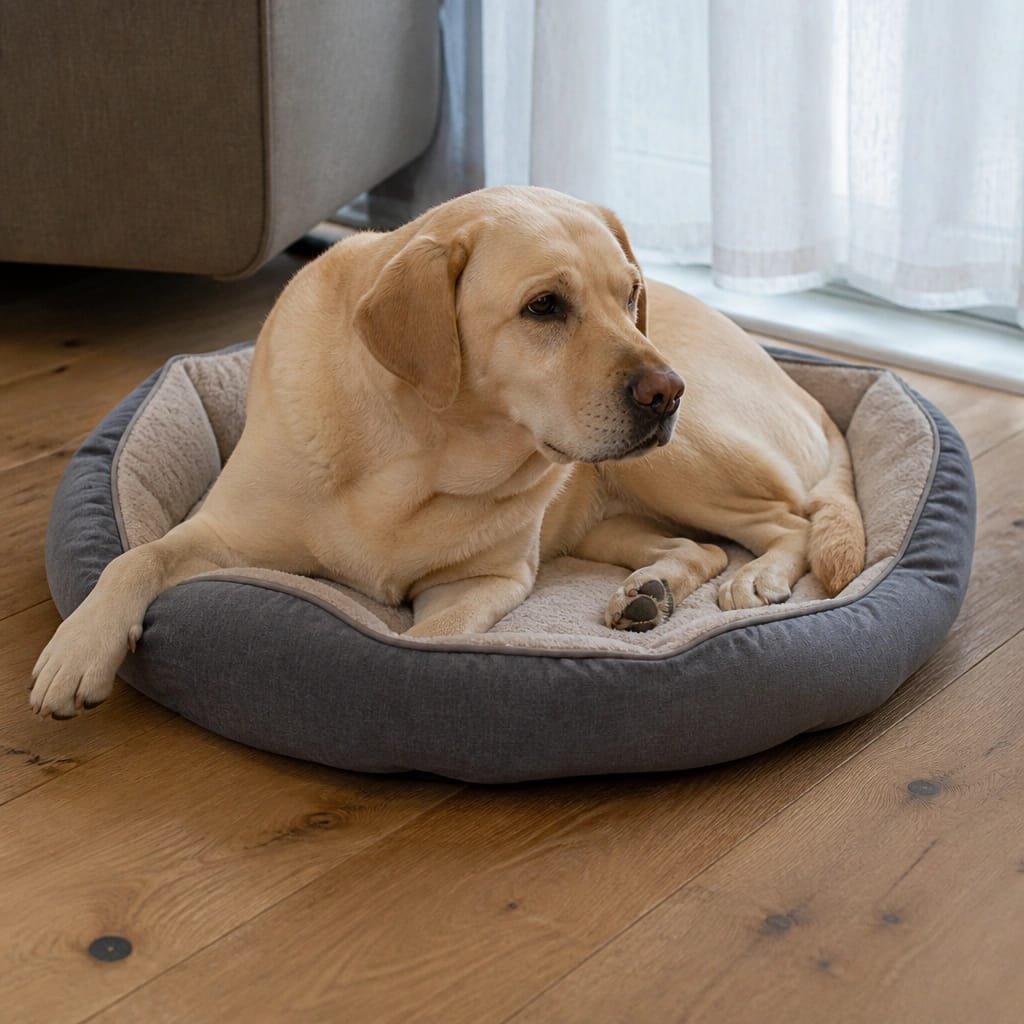
The 7 Signs Your Dog’s Bed Is Too Small
Hanging Off the Edge
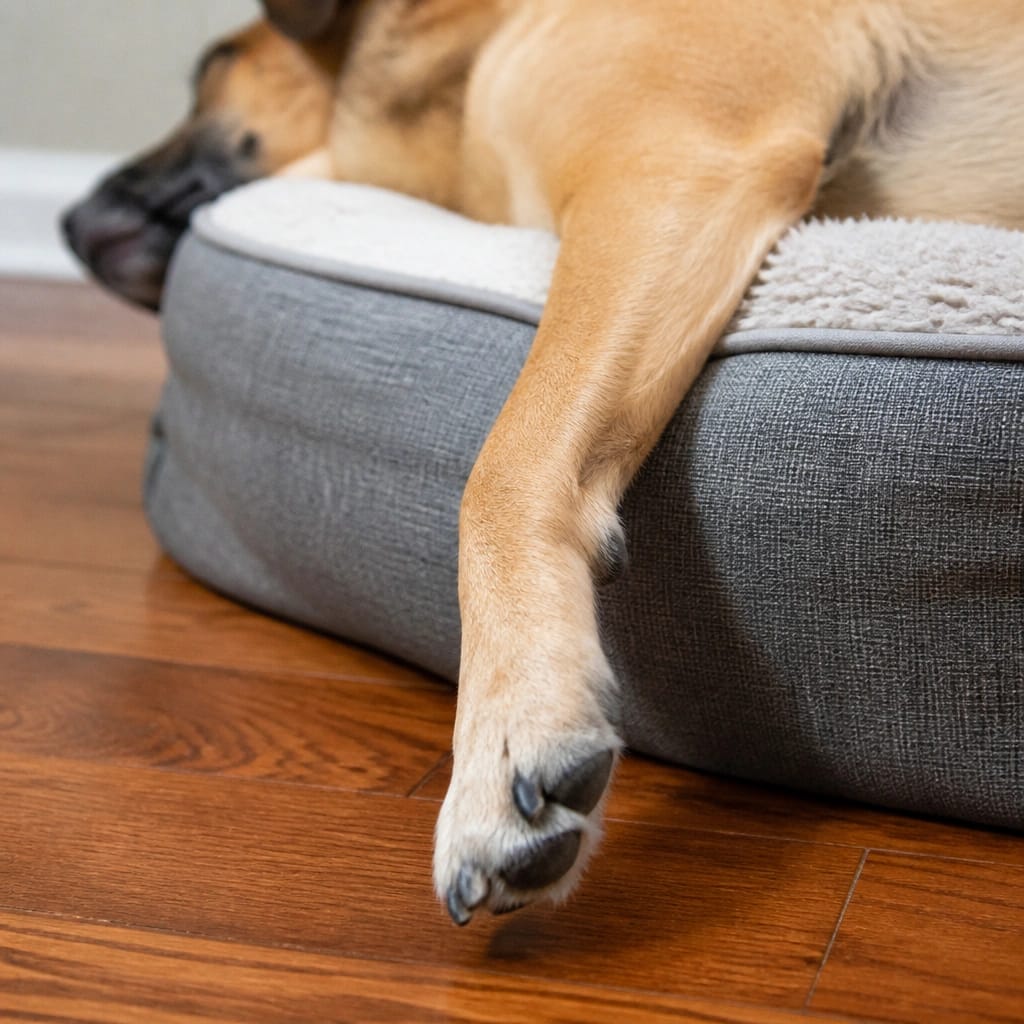
The clearest sign is a limb over the side. If your dog’s head, paws, or tail hit the floor, then the sleeping surface is too short. Some dogs stretch diagonally to compensate.
That’s a workaround, not a solution.
Sleeping in a Tight Curl Instead of Stretching Out
Curled sleeping is normal. A tight ball every night can mean the bed is too short. Dogs choose comfort over habit.
When they can’t stretch, they fold.
This is often confused with burrowing instinct. Burrowing is about warmth. Tight curling is often about lack of room.
Avoiding the Bed and Sleeping on the Floor
If the bed sits unused and your dog chooses cold tile or hardwood, listen. Dogs avoid surfaces that fail them. Size is one culprit.
Floor sleeping habits matter too, but measurement problems come first.
Restless Shifting and Constant Turning
Watch a dog settle into a too-small bed. They turn, circle, lie down, then get up. They are searching for a comfortable spot that doesn’t exist.
This often ends with the dog resting sideways or with a head hanging off. If it happens every night, size might be the cause.
Limping or Stiffness After Getting Up
A dog should get up a little stiff after a long nap. Frequent lameness or visible stiffness points to poor joint support. If the bed is too small, parts of the body rest on hard ground.
Memory foam support can help, but only if the bed actually fits the full body.
If stiffness persists, ask your veterinarian to rule out joint issues.
Bolsters That Push the Dog Awkwardly
Rounded edges and bolsters should cradle, not squeeze. When a dog’s body is longer than the inner sleeping area, bolsters push the spine into a curve. Some dogs lie awkwardly or perch on the edge.
Bolster styles work well only when the flat base is big enough.
Circling, Digging, and Struggling to Get Comfortable
Some nesting is normal. Excessive circling, digging, and repositioning may mean the bed doesn’t give enough room. The dog is trying to reshape the space.
If the bed is too small, no amount of fluffing fixes it.
What Counts as “Wrong Size”: Length, Height, and Sleeping Style
Size isn’t a single number. Three factors matter: length, height, and sleeping position.
| Factor | Why It Matters | What to Check |
|---|---|---|
| Length | A bed must fit the stretched body, not the standing frame | Measure nose to base of tail, add 4 to 6 inches |
| Height | Bolsters and walls must not push the spine | The inner base must fit the dog’s full length |
| Sleeping style | Curled sleepers need less length, sprawlers need more | Watch your dog for a week before choosing |
Curled sleepers need less length. Sprawlers need the longest option. Don’t size by weight.
Two dogs of the same weight can need different sizes.
How to Measure Your Dog for the Perfect Bed Fit
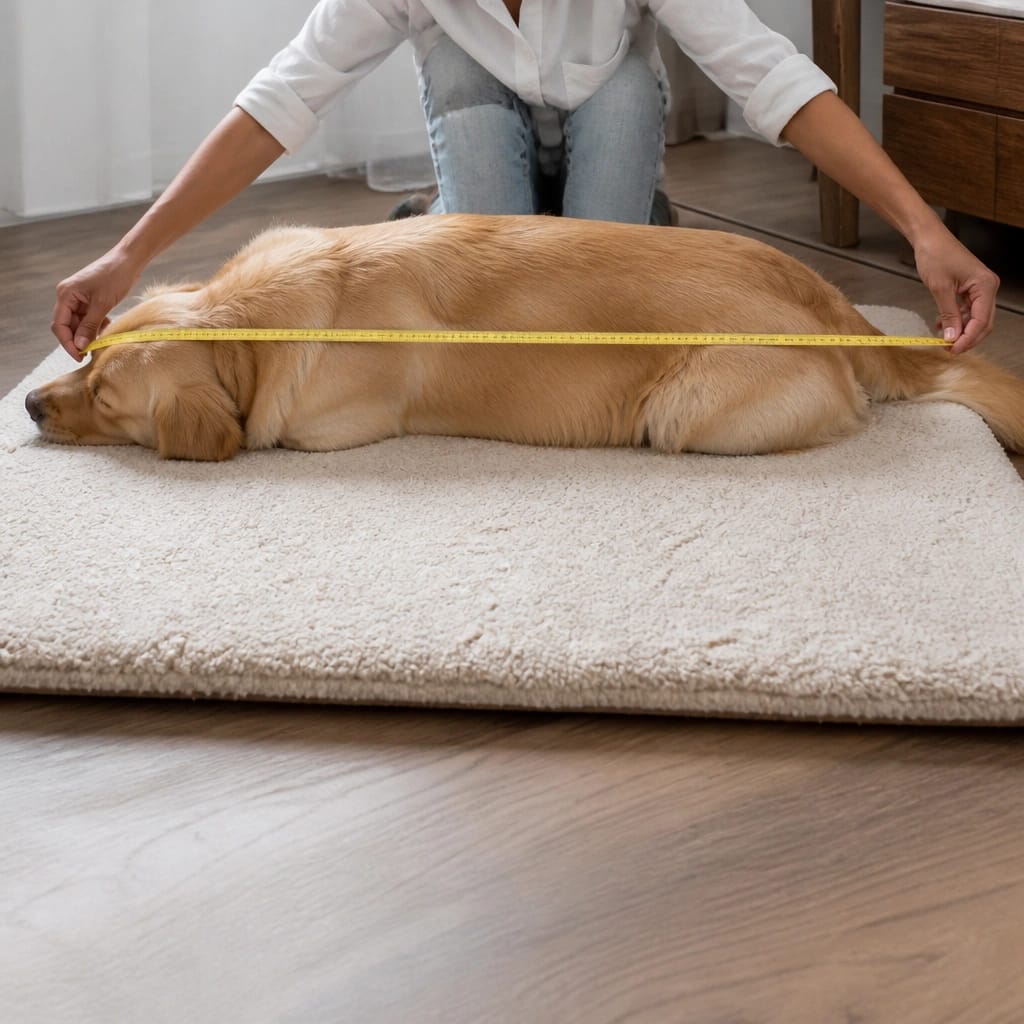
Grab a soft measuring tape. Do this while your dog sleeps or lies stretched out. That gives the real number.
- Measure from the nose to the base of the tail.
- Add 4 to 6 inches for comfort.
- For a crate bed, measure the crate floor instead.
- Compare your total to the bed’s inner dimensions, not the outer ones.
The inner sleeping area is what matters. Manufacturers often list outer dimensions on the label. That number can be misleading.
Look for “usable sleeping surface” or “inner dimensions” in the specs.
The AKC uses a similar length-based approach when describing dog sizes. Use the American Kennel Club’s breed measurements as a starting point, then measure your own dog. Every dog is different.
5 Common Bed-Sizing Mistakes That Waste Your Money
- Choosing by weight. Weight doesn’t equal length. Always measure your dog.
- Using outer dimensions. Outer edges include bolsters and seams. The interior is what supports your dog.
- Buying a puppy bed too large. A giant bed with no edges can feel insecure. Puppies do better with a snug, slightly bigger bed.
- Ignoring sleeping position. Your dog’s favorite pose determines needed length. A sprawler needs more room.
- Forgetting the crate. A house bed that covers the whole crate floor will bunch up. Leave room for turning and stretching.
Mistakes are fixable. Measure first, then replace. If your dog already sleeps on your bed instead of their own, a properly sized bed might change that.
Crate Beds vs. House Beds – The Size Rules Are Different
Crate beds follow different rules. A house bed only needs to fit the dog. A crate bed must fit the crate and the dog.
If the bed covers every inch of the crate floor, it bunches up against the walls. Your dog then sleeps on wrinkled fabric.
You also need airflow and turning room. A good crate bed leaves a few inches of clearance on each side. If your dog can stretch out flat, you’re in the right range.
For outdoor setups, check our winter kennel guidance before sizing.
When a Too-Small Bed Could Be More Than Just Uncomfortable
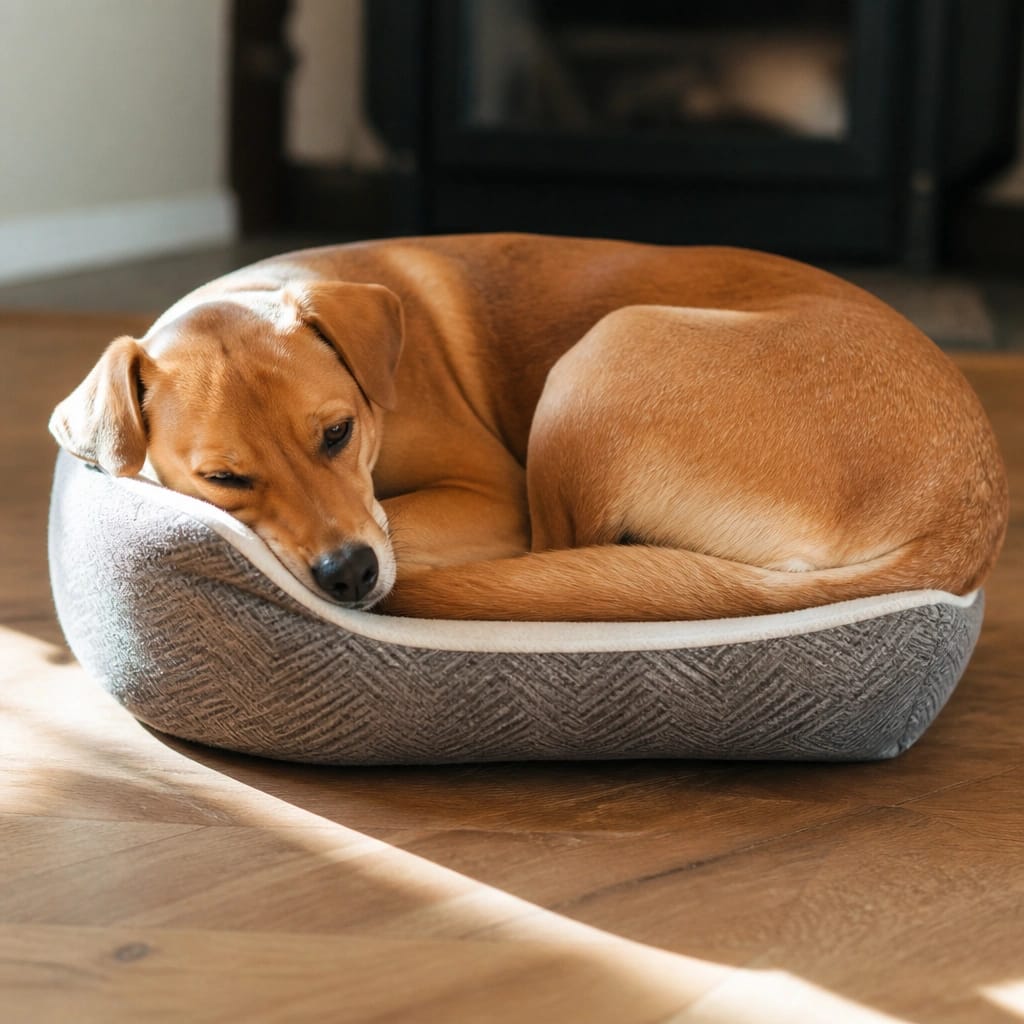
Constant pressure on elbows and hips leads to sore spots. Dogs develop calluses and thinning fur from resting on hard edges. That’s not just uncomfortable.
It’s a health issue.
If you see redness, hair loss, or limping that lasts more than a day or two, call your vet. The bed might be part of the problem, but confirmation should come from a professional.
How to Size Up as Your Puppy Grows (And When to Replace)
Puppies grow fast. A bed that fits at 10 weeks will not fit at 9 months. Large breeds can double in length within months.
Expect to replace beds once or twice during the first year.
Buy small and practical first, then measure again at each growth stage. If your puppy starts hanging off the edge, that’s your cue to size up, not to wait. Measuring every 8 to 12 weeks keeps you ahead of the curve.
Frequently Asked Questions
How much bigger should a dog bed be than the dog?
Add 4 to 6 inches to your dog’s stretched length. That gives enough room for normal movement without wasting space. For burrowers, a donut bed that hugs the body may feel cozier.
Our donut bed guide explains the fit difference.
What if my dog sleeps curled up?
Curled sleepers can use a shorter bed, but they still need width for the hips and shoulder blades. Measure the widest part of the curled ball and add 3 to 4 inches around it.
Should I buy a bigger bed for a puppy?
Not much bigger. A massive bed feels insecure to puppies. Buy one that fits them now with a little growing room.
Then size up as needed.
How do I know if a crate bed fits?
The bed must sit flat with no wrinkles and leave a few inches of clearance on each side. Your dog should stretch out and turn around without pushing against the walls.
Quick Decision Guide: Find Your Dog’s Correct Bed Size in 3 Simple Steps
Step 1. Measure your dog from nose to tail base while stretched out.
Step 2. Add 4 to 6 inches and compare that to the bed’s inner dimensions.
Step 3. Watch your dog sleep for one week. If they sprawl, choose the larger option. If they curl, the snugger fit works.
That’s it. A correctly sized bed supports joints, improves sleep, and saves you money on replacements. Start with the tape measure.
Your dog will do the rest.
A Final Tip Before You Buy
When you’re stuck between two sizes, choose the larger one. A roomier bed gets used more often than a snug one. Aggregate buyer feedback shows that dogs gravitate to extra space, especially as they age.
If you have a growing puppy, the bigger option saves you a second purchase sooner. Measure once more, then trust the tape. Your dog will sleep better for it.


