

Can You Steam Clean a Dog Bed?
Dog beds take a beating. Dirt, drool, dander, the occasional accident, they all end up in that one spot your dog loves most. Can you steam clean a dog bed? Yes, but the answer depends entirely on what your bed is made of and how it’s built. Get it right and you’ll kill bacteria, remove odors, and extend the bed’s life.
Get it wrong and you could wreck the foam or create a mold problem.
Manufacturer specifications indicate that most memory foam dog beds sold as of 2026 have a maximum safe temperature around 140°F. Steam cleaners output heat at roughly 212°F, which means direct contact with foam can cause permanent damage. The trick is knowing when steam is your friend and when it’s a hazard.
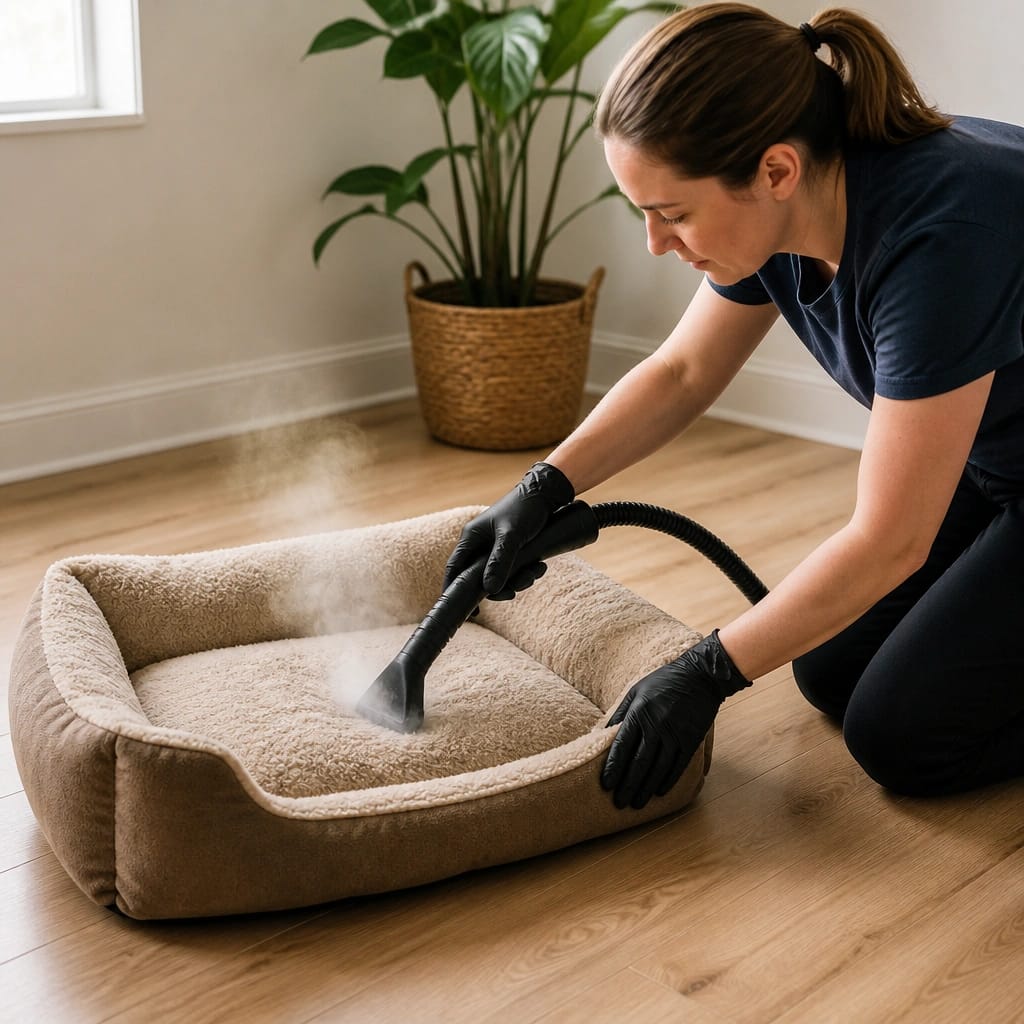
Yes, you can steam clean most dog bed covers. No, you should not steam clean the foam insert directly. Steam kills bacteria and dust mites without harsh chemicals. But moisture trapped inside foam leads to mold and mildew. The safest approach is to remove the cover, steam it separately, and clean the foam by other methods. Always check the care tag before you start.
The Real Problem: Why You’re Asking About Steam Cleaning
You’re probably here because your dog’s bed smells, looks stained, or you’re worried about allergens. Maybe you’ve already washed the cover and the smell is still there. Or the cover doesn’t come off at all.
Regular washing works for removable covers, but the foam core inside holds onto odors and bacteria. Spraying enzymatic cleaners helps, but they don’t penetrate deep enough. Steam cleaning promises a deeper clean, but it comes with real risks.
The core issue is moisture management. Dog beds are thick, dense, and designed to hold shape. Once moisture gets inside the foam, getting it out again takes days.
In humid conditions, that’s a recipe for mold. That’s why understanding your bed’s construction matters more than the cleaning method itself.

Quick Answer: Can You Steam Clean a Dog Bed?
Steam cleaning works great on the outer cover. It’s fast, chemical-free, and effective against odors. But you have to remove the cover first.
For the foam core inside, steam is usually a bad idea. The heat can deform memory foam. The moisture can soak into the material and cause mold.
And once mold sets in, the only real fix is replacing the bed entirely.
If your dog’s bed has a waterproof liner between the cover and foam, you have more options. That liner acts as a barrier that keeps moisture away from the core. You can clean more aggressively on the outside without worrying about what’s underneath.
What Steam Actually Does to a Dog Bed (The Core Explanation)
Steam works by delivering heat and moisture under pressure. At 212°F, it kills bacteria, dust mites, and mold spores on contact. It also breaks down dried-on dirt and oils that regular washing might miss.
On fabric covers, this is excellent. Microfiber, cotton, canvas, and polyester blends handle steam well. The heat sanitizes, and the moisture lifts grime.
You wipe it away with a clean cloth.
On foam, it’s a different story. Memory foam is temperature-sensitive. It softens with heat and hardens with cold. Direct steam exposure can cause it to deform permanently.
It can also break down the foam’s cell structure, reducing support and lifespan.
Polyester fiberfill handles heat better than memory foam, but it still traps moisture. Once wet, fiberfill takes 24 to 48 hours to dry completely. If it doesn’t dry fully, mold grows inside the bed where you can’t see it.
The Three Decision Variables That Change the Answer

Three things determine whether steam cleaning is safe for your dog’s bed. Run through these before you start.
1. Cover Material and Removability
If the cover zips off, you’re in good shape. Removable covers can be steamed, machine washed, or spot cleaned without risk to the foam inside.
If the cover is non-removable, you have to clean the whole bed as one unit. That’s where steam gets risky. The moisture has to travel through the fabric into the foam.
Even with careful technique, some water will reach the core.
Fabric type matters too. Natural fibers like cotton absorb more moisture than synthetics. Velvet and faux fur trap steam and hold it against the foam longer.
Microfiber and canvas dry faster and resist moisture better.
2. Fill Type: Foam vs. Fiberfill vs. Memory Foam
The fill material is the most important factor.
Memory foam is the most sensitive. It absorbs moisture, deforms with heat, and takes forever to dry. Never steam memory foam directly.
Polyester fiberfill is more forgiving. It handles heat better and dries faster. But it still absorbs moisture.
If you steam a fiberfill bed, dry it thoroughly afterward.
Shredded foam sits in the middle. It dries faster than solid memory foam but slower than fiberfill. The gaps between shreds let air circulate, but moisture can still get trapped in the center.
3. Bed Construction: Waterproof Liners and Zippers
Some beds have a waterproof liner sewn between the cover and the foam. This is a game changer. It lets you steam the cover without worrying about moisture reaching the core.
Look for beds with a TPU or polyurethane laminate liner. These materials create a true moisture barrier. Beds labeled as waterproof dog beds typically have this feature.
Zipper quality matters too. If the zipper is plastic and the bed gets wet, the zipper can corrode over time. Metal zippers hold up better, but they’re less common on budget beds.
When Steam Cleaning Works (Decision Branch A)
Steam cleaning is a good choice when these conditions are all true:
- The cover is removable or the bed has a waterproof liner
- The fill is fiberfill or shredded foam (not solid memory foam)
- The bed has no electrical components (no heated bed)
- You can dry the bed completely within 24 to 48 hours
- The care tag says “steam clean” or “no restrictions”
This is your green light. Follow the steps in the next section and you’ll get a clean, fresh bed without damaging anything.
Steam is especially effective for dog urine odor removal. The heat breaks down uric acid crystals that regular washing often leaves behind. If you’ve dealt with lingering smell even after washing, steam is worth trying, on the cover only, of course.
For beds with non-removable covers but no waterproof liner, you still have options. You can steam the surface lightly, keeping the nozzle 12 inches away and moving quickly. The goal is to sanitize the surface without saturating the fabric.
Towel blot immediately after to remove excess moisture.
When Steam Cleaning Fails (Decision Branch B)
Steam cleaning is the wrong choice when any of these apply:
- The bed has solid memory foam inside with no removable cover
- The bed is a heated dog bed with electrical wiring
- The care tag explicitly says “do not steam” or “spot clean only”
- You can’t dry the bed within 48 hours (high humidity, no airflow)
- The cover has a waterproof coating that could peel or bubble
In these cases, steam will cause more harm than good. Memory foam exposed to direct steam can lose its shape permanently. Electrical components in heated beds create a fire and shock risk.
And a bed that stays damp for days is a breeding ground for mold.
If you’re dealing with stubborn urine odor in a memory foam bed, our guide on getting urine smell out of memory foam covers safer methods that won’t damage the foam.
Step-by-Step: How to Steam Clean a Dog Bed Safely

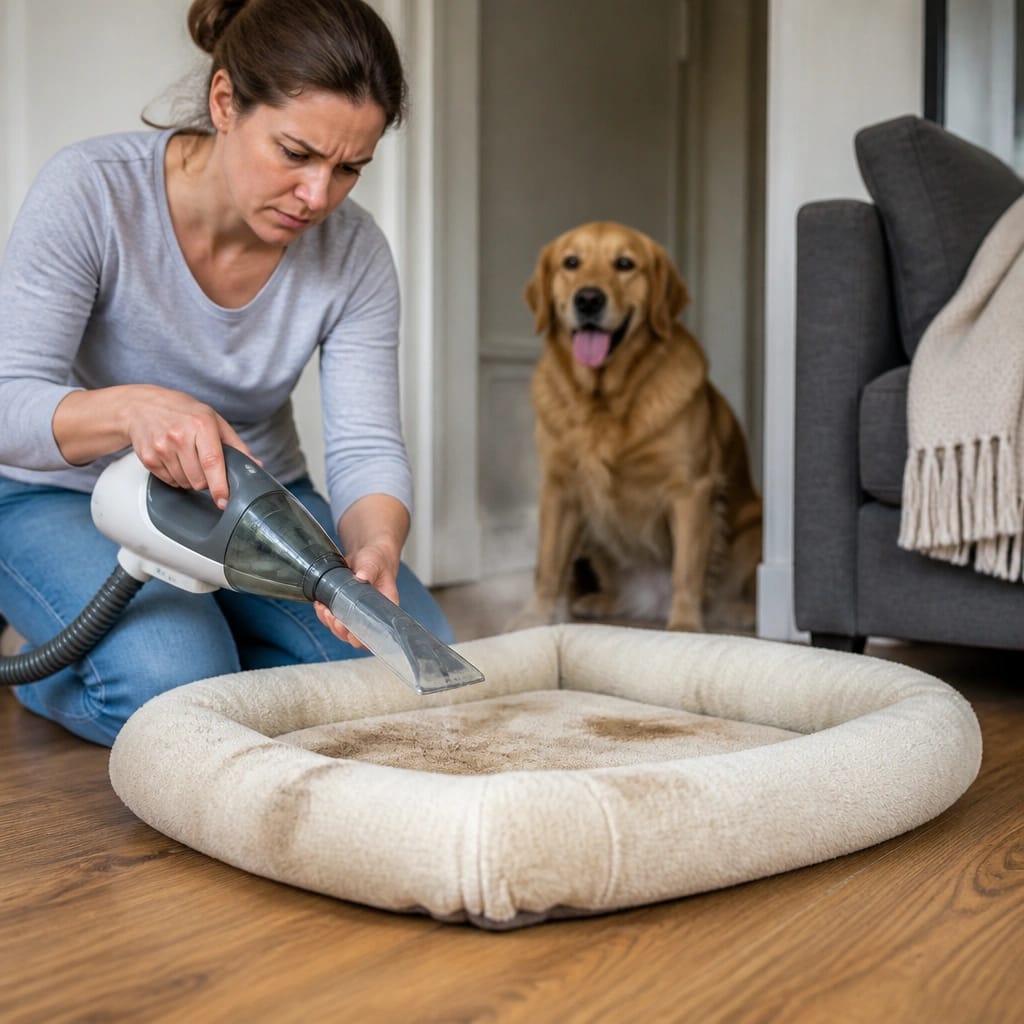
Step 1: Vacuum first. Run a vacuum with an upholstery attachment over the entire bed. Dirt and hair turn into a muddy mess when hit with steam.
Step 2: Remove the cover. If the cover zips off, take it off and steam it separately on a flat surface. Never steam the foam core directly.
Step 3: Spot test. Test steam on a hidden corner of the fabric. Wait for it to dry. Check for color bleeding or shrinkage.
Step 4: Steam in passes. Hold the nozzle 6 to 12 inches from the fabric. Move in slow overlapping passes. Don’t linger in one spot.
Step 5: Blot moisture. Use a clean dry towel to blot the fabric immediately after steaming. Remove as much moisture as you can.
Step 6: Dry completely. Let the cover air dry for 24 to 48 hours. Place it in a well-ventilated area or use a fan. Do not put it back on the foam until bone dry.
If your bed has a waterproof liner, you have more flexibility. Beds with built-in moisture barriers let you steam more aggressively without worrying about the core.
The Most Common Mistakes Owners Make
Steaming the foam directly. This is the biggest one. The foam acts like a sponge. Once wet, it stays wet for days.
Mold follows.
Saturating the fabric. You don’t need to soak the bed. Steam sanitizes on contact. Too much moisture creates drying problems.
Skipping the vacuum step. Dirt mixed with steam turns into a paste. You’ll end up wiping mud deeper into the fabric instead of removing it.
Putting the cover back too soon. A damp cover against foam is a perfect environment for mildew. Wait until the cover is completely dry. If your dog chews or scratches at the bed while it’s drying, it might be worth checking why that behavior happens.
Special Situations That Change the Rules
Heated dog beds. Never steam a heated bed. Moisture and electricity don’t mix. The risk of shock or fire is serious.
Clean these with a damp cloth only. Heated beds require special care.
Non-removable covers. If the cover is sewn on, you have to clean the whole bed as one unit. Use a light steam pass and keep the nozzle 12 inches away. Towel blot immediately.
Then dry the bed with a fan for 48 hours.
Large orthopedic beds. Thick memory foam beds take the longest to dry. If you must steam the cover, remove it. Let the foam sit uncovered while the cover dries.
The foam needs airflow too.
Alternatives to Steam Cleaning (When It’s Not Safe)
If steam isn’t right for your bed, try these methods:
- Baking soda and vacuum. Sprinkle baking soda over the bed. Let it sit for a few hours. Vacuum thoroughly. This neutralizes odors without moisture.
- Enzymatic cleaner. Spray an enzymatic cleaner on stains. These break down organic matter like urine and drool. They’re safe for most fabrics.
- Machine wash the cover. If the cover is removable, wash it in cold water on a gentle cycle. Air dry or tumble dry on low.
- Sunlight and fresh air. UV rays kill bacteria naturally. Place the bed outside on a sunny day. This works well for odor control.
For beds with cedar fillings, steam is especially risky. Cedar absorbs moisture and loses its natural scent. Our guide on cedar filled beds explains the best care methods for those.
The Environmental Protection Agency notes that moisture control is the key to preventing mold in any fabric or foam product. If you can’t dry a bed fully within 48 hours, avoid any cleaning method that adds water.
Dog Bed Steam Cleaning Safety and Warnings
Steam is hot. Keep the nozzle away from your dog’s skin and paws. Let the bed cool completely before letting your dog use it.
Never steam a bed with exposed zippers, buttons, or tags. The heat can melt plastic components. Metal parts can get hot enough to burn.
If your dog has allergies or skin sensitivities, steam is a chemical-free option. But always rinse the fabric afterward. Residual moisture can trap allergens if left to dry slowly.
FAQ: Quick Answers to Related Questions
Can I steam a memory foam dog bed?
No. Direct steam will damage memory foam. The heat can deform it.
The moisture can cause mold. Remove the cover and steam that separately.
How often should I steam clean my dog’s bed?
Every one to three months for maintenance. More often if your dog has allergies, incontinence, or heavy shedding. Spot clean between deep cleans.
What temperature kills bacteria on a dog bed?
Steam at 212°F kills bacteria and dust mites on contact. The fabric surface reaches this temperature instantly. The foam core never needs to reach that heat.
Can I use a steam mop on a dog bed?
Not recommended. Steam mops deliver too much moisture. They’re designed for hard floors, not thick fabric.
Use a handheld steamer with a fabric attachment instead.
How do I dry a dog bed after steam cleaning?
Remove the cover and air dry it for 24 to 48 hours. Use a fan or place it in direct sunlight. Do not reassemble the bed until the cover is completely dry.
Final Verdict: Should You Steam Clean Your Dog Bed?
Yes, but only the cover. Steam is excellent for sanitizing fabric, removing odors, and killing allergens without chemicals. It’s fast and effective.
The foam core stays dry. That’s the rule. If you follow it, steam cleaning is one of the best ways to keep your dog’s bed fresh and hygienic.
If you ignore it, you risk permanent damage and mold growth.
Check the care tag. Know your bed’s construction. When in doubt, skip the steam and use an enzymatic cleaner or baking soda instead.
Your dog’s bed will last longer, and your dog will sleep better.


