How to Choose a Puppy Bed for a Teething Dog
To choose a puppy bed for a teething dog, prioritize chew-resistant fabrics. Look for ballistic nylon, canvas, or denim covers. Avoid beds with loose stuffing or soft foam cores.
Choose a flat design without bolsters or raised edges. Ensure the bed is machine washable with a waterproof liner.
Knowing how to choose a puppy bed for a teething dog is different from shopping for an adult dog bed. Your puppy’s gums are sore, their jaw is getting stronger, and everything goes straight into their mouth. A standard pillow bed with soft stuffing can become a choking hazard in minutes.
As of 2026, the pet bedding industry offers materials designed specifically for this destructive phase. Ballistic nylon, reinforced seams, and no-stuffing construction are now common. But knowing which features actually matter takes more than scanning product descriptions.
Let’s look at what really keeps a teething puppy safe and comfortable.

Why a Teething Puppy Changes Everything About Choosing a Bed
Teething puppies chew differently than adult dogs. They chew for relief from sore, swollen gums rather than boredom or exploration. This means they chew harder, longer, and with more determination.
The American Kennel Club notes that teething typically lasts from three to six months of age. During this window, the urge to gnaw is intense. A bed that works for a calm adult dog can be destroyed in hours by a teething puppy.
The real danger is not just a ruined bed. It is what your puppy might swallow. Stuffing, foam chunks, zipper pulls, and fabric scraps can cause intestinal blockages.
If you notice excessive chewing habits, it is worth understanding what drives that behavior.

What Makes a Bed Safe for a Teething Dog (and What Doesn’t)
Safety starts with the outer fabric. Ballistic nylon, canvas, and denim are tough enough to resist punctures. Avoid soft fleece, plush fabrics, or anything with a velvet texture.
Puppy teeth will shred those quickly.
The fill matters as much as the cover. Beds with no loose stuffing eliminate the choking risk entirely. Some use a solid slab of high-density foam wrapped in a waterproof liner.
Others use a flat, no-fill design like a cot or raised mat.
Look for a waterproof inner liner between the cover and fill. This protects the core from drool, accidents, and blood from teething gums. Without it, moisture soaks in and creates bacteria problems.
Check for certifications like OEKO-TEX Standard 100 or CertiPUR-US. These confirm the materials are free from harmful chemicals. Puppies mouth their beds constantly, so non-toxic construction is non-negotiable.

The Main Types of Beds for Teething Puppies
Not all bed styles work for a teething puppy. Here are the main options that actually hold up.
Flat mat or crate mat. These are thin, firm pads with minimal or no stuffing. They give your puppy less to grab onto. Many are made from chew-resistant materials and fit perfectly inside a crate.
Raised cot bed. A mesh or fabric surface stretched over a metal or plastic frame. Air circulates underneath, keeping your puppy cool. There is nothing to sink teeth into.
These are one of the safest options for heavy chewers.
No-stuffing chew-resistant bed. These look like a normal bed but use a solid foam core wrapped in a waterproof liner and heavy-duty cover. No loose fill means no ingestion risk. The cover is typically removable and washable.
Avoid: bolster beds, donut beds, and pillow beds. These have raised edges or soft stuffing that puppies love to grab and shake. The bolsters become chew toys. The stuffing becomes a mess on your floor.
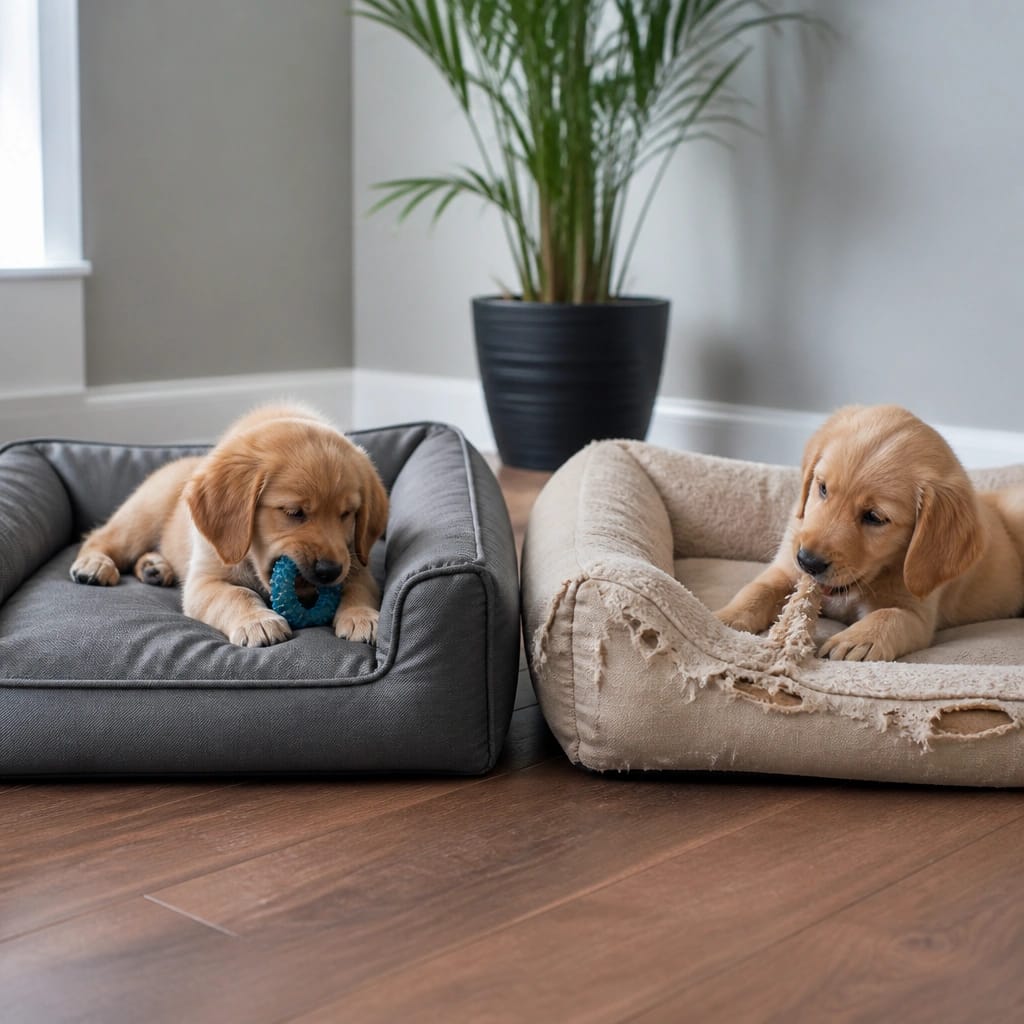
Side-by-Side Comparison: Chew-Resistant Beds vs. Standard Puppy Beds
The difference between a regular puppy bed and a chew-resistant one comes down to construction and materials. Here is how they compare.
| Feature | Chew-Resistant Bed | Standard Puppy Bed |
|---|---|---|
| Outer fabric | Ballistic nylon, canvas, denim | Fleece, plush, microfiber |
| Seams | Double-stitched or taped | Single-stitched |
| Fill | Solid foam or no fill | Loose stuffing or fiberfill |
| Zipper | Locking or covered | Exposed plastic zipper |
| Waterproof liner | Yes, built-in | Rarely included |
| Ingestion risk | Low | High |
| Machine washable | Usually yes | Varies |
| Typical lifespan during teething | 3 to 6 months | Days to weeks |
Chew-resistant beds cost more upfront, but they usually survive the entire teething phase. Standard beds need replacement multiple times and create a higher risk of ingestion. For most owners, the chew-resistant option saves money in the long run.
If you are using a crate for training, you may want to explore crate mat options that fit the safety requirements we discussed.
Key Features to Look For (and Which to Avoid)
Here is what to check before you buy.
Fabric type. Look for ballistic nylon, 1000 denier Cordura, or heavy cotton canvas. Avoid fleece, faux fur, velvet, and microfiber. Your puppy’s teeth will cut through those fabrics in minutes.
Seam construction. Double-stitched or bound seams last longer. Single-stitched seams pop open under pressure. Some beds use taped seams similar to outdoor gear.
Zipper quality. A metal zipper with a locking mechanism is best. If the zipper breaks, your puppy can access the fill. Some beds hide the zipper under a flap or cover it with a fabric guard.
Waterproof liner. This is a must. A waterproof inner layer protects the foam or fill from drool, urine, and blood from teething gums. Without it, the bed holds odors and bacteria.
Our guide on waterproof liners explains how they work.
Washability. The entire bed or at least the cover should be machine washable. Teething puppies generate a lot of drool and can have accidents. A bed that cannot be washed will not stay fresh.
Size. Buy a bed that fits your puppy’s expected adult size. A bed that is too small will be uncomfortable. A bed that is too large may not feel secure in a crate.
Check our proper sizing guidance for measurements.
What to avoid: zipper pulls that dangle, loose tags, removable squeakers, thin foam that crumbles, and any bed labeled junior or puppy that uses low-quality materials.