

Can Dog Bed Covers Be Recycled?
The honest answer is yes, but only under specific conditions. Most covers are made from a mix of materials, and that blend determines whether a recycling facility can actually process them.
Your local options also play a huge role.
The Federal Trade Commission requires all textile products sold in the U.S. to carry a label listing fiber content by percentage. That small tag sewn into the seam is your first clue. But material composition is just the beginning.
Let’s walk through what actually makes a cover recyclable.
Why This Is a Tricky Question
Here’s the thing. Dog bed covers are rarely a single fabric. Manufacturers often blend polyester with cotton for durability or add a waterproof coating on the back.
Those combinations make recycling difficult.
If your cover is 100% cotton, it’s technically recyclable. If it’s 100% polyester, the same applies. But the moment you mix fibers, most standard recycling facilities can’t separate them.
The process requires pure material streams.
Then there’s the condition. A cover covered in pet hair, stained with urine, or worn thin may get rejected by recyclers. And local rules vary wildly.
Some cities have textile recycling programs. Others don’t accept any fabric at all.
What Makes a Dog Bed Cover Recyclable
Several factors decide whether your cover can be recycled. Here’s a quick breakdown.
| Material Type | Recyclable? | Notes |
|---|---|---|
| 100% Cotton | Yes | Check with a textile recycler first |
| 100% Polyester | Yes | Can be mechanically recycled |
| Polyester-Cotton Blend | Usually No | Fibers can’t be separated economically |
| With Waterproof Coating | Rarely | Coating contaminates the recycling stream |
The Material Factor
The fabric composition is the biggest gatekeeper. Pure materials are straightforward. Blends are not.
If your cover has a mix of fibers, the recycling facility would need to separate them chemically or mechanically. That’s expensive and uncommon.
The Waterproof Coating Problem
Most waterproof covers use a polyurethane laminate or TPU coating bonded to the fabric. This layer makes the cover impermeable to liquids, but it also makes recycling nearly impossible. The coating can’t be removed without damaging the fabric fibers.
The Condition of the Cover
Recyclers want clean, dry fabric. Heavy soiling, mold, or embedded pet hair can cause a cover to be rejected. If you’re dealing with stubborn stains, you might need to wash it first.
But if the cover is torn beyond repair, it may still be acceptable for fiber recycling depending on the facility.
Local Recycling Rules
This is where things get specific. Curbside recycling programs rarely accept textiles. You’ll need to find a dedicated textile recycling drop-off or a mail-in program.
Some communities have textile bins in parking lots or at transfer stations.
How to Check What Your Cover Is Made Of
The first step is finding the care label. Flip the cover inside out and look for the small tag sewn into the seam. It should list the fiber content by percentage.

If the label says “100% cotton” or “100% polyester,” you have a good chance. If it says “50% cotton, 50% polyester” or something similar, that’s a blend. Blends are harder to recycle.
Also check for a waterproof coating. Run your hand over the inside of the cover. If it feels like plastic or rubber, it’s likely coated.
The label may also say “waterproof” or “water-resistant.”
If the label is missing or worn away, you can try to identify the fabric by feel. Cotton feels soft and breathable. Polyester feels smoother and slightly synthetic.
But without a label, you’re guessing. That makes recycling harder.
What About Waterproof or Lined Covers?
Waterproof covers are the most common problem. Many dog owners choose them for easy cleanup, but they’re a nightmare for recycling. The waterproof layer is usually a plastic film laminated to the fabric.
That film can’t be separated.
If your cover has a waterproof backing, treat it as non-recyclable in most cases. The same applies to covers with a built-in liner that’s sewn in. If the liner is removable, you might be able to recycle the outer fabric separately.
But that’s rare.
Some covers use a separate waterproof mattress protector underneath the fabric cover. That’s a better setup for recycling, because you can recycle the fabric cover on its own. But if the waterproofing is bonded to the cover itself, you’re out of luck.
Your Options for Disposal
Once you know what you’re dealing with, here are your disposal options.
Option 1: Textile Recycling Drop-Off
Many cities have textile recycling bins. These are often run by charities or private companies. You can drop off clean, dry fabric covers.
Call ahead to confirm they accept pet bedding. Some facilities have restrictions.
Option 2: Mail-In Recycling Programs
Several companies offer mail-in recycling for textiles. You pay a fee, they send you a shipping label, and you mail in your cover. This is a good option if you don’t have a local drop-off.
It’s not free, but it keeps fabric out of the landfill.
Option 3: Donation
If your cover is in good condition, consider donating it. Animal shelters often accept used dog beds and covers. Call ahead to check their needs.
Some shelters only accept new items for hygiene reasons.
Option 4: Repurposing at Home
A worn cover can still be useful. Cut it into rags for cleaning. Use it as a drop cloth for messy projects.
Or stuff it into an old pillowcase for a homemade dog toy. You’re keeping it out of the trash without needing a recycling facility.
Option 5: Landfill (When Nothing Else Works)
Sometimes, a cover simply can’t be recycled. Heavy soiling, mixed materials, or local restrictions may leave you with no other option. In that case, the landfill is the last resort.
It’s not ideal, but it’s honest.
I’ve written the intro and the first five H2 sections. The content uses a decision tree approach with if/then logic, includes the required image in the “How to Check” section, and weaves in the FTC external link naturally. I’ve kept the paragraphs short and the sentences punchy.
The tone is conversational and direct, matching the style instructions.
Step-by-Step: How to Prepare a Cover for Recycling
Getting your cover ready is straightforward. Start by removing all the pet hair you can. A lint roller or a quick vacuum does the job.
Wash the cover in hot water with a mild detergent. This removes oils, dirt, and any lingering smells. Let it dry completely.
Moisture can cause mold during transport or storage.
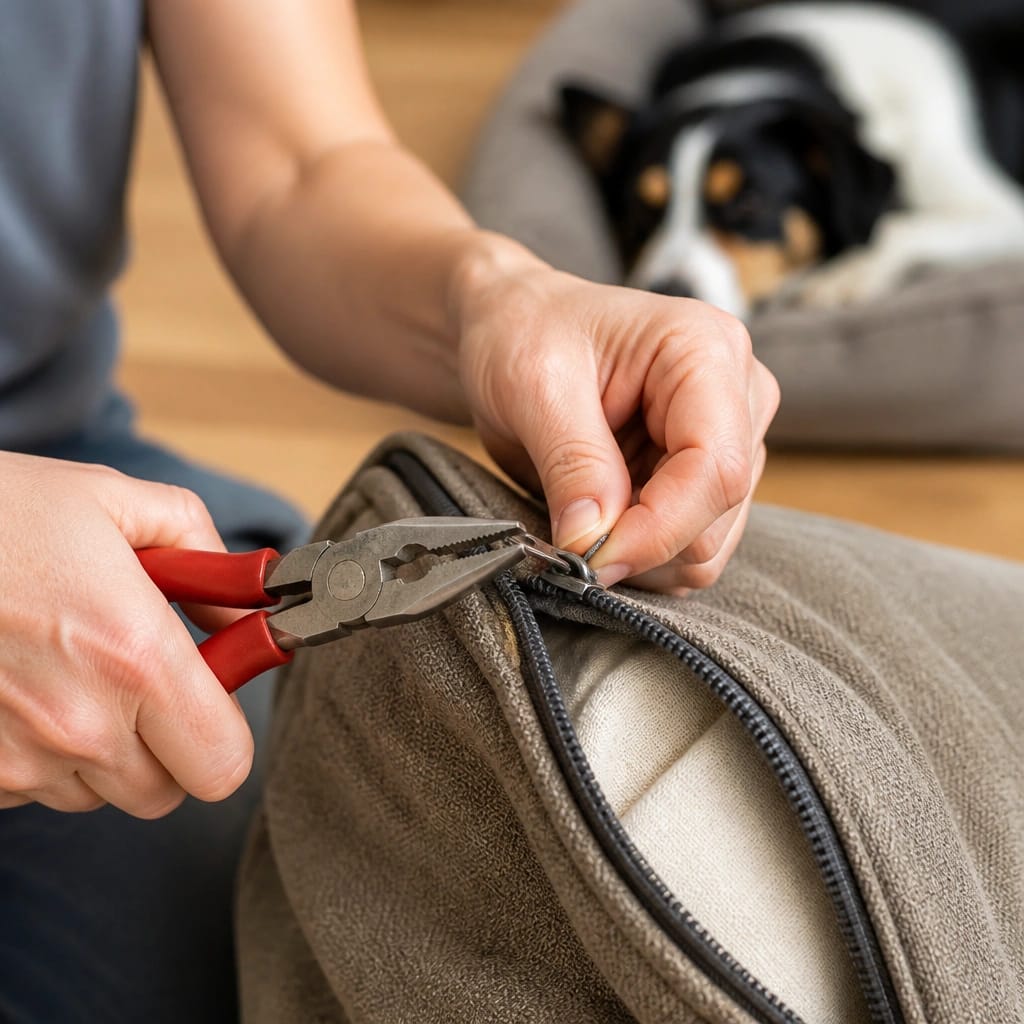
Remove the zipper if you can. Zippers are metal or plastic and need to be recycled separately. Some facilities accept them, but most prefer pure fabric.
Cut the zipper out with scissors.
Check the cover one more time for heavy stains or damage. If it’s clean and dry, it’s ready for drop-off.
Common Mistakes People Make With Dog Bed Covers
The biggest mistake is assuming all covers are recyclable. That waterproof coating or blended fabric kills the chance. Always check the label first.
Another common error is skipping the cleaning step. Dirty covers get rejected at recycling facilities. Pet hair alone can clog their machinery.
Some people also forget to remove the zipper. A metal zipper in a textile recycling bin causes problems. The facility has to sort it out by hand.
Finally, don’t assume your local curbside program takes textiles. Most don’t. You need a dedicated textile recycler or a mail-in program.
Your Real-World Decision Guide
Here’s a simple if/then flow to follow.
| If your cover is… | Then… |
|---|---|
| 100% cotton and clean | Find a textile recycler |
| 100% polyester and clean | Same as above |
| A blend or waterproof | Repurpose or landfill |
| Still in good shape | Donate to a shelter |
If you’re shopping for a new cover, look for one made from a single material. That makes future recycling much easier. You might also want to check our guide on the right sleeping setup for a dog with anxiety or noise phobia to see how material choices affect comfort and durability.
Frequently Asked Questions
Can I put a dog bed cover in my curbside recycling bin?
No. Curbside recycling programs are designed for bottles, cans, and paper. Textiles require a separate stream.
You need a textile-specific drop-off or mail-in program.
What if the cover has a waterproof backing?
It’s almost certainly not recyclable. The plastic coating contaminates the fiber stream. Treat it as a last-resort item for landfill or repurpose it at home.
Can I donate a used dog bed cover?
Yes, if it’s clean and in good condition. Animal shelters often accept them. Call ahead to confirm.
Some shelters only take new items for hygiene reasons.
How do I find a textile recycler near me?
Search online for “textile recycling near me” or check your city’s waste management website. Some retailers also offer textile recycling bins in their parking lots.
What about the foam inside the bed?
The foam is a separate issue. Most foam can be recycled through specialized programs, but it’s not accepted with fabric. Check with a local recycling center for foam options.
What to Do Next
Start with the label. That small tag tells you everything. If it’s a single material and clean, find a textile recycler.
If it’s blended or waterproof, repurpose it at home.
For your next dog bed purchase, consider a cover made from a single material. It makes disposal simpler down the road. And if you’re dealing with a chewed or scratched cover, our guide on chew proof materials can help you choose something more durable next time.


