

How Many Dog Beds Does My Dog Actually Need?
Most dogs need one primary bed for sleeping at night. Many homes benefit from a second bed in a main living area. Homes with multiple levels usually need one bed per floor.
Travel and crate setups add extra beds when needed. The minimum is one bed per dog.
You’ve watched your dog circle the living room, flop onto the floor, and ignore the perfectly good bed you bought. Or maybe you’ve got three beds scattered around the house and your dog still sleeps on the rug. So the question becomes: how many dog beds does my dog actually need?
The short answer is that most dogs need at least one comfortable, supportive bed, but many households need two, three, or even more depending on your home’s layout, your dog’s age, and their daily routine. As of 2026, manufacturer specifications and veterinary guidance agree that matching the bed count to your dog’s real habits matters far more than hitting a magic number. Let’s walk through the decision so you can stop guessing and get it right.
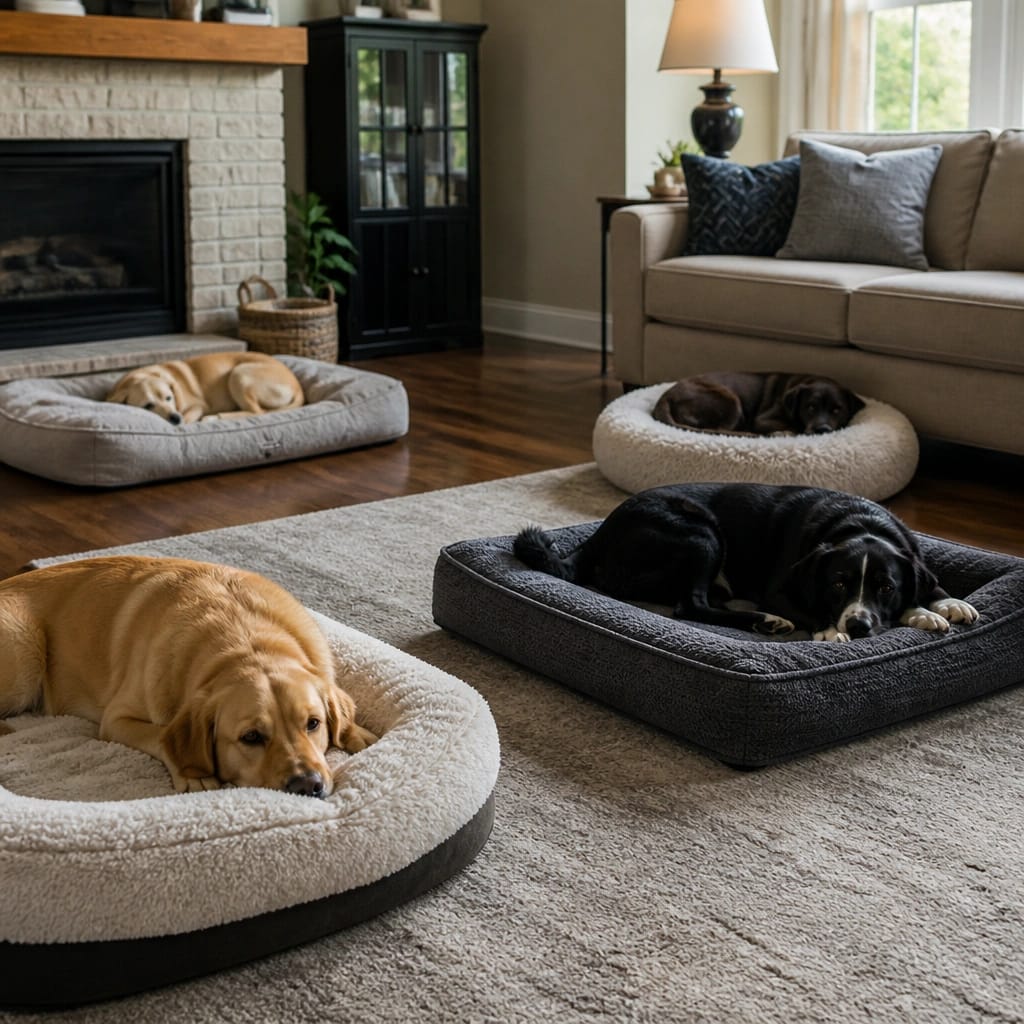
Why the “One Bed” Rule Doesn’t Work for Every Dog
The “one bed per dog” rule sounds simple, but it ignores how dogs actually live in a home. Your dog doesn’t stay in one spot all day. They follow the sun, the family, and the temperature.
A puppy might sleep in a crate at night but nap on the living room floor during the day. A senior dog with arthritis may need a supportive bed in the bedroom and another in the family room. A dog in a two-story house won’t climb stairs every time they want to rest.
Our research and aggregate reviews from dog owners consistently show that dogs use beds more when the beds are where the dog already wants to be. A bed shoved in a corner that nobody visits becomes furniture, not a sleeping spot.

Factors That Decide How Many Beds You Need
Your Home’s Layout
A single-story apartment might need only one bed. A two-story house usually benefits from one bed on each level. Think about where your dog actually spends their time, not where you think they should sleep.
If you work from home and your dog naps near your desk, that’s a prime location for a bed. If your dog sleeps in your bedroom at night, that’s another. The goal is simple: put a bed wherever your dog routinely settles down for more than a few minutes.
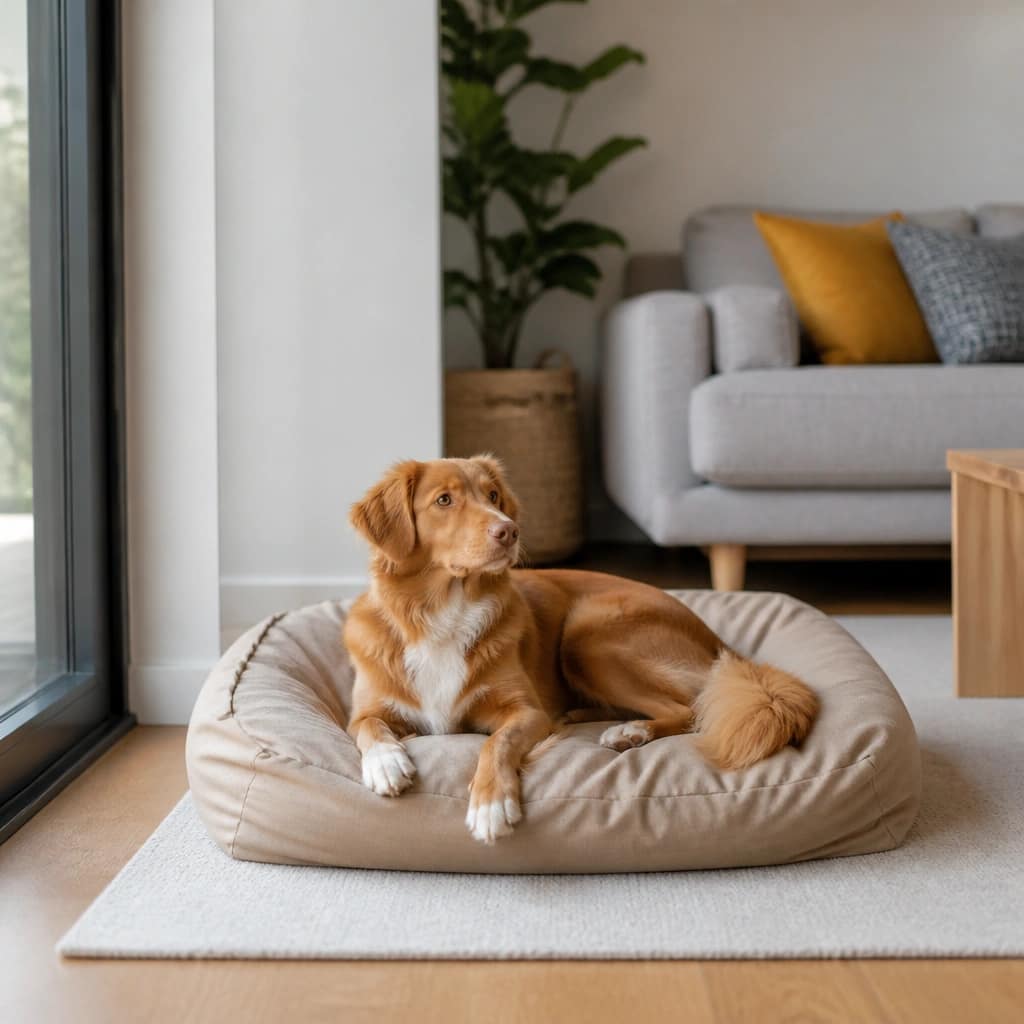
Your Dog’s Age and Life Stage
Puppies need beds that fit inside their crates for house training. They also go through chewing phases, so a washable, durable bed is essential. You might replace a puppy bed several times before they grow into their adult size.
Senior dogs often need orthopedic support. A memory foam bed or a heated bed can help with joint stiffness. If your senior dog struggles with stairs, they need a bed on every level they use, not just the one where they sleep at night.
Your Dog’s Sleeping Habits
Some dogs are “velcro dogs” who follow you from room to room. Others claim one spot and rarely move. Watch your dog for a few days.
Where do they settle first when you sit down? Where do they go when you leave the room?
Dogs that love to burrow often prefer a cave-style or donut bed. Dogs that sprawl out flat need a larger open bed. Matching the bed style to your dog’s habits is often more important than the number of beds.
Household Size and Routine
If you have two dogs, they might share a giant bed or they might not. Many dogs prefer their own space, especially when they’re sleeping. The safe rule is one bed per dog, plus one extra if space allows.
Consider your daily routine too. If you travel regularly, a portable bed for the car or hotel makes sense. If your dog spends time in a crate while you’re at work, they need a comfortable crate mat or pad.
How Many Beds by Scenario: A Quick Decision Guide
Here is a simple way to think through it based on your situation:
- Single dog, single-story home: One bed is usually enough. Add a second if your dog rotates between rooms.
- Single dog, two-story home: Start with two beds, one per level. Add a crate bed if you use a crate.
- Multiple dogs, single-story home: One bed per dog minimum. A giant shared bed can work if your dogs already sleep together.
- Multiple dogs, two-story home: One bed per dog per level your dogs actually use. That can mean four beds for two dogs.
- Very small dogs: They often need warmth and security, so a cave-style bed in a quiet corner may be plenty.
- Large, active dogs: They may prefer a cool floor in summer and a warm bed in winter. An elevated cot bed works well for outdoor use.
The “One Bed Per Level” Rule (and When to Break It)
The one-bed-per-level rule is a solid starting point for most homes. It ensures your dog always has a comfortable spot close by without you carrying a bed up and down stairs all day.
Break the rule when your dog genuinely prefers one spot. If your dog always sleeps in your bedroom and nowhere else, a single bed is fine. If you live in a small apartment where the living room and bedroom are steps apart, one bed may cover both.
Similarly, if your dog spends significant time outside, an outdoor bed changes the math. A weather-resistant elevated cot for the patio plus an indoor bed for sleeping is a practical combination. Check the differences between indoor and outdoor dog beds to see which setup fits your climate.
The real goal isn’t hitting a specific number. It’s making sure your dog has a comfortable, supportive place to rest wherever they spend their time.
The 1:1 rule for multi-dog households is the safest starting point. Each dog gets their own bed, and that’s non-negotiable. Dogs need their own space to sleep, especially in multi-dog homes where resource guarding or simple personality clashes can make sharing stressful.
That said, some dogs genuinely prefer to share. If your two dogs regularly curl up together on their own, a giant shared bed can work. Watch for signs of tension during rest time.
If one dog avoids the shared bed or seems anxious, go back to separate beds.
Crate Beds vs. Free-Standing Beds: Do You Need Both?
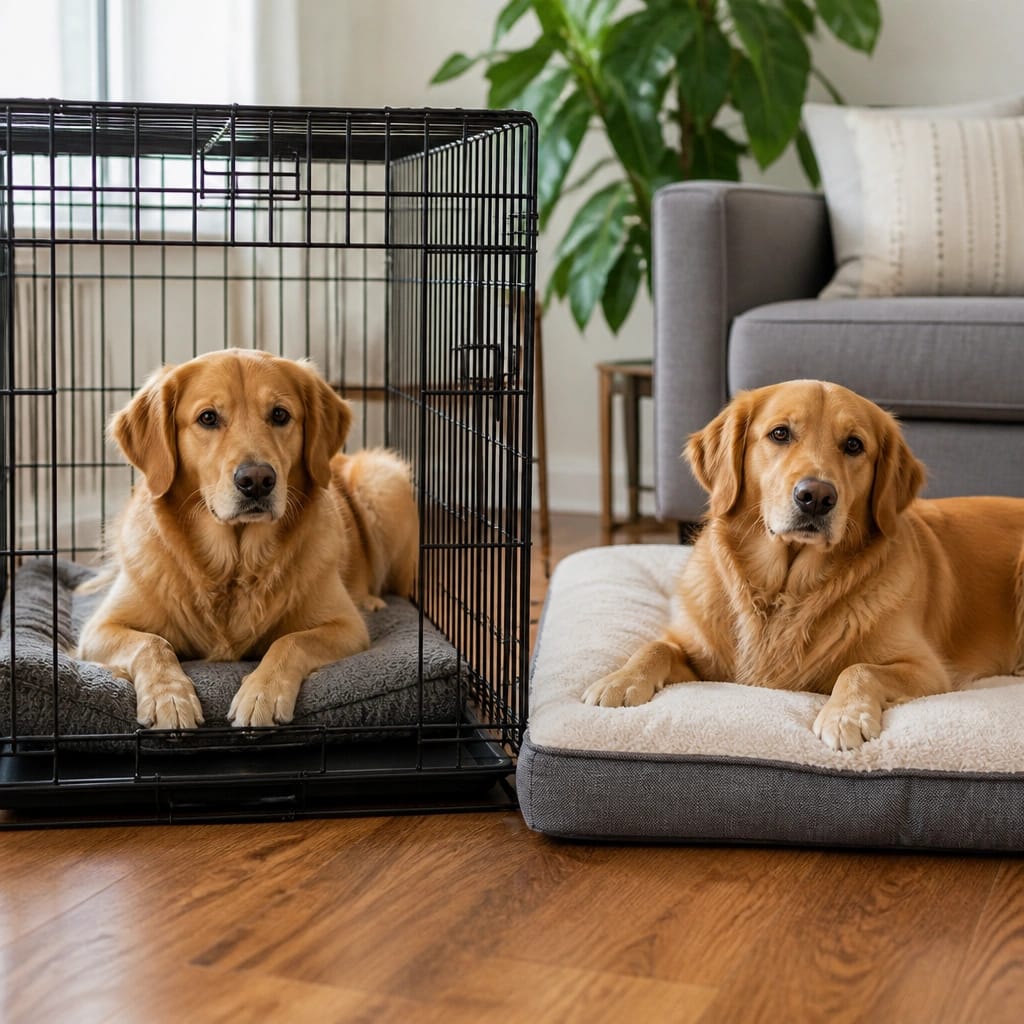
When you crate train, the crate bed and the lounging bed serve different purposes. A crate bed needs to fit snugly inside the crate with no extra space for your dog to potty in one corner. A free-standing bed can be any size that suits your dog’s sleeping style.
If your dog sleeps in the crate at night but naps on the couch during the day, you likely need both. The crate gets a firm, washable mat or pad. The living room gets a softer, larger bed.
Many owners find that a single bed can’t do both jobs well. Refer to the differences between crate pads and crate mats to choose correctly for the crate.
Outdoor and Weather-Specific Beds
If your dog spends significant time outside, an outdoor bed is not optional. Cold concrete or hot pavement is hard on joints and body temperature. A weather-resistant elevated cot keeps your dog off the ground and allows air to circulate underneath.
For cold climates, a heated outdoor bed can make a real difference for short-haired breeds or senior dogs. For hot climates, a cooling elevated cot helps prevent overheating. The key specification to check is whether the bed is designed for outdoor use, with waterproof or water-resistant materials that you can hose down.
Signs You Have Too Many Beds (or Too Few)
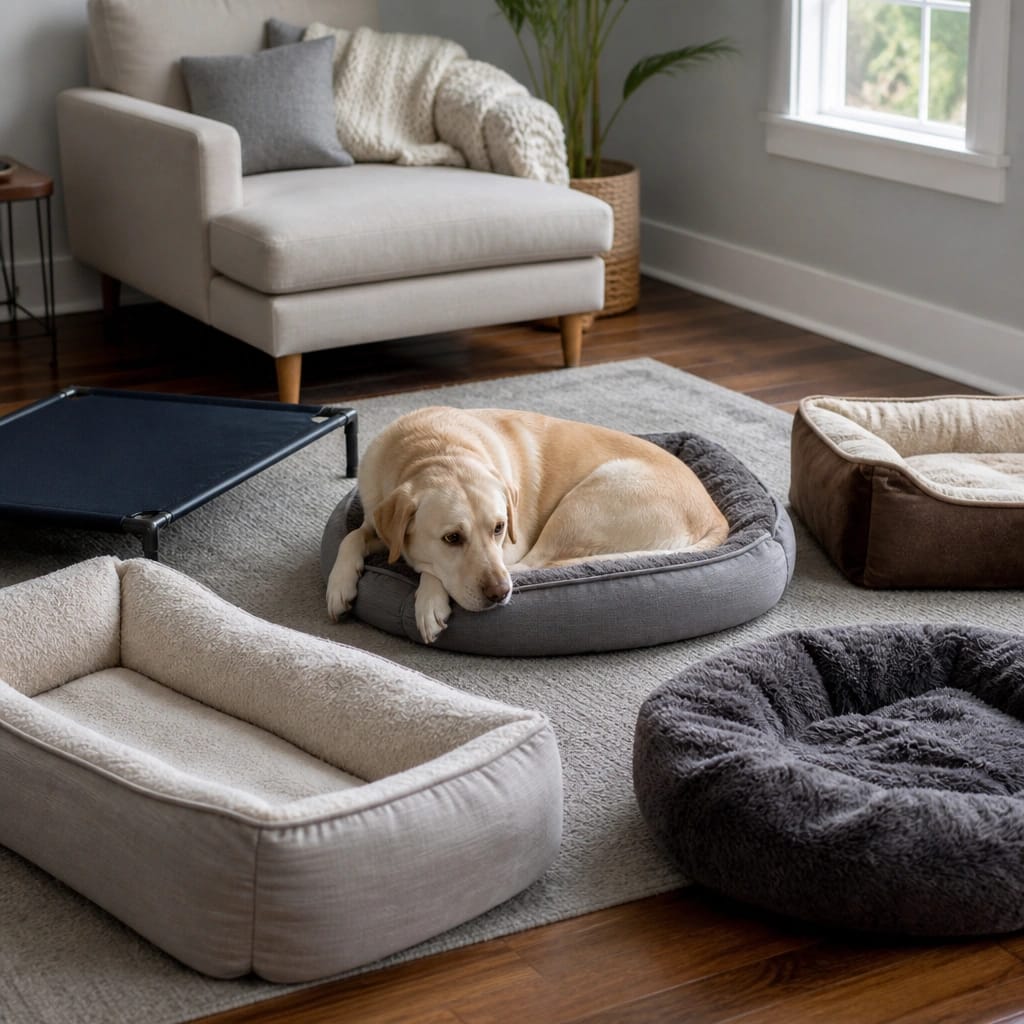
Too many beds show up as clutter. If you have three beds in one room and your dog uses only one, the others are just taking up space. Beds that collect dust and never get slept in are a clear sign you overshot.
Too few beds are easier to spot. Your dog chooses the floor, the tile, or your bed over the bed you bought. That usually means the bed is uncomfortable, too small, or in the wrong location.
If your dog repeatedly sleeps on the floor, the bed itself is the problem, not the count.
Common Mistakes Owners Make With Dog Bed Counts
The biggest mistake is buying one giant bed and expecting it to work everywhere. Another common error is ignoring the crate entirely. A dog that sleeps in a crate with no padding is sleeping on hard plastic or wire, which is uncomfortable and cold.
Matching the bed size to your dog’s weight and length matters more than most owners realize. A bed that’s too small discourages use, and a bed that’s too large can feel unsafe for dogs that like to nest. Owners also forget to wash beds regularly.
A dirty, smelly bed gets avoided even when it’s comfortable.
How to Test Whether Your Dog Needs Another Bed
Spend two weeks observing your dog’s sleep patterns. Note where they settle at different times of day. If you find them consistently choosing the floor in the same spot, that spot needs a bed.
A simple test is to temporarily move an existing bed to that location. If your dog starts using it, you have your answer. If they ignore it there, the issue may be the bed itself rather than the count.
Check the dog bed size chart by weight to confirm you have the right size first.
Quick Reference Table: How Many Beds Does Your Dog Need?
| Scenario | Recommended Bed Count | Notes |
|---|---|---|
| Single dog, single-story home | 1–2 | One primary bed, one optional in main living area |
| Single dog, two-story home | 2–3 | One per level, plus crate/travel bed if used |
| Two dogs, single-story home | 2 | One per dog minimum; shared bed if they prefer |
| Two dogs, two-story home | 4 | One per dog per level your dogs use |
| Puppy in crate training | 2 | One crate mat, one lounging bed for outside the crate |
| Senior dog with mobility issues | 2–3 | One per level, orthopedic support preferred |
Frequently Asked Questions
Do dogs really need their own bed?
Yes, dogs benefit from a designated sleeping space they can claim as their own. It provides comfort, warmth, and a sense of security. A bed also protects joints from hard floors and helps maintain body temperature during sleep.
Can my dog just use blankets instead?
Blankets can work as a temporary solution, but they don’t provide the joint support or consistent padding of a proper bed. Blankets also shift and bunch up, leaving your dog on bare floor in the middle of the night. A bed with a non-slip base stays put.
Is it okay to have too many dog beds?
It’s not harmful, but it becomes wasteful and cluttered. Dogs only need a few comfortable spots that match their routine. If you have unused beds collecting dust, donate them or repurpose them in a different room to see if your dog prefers the new location.
How often should I wash each bed?
Wash beds every one to two weeks, depending on how much time your dog spends on them. Dogs with skin allergies or heavy shedding may need weekly washing. Always follow the manufacturer’s care instructions, and consider a waterproof bed or liner to protect the inner foam.
Final Takeaway: Match the Bed Count to Your Dog’s Real Life
The right number of beds comes down to three things: your dog’s age, your home’s layout, and your dog’s actual sleeping habits. Start with one bed per dog per level. Watch where your dog chooses to rest for a week.
Adjust from there.
Quality matters more than quantity. A single well-sized, supportive bed in the right location beats four unused beds stacked in a corner. If you’re still seeing your dog on the floor, revisit the bed’s size, firmness, and placement.
And if your dog keeps choosing your bed over their own, that’s a separate habit to address.
If you want changes, tell me which section to revise. I can tighten the FAQ, expand a specific heading, adjust the tone, or rewrite any part that isn’t landing the way you want.


