

Are Loose Threads Dangerous for Dogs?
Yes, loose threads are dangerous for dogs. A single strand of thread or fabric can cause a life-threatening veterinary emergency called a linear foreign body. This happens when a dog swallows a piece of string, thread, or fabric that gets anchored inside the digestive tract.
Veterinary teaching hospitals report hundreds of cases each year involving swallowed string, fabric, or thread. The condition develops fast, often within 6 to 24 hours of ingestion. Let’s walk through why this common household item is such a serious threat.

Yes, loose threads are dangerous for dogs. They can cause a linear foreign body obstruction. This often requires emergency surgery.
Thread can get stuck on the tongue or teeth. It then pulls the intestines like an accordion. Never pull a thread from your dog’s mouth.
Why This Question Is a Real Emergency
A loose thread might seem harmless. It’s just a piece of fabric, right? Wrong.
The problem is how the thread moves through the body. Once swallowed, one end can get caught on the tongue, teeth, or in the stomach. The other end keeps traveling through the intestines.
This creates a tug-of-war inside your dog. The intestines try to push the thread along, but the anchored end won’t budge. The result is a condition called intestinal plication.
Think of it like gathering fabric on a drawstring. The intestines bunch up, blood flow gets cut off, and tissue starts to die.
This is a true emergency. Without treatment, the intestinal wall can perforate. That leads to peritonitis, a life-threatening infection.
Waiting to see if the thread passes on its own is not a safe option.
How a Loose Thread Becomes a Life-Threatening Problem
The mechanics of a linear foreign body are straightforward but scary. The dog swallows the thread. One end often hooks onto the base of the tongue.
The rest travels down the esophagus into the stomach. From there, it moves into the small intestine.

Image source: Wikimedia Commons / Y. Rosen, MD (CC BY-SA)
The image above shows a foreign body in an arteriole, but the concept is similar. The thread acts like a saw. Each time the intestine contracts, the thread cuts a little deeper into the tissue.
Over hours, it can slice through the intestinal wall.
The type of thread matters. Nylon and polyester are strong and resist breaking. Cotton can break down, but it still causes damage before it does.
The length of the thread is also critical. Even a few inches can cause a serious obstruction. Dogs that chew on their bedding are at especially high risk, and this is a common reason why a dog might start chewing on their bed.
Which Dogs Are Most at Risk
Any dog can swallow a thread, but some are more vulnerable than others. Puppies explore the world with their mouths. They are more likely to chew on loose threads from toys, bedding, or carpet.
Small breeds are especially at risk because their intestines are narrower. A thread that might pass through a large dog can easily block a small one.
Dogs that love to chew or shred fabric are also high-risk. This includes breeds like Labrador Retrievers, Golden Retrievers, and terriers. Dogs with anxiety or noise phobia may turn to destructive chewing as a coping mechanism.
And dogs that are left alone for long periods may chew out of boredom.
The size of the dog also affects the outcome. A small dog needs less thread to cause a blockage. Owners of smaller breeds should be extra vigilant.
Choosing the right size bed for your puppy versus an adult dog can help reduce the risk of chewing on ill-fitting bedding.
Where Loose Threads Hide: Dog Beds, Toys, and More
Loose threads are everywhere in a dog’s environment. The most common source is the dog bed. Seams on beds can unravel over time, especially with regular washing.
Stuffed toys are another major culprit. The seams on squeaky toys, plush animals, and rope toys are all potential sources.
Other hidden sources include:
- Carpet edges and rugs
- Upholstery on furniture
- Clothing, especially socks and sweaters
- Towels and blankets
- Curtains and drapes
- Tinsel and ribbon during holidays
Even a small loose thread on a toy can be dangerous. Dogs often pull at threads with their teeth, which makes the thread longer. Before you know it, a few inches of thread becomes a foot or more.
The best way to prevent this is to inspect your dog’s bedding and toys regularly. Fabric choice matters, and opting for chew-proof materials can significantly reduce the risk.
Signs Your Dog May Have Swallowed a Thread
The symptoms of a linear foreign body are not always obvious. They can mimic other conditions. The key is to act quickly if you notice any of these signs:
- Vomiting, especially after eating or drinking
- Loss of appetite or refusing food
- Lethargy or weakness
- Diarrhea or constipation
- Straining to defecate
- Drooling more than usual
- Pawing at the mouth
- Visible string or thread around the anus
If you see a thread sticking out of your dog’s mouth, do not pull it. That can cause more damage. Instead, keep the dog calm and go to the vet immediately.
If you see thread around the anus, do not pull it either. The thread may be looped through the intestines. Pulling it can tear the tissue.
The American Veterinary Medical Association recommends seeking immediate veterinary care if you suspect your dog has swallowed a string or thread. The ASPCA Animal Poison Control Center also advises against waiting to see if the thread passes. Early intervention is the best chance for a full recovery.
What to Do If You See a Thread Hanging from Your Dog

Stay calm. Do not pull the thread. If you see string hanging from the mouth or anus, leave it alone.
Pulling can tighten the loop around the tongue or tear the intestinal wall.
Keep your dog from chewing at the thread. Prevent them from eating more. Gently trim any visible thread close to the body, but never tug.
Go straight to the vet. Time is critical.
Common Mistakes That Make Things Worse
The biggest mistake is waiting. Many owners hope the thread will pass naturally. With a linear foreign body, that rarely happens.
The thread gets stuck, and the damage keeps happening.
Another mistake is pulling the thread. This can cause serious internal tearing. Some owners also try to induce vomiting at home.
Do not do this. If the thread is already anchored, vomiting can force it deeper or cause perforation.
The third mistake is ignoring mild symptoms. A dog that vomits once or seems a little tired might seem fine. By the time symptoms are obvious, the thread has often been causing damage for hours.
How to Prevent Loose Thread Problems
Prevention is straightforward. Inspect your dog’s bed and toys every few days. Check seams, edges, and stitching.
If you see a loose thread, trim it flush with the seam. Do not pull it.
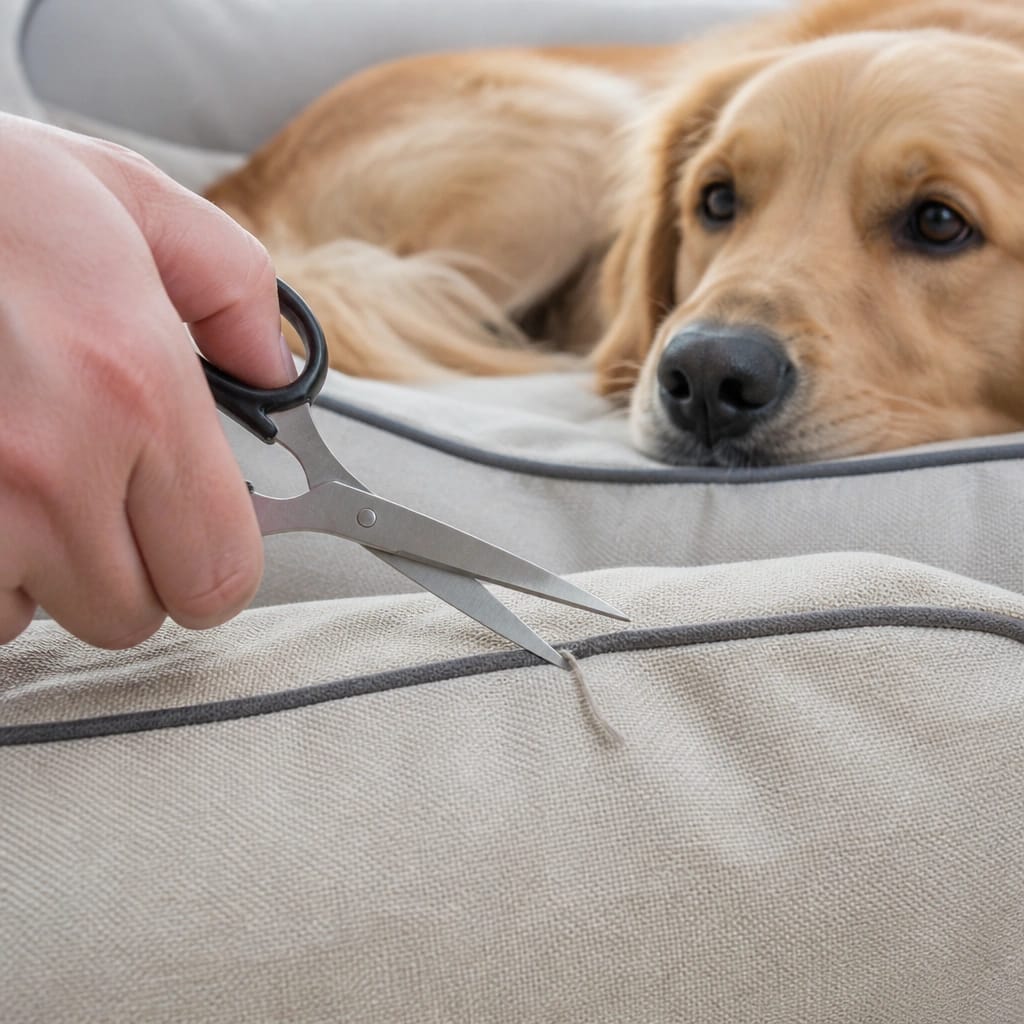
Choose beds and toys made with durable, chew-resistant materials. Avoid toys with loose ribbons, tassels, or long fur. Supervise your dog during play, especially if they are a chewer.
If your dog has a habit of chewing their bedding, consider switching to a bed with reinforced seams or a bed designed for heavy chewers.
When to Go to the Vet
Go immediately if you know your dog swallowed a thread. Go immediately if you see a thread hanging from the mouth or anus. Go immediately if your dog shows any signs of obstruction, such as vomiting, lethargy, or loss of appetite.
Do not wait for symptoms to get worse. The earlier the thread is removed, the better the outcome. Veterinary teaching hospitals report that dogs brought in within the first few hours have a much higher survival rate and a shorter recovery time.
The ASPCA Animal Poison Control Center provides emergency guidance and can be reached for advice.
What Treatment Looks Like
The vet will start with a physical exam and imaging. X-rays do not always show thread, but they can show signs of obstruction. Ultrasound is often more reliable.
If the thread is caught on the tongue, the vet may sedate the dog and remove it gently. If the thread has moved into the intestines, surgery is usually needed. The vet opens the abdomen and makes one or more incisions in the intestine to remove the thread.
Recovery takes a few days in the hospital, followed by a week or two of rest at home. Most dogs recover fully with prompt treatment. The cost ranges from $1,500 to $5,000 or more, depending on the severity and location.
Pet insurance covers this type of emergency in most policies.
Frequently Asked Questions
Can a dog pass a thread naturally?
Very rarely. Most threads get anchored inside the digestive tract. The intestines cannot push the thread through once it is stuck.
Waiting usually leads to worse damage.
What happens if a dog swallows a needle and thread?
This is even more dangerous. The needle can puncture the esophagus, stomach, or intestines. It requires immediate surgical removal.
Do not wait for symptoms.
How long after eating a thread do symptoms appear?
Symptoms usually appear within 6 to 24 hours. Some dogs show signs sooner. Others take a day or two.
The sooner you act, the better the outcome.
Are certain fabrics safer than others?
No fabric is safe once swallowed. Nylon and polyester resist breaking, which makes them more dangerous. Cotton can break down but still causes damage before it does.
Can I give my dog something to help pass the thread?
No. Do not give food, water, or medicine. This can make the problem worse.
Go straight to the vet.
The Bottom Line
Loose threads are a real and serious danger to dogs. A single swallowed strand can lead to emergency surgery. Check your dog’s bed and toys regularly.
Trim any loose threads immediately. If you suspect your dog has swallowed thread, do not wait. Go to the vet right away.


