

How to Sanitize Dog Bedding Safely
Your dog’s bed looks clean, but that doesn’t mean it’s sanitary. How to sanitize dog bedding safely is a question every owner should ask, because germs, allergens, and parasites can thrive in fabric even when it appears spotless. A quick sniff test won’t tell you what’s really living in there.
The CDC recommends a bleach concentration of 1/3 cup per gallon of water for effective disinfection, but using that on your dog’s bed requires careful handling. As of 2026, the same guidelines apply. The wrong approach can harm your dog or damage the bedding.
Let’s break down what actually works.
Sanitize dog bedding by washing in hot water (140°F minimum). Use a pet-safe disinfectant or diluted bleach. Rinse thoroughly to remove all residue. Dry completely on high heat. Never use toxic cleaners like pine oil or undiluted essential oils.
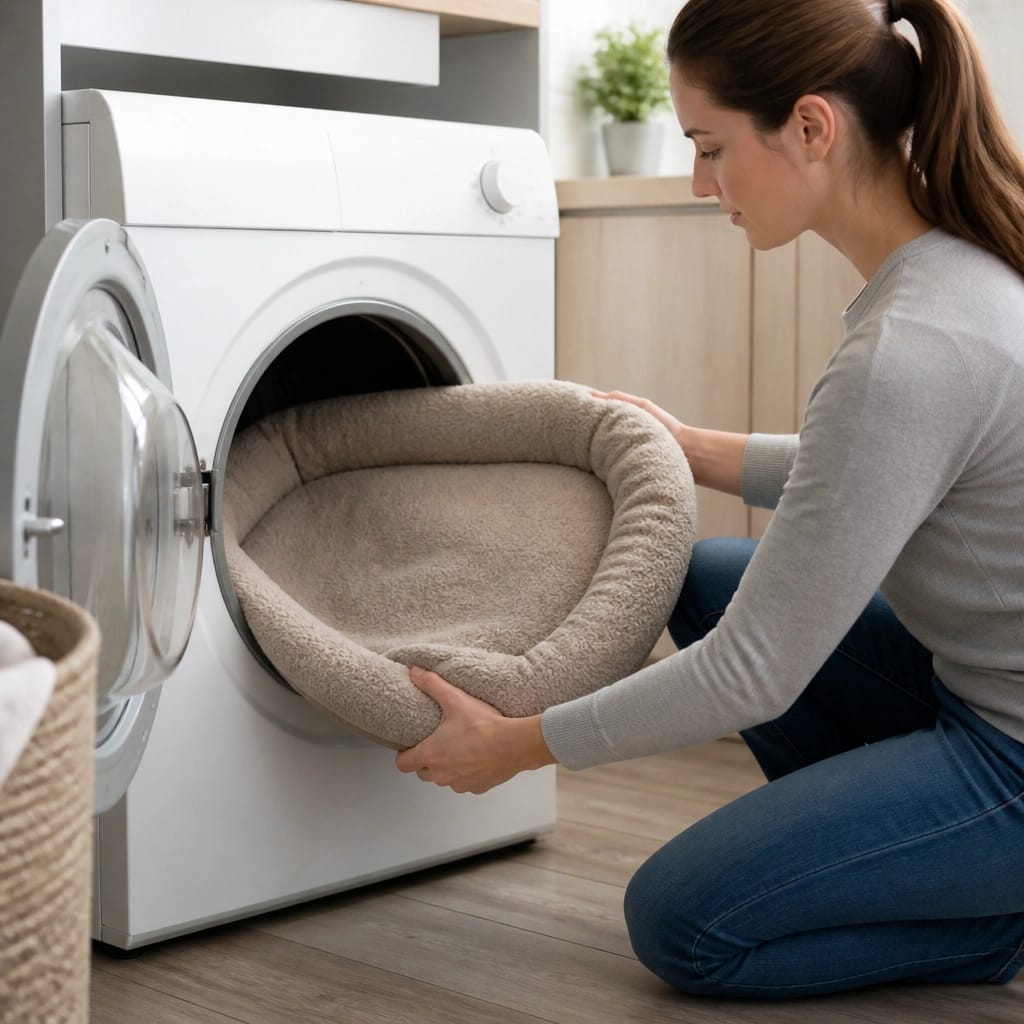
Why Sanitizing Dog Bedding Matters More Than You Think
Your dog spends up to 14 hours a day in their bed. That’s a lot of time for bacteria, yeast, and dust mites to multiply. In our research, we found that unwashed bedding can harbor Staphylococcus and E. coli.
That’s especially concerning for puppies, senior dogs, or dogs with existing skin issues.
A bed that isn’t sanitized can also trigger allergies. Dust mites, mold spores, and dander build up fast. If your dog is scratching more than usual or has red skin, the bedding might be the cause.
It’s worth checking if their skin irritation or chewing behavior could be linked to an unclean sleeping surface.
Dogs with compromised immune systems are at higher risk. Even a healthy dog can develop a skin infection from prolonged contact with dirty bedding. Regular sanitization isn’t just about smell.
It’s basic preventative care.

The Difference Between Cleaning and Sanitizing
Many owners think washing equals sanitizing. It doesn’t. Cleaning removes dirt, hair, and visible stains.
Sanitizing kills bacteria, viruses, and fungi. Most laundry detergents clean but don’t sanitize on their own.
To sanitize, you need something that kills microorganisms. That means water temperature above 140°F, a chemical disinfectant, or both. A regular warm water cycle with standard detergent won’t get the job done.
If you’re using a waterproof cover, the barrier helps protect the foam underneath. But the cover itself still needs true sanitization. Without it, bacteria can multiply on the surface your dog sleeps on every night.
The Risks of Using the Wrong Sanitizer
Not all household cleaners are safe for dogs. Some common products can cause serious harm. Pine oil cleaners are toxic to dogs.
Tea tree oil, often promoted as natural, can cause skin reactions and neurological issues. Ammonia-based cleaners produce strong fumes that irritate a dog’s respiratory system.
Bleach is effective when used correctly, but it comes with risks. Undiluted bleach can cause chemical burns on paws. Residual bleach on bedding can be licked off and ingested.
That’s why proper dilution and extra rinsing are non-negotiable.
Some owners reach for common household cleaners without thinking. That’s a mistake. Always check the label and avoid anything that isn’t explicitly pet-safe.
If you’re curious about natural alternatives, check out our article on cedar filled dog beds to understand why “natural” doesn’t always mean safe.
Common Household Cleaners That Are Unsafe for Dogs
- Pine oil and phenol-based cleaners
- Bleach when not properly diluted
- Ammonia and ammonia-based products
- Essential oils like tea tree, eucalyptus, and peppermint
- Fabric softeners and dryer sheets (can cause skin irritation and are toxic if ingested)
Why Vinegar Isn’t a Sanitizer (and When It’s Still Useful)
Vinegar is a great deodorizer. It can neutralize urine smells and soften fabric. But it’s not a disinfectant.
Studies show that vinegar does not kill most bacteria or viruses at household concentrations. It’s a cleaner, not a sanitizer.
Use vinegar for maintenance between deep cleans. Add a cup to the rinse cycle to help remove odors. But don’t rely on it to kill germs.
That’s a common misconception. For true sanitization, you need heat or a proper disinfectant.
Step-by-Step: How to Sanitize Dog Bedding in a Washing Machine
This is the most effective method for most dog beds. Here’s how to do it right.
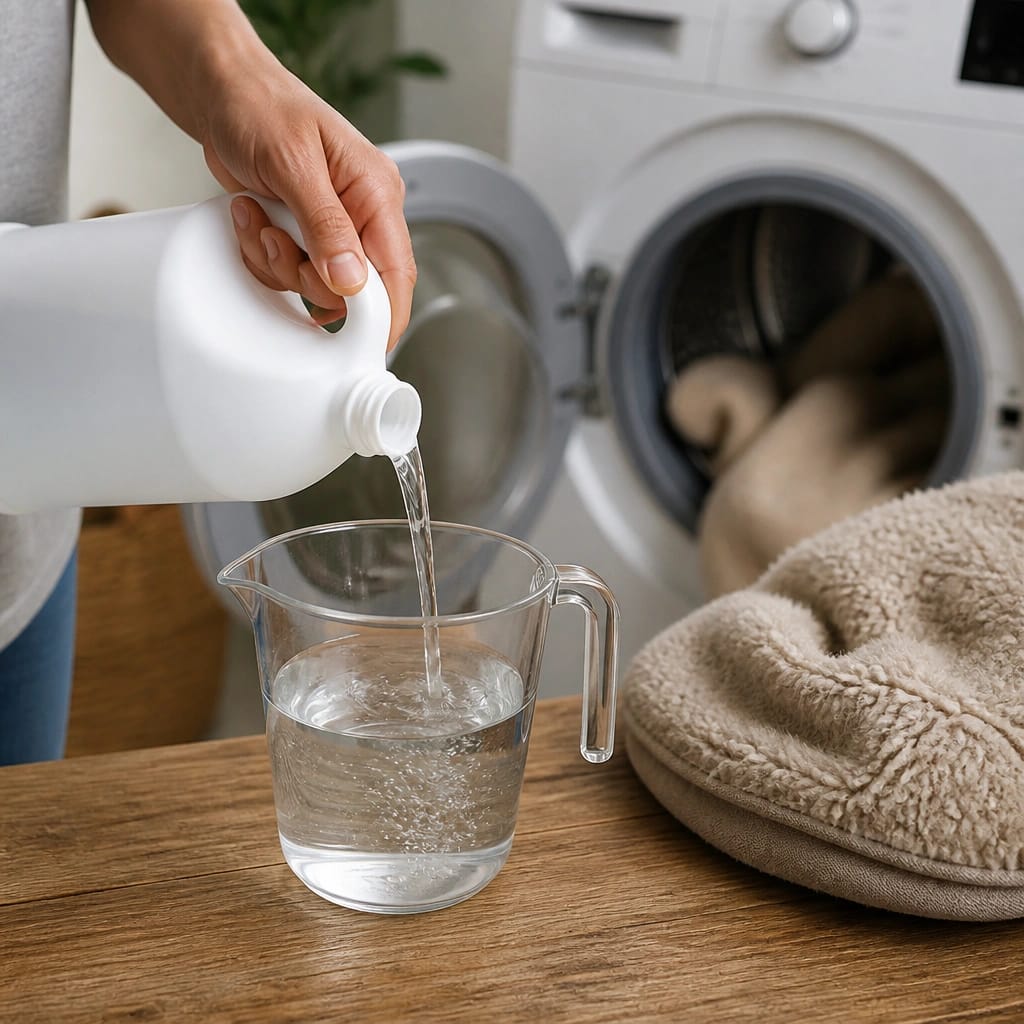
Step 1: Check the Care Label
Before you do anything, read the care tag. Some materials can’t handle hot water or high heat. Memory foam and certain synthetic fills may warp or degrade.
If the cover is removable, wash it separately. The foam itself should never go in the washing machine. Knowing your dog’s bed size helps you choose the right approach for your specific bedding.
Step 2: Pre-Treat Stains and Remove Solids
Scrape off any solid debris. Pre-treat urine or feces stains with an enzymatic cleaner. Let it sit for 10 to 15 minutes.
This breaks down organic matter so the sanitizer can work more effectively.
Step 3: Choose the Right Water Temperature
Hot water is your best friend here. Set the machine to the hottest cycle that’s safe for the fabric. Aim for 140°F if possible.
Check the care label first. Some fabrics shrink or get damaged at high temps.
Step 4: Select a Safe Sanitizer
You have a few options. Oxygen bleach (hydrogen peroxide based) is gentle on fabrics and safe for dogs. Chlorine bleach works too but requires careful dilution.
Use 1/2 cup for a full load. Add it to the bleach dispenser, not directly on the fabric. Pet-safe disinfectants are also available.
Follow the label instructions for contact time.
Step 5: Run an Extra Rinse Cycle
Residue is the enemy. Even pet-safe products can cause skin irritation if left behind. Run an extra rinse cycle to make sure all the sanitizer is washed out.
This step is non-negotiable, especially for dogs with sensitive skin.
Step 6: Dry on High Heat or Sunlight
Heat kills remaining germs. Dry the bedding on the highest heat setting that’s safe. If the care label says low heat only, use that.
You can also dry in direct sunlight. UV rays are a natural sanitizer. Just make sure the bedding is completely dry before putting it back in the bed.
Moisture leads to mold and mildew.
How to Sanitize Dog Bedding Without a Washing Machine
Not everyone has a washing machine that handles bulky bedding. Here are alternative methods that work.
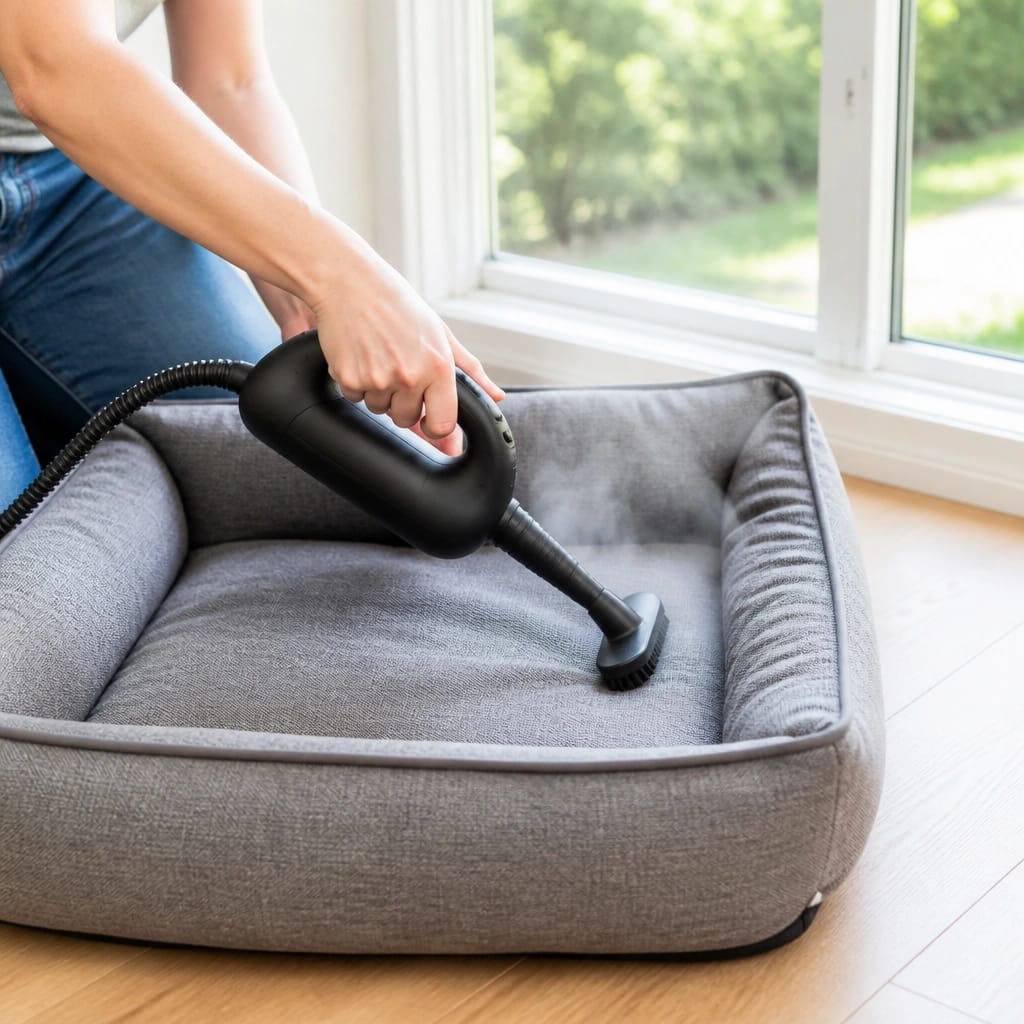
Hand Washing in a Sink or Tub
Fill a sink or tub with hot water. Add a pet-safe disinfectant or diluted bleach. Submerge the bedding and let it soak for 10 minutes.
Agitate with your hands. Rinse thoroughly with hot water until no suds remain. Wring out excess water and dry completely.
Steam Cleaning
Steam kills bacteria, viruses, and dust mites without chemicals. Use a handheld steam cleaner on the fabric surface. Move slowly so the steam penetrates.
Let the bedding dry completely before use. This method works well for foam beds that can’t be submerged.
Sunlight and UV Sanitization
On a sunny day, hang the bedding outside. UV rays are a natural disinfectant. Leave it for at least two hours, flipping halfway through.
This works best as a supplement to washing, not a replacement. It’s great for freshening up between deep cleans.
How Often Should You Sanitize Dog Bedding?
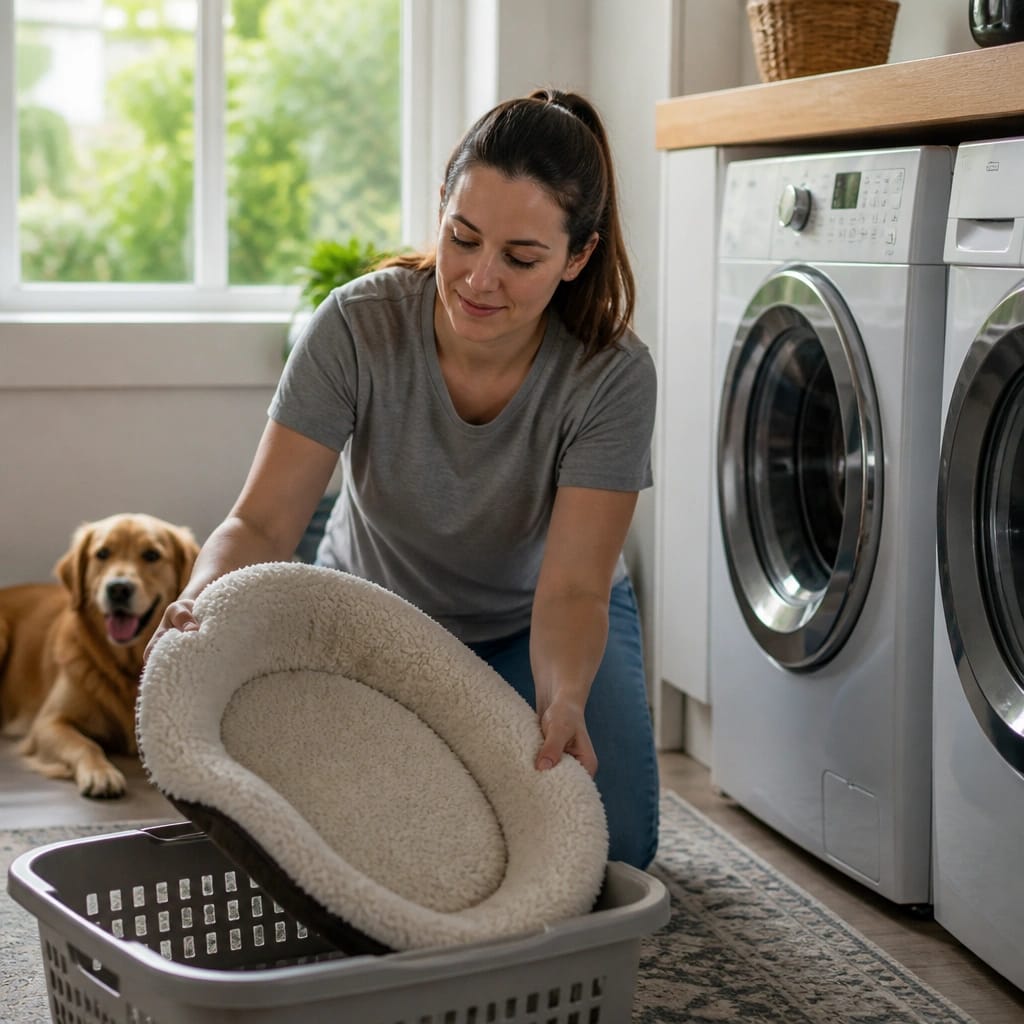
For most dogs, once every two weeks is enough. Dogs with skin conditions, allergies, or incontinence need weekly sanitization. Puppies in house training may need it even more often.
If your dog is recovering from a skin infection or surgery, sanitize every three to four days. Check with your vet for specific guidance. A good rule of thumb is simple: if it smells, wash it.
If your dog is scratching more than usual, wash it. If you’re not sure, wash it. Dogs that spend time outdoors or share beds with other pets need more frequent cleaning too.
Mistakes That Can Ruin the Bedding or Harm Your Dog
Using too much bleach is the most common mistake. It leaves residue that irritates skin and can be ingested. Stick to 1/2 cup per load.
Never mix bleach with vinegar or ammonia. That creates toxic chlorine gas.
Another mistake is skipping the extra rinse cycle. Even mild detergents can cause reactions if they build up. Some dogs develop a habit of licking or chewing the bedding, which makes residue even more dangerous.
Hot water on the wrong fabric can shrink or warp the bed. Always check the care label first. Ignoring it is a fast way to ruin a bed.
Frequently Asked Questions
Can I use vinegar to sanitize my dog’s bed?
Vinegar deodorizes but does not kill most bacteria or viruses. Use it for odor control between deep cleans. For true sanitization, rely on heat or a pet-safe disinfectant.
Is bleach safe for dog bedding?
Yes, when properly diluted. Use 1/2 cup per full load. Run an extra rinse cycle.
Never use bleach on bedding labeled as non-chlorine bleach only.
How do I sanitize a memory foam dog bed?
Remove the cover and wash it separately. Spot clean the foam with a mild disinfectant. You can also use a steam cleaner.
Never submerge memory foam in water.
Can I use essential oils to sanitize my dog’s bed?
No. Many essential oils including tea tree, eucalyptus, and peppermint are toxic to dogs. They can cause skin reactions and neurological issues.
Stick to proven methods.
The Bottom Line on Safe Dog Bedding Sanitization
Sanitizing your dog’s bedding is straightforward. Use hot water, the right disinfectant, and thorough drying. Avoid toxic cleaners and always rinse well.
Wash every one to two weeks for most dogs. Your dog sleeps better on a clean bed. And you rest easier knowing they’re safe.


