

How to Keep a Dog Bed Cool Without Electricity?
Your dog’s bed can feel like a heating pad in summer. If you’re wondering how to keep a dog bed cool without electricity, you’ve come to the right place. Most standard dog beds trap body heat, making it hard for your pup to sleep through a hot night.
A dog’s normal body temperature runs between 101 and 102.5 degrees Fahrenheit. Memory foam, which is common in orthopedic beds, absorbs and holds that heat for hours. Simple passive cooling methods can drop the surface temperature by 10 degrees or more without plugging anything in.
Let’s look at why beds get hot in the first place.
Yes, you can keep a dog bed cool without electricity. The key is choosing the right materials and placement. Elevated beds with mesh allow airflow underneath. Cooling mats and frozen water bottles provide direct relief. Where you put the bed matters just as much as what it’s made of. Simple changes can make a big difference for your dog’s comfort.
Why Your Dog’s Bed Gets So Hot
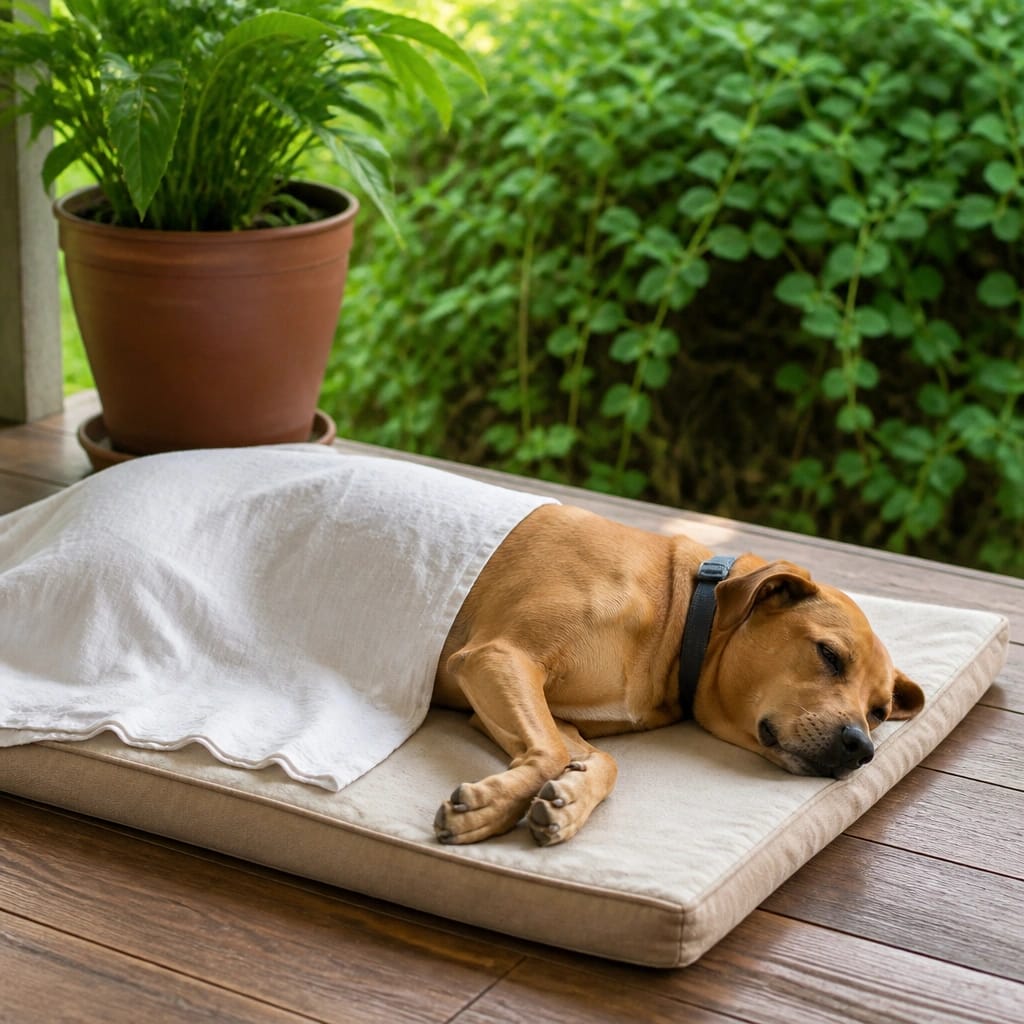
Most dog beds are designed for comfort, not cooling. Memory foam and thick polyester fillings are great for joint support, but they act like insulation. They trap your dog’s body heat and hold it close.
The problem gets worse when the bed sits on carpet or in direct sunlight. Carpet blocks airflow underneath, and sun through a window can turn the bed into a warm spot. As of 2026, many popular beds still use dense foam that retains heat, even in the summer months.
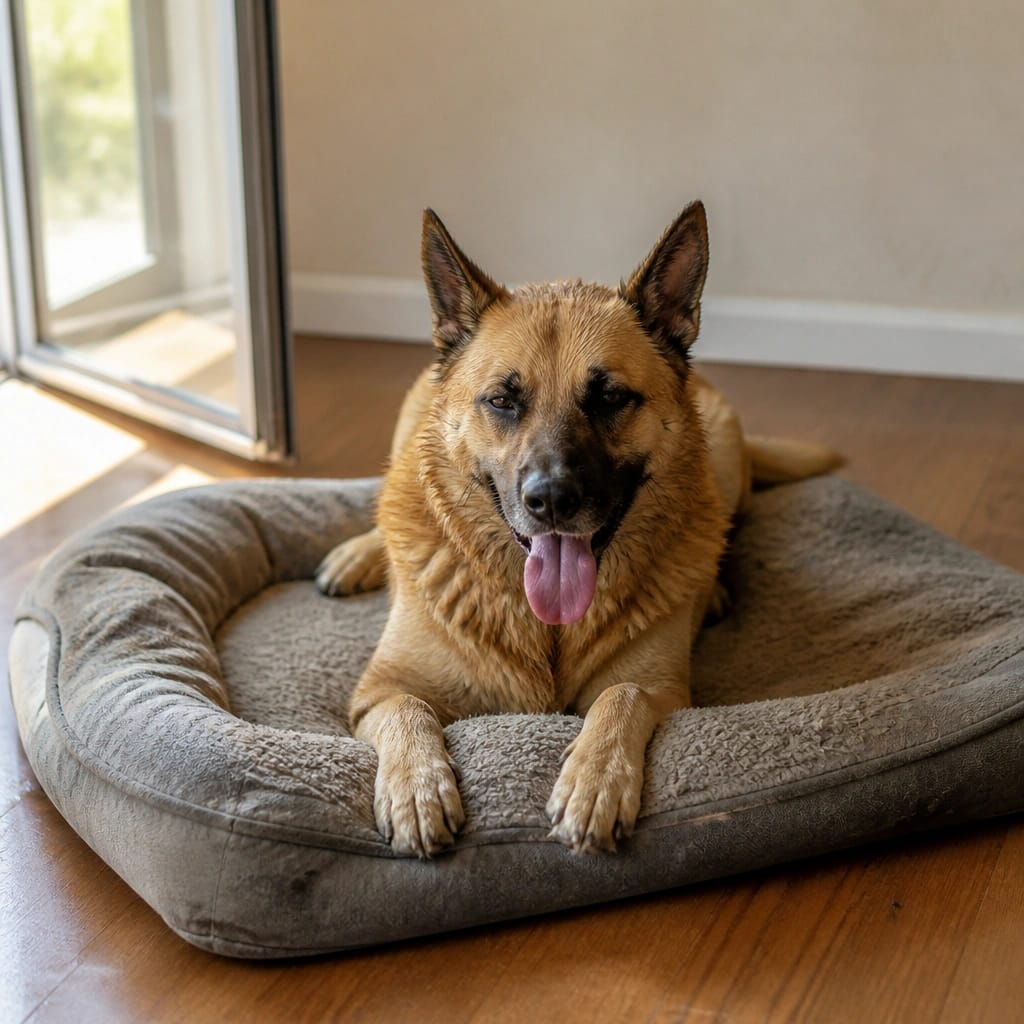
A bed that stays hot can lead to restless sleep and excessive panting. For brachycephalic breeds like French Bulldogs and Pugs, the risk is higher. Their short airways make it harder to cool down, and a hot bed adds to the problem.
You can find more about their specific needs in our guide on what kind of bed a French Bulldog needs.
How Non-Electric Cooling Methods Actually Work
Non-electric cooling relies on three principles: evaporation, conduction, and convection. Each one moves heat away from your dog’s body without using a fan or air conditioner.
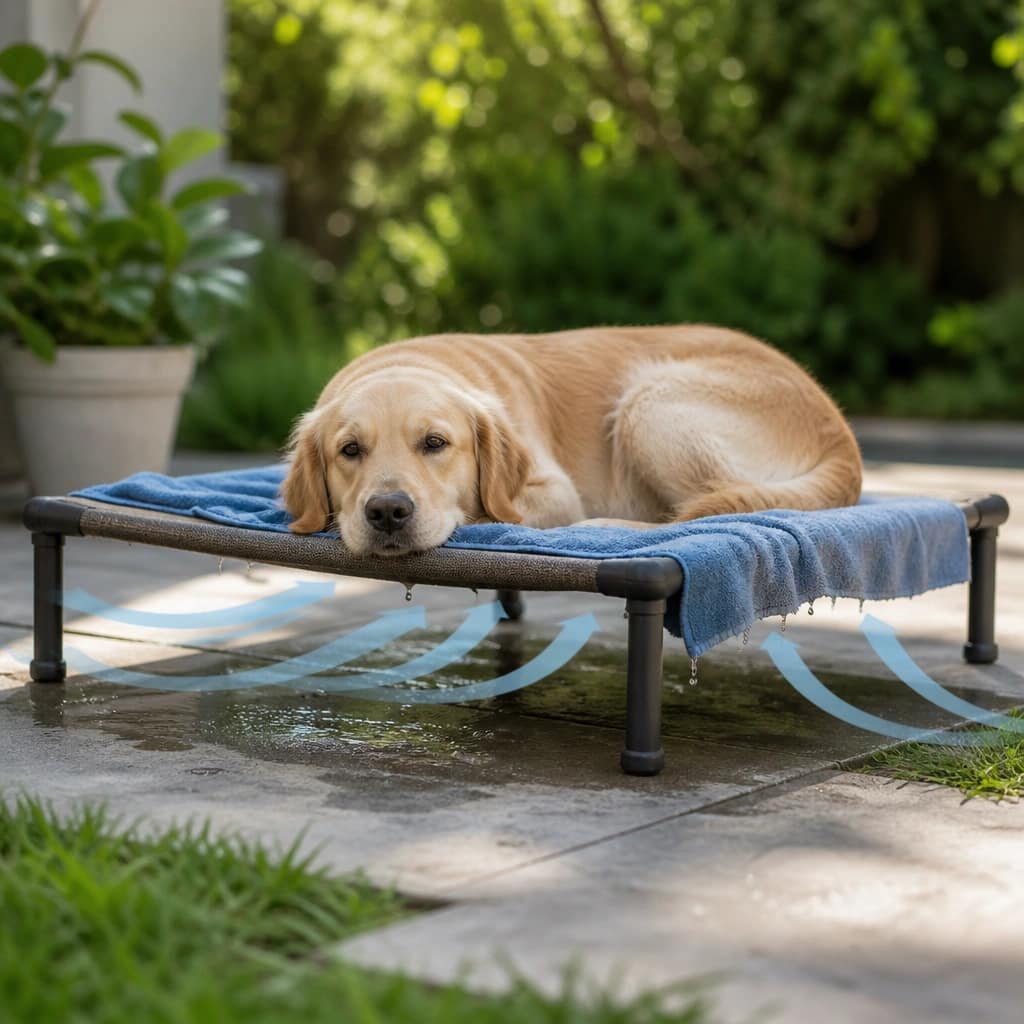
- Evaporation pulls heat away as moisture turns to vapor. A damp towel or a cooling mat that uses water evaporation works this way. It works best in dry climates.
- Conduction transfers heat through direct contact. A gel cooling mat absorbs your dog’s body heat and spreads it across the pad. The mat stays cool because the gel has a high heat capacity.
- Convection uses moving air to carry heat away. An elevated bed with a mesh surface lets air flow underneath and around your dog. This is the simplest and most reliable method.
The American Veterinary Medical Association recommends keeping pets in well-ventilated areas during hot weather. Passive cooling methods support that goal without needing electricity.
Best Bed Materials That Stay Cool Naturally
Not all bed materials are equal when it comes to heat. Some fabrics and fillings actively resist heat buildup.
- Mesh and canvas are the top choices for elevated beds. They allow air to pass through freely. Your dog’s body heat escapes rather than getting trapped.
- Cotton and linen breath much better than polyester. A cotton cover stays cooler to the touch and absorbs moisture without holding heat.
- Buckwheat hulls are a natural filling that stays cool. Unlike memory foam, buckwheat hulls don’t compress and trap heat. They allow air pockets between the hulls.
- Coconut coir is another natural option. It’s firm and breathable, making it a good choice for warm climates.
Avoid memory foam and thick polyester batting for summer use. If your dog needs the joint support of orthopedic foam, consider a cooling mat on top of the bed. You can also check our guide on indoor vs outdoor dog beds for more material advice.
Where to Place the Bed for Maximum Airflow
Location matters more than most people realize. Moving the bed just a few feet can drop the temperature significantly.
Place the bed on a tile or hardwood floor instead of carpet. Tile stays naturally cool and conducts heat away from your dog’s body. Carpet acts as insulation and traps heat underneath the bed.
Keep the bed out of direct sunlight. A window that gets afternoon sun can heat the bed to uncomfortable levels. Even indirect sun through a window can raise the temperature by several degrees.
Find a spot with good air circulation. Near a window with a cross breeze is ideal. Avoid corners where air gets stagnant.
If you have a basement or a room on the north side of the house, those spots stay cooler in summer.
Our guide on where to place a dog bed in the house has more tips for finding the best spot year-round.
DIY Cooling Methods: Ice Packs, Bottles, and Damp Towels
You can make simple cooling tools with items you already have at home. Each method has pros and cons, so choose what fits your dog’s habits.

Frozen water bottles are the safest DIY option. Fill a plastic bottle with water, freeze it overnight, and wrap it in a thin towel. Place it under the bed cover or next to the bed.
The bottle stays cold for 4 to 6 hours. Make sure your dog doesn’t chew through the plastic. If they are a chewer, skip this method.
Ice packs work the same way but cool faster. Use a hard-shell ice pack rather than a soft gel pack. Hard packs are harder to puncture.
Always wrap the pack in a towel to prevent condensation from soaking the bed.
Damp towels are simple but need frequent replacement. Wet a towel with cool water, wring it out until it’s damp, and lay it on the bed. The towel stays cool for about an hour as the water evaporates.
In humid climates, evaporation slows down and the towel becomes warm and wet faster.
Cooling mats are a commercial option that uses gel or phase-change materials. They activate when your dog lies on them and stay cool for 2 to 4 hours. Most are self-cooling and don’t need freezing.
Check the manufacturer’s instructions to confirm the mat is non-toxic in case of leakage.
If you use any DIY cooling method, protect the bed from moisture. A waterproof cover underneath the cooling layer keeps the bed dry and prevents mold. Our guide on waterproof dog beds can help you choose the right one.
Cooling Mats and Gel Pads: What Works and What Doesn’t
Cooling mats use gel or phase-change materials to absorb your dog’s body heat. They activate by pressure alone and don’t need freezing. Most stay cool for 2 to 4 hours before needing to reset.
The effectiveness varies. Water-based gel mats cool quickly but warm up fast. Phase-change mats maintain a steady temperature longer.
Manufacturer specs confirm that dogs over 50 pounds may warm up a small mat in under an hour.
Not all mats are safe for chewers. Look for non-toxic certification on the label. If your dog likes to dig or scratch, a mat with a tough cover and heavy-duty zipper lasts longer.
Our guide on chew proof materials can help you choose a durable option.
Elevating the Bed for Better Air Circulation
Elevated beds lift your dog off the floor so air moves freely underneath. This convection effect carries body heat away without any electricity. The best designs use a mesh or fabric surface stretched over a metal frame.
Research shows elevated beds keep the surface 5 to 10 degrees cooler than floor beds. They work especially well on patios, in crates, or on carpeted floors where airflow is limited. For outdoor use, an elevated bed with a waterproof mesh lasts longer.
If you use a crate, a raised crate pad offers similar benefits. Our comparison of crate pad vs crate mat covers the key differences.
Common Cooling Mistakes That Make Your Dog Hotter
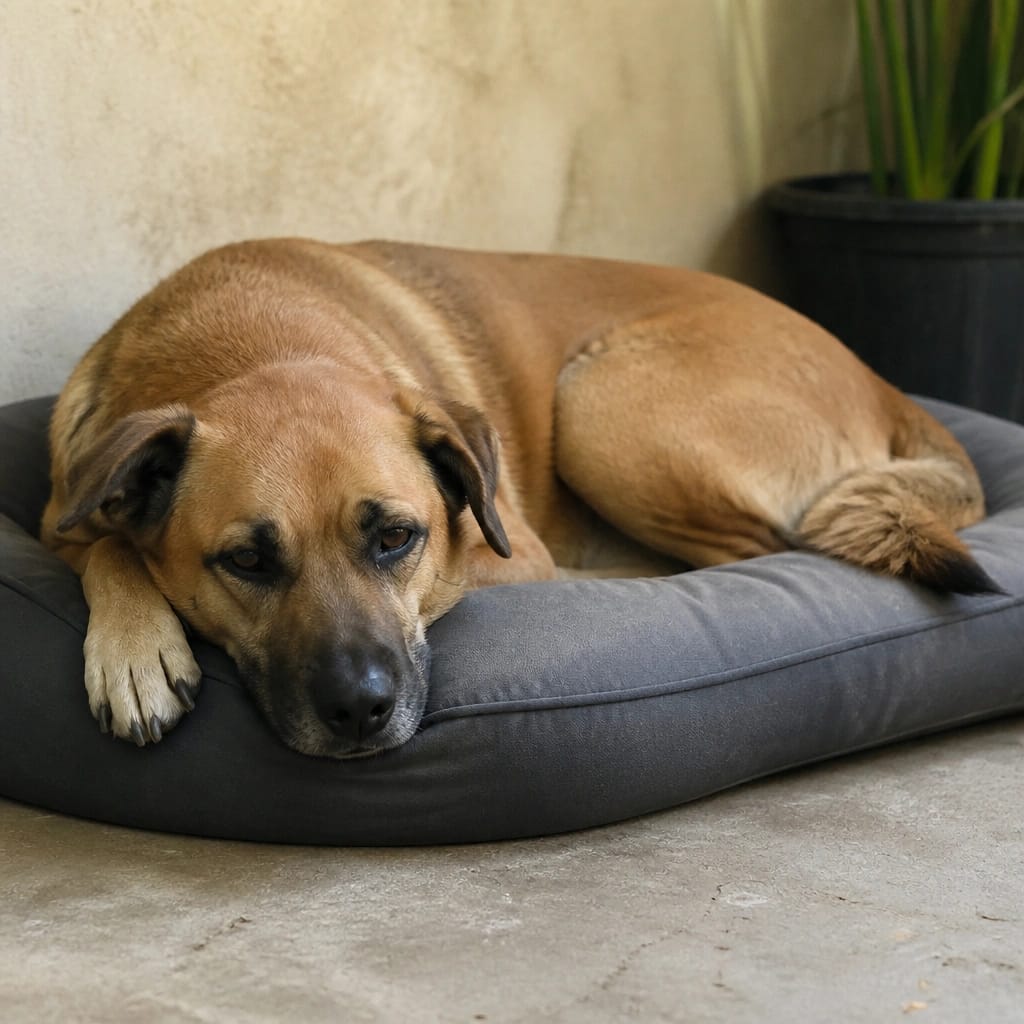
Putting a thick blanket over a cooling mat traps heat and makes the mat useless. The mat needs direct contact with your dog’s body to work.
Placing the bed on carpet blocks airflow underneath. Even an elevated bed loses some benefit if the gap is too small. Keep at least 3 to 4 inches of clearance.
Using a wet towel in humid weather creates a warm, damp surface. The water can’t evaporate fast enough to cool effectively. Your dog ends up lying on a soggy, warm towel.
Safety Risks to Watch For With Any Cooling Method
Chewing is the most serious risk. Plastic bottles, gel packs, and cooling mats can leak harmful materials if punctured. Always supervise your dog with any cooling accessory.
Condensation is another problem. Ice packs and frozen bottles create moisture that can soak the bed. Use a waterproof cover underneath to prevent mold and mildew.
Check the bed daily for damp spots.
Some dogs dislike the texture of cooling mats. Introduce the mat slowly. Let your dog sniff it and lie on it for short periods before using it overnight.
Signs Your Dog Is Overheating (and When to Act Fast)
Excessive panting, drooling, and restlessness are early signs of overheating. Your dog may refuse to lie on their bed or pace around the room.
The American Veterinary Medical Association recommends moving an overheated dog to shade, applying cool water to the paws and belly, and contacting a vet immediately. Do not use ice water, as it constricts blood vessels and slows cooling.
Frequently Asked Questions
How long does a frozen water bottle stay cool in a dog bed?
A frozen 16-ounce water bottle wrapped in a thin towel stays cool for 4 to 6 hours. Larger bottles last longer. Always check the bottle for damage before each use.
Can I leave a cooling mat on the bed overnight?
Yes, most cooling mats are safe for overnight use. Check the manufacturer’s instructions for duration limits. Place a thin cover between the mat and your dog for comfort.
What is the best bed material for hot weather?
Mesh elevated beds and cotton-covered beds are the best choices. They allow airflow and don’t trap heat. Avoid memory foam and thick polyester batting in summer.
Do cooling mats work for all dog breeds?
Cooling mats work for most dogs, but brachycephalic breeds need extra caution. They overheat faster and may need a combination of cooling methods. Monitor them closely in hot weather.
How do I clean a cooling mat?
Most cooling mats have a removable cover that goes in the washing machine. The gel insert should be wiped clean with a damp cloth. Never puncture the gel layer.
Putting It All Together: A Simple Cooling Plan for Hot Weather
Start with an elevated bed in a shaded spot with good airflow. Add a cooling mat or a frozen water bottle on hot days. Use a damp towel only in dry climates and replace it often.
Check your dog’s bed temperature with your hand. If it feels warm, adjust the cooling method. Watch for signs of overheating and act fast if needed.
The best approach combines multiple methods. Good materials, smart placement, and a cooling accessory work together to keep your dog comfortable all summer.


