

How Far Should a Dog Bed Be From a Heater?
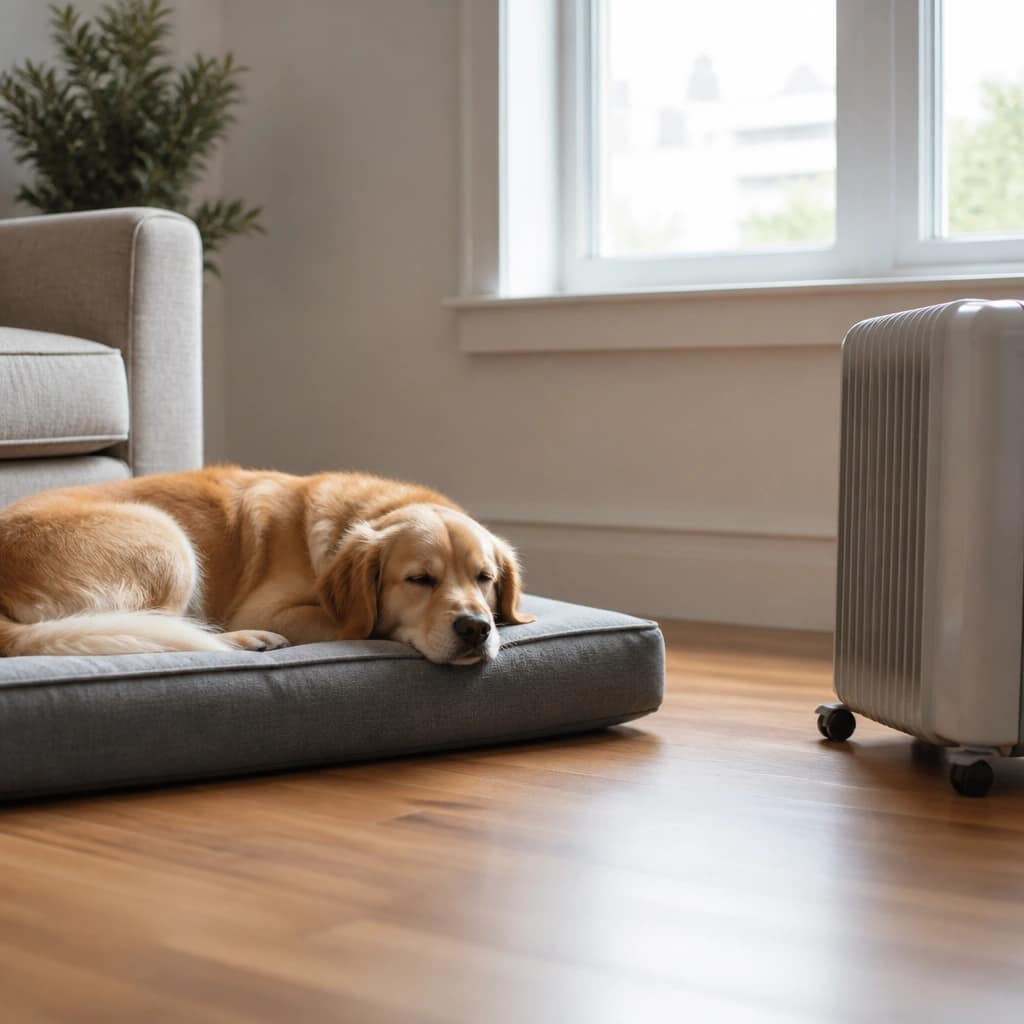
A dog bed should sit at least three feet from any space heater. Radiant heaters and fireplaces need more distance. Forced air vents can be closer.
Always check the manufacturer’s instructions first. Your dog’s safety depends on getting this right.
It’s a cold night and your dog is curled up tight. You want to keep them warm, so you turn on the space heater. But where does the bed go?
The answer matters more than you might think.
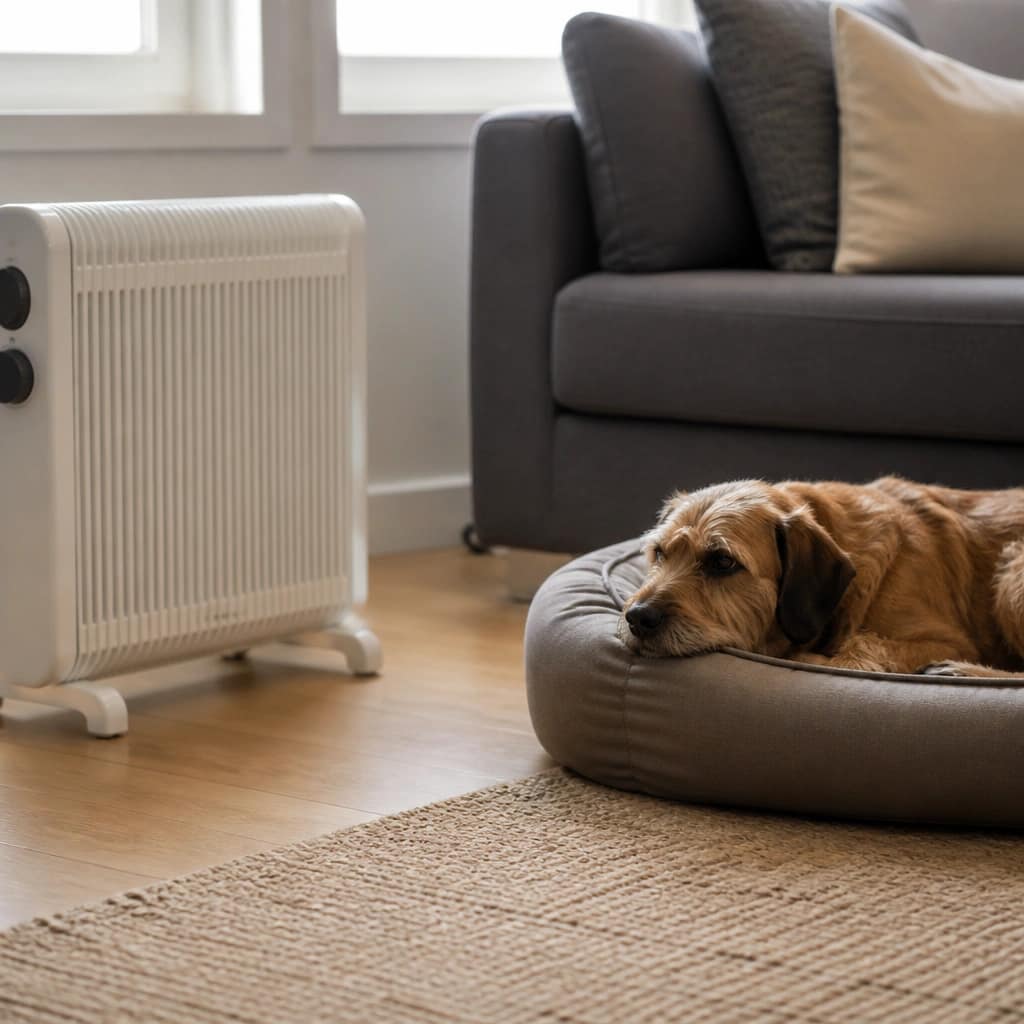
How Far Should a Dog Bed Be From a Heater? The general rule is a minimum of three feet of clearance. The National Fire Protection Association recommends this distance for any space heater near combustible materials. A dog bed counts as a combustible material.
That three foot buffer is the baseline, but it can change depending on the heater type, the bed material, and your dog’s behavior. Let’s walk through what you need to know.
Why Safe Distance Matters More Than You Think
Most people think of fire risk first. That’s valid. A space heater can ignite bedding if it’s too close.
The CPSC reports thousands of home fires each year involving space heaters. But there’s another danger that’s just as real.
Dogs can burn themselves without you noticing. Their paw pads are sensitive. Their noses and ears are vulnerable.
A dog that seeks warmth may lie right against a hot surface. The result can be a slow burn that you don’t see until it’s serious.
Heat stroke is also a risk. Dogs regulate temperature differently than humans. They don’t sweat the same way.
A bed that’s too close to a heater can trap heat underneath. Your dog might not move away until they’re already overheating.
The simple solution is distance. Three feet is the starting point. Some situations need more.
Some need less. The key is knowing which is which.
What Changes the Safe Distance? Key Variables
Heater Type
Not all heaters are the same. A fan forced heater blows hot air in one direction. The area directly in front gets hot fast.
The sides stay cooler. You can place a bed to the side at a closer distance, but keep the front zone clear.
An oil filled radiator stays hot for a long time after it shuts off. The surface temperature can reach 200 degrees Fahrenheit or more. Your dog might lean against it without realizing it’s dangerous.
These need a wider buffer.
A gas fireplace or wood stove is a different category. The glass front can exceed 500 degrees. Embers can pop out.
These need a minimum of six feet of clearance. Probably more if your dog is the curious type.
Forced air vents are the safest option. The air coming out is warm but not hot enough to cause burns. You can place a bed one to two feet from a vent.
Just make sure the bed doesn’t block the airflow.
Bed Material
Thick memory foam beds absorb heat. They can get uncomfortably warm near a heater. Thin flat beds don’t hold as much heat.
But they also offer less protection against a hot surface underneath.
Some beds have fire resistant covers. Many don’t. Check the tag on your dog’s bed.
If it’s made of synthetic fleece or faux fur, it can melt or scorch faster than natural fibers.
Dog Size and Coat
Small dogs sit lower to the ground. They’re closer to the heat source. Short haired breeds like Greyhounds and Chihuahuas have less insulation.
They feel heat more intensely.
Large dogs may be tall enough to rest their head near a heater while their body is further away. That’s still a risk. The nose and ears are sensitive on any dog.
Puppies and senior dogs need extra caution. Puppies explore with their mouths. Senior dogs may have reduced sensation or mobility.
They might not move away when they get too hot.
Safe Distance by Heater Type Quick Reference Table

| Heater Type | Minimum Distance | Notes |
|---|---|---|
| Fan forced space heater | 3 feet front, 1 foot sides | Keep bed out of direct airflow |
| Oil filled radiator | 3 feet minimum | Surface stays hot after shutdown |
| Baseboard heater | 2 feet minimum | Can scorch bed fabric |
| Gas fireplace | 6 feet minimum | Glass surface extreme heat |
| Wood stove | 6 feet minimum | Ember risk |
| Forced air vent | 1 to 2 feet | Safest option, adjust based on air temp |
| Radiator (steam/hot water) | 3 feet minimum | Can reach 200 degrees |
These are starting points. Watch your dog’s behavior. If they pant heavily or move away from the bed, the distance is too small.
If they press against the heater, increase the gap.
Step by Step How to Find the Right Spot
Step 1 Check the Heater Manual
Every heater comes with clearance instructions. Look for a label on the back or bottom. It will say something like “keep objects at least 3 feet away.” Follow that number.
It’s not a suggestion.
Step 2 Measure the Distance
Use a tape measure. Don’t guess. Measure from the heater surface to the nearest edge of the bed.
Three feet is 36 inches. Mark the spot with a piece of tape if it helps.
Step 3 Do the Hand Test
Turn the heater on. Let it run for 15 minutes. Hold your hand at the spot where the bed will sit.
If it feels uncomfortably hot, the bed is too close. Move it back and test again.
Step 4 Watch Your Dog
Your dog will tell you if something is wrong. Panting, restlessness, or moving away from the bed are signs of discomfort. If your dog chooses to sleep on the cold floor instead of the bed near the heater, that’s a signal.
Step 5 Adjust for Seasons
Winter needs more heat. Summer needs none. In colder months, you might move the bed closer to a vent.
In warmer months, pull it away. The bed’s position should change with the season.
Special Situations: Puppies, Senior Dogs, and Crates

Puppies are curious. They explore the world with their nose and mouth. A heater is a fascinating object to investigate.
Never leave a puppy alone with a space heater in the room. If they chew on the cord or press their face against the grille, the result can be serious.
Senior dogs have their own risks. Arthritis limits their movement. They may want the warmth but struggle to get up and move away.
Make sure the bed is positioned so they can leave it easily. A bed that’s too close to a heater can trap heat underneath. This is especially dangerous for a dog that can’t shift position quickly.
Crates add another layer of risk. If you place a crate near a heater, the heat can build up inside. Air circulation is already limited in a crate.
A heater blowing directly at a crate can raise the internal temperature fast. Keep crates at least three feet from any heat source. For more tips on crate setups, check out our guide on crate pad options.
Common Mistakes That Put Your Dog at Risk
The most common mistake is trusting the dog to move away. Dogs seek warmth. They will stay in a hot spot longer than they should.
They don’t always recognize the danger.
Another mistake is placing the bed on a rug or carpet near a heater. The rug can trap heat. The combination of a heater, a rug, and a dog bed creates a fire risk.
Keep the floor clear around the heater.
People also forget to check the heater itself. Dust buildup on the heating element can cause a fire. Clean your heater before each season of use.
The CPSC recommends annual maintenance for space heaters.
Signs Your Dog Is Too Close to the Heater
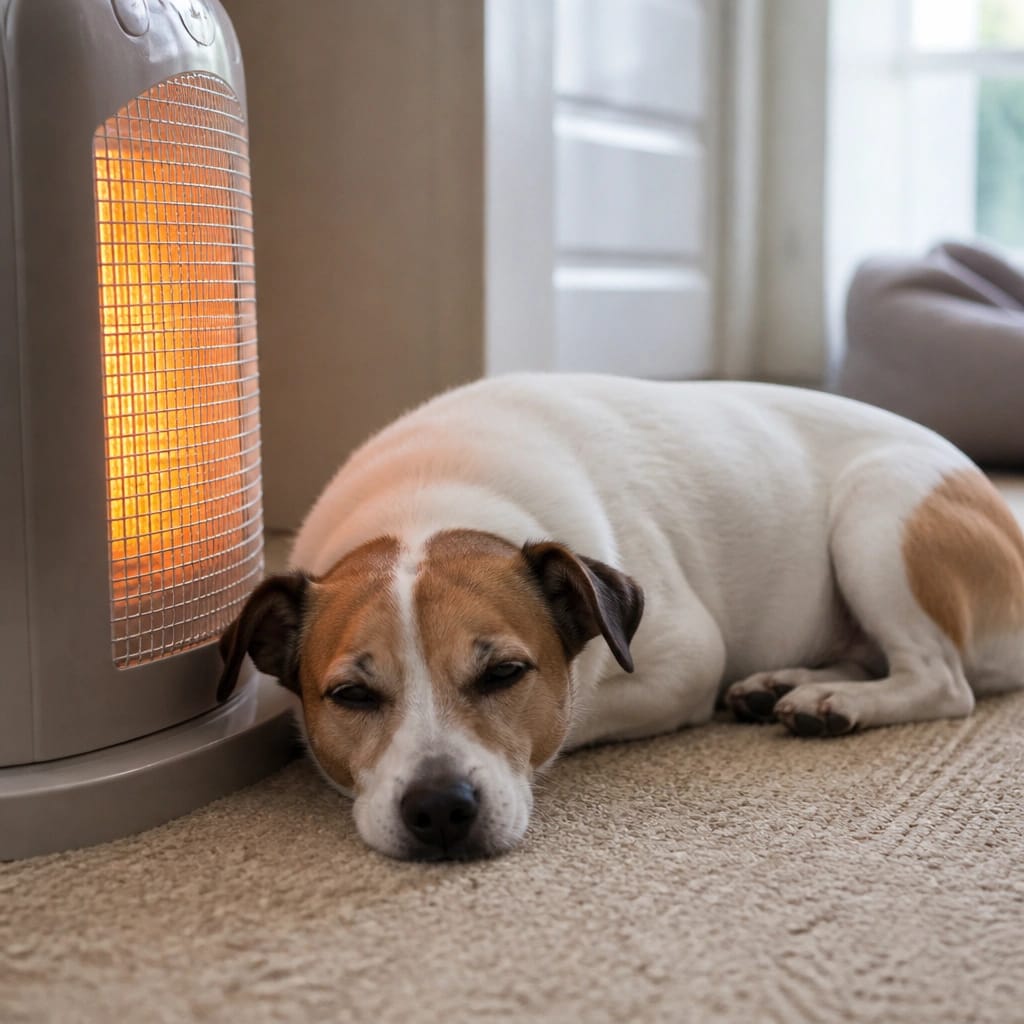
Watch for these signals. Heavy panting that doesn’t stop. Restlessness or pacing.
Your dog moving to the other side of the room. Licking or chewing at their paw pads. Whining without an obvious cause.
If you see any of these, check the bed surface temperature. Use your hand. If it’s too hot for you, it’s too hot for your dog.
Move the bed further away and recheck after 15 minutes.
Some dogs will hide their discomfort. Brachycephalic breeds like French Bulldogs already struggle with heat regulation. Be extra cautious with them.
Our guide on French Bulldog bed needs covers their specific requirements.
When to Skip the Heater Entirely: Safer Alternatives
Sometimes the best solution isn’t a heater at all. A heated dog bed uses low voltage warmth directed at the dog. It’s safer than a space heater because there’s no open flame or exposed heating element.
The warmth comes from underneath. The dog doesn’t need to press against anything hot.
Another option is a thermal dog bed. These use reflective materials to trap the dog’s own body heat. They work well for short haired breeds and dogs that sleep in drafty rooms.
For dogs that burrow, a cave style bed with a hooded cover can keep them warm without any external heat source. Dogs naturally curl up to conserve heat. A bed with high sides and a soft interior lets them do that more effectively.
If you must use a heater, position it so the bed is not in the direct line of airflow. A fan forced heater should blow across the room, not directly at the bed. This spreads warmth evenly without creating a hot spot.
Frequently Asked Questions
Can I put my dog’s bed near a radiator?
Yes, but keep it at least three feet away. Radiators can reach 200 degrees Fahrenheit on the surface. Your dog pressing against it can cause burns.
Check the surface temperature regularly.
Is it safe for my dog to sleep near a space heater?
It is safe if you follow the three foot rule and supervise your dog. Never leave a space heater running unattended in a room with a dog. Choose a heater with tip over shutoff and overheat protection.
What type of heater is safest for dogs?
Forced air vents are the safest option because the surface temperature stays low. Oil filled radiators are safer than fan forced heaters because they don’t have exposed heating elements. Any heater with a cool touch exterior is better.
How do I know if the bed is too hot for my dog?
Place your hand on the bed surface after the heater has been running for 15 minutes. If it feels hot to your touch, it’s too hot for your dog. Your dog’s body temperature is higher than yours, but their tolerance for surface heat is lower.
Should I move my dog’s bed away from the heater in summer?
Absolutely. The bed doesn’t need to be near a heater in warmer months. Move it to a cooler spot.
Your dog will appreciate having a comfortable place to sleep without the extra heat. The ideal room temperature for dogs is between 65 and 75 degrees Fahrenheit.
What if my dog has a heated bed?
A heated dog bed is designed to be safe. The internal wiring is insulated and the temperature is regulated. Still, place it away from other heat sources.
Never stack a heated bed on top of another heater or near a radiator.
Final Takeaway: The One Rule to Never Forget
Three feet is the minimum. Adjust based on your heater type, your dog’s size, and their behavior. Watch for signs of discomfort.
Check the bed surface temperature regularly. A safe sleeping spot is a warm spot that doesn’t burn, overheat, or pose a fire risk.
Your dog trusts you to keep them safe. That means being proactive. Don’t assume they’ll move away.
Don’t rely on guesswork. Measure the distance. Test the temperature.
Observe your dog’s behavior. It takes two minutes to check and it could save your dog from serious injury.
When in doubt, move the bed further away. A colder bed is safer than a bed that’s too close. Your dog will still be warm enough.
They’ll be safer. And you’ll sleep better knowing you got it right.


