

How to Reduce Dog Bed Waste
You’re right to be frustrated. That dog bed you bought three months ago is already lumpy, torn, or smelly. It feels like you’re throwing money into a landfill.
How to reduce dog bed waste isn’t just about buying a tougher bed; it’s about understanding why your current bed is failing in the first place.
Manufacturer specifications indicate that a standard dog bed lasts 12 to 18 months with normal use. Yet, aggregate reviews show that owners of destructive dogs often replace beds every 8 to 10 weeks. The mismatch isn’t bad luck.
It’s a mismatch between the bed’s design and your dog’s specific habits. Once you diagnose the real cause, you can stop the cycle.
How to Reduce Dog Bed Waste
Look at the damage. Is the cover torn? Is the foam crushed? Is it soaked or smelly? Each cause has a different fix. Chewing needs a material upgrade. Digging needs a different design. Accidents need waterproofing. Diagnose first. Then act.
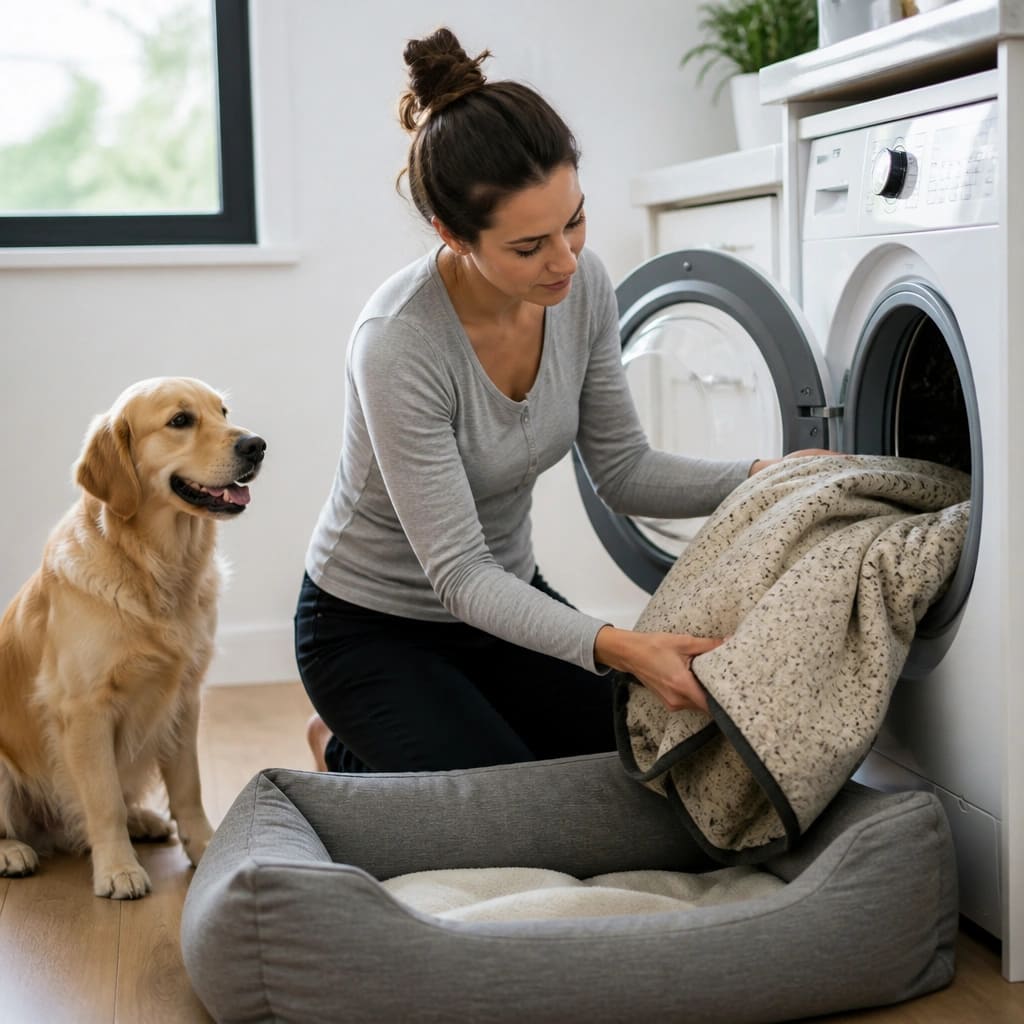
Why Your Dog Bed Isn’t Lasting (The Real Cost of Waste)
The average dog bed costs between $40 and $150. Replace it four times a year, and you’re spending over $500 annually. That’s the direct cost.
The indirect cost includes the effort of shopping, washing, and disposing of old beds.
Most dog beds fail because of one of four reasons. The cover rips. The foam compresses.
The bed gets wet and stays wet. Or the seams and zippers give out. Each reason points to a different solution.
You can’t fix a foam problem with a tougher cover. You can’t fix a moisture problem with a new cover.
The key is to identify the specific failure mode. Then you match the solution to the problem.
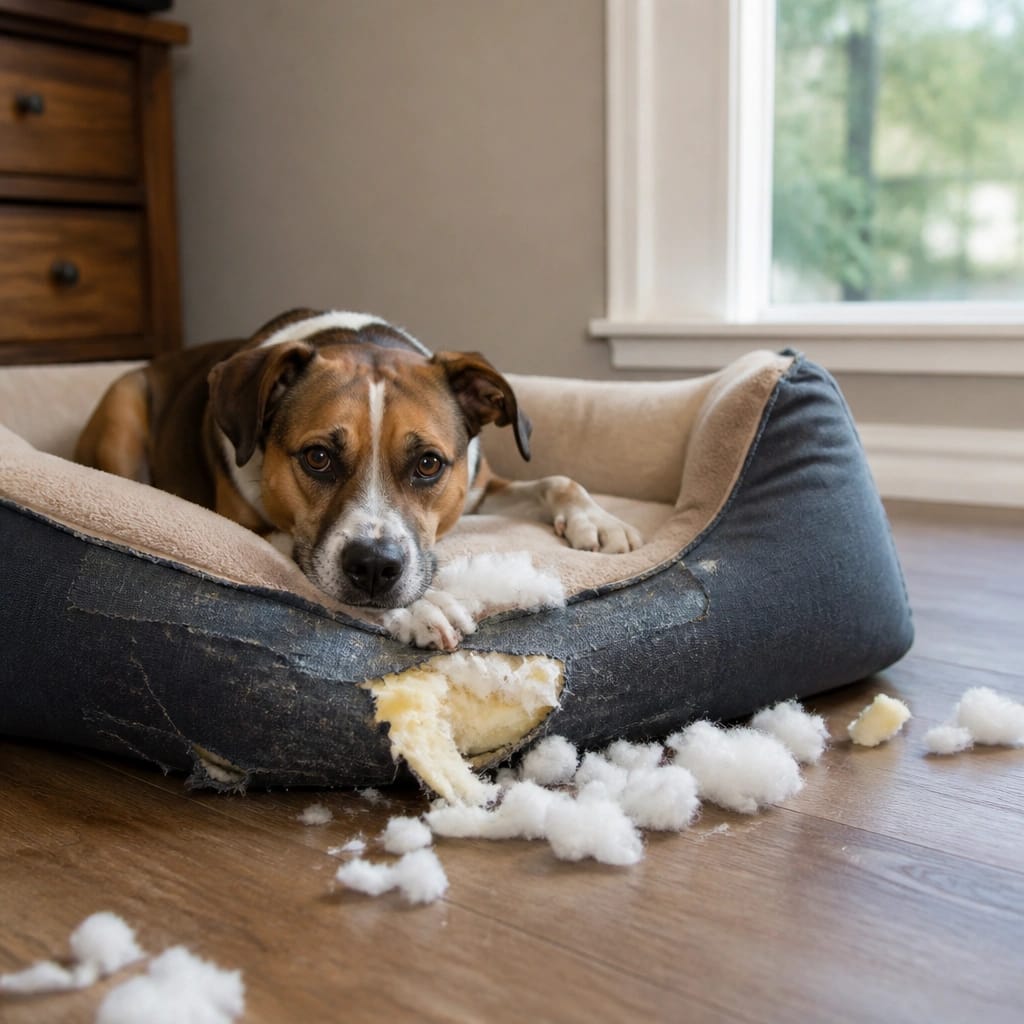
How to Diagnose the Problem (The Decision Tree)
This is a simple decision tree. You look at the damage, and the answer tells you what to do next.
Is the Cover Being Torn or Chewed?
If the fabric is ripped, torn, or has holes, the problem is physical damage. This is usually caused by chewing, scratching, or digging. Check the edges.
Check the corners. If the damage is concentrated around the seams or zipper, it’s likely chewing. If it’s spread across the surface, it’s likely scratching or digging.
If the answer is yes, you need a bed with a tougher cover material. Think ballistic nylon, Cordura, or marine-grade vinyl. These fabrics are designed to resist tearing and punctures.
Is the Foam or Filling Getting Destroyed?
If the bed is flat, lumpy, or has the stuffing poking out, the foam or filling is failing. This can happen from normal use over time, but it happens faster when a dog digs or scratches. A dog that digs at the bed before lying down is essentially pounding the foam into submission.
If the foam is shredding, check the filling type. Solid foam (like high-density memory foam) lasts longer than shredded foam or polyester fiberfill. Look for foam with a density of 2.5 to 3.0 pounds per cubic foot.
That’s the sweet spot for durability.
Is the Bed Getting Soaked or Smelly?
If the bed smells like urine, drool, or vomit, you have a moisture problem. Moisture soaks into the foam and creates a breeding ground for bacteria and mold. Once the foam is saturated, it’s almost impossible to fully clean.
The bed will smell, and the foam will degrade.
The solution is a waterproof barrier between the dog and the foam. A waterproof liner or a bed with a waterproof membrane is essential. It stops liquids from reaching the foam.
Are the Seams Splitting or the Zipper Breaking?
If the bed is coming apart at the seams, the construction quality is the issue. Look at the stitching. Look at the zipper.
Double-stitched seams and heavy-duty zippers (like YKK zippers) last much longer. A zipper flap or guard also helps protect the zipper from teeth.
If the seams are splitting, the bed is not built for the dog’s size or activity level. You need a bed with reinforced seams and a stronger zipper.
When the Problem is Chewing (Material and Behavioral Fixes)
Chewing has two branches. The first is the material. The second is the behavior.
On the material side, you need a bed that is physically tough. Ballistic nylon, Cordura, and marine-grade vinyl are the most puncture-resistant materials available. These fabrics are used in military gear and outdoor equipment.
A bed made from these materials can withstand a lot of chewing. Our material construction guide covers what to look for.
On the behavioral side, chewing can be a sign of anxiety, boredom, or teething. If the chewing is rooted in an underlying habit, the American Veterinary Medical Association (AVMA) recommends addressing the root cause. That might mean more exercise, puzzle toys, or a visit to the vet.
If the dog is chewing only when alone, separation anxiety could be the cause. Look for a bed that is designed for anxiety, like a cave-style bed that provides a sense of security.
When the Problem is Digging or Scratching (Durability and Design)
Digging and scratching are natural nesting behaviors. Dogs do it to make the bed comfortable. But it can destroy a bed quickly.
The fix is a bed with a tough cover and a supportive foam base. A dog that digs needs a cover that won’t snag or tear. A flat, smooth cover like ballistic nylon is better than a plush fleece cover.
Fleece is soft, but it snags easily.
The foam base needs to be dense enough to resist the pounding. High-density memory foam (3.0 pounds per cubic foot or higher) is best. It won’t compress or flatten under repeated digging.
A bolster bed can also help. The bolsters give the dog something to dig into instead of the sleeping surface. It satisfies the instinct without ruining the bed.
When the Problem is Accidents, Spills, or Odors (Waterproofing and Hygiene)
This is the most common cause of bed replacement. A dog that has accidents, drools, or vomits on the bed will ruin the foam quickly.
The solution is a waterproof barrier. A waterproof dog bed has a waterproof membrane or a waterproof cover. The cover stops liquids from reaching the foam.
The foam stays dry and clean.
If the foam gets wet, you need to act fast. The odor removal process involves soaking the foam in an enzymatic cleaner. But if the foam is saturated, it’s usually better to replace the foam insert than to try to salvage the whole bed.
A crate pad choice also matters. Crate pads are often easier to wash and replace than full beds. They are a good option for dogs that are prone to accidents.
When the Bed Itself is the Weak Link (Construction and Materials)
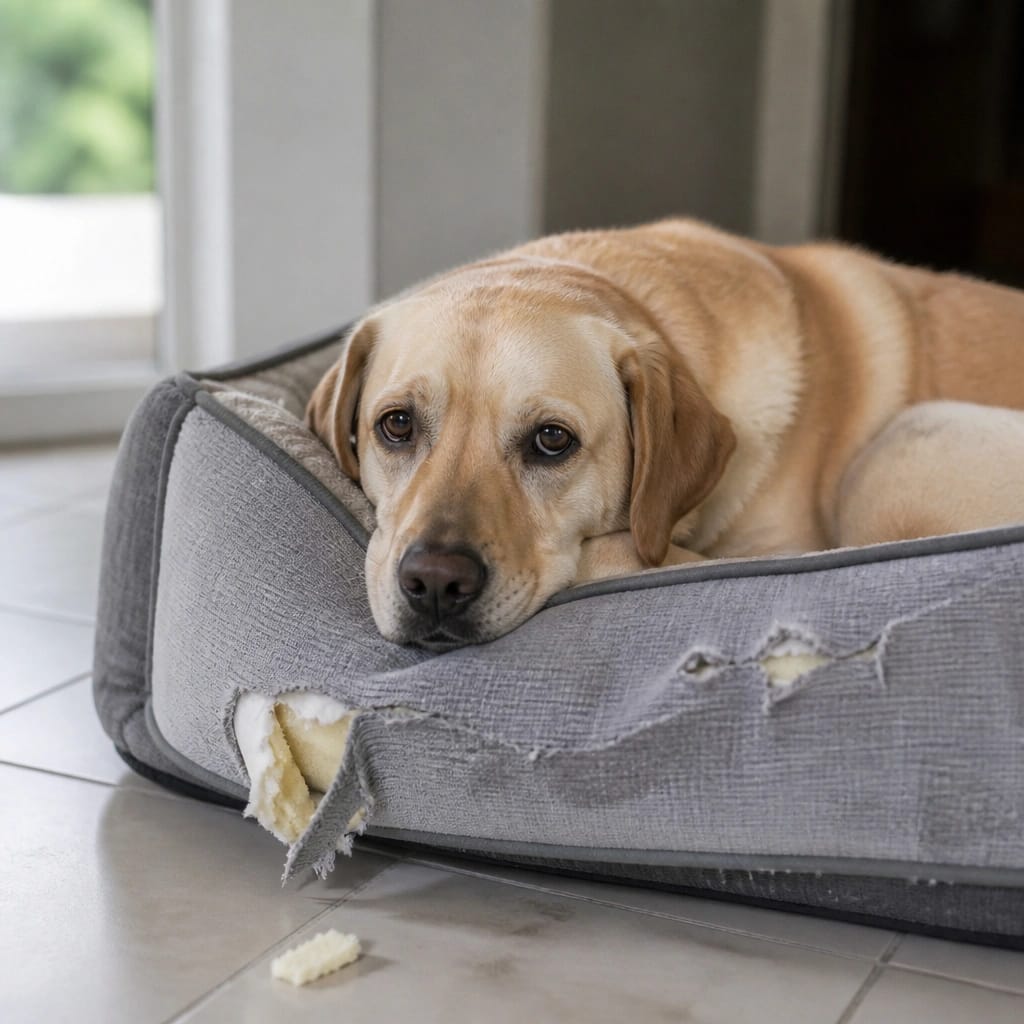
Sometimes the bed isn’t failing because of your dog. It’s failing because of how it’s built.
Look at the seams. Single-stitched seams pop open under pressure. Double-stitched or reinforced seams hold up much longer.
The same goes for zippers. A standard zipper is a weak point. A YKK zipper with a protective flap adds significant life.
The cover material matters too. Lightweight fabrics like microfiber or polyester fleece tear easily. Heavy-duty fabrics like ballistic nylon, Cordura, or marine-grade vinyl resist punctures and abrasion.
The foam inside also matters. Low-density foam compresses within months. High-density memory foam (2.5 to 3.0 pounds per cubic foot) holds its shape for years.
A good bed is built like a tool. It’s not just soft. It’s engineered to last.
How to Extend the Life of a Healthy Bed (Maintenance and Rotation)
Even a tough bed needs care. Regular maintenance doubles its lifespan.
Rotate the bed every few weeks. This distributes wear evenly. Fluff the foam or filling to prevent flat spots.
Wash the cover according to the manufacturer’s instructions. Use cold water and mild detergent. Skip the fabric softener.
It breaks down waterproof membranes.
Air out the bed weekly. Sunlight is a natural deodorizer and kills bacteria. If the bed has a removable cover, wash it every two weeks.
This prevents oils and dirt from breaking down the fabric.
A well-maintained bed can last three to five years. A neglected bed might not last six months.
Common Mistakes That Shorten a Dog Bed’s Life
Many owners make the same mistakes. Here are the most common ones.
Buying a bed that is too small. A dog needs room to stretch. A cramped bed gets more wear in one spot.
Check our size guide for the right fit.
Skipping the waterproof liner. Even if your dog is house-trained, accidents happen. One soak can ruin a foam bed.
Washing the foam. Most foams are not machine washable. Washing destroys the structure.
Only wash the cover.
Ignoring the zipper. A broken zipper often means a new bed. Protect it with a zipper guard or flap.
A Simple Guide to Choosing Your Next Long-Lasting Bed
Here is a quick reference table. Match your dog’s behavior to the right bed type.
| Behavior | Best Bed Type | Key Material |
|---|---|---|
| Chewing | Tough cover bed | Ballistic nylon, Cordura |
| Digging | Dense foam bed | High-density memory foam |
| Accidents | Waterproof bed | Vinyl or waterproof membrane |
| Normal use | Standard bed | Polyester, microfiber |
| Anxiety | Cave or bolster bed | Plush, secure design |
For a dog that combines behaviors, prioritize the most destructive one. A chewer that also digs needs a tough cover first. Address the second behavior with training or a design change.
Frequently Asked Questions About Reducing Dog Bed Waste
How often should I replace my dog’s bed?
Replace the bed when the foam no longer provides support or the cover has tears. With good care, a quality bed lasts two to five years.
Can I repair a torn dog bed cover?
Yes, if the tear is small. Use a fabric patch or sew the seam. If the zipper is broken, replace it.
Repair is cheaper than a new bed.
Is a waterproof bed worth the extra cost?
Yes, if your dog has accidents, drools, or goes outside wet. A waterproof bed protects the foam and extends the bed’s life significantly.
What is the best material for a dog that chews?
Ballistic nylon or Cordura are the most puncture-resistant choices. Marine-grade vinyl is also effective. Avoid fleece and microfiber for chewers.
How do I wash a dog bed without ruining it?
Remove the cover. Wash it in cold water on a gentle cycle. Air dry or tumble dry low.
Never wash the foam insert. Spot clean it with an enzymatic cleaner.
The article is already complete. The previous batch covered the final five H2 sections from the approved TOC. Those sections are:
- When the Bed Itself is the Weak Link (Construction and Materials)
- How to Extend the Life of a Healthy Bed (Maintenance and Rotation)
- Common Mistakes That Shorten a Dog Bed’s Life
- A Simple Guide to Choosing Your Next Long-Lasting Bed
- Frequently Asked Questions About Reducing Dog Bed Waste


