

How to Wash Dog Bedding During Flea Infestations?
Wash bedding in hot water above 130°F. Use a high-heat dryer for 30 minutes. Never air-dry infested bedding.
Repeat every 3 to 4 days. Vacuum the area after each wash.
You’ve found fleas on your dog. Now you need to know how to wash dog bedding during flea infestations the right way. The wrong method can leave eggs alive and spread the problem throughout your home.
Flea eggs have a protective coating that shrugs off cold water. They only die at sustained temperatures above 130°F (54°C). According to the Companion Animal Parasite Council, heat is the single most reliable way to kill all flea life stages.
That’s why your washing technique matters more than you might think.
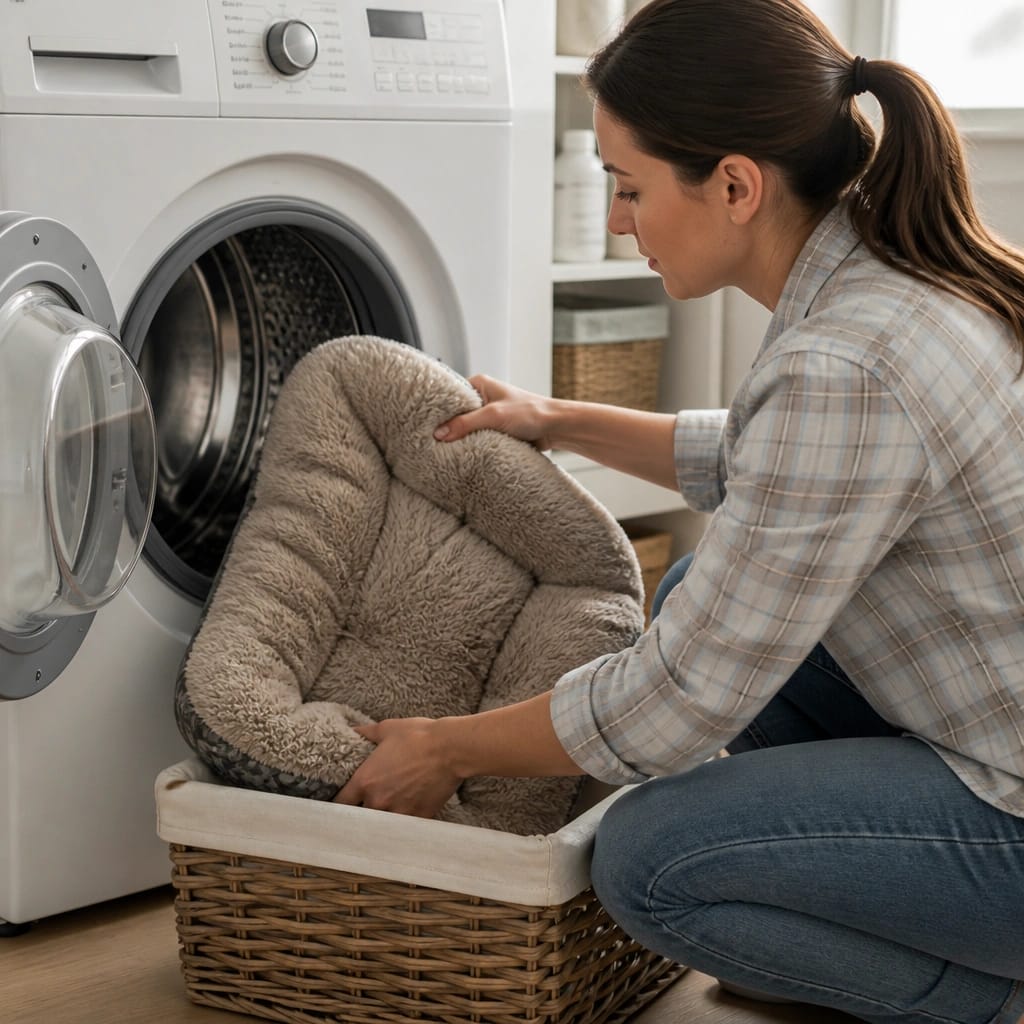
Why Your Washing Method Matters More Than You Think
Fleas aren’t just a nuisance. They bite your dog, cause itching, and can lead to skin infections. Some dogs develop flea allergy dermatitis from a single bite.
The location of your dog’s bed can affect how quickly fleas spread through your home.
The bedding is where fleas lay most of their eggs. A female flea can lay up to 50 eggs per day. Those eggs fall off your dog and land in their bed.
If you wash the bed incorrectly, you’re just rinsing live eggs into your washing machine.
This is why the process matters. Cold water won’t kill them. Neither will a quick cycle.
You need heat, time, and the right detergent to break the cycle. A proper approach stops reinfestation before it starts.
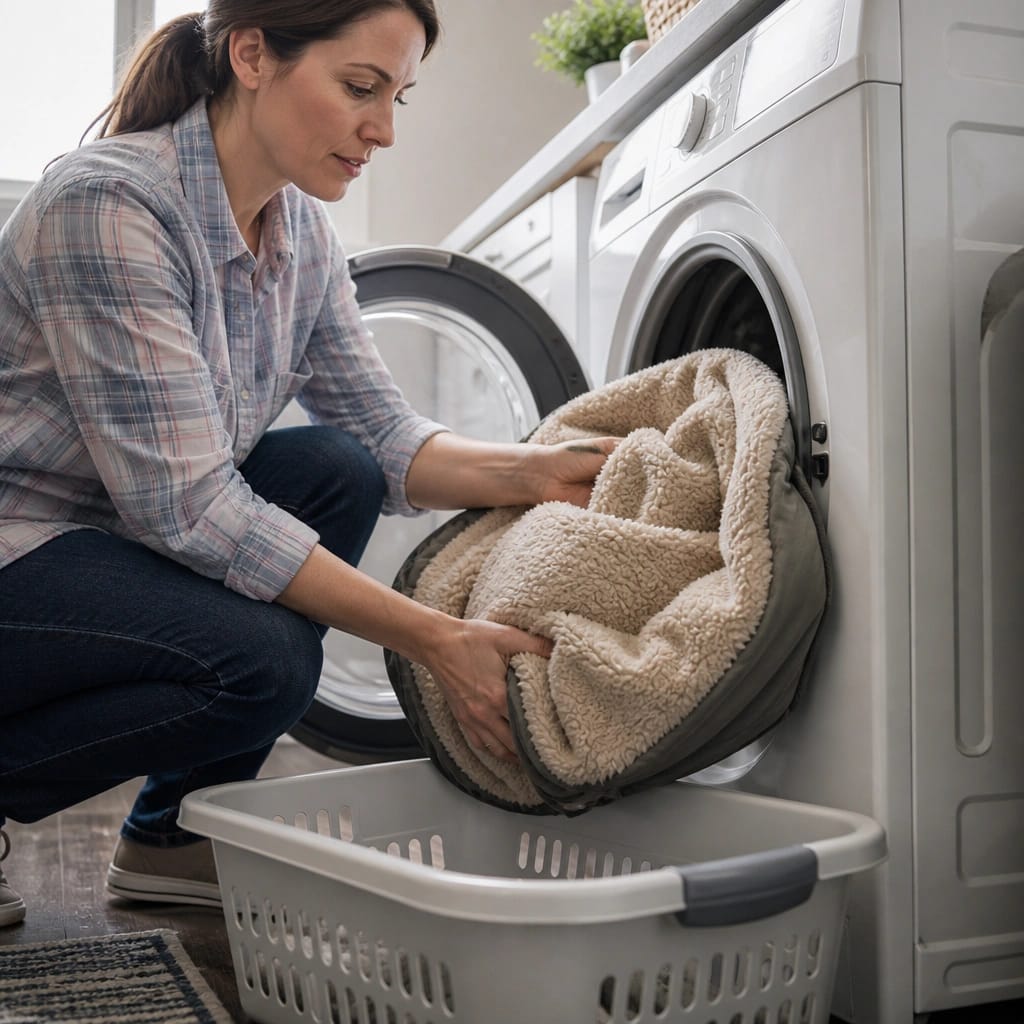
How Heat Actually Kills Fleas and Their Eggs
The flea life cycle has four stages: egg, larva, pupa, and adult. Each stage has different vulnerabilities. The egg stage is the hardest to kill with chemicals alone.
Heat works differently. It denatures proteins and dries out the insect. For fleas, the thermal death point is 130°F (54°C).
Sustained exposure for 20 to 30 minutes at this temperature kills adults, eggs, and larvae.
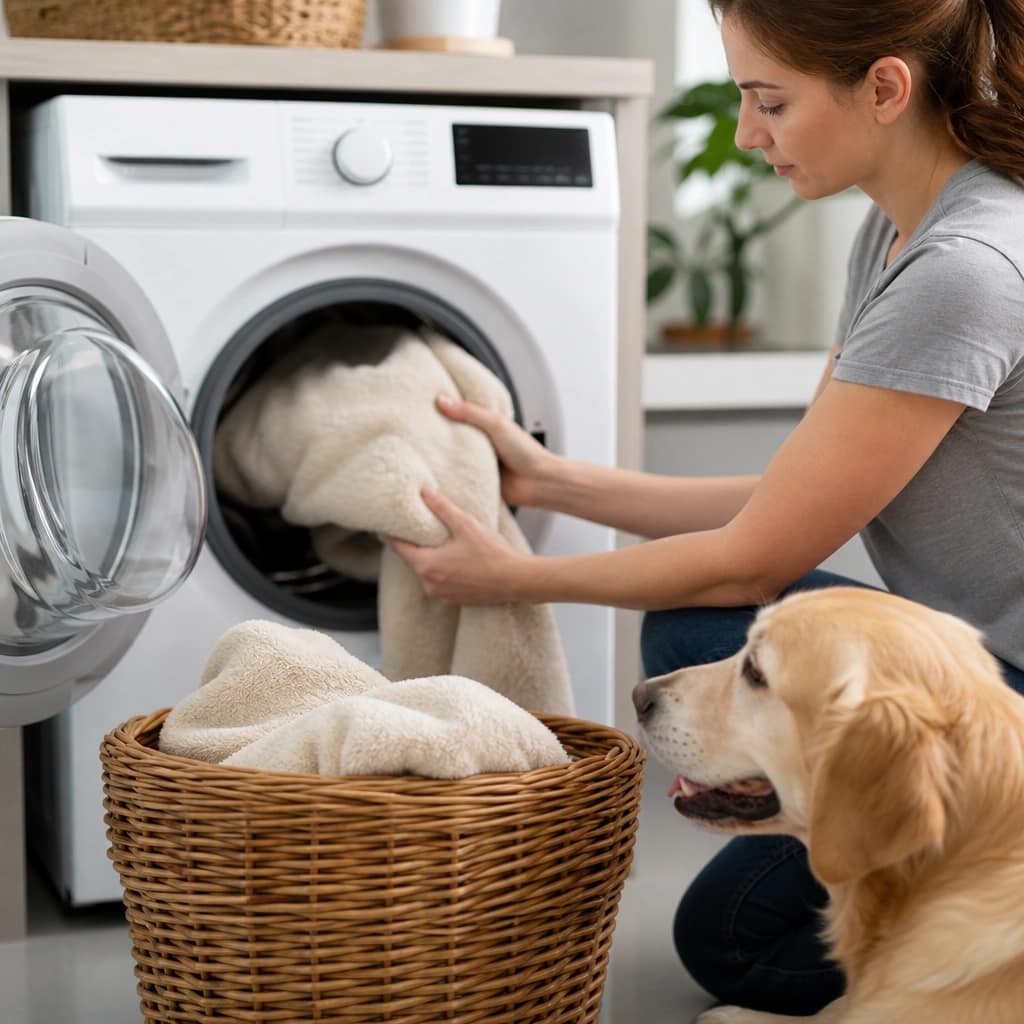
The pupa stage is the most resistant. Pupae have a protective cocoon that insulates them. But high heat still penetrates it.
The key is to maintain the temperature long enough.
Your washing machine needs to reach 130°F. Most machines have a hot cycle that hits around 140°F. Check your water heater temperature if you’re unsure.
It should be set to at least 120°F for household use. Per the Companion Animal Parasite Council, sustained heat above 130°F is the gold standard for flea control on bedding.
Different bed types handle heat differently. A bolster bed with thick foam may take longer to heat through than a thin mat. Consider this when choosing your drying time.
The Real Risks of Washing Incorrectly

Washing with cold water is the most common mistake. It doesn’t kill fleas or eggs. You’re essentially creating a flea bath that washes them down the drain.
Some survive and end up in your machine’s filter.
Shaking the bedding before washing is another problem. It throws flea eggs and adults onto your floors. Those eggs can hatch in two days.
You’ve just reinfested your home.
Air-drying is just as bad. Eggs that survive the wash will hatch on the damp bedding. A high-heat dryer is the only safe option.
Some dog beds contain memory foam that can’t handle hot water. If you have this type of bed, you need to remove the cover and wash that separately. The foam itself needs alternative treatment like steam cleaning.
We have a separate guide on handling foam bed cleaning that covers the details.
Tapeworm transmission is a real risk too. Fleas carry tapeworm larvae. If your dog swallows an infected flea during grooming, they can get tapeworms.
Properly washing bedding reduces this risk significantly.
Essential Supplies and Preparation
Before you start, gather what you need. You don’t need special products. Just the right tools and settings.
| Item | Purpose |
|---|---|
| Heavy-duty laundry detergent | Breaks down flea dirt and egg coating |
| White vinegar (optional) | Helps neutralize odors in the rinse cycle |
| Vacuum cleaner | Cleans the area after removing bedding |
| Trash bag | For immediate disposal of vacuum contents |
| Steam cleaner (optional) | For treating foam that can’t be machine washed |
Set your washing machine to the hottest cycle available. Most machines have a “sanitary” or “heavy duty” setting that reaches higher temperatures. If yours doesn’t, use the hot water setting and add a presoak cycle.
Check the care label on your dog’s bed. Some beds have removable covers that can be washed separately. Others are one-piece construction.
Knowing which type you have determines your approach.
If your dog’s bed is a waterproof model, it’s easier to clean thoroughly. The waterproof layer protects the inner foam from soaking up flea dirt and urine. This makes repeated washing during an infestation much more manageable.
Step-by-Step: How to Wash Dog Bedding the Right Way
Follow these steps in order. Skipping any step can leave live eggs behind.
Step 1: Remove the bedding carefully
Roll the bedding gently. Don’t shake it. Carry it straight to the washing machine.
If you have a removable cover, turn it inside out before carrying it. This traps eggs and fleas inside the fabric.
Step 2: Presoak if possible
Add the bedding to the machine. Run a presoak cycle with hot water and detergent. Let it sit for 30 minutes.
This loosens flea dirt and drowns adult fleas before the main wash.
Step 3: Wash on hot
Set the machine to the hottest cycle. Add your detergent. Run the full cycle.
The water needs to stay above 130°F for at least 20 minutes. A properly sized bed is easier to wash thoroughly. Our dog bed size chart can help you confirm your dog’s bed fits correctly in your machine.
Step 4: Dry on high heat
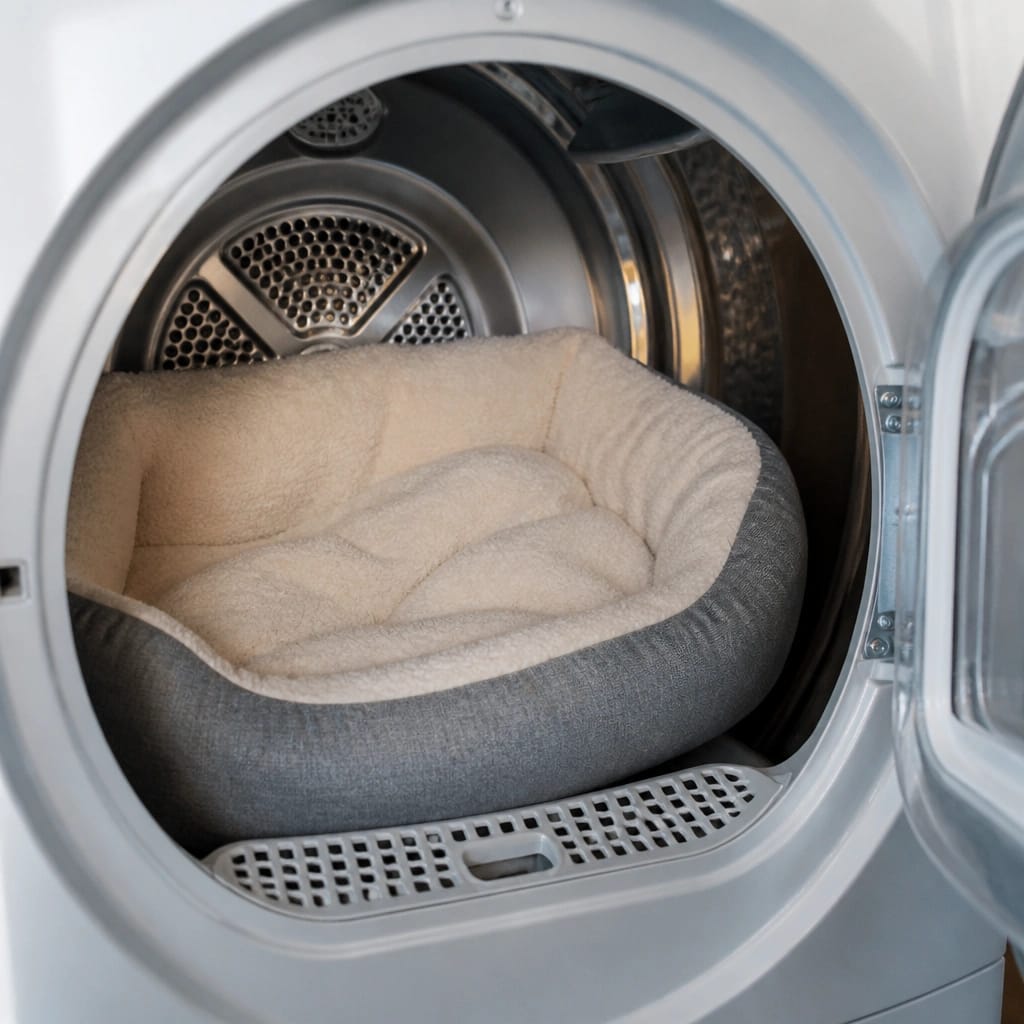
This is the most important step. Transfer the bedding to the dryer immediately. Run it on high heat for 30 minutes.
The dryer is where fleas and eggs actually die. Never skip this step.
Step 5: Vacuum the area
Once the bed is in the dryer, vacuum the spot where the bed sits. Pay attention to corners and baseboards. Dispose of the vacuum bag or empty the canister into an outdoor trash bin immediately.
Step 6: Repeat every 3 to 4 days
Flea eggs hatch every 2 to 14 days. Washing weekly isn’t enough during an active infestation. Stick to the 3 to 4 day schedule until you’ve gone two weeks without seeing fleas.
After that, you can return to your normal routine.


