

Do Dogs Prefer One Bed or Multiple Sleeping Spots?
Do dogs prefer one bed or multiple sleeping spots? It depends on the dog. One good bed is enough for some dogs.
Many dogs do better with two or three options. The right number matches your dog’s routine, health, and home.
Do dogs prefer one bed or multiple sleeping spots? That’s a question many owners ask when they watch their dog flop onto the floor instead of a perfectly good bed. The answer isn’t a simple yes or no.
It depends on your dog, your home, and what each space offers.
Here’s a helpful starting point: dogs sleep roughly 12 to 14 hours per day, according to veterinary guidance. That’s a big chunk of their life spent choosing where to rest. As of 2026, most dog behavior advice points the same direction: offer choices, but match the number of beds to your dog’s actual habits.
Let’s break that down.
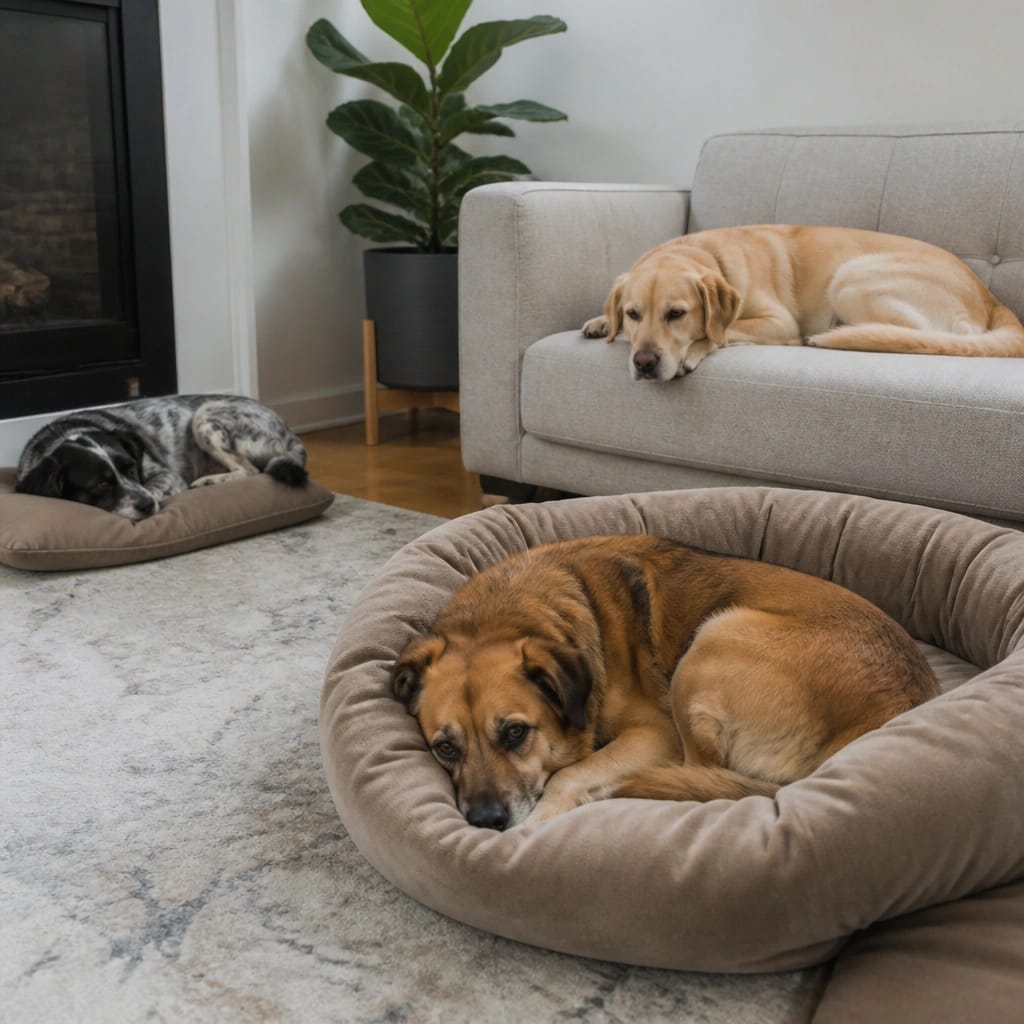
Why Do Dogs Prefer One Sleeping Spot Over Another?
Dogs don’t pick a sleeping spot at random. They look for safety, comfort, and a comfortable temperature. A dog with one favorite spot usually found a place that checks all three boxes.
That might be a crate, a corner of the couch, or the foot of your bed.
Dogs are denning animals, and the American Kennel Club notes that many dogs feel more secure in enclosed, den-like spaces. That’s why some dogs pick a crate even when the whole house is available. It’s not always about the bed itself.
The spot makes them feel safe.
If your dog has one reliable spot, respect it. In our research, dogs often ignore a bed that sits in a noisy, high-traffic area. For example, some dogs choose a person’s bed simply because it smells like their favorite human.
A second bed won’t fix that unless it’s placed where they already relax.
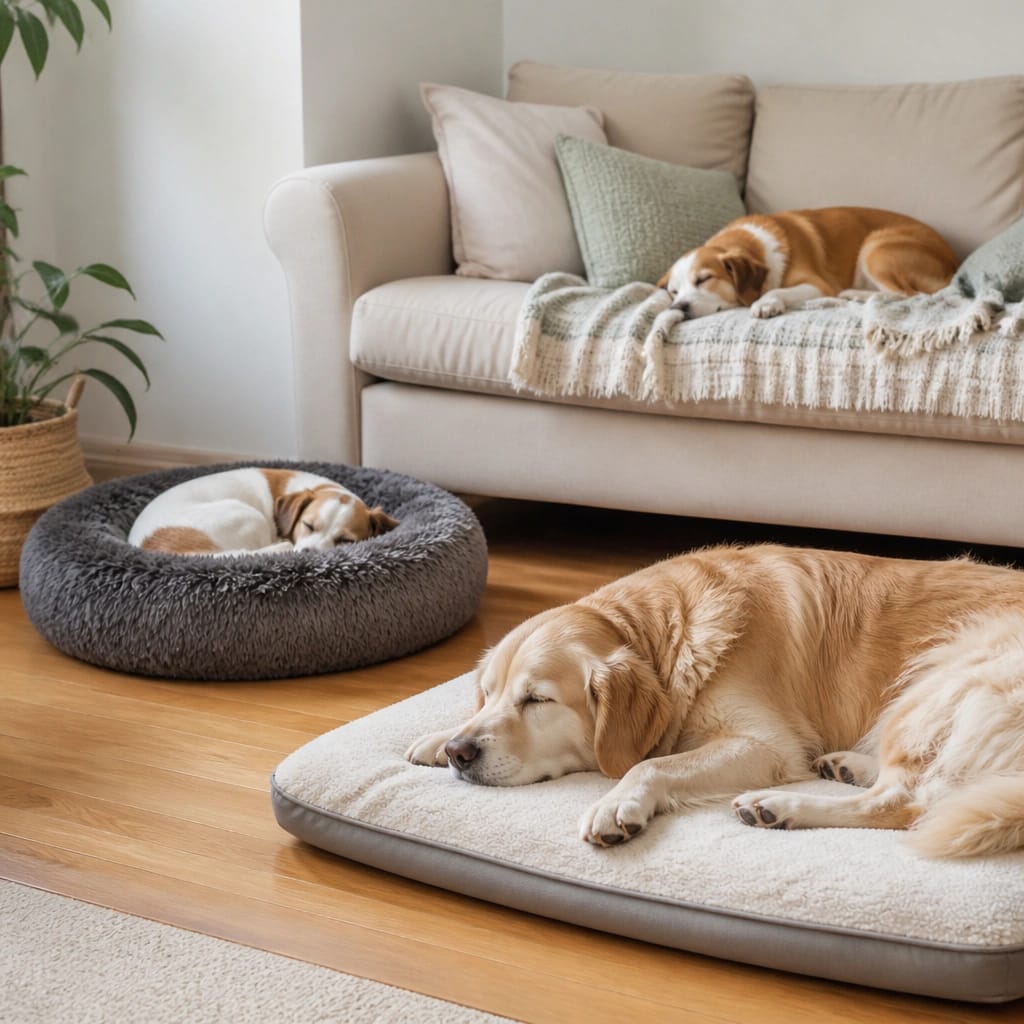
The Real Question: How Many Beds Does a Dog Actually Need?
One bed is the minimum. Two or three is usually better. The right number depends on how your dog spends their day and where you are.
A simple rule: give a bed to every room where your dog rests for more than about an hour. If you work in a home office, add a bed there. If your dog sleeps in your bedroom at night, that’s another spot.
Dogs who follow you from room to room will use multiple beds throughout the day.
Here’s a basic guide:
| Your household | Beds to start with | Why |
|---|---|---|
| One-room lifestyle, dog stays close | 1 quality bed | They can nap and sleep there all day |
| Two-story home, dog follows you | 2 or 3 beds | No one wants to carry a bed up and down stairs |
| Crate-trained puppy | 1 crate pad + 1 playpen bed | Crate rest and daytime naps serve different needs |
| Senior dog with joint stiffness | 2 orthopedic beds | Supportive comfort in the rooms where you actually spend time |
This isn’t a magic formula. It’s a starting point. Watch your dog for a week and adjust.
Signs Your Dog Is Content With Just One Bed
Some dogs genuinely don’t care about having options. If your dog settles quickly on their bed and stays there, you probably don’t need a second one.
Signs that one bed is working:
- They lie down and relax within a few minutes of being told “bed.”
- They sleep through the night without wandering to another room.
- They nap in the same spot most days.
- They rarely choose the hard floor over their cushioned bed.
- They don’t follow you from room to room just to rest.
Dogs like this often pair one high-quality bed with a familiar blanket. If they seem comfortable and sleep well, adding another bed could just sit unused. You can always add one later if their habits change.
Signs Your Dog Wants Multiple Sleeping Spots
Watch for behavior that suggests one location isn’t enough. The clearest sign is movement. A dog that rotates between the living room, your office, and the bedroom is telling you they want options.
Other common signs:
- They sleep on the floor next to the bed in one room, then use a different bed in another.
- They follow you from room to room but never settle until you stop moving.
- They push furniture or dig at a bed before lying down.
- They prefer cool floors in summer and padded beds in winter.
- They start the night in one spot and move at least twice before morning.

Image source: Openverse / Rorth Onno
The photo above shows an L-shaped sleeping pose. Dogs often stretch this way to cool their belly. If you see this on a hard floor instead of a bed, the bed may be too warm, too small, or simply in the wrong room.
Sometimes the issue is also about staying close to you. Dogs that keep choosing the floor might be looking for a cooler surface or a better view of the room. That’s a sign one well-placed bed isn’t enough.
Key Factors That Decide the Right Number of Beds
Not sure which category your dog falls into? Work through these four factors. They cover most of the reasons dogs do better with one, two, or three beds.
Dog’s Age, Health, and Mobility
Puppies and senior dogs usually need more than one spot. Puppies need a bed in their crate and a washable mat in their play area. Senior dogs need supportive surfaces where they actually rest.
If your dog has arthritis or joint stiffness, think about their ability to climb stairs. Placing one orthopedic bed upstairs and one downstairs can save them pain and keep them close to the family. For puppies, remember that size changes as puppies grow, so you may need to adjust the bed size a few times during the first year.
Your Home’s Layout and Daily Routine
Think about how you actually move through your home. Do you spend mornings in the kitchen, afternoons in a home office, and evenings on the couch? Your dog probably follows you.
That means a single bed in the living room leaves them with nothing comfortable while you work.
This is where placement matters as much as the bed itself. If you live in a two-story house, a bed on each floor solves the stairs problem. If you’re in an apartment, one bed near your main resting spot might be plenty.
Don’t overcrowd a small space with beds that never get used.
Temperature and Seasonal Changes
Seasonal shifts change where dogs want to sleep. In summer, they stretch out on cool tile, linoleum, or bare wood. In winter, they curl up on a padded bed with raised edges.
A second bed gives your dog the freedom to manage their own body temperature. Place one near a warm spot in winter, then let them choose a cooler floor area in summer. This is normal thermoregulation, not a sign of picky behavior.
Crate Training and Denning Instinct
If you use a crate, that’s already one sleeping spot. The right crate bedding turns a hard plastic floor into a comfortable den. Many dogs still want a second bed outside the crate, especially one in the living room where the family gathers.
The key is to honor their denning instinct without trapping them. Keep the crate door open during the day, and put a separate bed nearby. That way your dog can choose between privacy and being part of the action.
How to Choose Bed Placement by Room
Watch where your dog actually naps for a week. That tells you which rooms need a bed. Start with the spot they use most, then add one if they rotate between rooms.
Place beds near family activity, not in isolated corners. Keep them away from drafts and direct sunlight. For two-story homes, one bed per floor works best.
These smart placement choices save your dog from climbing stairs to rest.
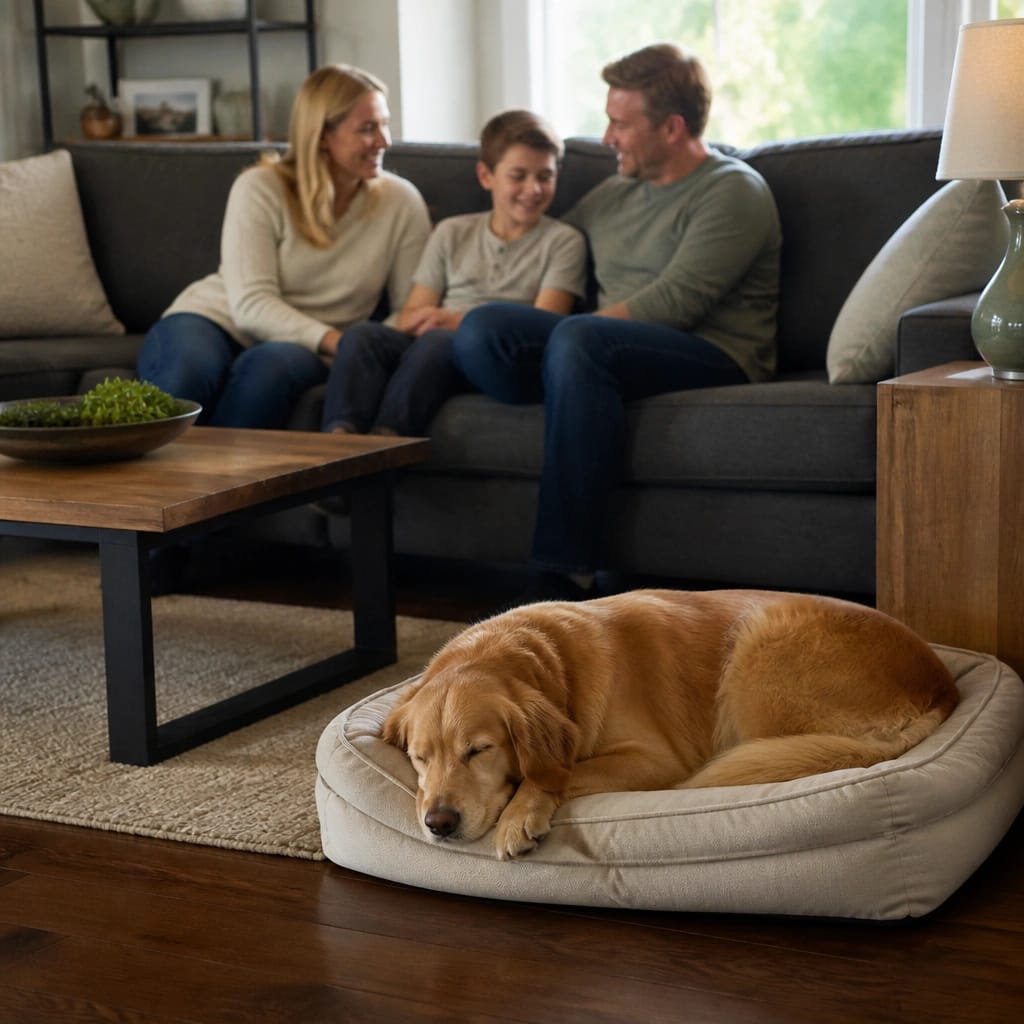
Matching Bed Style to Each Sleeping Spot
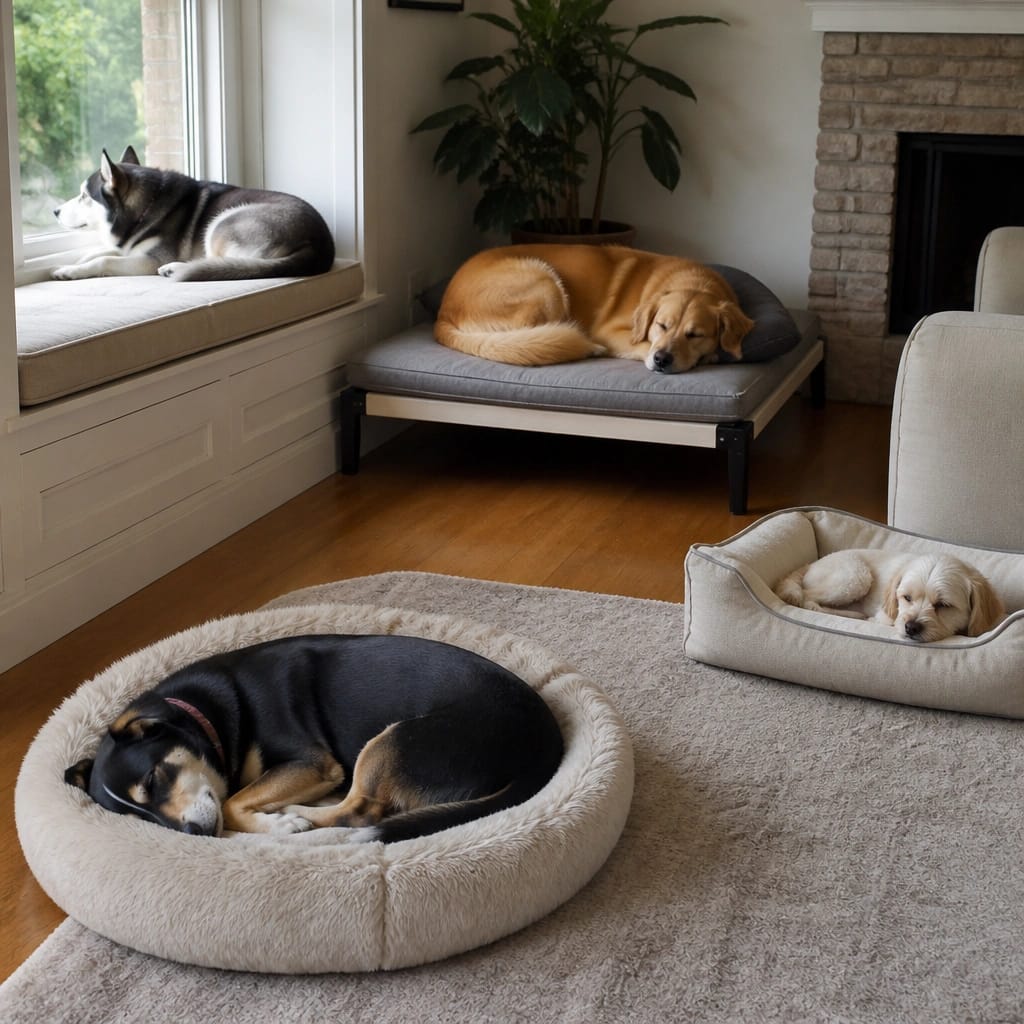
Each spot calls for a different shape. A flat mat suits a warm floor. A cave-style bed fits a dog that loves to burrow.
A bolster bed gives older dogs a place to rest their head. Match the bed to the surface and your dog’s favorite sleeping position.
Common Mistakes Owners Make With Dog Beds
Don’t buy a bigger bed to fix a placement problem. That ignores why the spot fails. Also, avoid washing beds too often with strong detergent.
It removes their scent. Dogs choose beds by smell, so keep washing mild and infrequent. If your dog keeps sleeping on the floor, check room temperature first.
How to Introduce a New Bed Without Drama
Put the new bed exactly where your dog already sleeps. Add a familiar blanket with their scent. Toss treats inside.
Praise them for stepping near it. Never push or hold your dog down on a new bed. That creates stress.
If they start digging or scratching, let them take their time.
Real-Life Scenarios: One-Bed Dogs vs Multiple-Bed Dogs
A senior lab often needs two orthopedic beds, one upstairs and one down. A young Frenchie might do fine with one bed plus a cooling mat. Puppies need a crate pad plus a playpen bed.
The common thread is a right-sized bed in the right place. Start with one, watch your dog, and add a second only when they show they want it.
Quick FAQ: Dog Beds and Sleeping Preferences
How many beds should a dog have?
Most dogs do well with one bed in their main resting room. Add a second if your dog rotates between rooms. Two or three is enough for most households.
Why does my dog sleep on the floor instead of their bed?
Dogs often pick the floor to cool down. Tile and wood pull heat from their belly. A warm bed in a noisy spot can also push them to a quieter floor space.
Do dogs get confused by multiple beds?
No. Dogs see different rooms as different resting spots. Multiple beds give them choices for temperature, lighting, and staying near you.
Final Decision Guide: What to Do for Your Dog
Start with one quality bed where your dog naps most. Watch for a week. If they move between rooms or sleep on hard floors, add a second.
Let their behavior decide. That’s the whole trick.


