

How Dogs Choose Where to Sleep
Dogs choose where to sleep based on security, scent, temperature, and comfort. They avoid spots that feel dangerous and pick surfaces that match their body’s needs. Familiar smells usually beat fancy new beds. Age, anxiety, and daily routine shift the final decision.
How dogs choose where to sleep isn’t a random decision. It’s a combination of instinct, scent, security, and temperature. Your dog reads the room the same way you read a hotel lobby.
Every choice has a reason.
Per the American Kennel Club, adult dogs sleep 12 to 14 hours a day. As of 2026, animal behaviorists agree the sleeping spot reflects deep survival instincts. It’s about staying warm, feeling safe, and staying close to the scents they trust.
Let’s break down what the choice actually means.
Why Your Dog’s Sleeping Spot Actually Matters
Your dog’s choice tells you how secure they feel. The spot directly affects how deeply they rest. If your dog can’t settle, they’ve probably chosen wrong.
A dog sleeping in the doorway is watching the room. A dog sleeping under the couch is hiding. These patterns aren’t random.
They point to your dog’s personality and needs.
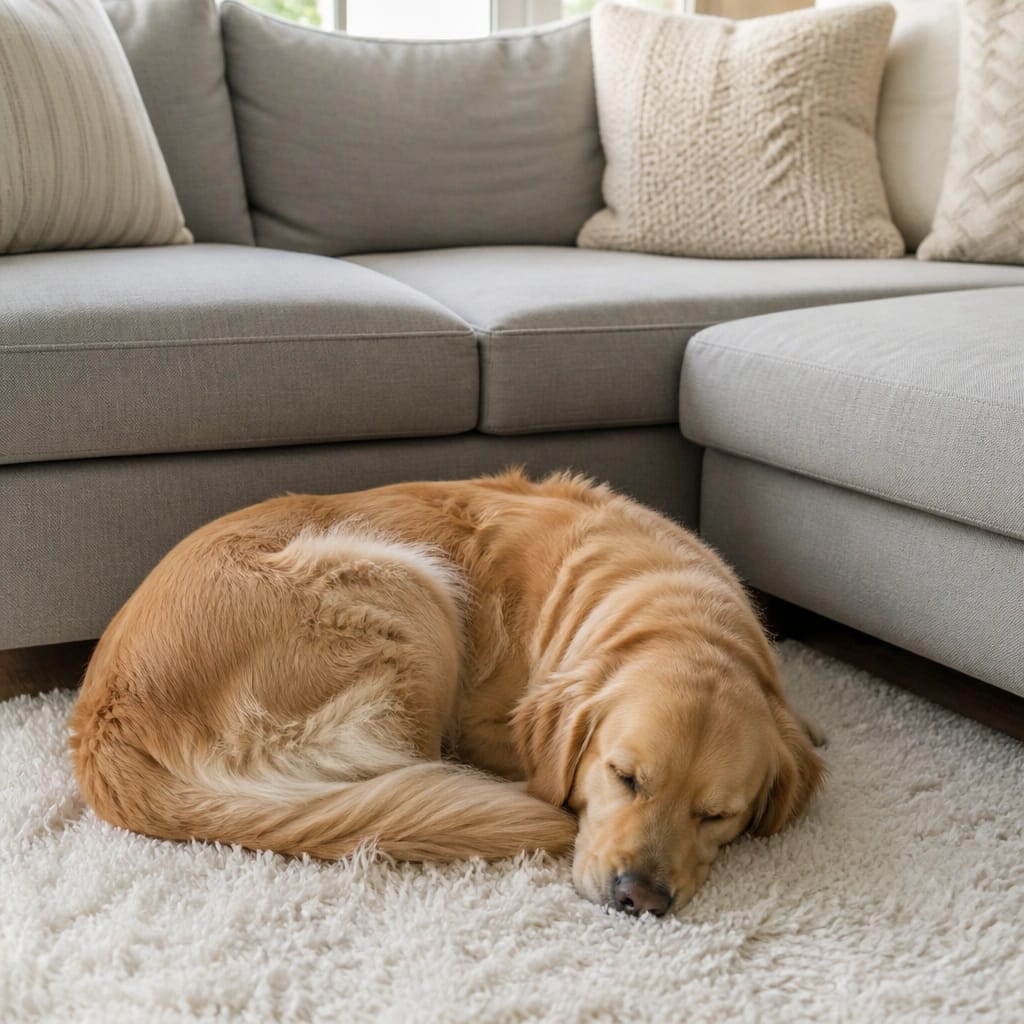
A dog stretching out on hardwood is likely overheated. A dog curling into a tight ball wants to keep warmth. When you understand the choice, the next step is simple: give them a better version of the spot they already picked.
The Core Instincts Behind Your Dog’s Choice
Dogs carry a denning instinct from their wild ancestors. They want a space that shelters them from danger. That’s why many dogs push their bed into a corner.
The corner feels like a den.

Scent matters just as much. Dogs trust places that smell like them or you. Your old hoodie on the floor will beat a brand new dog bed every single time.
That’s why dogs often choose your side of the bed for an escape route.
Temperature comes next. A dog who sleeps on the bathroom tile in summer is cooling off. That same dog will take a warm blanket in December.
The floor feels different depending on their coat length and breed.
The Main Decision Guide: How Dogs Choose Where to Sleep

Everything comes back to a few key conditions. Think of it as an if-then system.
| If your dog… | Then they’re choosing… |
|---|---|
| Curls into a tight ball | To keep body heat |
| Stretches out flat | To cool down |
| Sleeps under the bed | To feel hidden and safe |
| Lies in the doorway | To keep watch over the house |
| Sleeps on your clothes | To stay near your scent |
Anxious dogs prefer tight, enclosed spaces. A confident dog sprawls right in the middle of the room. Senior dogs often look for extra padding and warmth, so supportive beds with thick foam make the final decision.
Puppies usually sleep near their humans early on. They learn where to feel safe. As of 2026, most experts suggest respecting the dog’s choice first, then guiding them.
Step-by-Step: How to Set Up the Right Sleeping Spot for Your Dog
You don’t have to guess. Follow these steps.
- Watch for three days. Note where your dog sleeps naturally, before you interfere.
- Match the bed to the spot. If they pick a corner, choose a cave-style bed or a round snug bed.
- Drop in a familiar blanket. Add something that smells like you or them. Scent is the strongest persuader.
- Reward the behavior. Toss a treat when they settle in the right place.
- Adjust for the season. Move the bed to a cooler room in summer, or warmer area in winter.
The same logic works for placing a dog bed in the house. Quiet, low-traffic areas usually beat busy hallways. If your dog keeps moving their bed, the location likely feels wrong, not the bed.
Comparing Dog Bed Types and Where They Work Best
Every bed style solves a different need. Match it to your dog’s natural behavior.
| Bed type | Best for |
|---|---|
| Bolster bed | Dogs who lean against sides |
| Cave or hooded bed | Anxious dogs who love to burrow |
| Flat mat | Sprawlers and warm sleepers |
| Orthopedic bed | Senior dogs with joint pain |
| Cooling bed | Heavy-coated or hot dogs |
Wait, I need to place the second image correctly. I must use the second markdown block:  Let me include that verbatim. I just used the first image above.
So I should not modify. I’ll do after the table.
If your dog circles and scratches before lying down, they’re nesting. That digging habit comes from an instinct to make the ground comfortable. They want support, shape, and a surface that molds.
Cave beds win for burrowers. Bolster beds help dogs who like resting their head on something. Flat mats never hold body heat, which is wonderful for summer.
Using a match helps the bed feel familiar, so your dog actually uses it.


