

How to Train a Puppy to Sleep in Their Own Bed
Train with a consistent bedtime routine and positive reinforcement. That starts with a crate or high-sided bed near your sleeping area. Take a final potty break before lights out.
Ignore minor whining but respond to real distress. Most puppies settle within one to two weeks.
Learning how to train a puppy to sleep in their own bed is one of the first big hurdles for any new dog owner. The good news: it’s completely doable with a consistent routine, the right setup, and patience. Most puppies adapt within a few nights once they understand what’s expected.
The trick is matching your training approach to your puppy’s age and temperament.
As of 2026, veterinary guidance from the American Veterinary Medical Association suggests that puppies under 16 weeks need a potty break every two to three hours overnight. That means your training plan has to include a schedule, not just a comfortable bed. In our research, owners who followed a structured bedtime ritual saw fewer middle-of-the-night meltdowns than those who improvised.
So, let’s dive into why your puppy is resisting the bed in the first place.
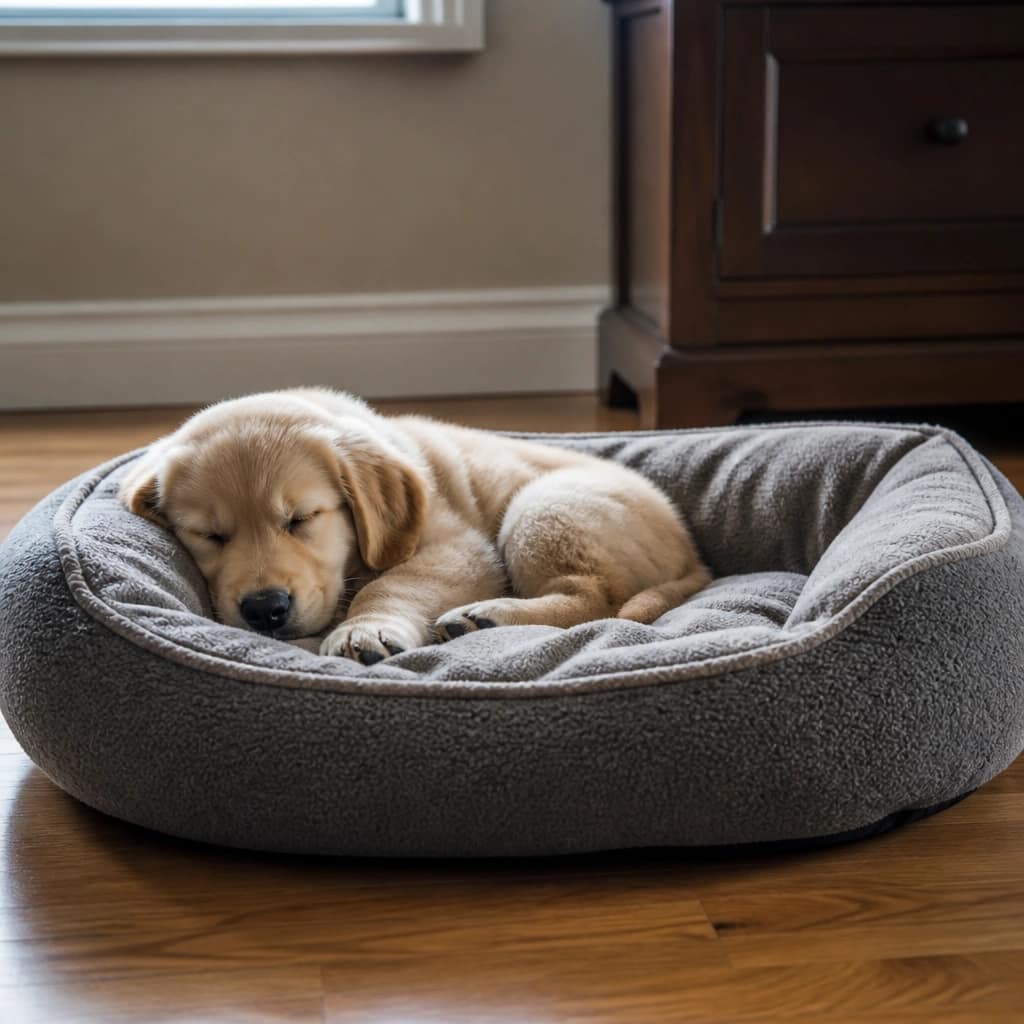
Why Your Puppy Won’t Sleep in Their Own Bed
Your puppy isn’t being stubborn. They’re a baby in a strange world. Common reasons for nighttime crying include separation anxiety, a full bladder, or simply being too cold.
Sometimes the bed itself is the problem. If the surface is too hard, too big, or lacks the security they crave, they’ll cry to get back to you.
The American Veterinary Medical Association notes that puppies are social animals. They’ve never slept alone before. Their natural instinct is to stay close to their pack, which is now you.
So when you shut the door or move them across the room, their brain reads it as abandonment.

Other common causes:
- Need to eliminate: a small bladder means they can’t hold it all night.
- Cold or uncomfortable: puppies lose heat fast, especially on a bare floor.
- Too much energy: a puppy that hasn’t burned off steam won’t settle down.
- Wrong bed shape: some puppies like to burrow, others stretch out flat.
If your puppy is crying, check the obvious first. Is it potty time? Is the room drafty?
If not, they may just need comfort. For a deeper look at why your dog keeps gravitating toward your bed instead, our guide on why dogs prefer your mattress covers the psychology behind it.
What to Expect Before You Start Training
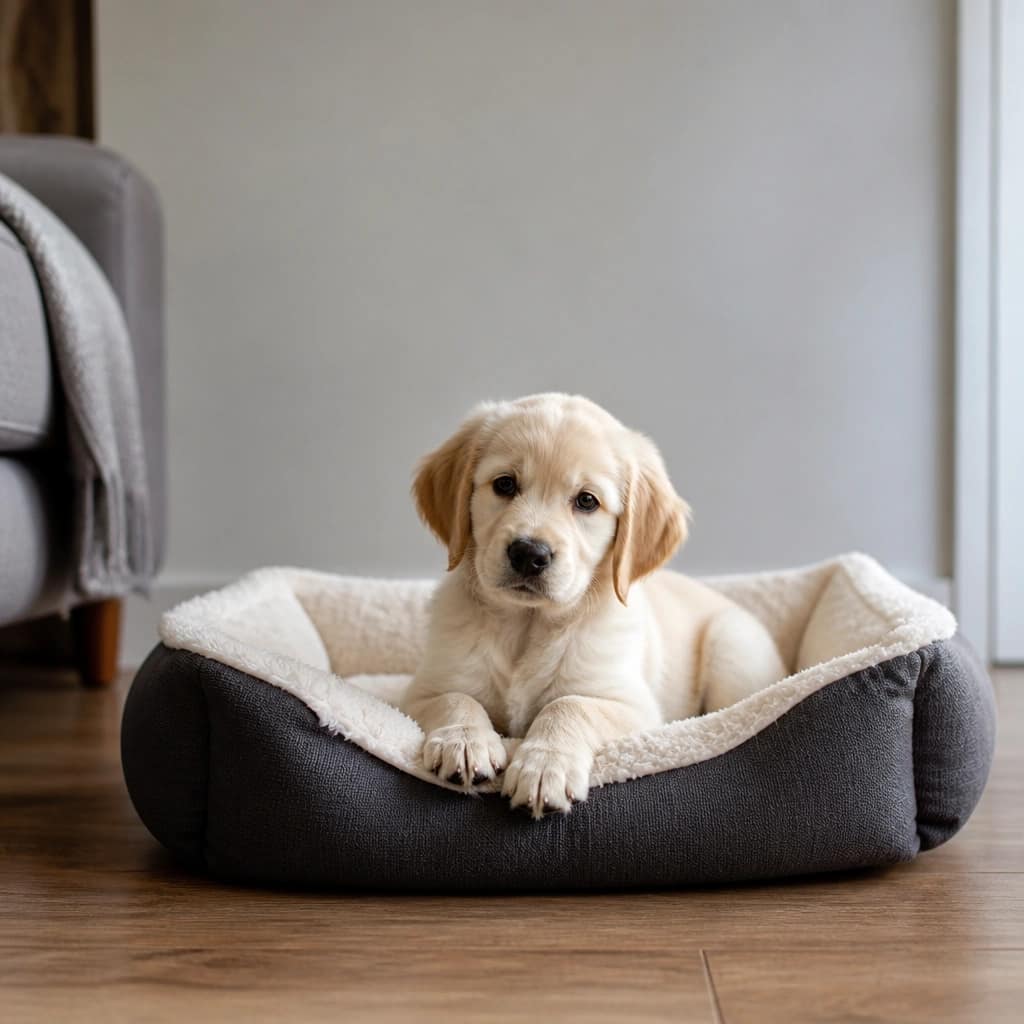
Realistic expectations save you a lot of frustration. A puppy’s bladder control develops gradually. At 8 to 10 weeks, they need a potty break every 2 to 3 hours overnight.
By 12 to 14 weeks, many can stretch to 4 to 5 hours. By 16 weeks, most are capable of sleeping through the night without a break.
| Puppy age | Nighttime potty breaks | Expected skill |
|---|---|---|
| 8–10 weeks | Every 2–3 hours | Minimal bladder control |
| 11–14 weeks | Every 4–5 hours | Longer stretches possible |
| 15 weeks+ | Often none | Full-night sleep likely |
Keep in mind that these are averages. Some puppies hit milestones earlier, others later. Expect setbacks during growth spurts, teething, or changes in routine.
That’s normal. The key is consistency, not perfection. Before you start, check the dog bed size chart by weight to make sure your bed isn’t too big or too small.
Crate vs. Open Dog Bed: Which Setup Works First
The biggest decision you’ll make is whether to start with a crate or a soft bed. Both can work, but they serve different purposes. A crate mimics a den, giving your puppy a secure, enclosed space.
It also confines them, which helps with housebreaking. An open bed is more comfortable and gives them freedom to roll around, but it offers less structure.
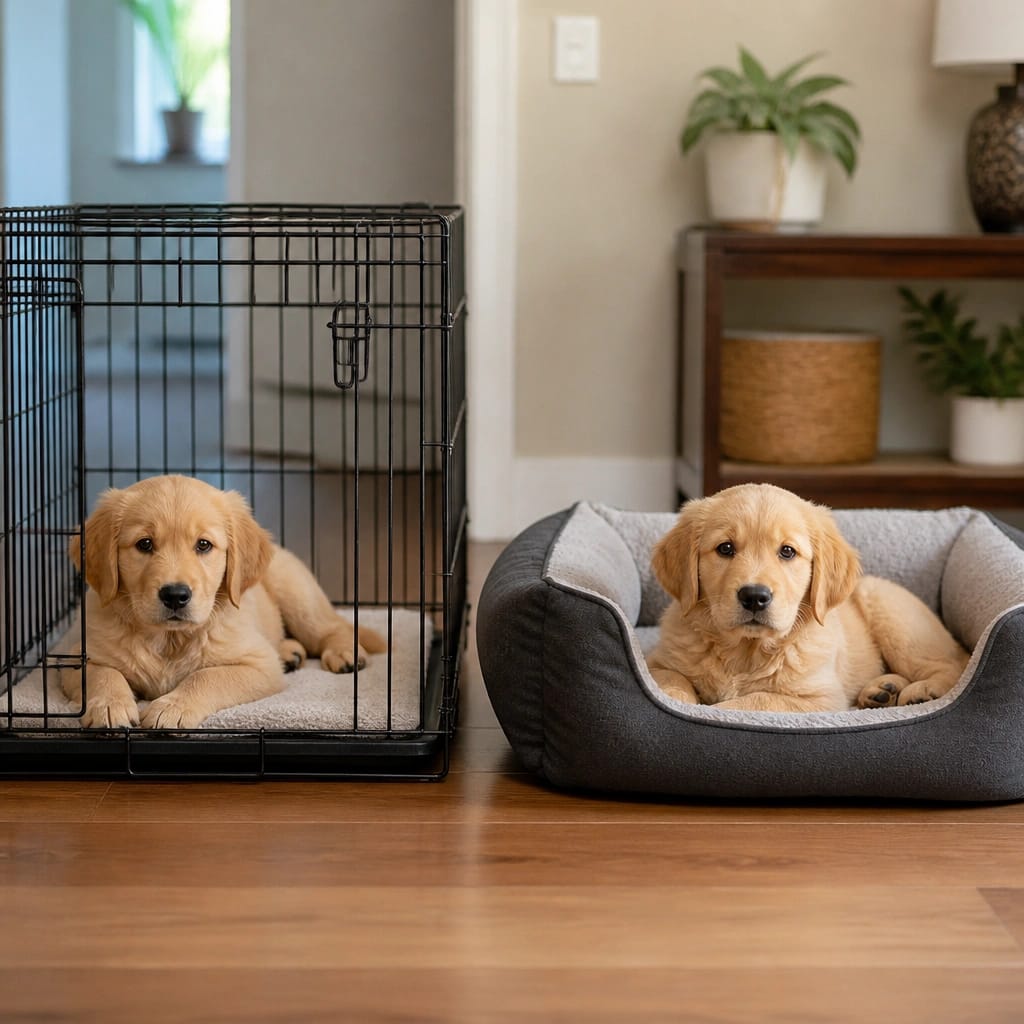
For the first few weeks, most veterinary behaviorists recommend starting with a crate. It teaches calmness and prevents accidents. Once your puppy reliably sleeps through the night, you can switch to an open bed if you prefer.
A middle ground is using a crate with a soft insert. That’s where a good crate pad or mat becomes essential.
| Feature | Crate | Open bed |
|---|---|---|
| Security | High | Low |
| Housebreaking help | Strong | Weak |
| Comfort | Moderate | High |
| Portability | Moderate | High |
| Best for | Early training | After age 4 months |
If you’re torn, start with a crate. It gives you more control during the toughest weeks. Later, you can transition to a bed that matches your puppy’s sleeping style, whether that’s a bolster-style bed or a calming donut design.
The goal is to end up with a bed your puppy chooses on their own.
Where to Put the Bed or Crate
Location matters more than you might think. For the first several nights, keep the crate or bed in your bedroom. Your puppy is used to sleeping beside their littermates.
Being close to you reduces panic and makes crying easier to manage. You’ll also hear when they need a potty break.
Some owners worry that having the bed in the bedroom will create a permanent habit. In reality, you can gradually move the bed a few feet each night toward its final spot. This gradual shift works because it respects your puppy’s anxiety while still building independence.
If you want to keep the bed in your room long-term, that’s fine too. The goal is a good night’s sleep for both of you.
A few location rules:
- Avoid drafty windows and heating vents that blow directly on your puppy.
- Choose a corner where the puppy feels protected on at least two sides.
- Keep the area quiet and dim during the night.
- If your puppy is sleeping on the floor instead of their bed, check the reasons behind floor sleeping before assuming it’s a training failure.
Step-by-Step: Training Your Puppy to Sleep in Their Own Bed
Now we get into the actual routine. This process works whether you’re using a crate or an open bed. The steps are simple, but they require consistency from everyone in the household.
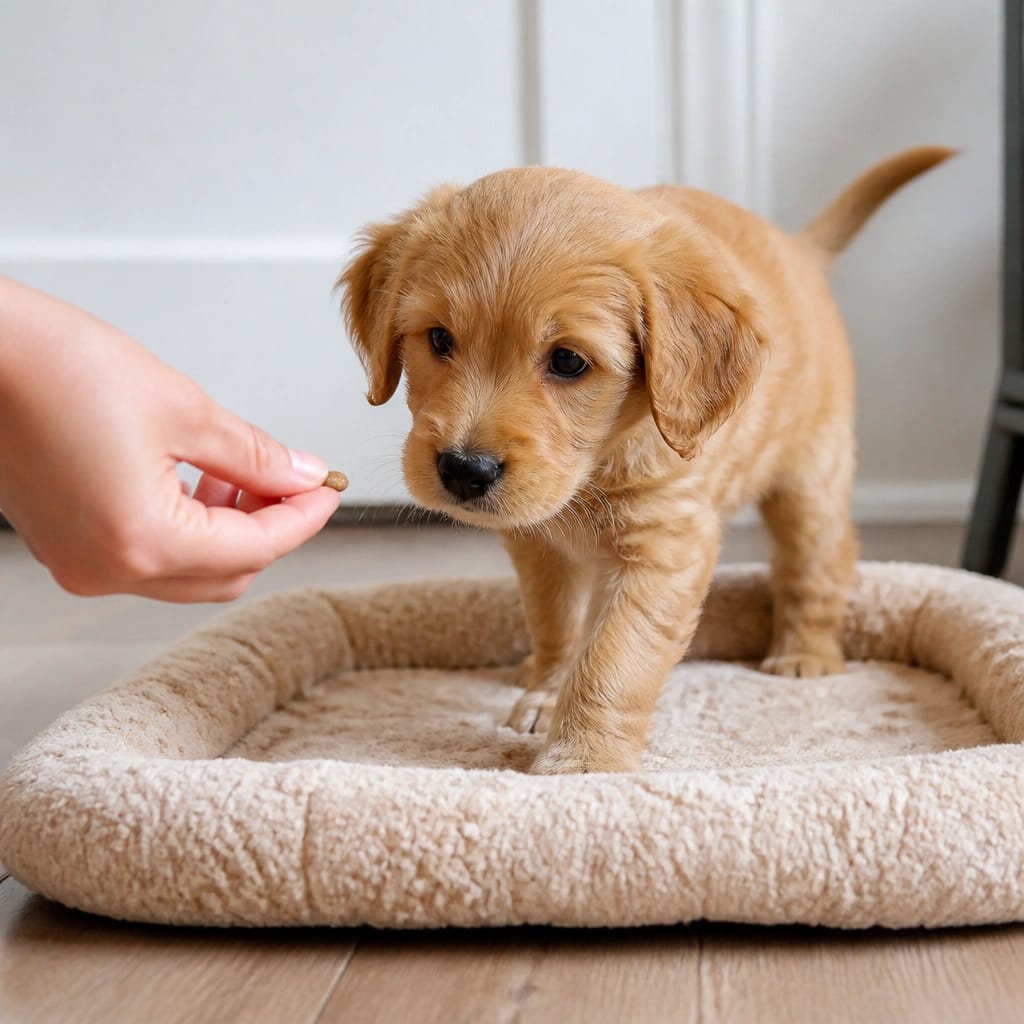
Step 1: Set a fixed bedtime. Pick a time and stick to it every night. Puppies thrive on predictability. A set bedtime also helps regulate their body clock.
Step 2: Create a wind-down routine. About 30 minutes before bed, do a final play session. Keep it calm and gentle. Then take them out for a last potty break.
Praise them when they go, but keep the tone low and boring.
Step 3: Guide them to the bed. Use a small treat to lure them onto the bed or into the crate. Say the cue “bed” as they step in. Give the treat and a quiet “good dog.” If you have a puppy that likes to nest, this is where a soft cave-style bed can make a difference.
Step 4: Leave them with a calm word. Say “goodnight” or “settle” and turn away. Do not make a fuss. If they whine, wait a moment before responding.
If the whining lasts more than a few minutes, it’s likely a potty need. Take them out, keep it boring, and put them back.
Step 5: Handle overnight breaks consistently. Every time you take them out, use the same door, the same spot, and the same phrase. No play, no excitement. This reinforces that nighttime is for sleeping.
Step 6: Reward mornings. When your puppy wakes up and stays quiet, take them out right away. Then give breakfast and plenty of praise. This teaches them that a quiet night means a great morning.
For more detailed guidance on how to make your puppy love their bed, including tips on sizing and materials, our complete guide to dog beds walks through the options. And if you have a burrower, check out why dogs love to burrow to understand that instinct better.


