

How to Build a Positive Bedtime Routine for a Dog
Build a bedtime routine around consistency. End active play 30 minutes before bed. Take a calm walk.
Offer a chewing activity. Take a final potty break. Lead your dog to their sleeping area.
Keep lights low and voices quiet. Repeat the same sequence every night.
If your dog’s restless at night, you’re not alone. Learning how to build a positive bedtime routine for a dog can transform your evenings from chaotic to calm. A consistent wind-down process helps your dog understand when it’s time to sleep.
It reduces anxiety and prevents those 2 a.m. wake-up calls.
As of 2025, veterinary behaviorists agree that dogs thrive on predictability. A structured routine cues their natural sleep-wake cycle, or circadian rhythm, just like it does for humans. The result is better sleep for everyone in the house.
Let’s walk through what actually works.

Why a Bedtime Routine Actually Matters for Your Dog
Dogs are creatures of habit. They learn through repetition and association. A bedtime routine tells your dog, “It’s time to settle down.” Without this signal, your dog stays alert and confused.
This matters because sleep is essential for your dog’s health. Puppies need 18 to 20 hours of sleep daily. Adult dogs need 12 to 14 hours.
Senior dogs need 14 to 16 hours. A routine helps them get that rest.
A solid routine also prevents problem behaviors. Dogs that don’t know when to sleep often develop anxiety. They may pace, bark, or destroy things at night.
A predictable pattern removes that uncertainty. Your dog’s sleep schedule affects yours too. When your dog sleeps through the night, you do too.
The American Kennel Club notes that dogs are crepuscular animals, meaning they are most active at dawn and dusk. A bedtime routine helps shift their natural rhythm toward your schedule. It works with their biology, not against it.

The Core Components of a Wind-Down Process
A good bedtime routine has four parts. Each part helps your dog shift from active to relaxed.
Lower the energy. End vigorous play at least 30 minutes before bed. This gives your dog time to calm down. A dog that goes straight from fetch to bed will struggle to settle.
Drain the tank. A walk, even a short one, helps burn off excess energy. The walk should be calm, not exciting. Save the sniffing and exploring for earlier in the day.
Engage the brain. Calming activities like a chew toy or a lick mat can help. These tasks lower cortisol levels and signal relaxation. Many dogs need this step to fully wind down.
Empty the bladder. A final potty break is non-negotiable. This prevents accidents and midnight whining. Make it quick and boring.
These four components form the backbone of any good routine. You can adjust the order slightly, but keep all four. The right bed placement also matters.
Where you put the bed can affect how easily your dog settles.

Building the Routine Step by Step
Here is a simple sequence that works for most dogs. Stick with it for at least two weeks before making changes.
Step 1: Time the last walk right. Schedule the final walk 30 to 60 minutes before bed. This gives your dog time to digest and relax. A walk that’s too close to bedtime can be overstimulating.
Step 2: End playtime before bed. Stop all high-energy play at least 30 minutes before the routine starts. This includes fetch, tug, and roughhousing. Switch to calm activities instead.
Step 3: Offer a calming activity. A chew toy, a frozen Kong, or a lick mat works well. These activities keep your dog occupied and relaxed. They also help with teething puppies.
Step 4: Take the final potty break. This is the last chance to go outside before sleeping. Be patient and wait for your dog to actually go. Reward them calmly afterward.
Step 5: Lead them to the sleeping area. Guide your dog to their crate or bed. Say a quiet cue like “bedtime” or “settle.” Make sure the bed is the right size for your dog. A bed that’s too small or too big can feel uncomfortable.
Step 6: Stay quiet and consistent. Dim the lights. Reduce noise. Sit nearby for a few minutes if your dog needs comfort.
Then leave them to settle.
Common Mistakes That Sabotage a Good Night’s Sleep
Even with good intentions, it’s easy to make mistakes. Here are the most common ones.
Skipping the routine on weekends. Dogs don’t understand weekends. If you skip the routine, your dog gets confused. Consistency matters more than anything.
Letting your dog sleep in your bed sometimes. This sounds harmless, but it creates confusion. Your dog doesn’t know when it’s allowed. Stick to one sleeping spot.
Using the crate as punishment. If the crate is only for time-outs, your dog will hate it. Make the crate positive with treats and toys. It should feel like a safe den.
Ignoring the last potty break. This is the most common cause of nighttime accidents. Take your dog out right before bed. Wait until they actually go.
Overtiring your dog on purpose. Some owners think an exhausted dog sleeps better. But an overtired dog can actually be more restless. Calm is better than exhausted.
Some dogs also develop habits like scratching or digging at their bed before lying down. This is normal nesting behavior, not a sign your routine is broken.
Adjusting for Your Dog’s Age and Energy Level

Not all dogs need the same routine. Your dog’s age and energy level matter.
Puppies
Puppies need more sleep and more frequent potty breaks. Their routine should include a potty break in the middle of the night for the first few months. Keep the nighttime potty visit quiet and boring.
No play, no excitement.
Adult Dogs
Adult dogs can usually hold their bladder through the night. Focus on the walk and calming activities. High-energy breeds may need a longer walk.
Low-energy breeds may need less.
Senior Dogs
Senior dogs often have arthritis or other health issues. Their bed should provide good support. A heated bed can help with joint pain.
Watch for signs of discomfort or restlessness.
When the Routine Isn’t Working
Sometimes you follow every step and your dog still won’t settle. Give the routine at least two weeks before judging it. Dogs need time to learn new patterns.
If your dog still struggles, check the basics first. Is the walk long enough for your dog’s energy level? A high-energy breed might need 30 minutes instead of 15.
Is the bed comfortable? A bed that’s too small or worn out can cause restlessness.
Some dogs have specific preferences about where they sleep. If your dog keeps avoiding their bed, try moving it to a different spot. The location matters more than most owners realize.
Safety and Warnings
A bedtime routine should always prioritize safety. The sleeping area needs to be free of hazards. Check for loose threads, torn fabric, or small parts your dog could swallow.
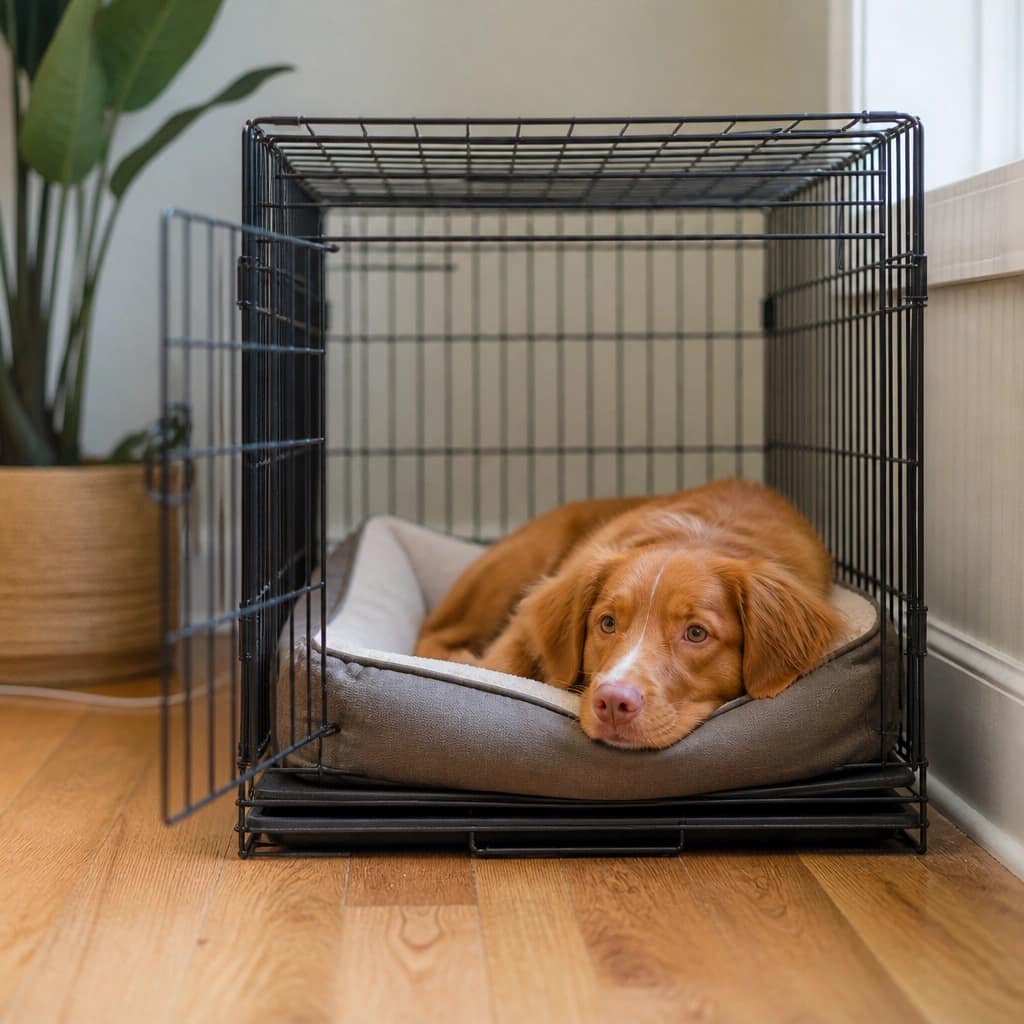
Crate safety is especially important. The crate should be large enough for your dog to stand, turn around, and lie down. Remove any collars or tags that could get caught on the bars.
Never use a crate as punishment.
Bed safety matters too. Choose a bed with durable, chew-resistant materials. If your dog destroys bedding, switch to a chew-proof option.
Avoid heated beds for puppies or dogs that chew. Always supervise your dog with any new toy or bed.
Some dogs like to burrow under blankets or into cave-style beds. This is natural behavior, but make sure there’s enough airflow. If your dog is a senior or has breathing issues, a flat bed might be safer.
Consult your veterinarian if your dog shows signs of pain, anxiety, or persistent restlessness at night. Medical issues can sometimes look like behavioral problems.
A Quick Troubleshooting Guide for Common Nighttime Issues
| Problem | Likely Cause | Quick Fix |
|---|---|---|
| Whining in crate | Needs potty or feels lonely | Take out for quick potty, then ignore whining |
| Pacing and circling | Too much energy left | Add a longer walk or more calming activity |
| Scratching at bed | Normal nesting behavior | Provide a more supportive bed or blanket |
| Waking up too early | Hunger or light exposure | Adjust meal time or use blackout curtains |
| Refusing to settle | Routine is too new | Stay consistent for at least two weeks |
If your dog digs or scratches at their bed before lying down, that’s usually normal. It’s an instinct to make the sleeping area comfortable. Only worry if the scratching becomes obsessive or destructive.
Frequently Asked Questions
How long should a bedtime routine take?
Most routines take 30 to 60 minutes from start to finish. The walk, calming activity, and potty break should flow naturally. Keep it relaxed and consistent.
What if my dog cries in the crate at night?
First, rule out a potty need. If your dog just went out, wait quietly. Responding to every whimper rewards the behavior.
Most dogs settle within 10 to 15 minutes.
Can I change the routine on weekends?
Try to keep the same schedule every day. Dogs don’t understand weekends. A consistent routine prevents confusion and keeps your dog’s sleep cycle on track.
Should I wake my dog for a middle-of-the-night potty break?
Puppies under four months old may need one nighttime potty break. Adult dogs and seniors usually don’t. Only wake your dog if they consistently have accidents.
My dog sleeps on the floor instead of their bed. Is that a problem?
Older dogs often prefer the floor for the cool temperature. If your dog is healthy and comfortable, it’s usually fine. Check that the bed isn’t too warm or uncomfortable.
The Takeaway
Building a positive bedtime routine for your dog comes down to consistency. Keep the same sequence every night. End playtime early, take a calm walk, offer a calming activity, and finish with a potty break.
Match the routine to your dog’s age and energy level. Puppies need more breaks. Senior dogs need more comfort.
High-energy dogs need longer walks.
If your dog still struggles, check the bed, the location, and your own consistency. Most problems solve themselves with time and patience. A well-rested dog is a happier dog.
And a sleeping dog means a peaceful night for you.


