

How to Clean a Dog Bed Without Damaging the Foam
Spot clean foam with minimal water. Never submerge memory foam in a machine. Remove the cover and wash it separately.
Use a damp cloth and mild cleaner on stains. Dry the foam flat with a fan for 24 hours. Baking soda absorbs deep odors without moisture.
There’s no worse feeling than pulling your dog’s bed out for a wash, only to realize the foam inside is now a lumpy, smelly mess. Learning how to clean a dog bed without damaging the foam is the difference between a bed that lasts years and one that needs replacing every few months. The foam is the heart of the bed, it provides support, comfort, and joint relief, but it’s also fragile.
Manufacturer specifications indicate that most foam cores can take 24 to 48 hours to dry completely after a deep clean. Rushing that process or using the wrong method is the fastest way to ruin a bed you probably spent good money on. Let’s walk through exactly what to do, step by step, so your dog’s bed comes out fresh and structurally sound.
The Real Problem: Why Foam Is So Easy to Damage
Foam is basically a sponge. A very expensive, carefully shaped sponge. When you soak it, the water gets trapped deep inside the material.
That trapped moisture leads to mold, mildew, and a permanent musty smell.
If you twist or wring wet foam, you tear the internal structure. The cell walls collapse, and the foam loses its original shape and support. You’ve seen what happens to a memory foam pillow after a bad wash, it never bounces back the same way.
Here’s the thing. Many dog beds use polyurethane foam, memory foam, or shredded foam. Each one reacts differently to water, heat, and agitation.
Treating them all the same way is a recipe for disappointment.
First Decision: Does Your Bed Have a Removable Cover?
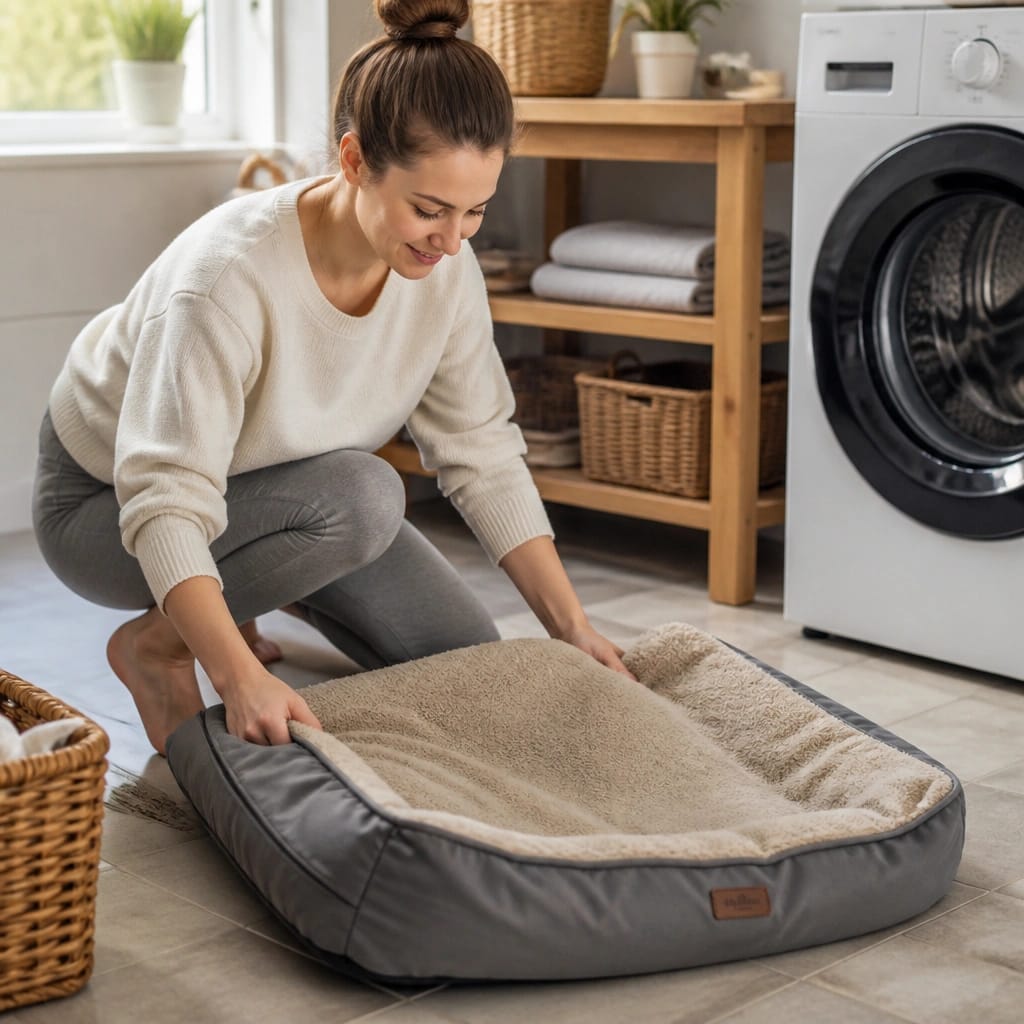
This single question determines your entire cleaning strategy. Check the seam or zipper before you do anything else.
If yes, the cover comes off. Great. You can unzip it, wash it in the machine, and clean the foam separately with far less risk. This is the ideal scenario for most modern dog beds.
If no, the cover is sewn on. You now have to clean the whole bed as one unit. That means spot cleaning only, or a very careful hand wash in a bathtub. You cannot throw a sewn-covered bed with foam inside into a washing machine, the foam will absorb water and likely get destroyed.
| Cover Type | Best Cleaning Method | Risk Level |
|---|---|---|
| Removable zippered cover | Machine wash cover, spot clean foam | Low |
| Sewn-on cover (non-removable) | Spot clean only, hand wash tub | Medium |
| Waterproof liner inside | Prevents foam damage, easier cleaning | Lowest |
If your bed has a removable cover, you’re already ahead. Consider protecting the foam with a waterproof barrier for future messes.
How to Identify Your Foam Type

Look at the foam core. The label or tag usually says what type it is, but if the tag is gone, you can tell by how it feels and behaves.
Solid memory foam is dense, slow to bounce back, and heavy. It’s the most delicate when wet. Never submerge it.
Spot clean only. It holds water like a brick and takes forever to dry.
Shredded foam looks like small chunks or pieces inside a pillow-like insert. Water moves through it more easily, but the pieces can clump together and shift unevenly. You can hand wash it gently, but you must separate the pieces while drying.
Standard polyurethane foam is lighter, bouncier, and less dense. It’s more forgiving with water but still needs careful drying. This is the most common foam in budget-friendly dog beds.
| Foam Type | Water Tolerance | Drying Time | Best Clean Method |
|---|---|---|---|
| Solid memory foam | Very low | 48+ hours | Spot clean only |
| Shredded foam | Medium | 24-36 hours | Hand wash, separate pieces |
| Standard polyurethane | Medium-high | 12-24 hours | Hand wash or spot clean |
Knowing your foam type prevents costly mistakes. The wrong approach can turn a supportive bed into a flat, lumpy, smelly disaster.
Decision Tree: Spot Clean vs. Full Deep Clean
Now you decide. How dirty is the bed really?
Choose spot cleaning when:
- There’s a small stain or fresh accident
- The bed doesn’t smell
- The last deep clean was less than three months ago
- You just want to freshen things up
Choose a full deep clean when:
- The bed smells strongly of urine or dog odor
- There’s a large wet stain that’s soaked in
- The last deep clean was more than three months ago
- You’ve just dealt with a sick dog or accident
If you’re unsure, go with spot cleaning. Less water always means less risk. You can always do a deeper clean later if the smell lingers.
A full deep clean is necessary when dealing with heavy urine odors, which require specialized treatment.
Branch 1: Spot Cleaning the Foam (For Small Stains)
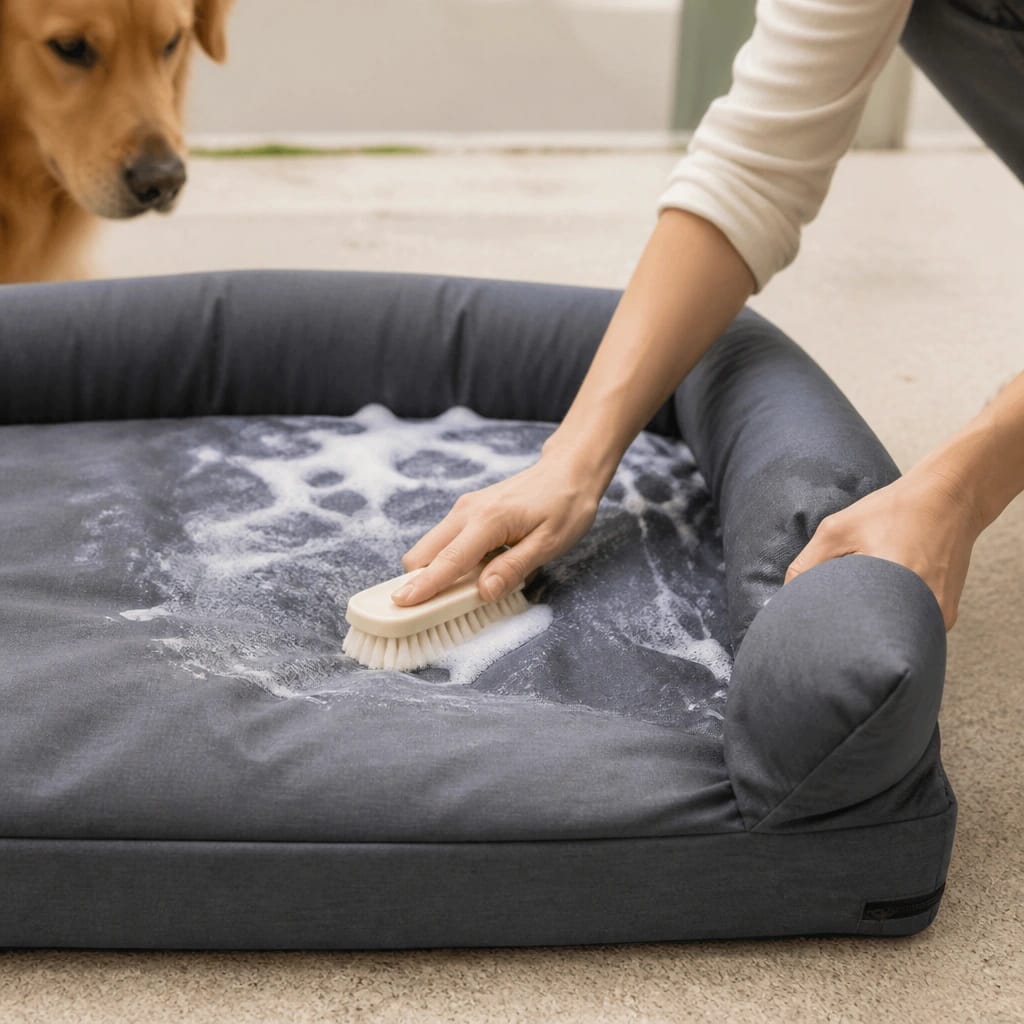
Start with a dry cloth to blot fresh stains. Press firmly to soak up as much liquid as possible. Never rub.
Rubbing pushes the stain deeper into the foam.
Mix a small amount of mild detergent with cool water. Dip a clean cloth into the solution and wring it out until just damp. Gently dab the stain, working from the outside in.
Blot again with a dry cloth to lift the moisture.
For tough odors, sprinkle baking soda over the area. Let it sit for 15 to 20 minutes, then vacuum it up with an upholstery attachment. This pulls out smells without adding any water.
Branch 2: Deep Cleaning the Foam (For Heavy Odors or Accidents)

When the foam smells strongly of urine, spot cleaning isn’t enough. Take the foam to a bathtub or large utility sink. Use lukewarm water and a very small amount of enzyme cleaner designed for pet stains.
Gently press the foam under the water. Do not wring or twist it. Let it soak for 10 to 15 minutes, then drain the water.
Refill with clean water and press again to rinse. Repeat until the water runs clear.
The drying phase is critical. Place the foam flat on a clean towel. Set it in a well-ventilated area with a box fan blowing across the surface.
Flip it every few hours. Expect 24 to 48 hours of drying time depending on foam thickness and humidity. Do not put the foam in direct sunlight, which can degrade memory foam.
How to Wash the Cover (Without Shrinking or Breaking Zippers)
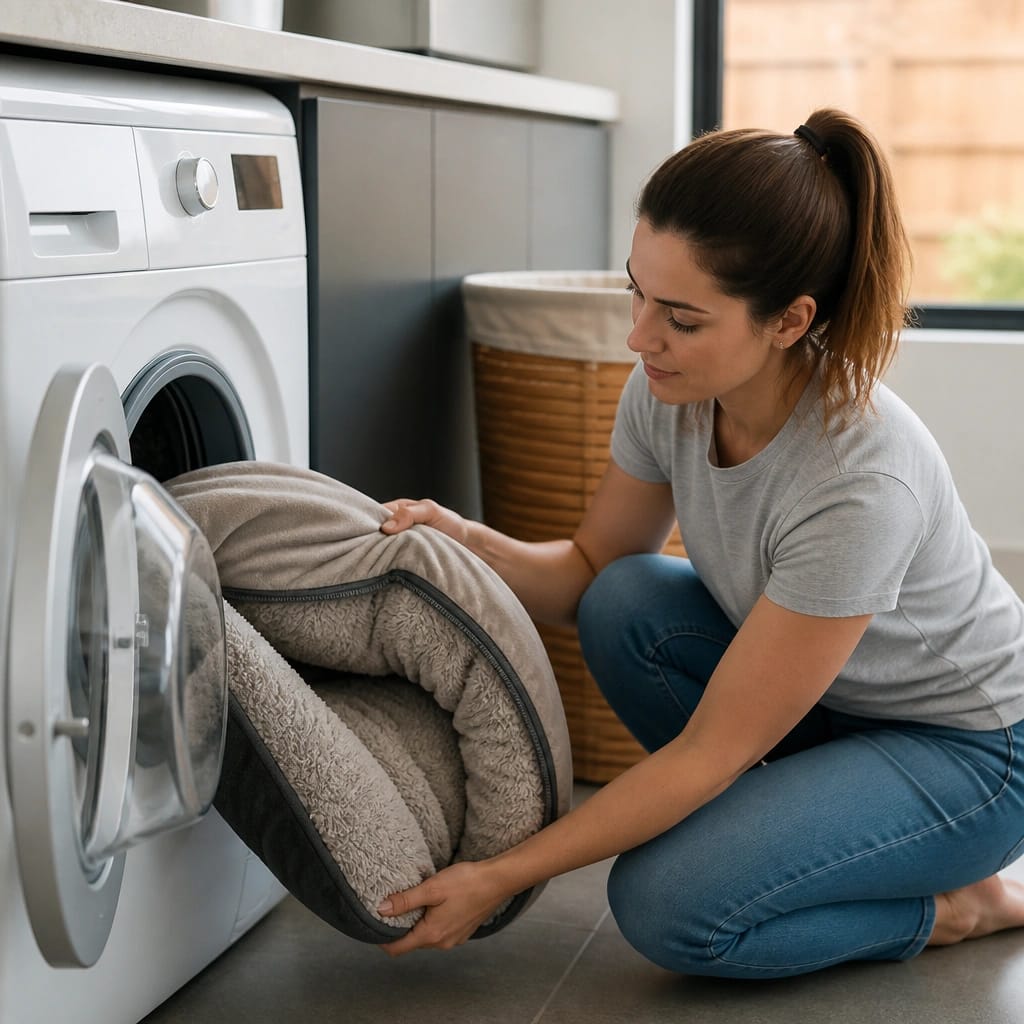
Check the care tag first. Most covers are machine washable on cold or warm. Never use hot water.
Hot water shrinks fabric covers and damages zippers.
Turn the cover inside out before washing. This protects the zipper and the outer fabric. Close the zipper fully to prevent the teeth from catching on other items.
Use a gentle cycle with a mild detergent. Skip fabric softener and bleach entirely.
Dry on low heat or air dry. High heat shrinks covers and weakens seam stitching. If the cover has a waterproof backing, air drying is the only safe option.
Common Mistakes That Ruin Foam
Submerging memory foam in a washing machine is the number one mistake. The agitation breaks the foam structure, and the spin cycle can cause permanent lumps. The foam absorbs so much water that the machine may not spin it out properly.
Using bleach or harsh chemicals is another common error. Bleach breaks down foam cells and leaves a chemical residue that can irritate your dog’s skin. Stick to enzyme cleaners or mild detergent.
Rushing the drying process is just as bad. Putting damp foam back into the cover creates a breeding ground for mold. If you’re dealing with persistent odors, our guide on removing urine smells covers the deeper treatment steps.
When It’s Time to Replace Instead of Clean
A deep clean can only do so much. If the foam has visible mold, dark stains that won’t lift, or a smell that returns within days, it’s time to replace the core. Mold inside foam is a health risk for both you and your dog.
Foam that has lost its original shape is also a sign. If the bed has permanent indentations or feels flat, the support is gone. No amount of cleaning will bring back the structural integrity.
Consider the age of the bed. Most foam dog beds last two to three years with regular cleaning. A bed that’s older than that is probably past its prime.
When you replace it, look for a design with a removable cover and a waterproof liner underneath to make future cleaning much easier.
Maintenance Tips to Stretch Time Between Deep Cleans
Vacuum the bed cover weekly. Use an upholstery attachment to pull up hair, dander, and crumbs. This simple step prevents dirt from working its way into the foam.
Spot clean accidents immediately. Blot, don’t rub. The faster you act, the less moisture reaches the foam layer.
A waterproof liner underneath the cover makes this much easier.
Rotate the bed every few weeks. This distributes wear evenly across the foam. It also helps you spot small stains before they become deep-set problems.
Frequently Asked Questions
Can I put memory foam in the washing machine?
No. Never put memory foam in a washing machine. The agitation breaks down the foam structure and the spin cycle creates permanent lumps.
Spot clean memory foam by hand with a damp cloth.
How long does dog bed foam take to dry?
Most foam cores take 24 to 48 hours to dry completely. Thick memory foam can take longer. Use a box fan and flip the foam every few hours to speed up the process.
What cleaner is safe for dog bed foam?
Enzyme cleaners designed for pet stains are the safest option. Mild liquid detergent mixed with water also works. Never use bleach, ammonia, or fabric softener on foam.
How often should I clean my dog’s bed?
Deep clean the foam every two to three months. Wash the cover every two to four weeks. Vacuum the bed weekly to keep dirt and hair from building up.
Can I dry dog bed foam in the dryer?
No. Heat from a dryer damages foam cells and can melt or warp the material. Always air dry foam flat with good ventilation.
Low heat is safe for the cover only.
Decision Guide: Which Cleaning Path Is Right for You?
Use this quick reference to choose your approach.
| Situation | Cleaning Method | Drying Time |
|---|---|---|
| Small stain, no odor | Spot clean foam | 2-4 hours |
| Heavy odor, large accident | Deep clean foam in tub | 24-48 hours |
| Cover is dirty, foam is fine | Machine wash cover only | 1-2 hours |
| Mold or permanent smell | Replace the foam core | N/A |
If you’re ever unsure, start with the gentlest method. Less water always means less risk. Your dog’s bed will last longer, smell fresher, and keep providing the support your pet needs every night.


