

Dog Bed Size Chart by Breed?
You’ve probably stared at a Dog Bed Size Chart by Breed and wondered if your dog is just weirdly shaped. Most charts say “Labrador: Large.” But your Lab might be built like a greyhound or a barrel. That’s because breed charts rely on averages, not your dog’s actual body.
Here’s a hard truth: a 70-pound Labrador can be a foot longer than a 70-pound Bulldog. Manufacturer specifications show that interior dimensions vary by several inches even within the same size band. So buying based on weight alone means you’re guessing.
Let’s fix that.

Why Breed-Specific Bed Charts Are Tricky
Breed standards from sources like the AKC tell you what a dog should look like, but your dog isn’t a show dog. They’re a mix of every snack you’ve ever dropped.
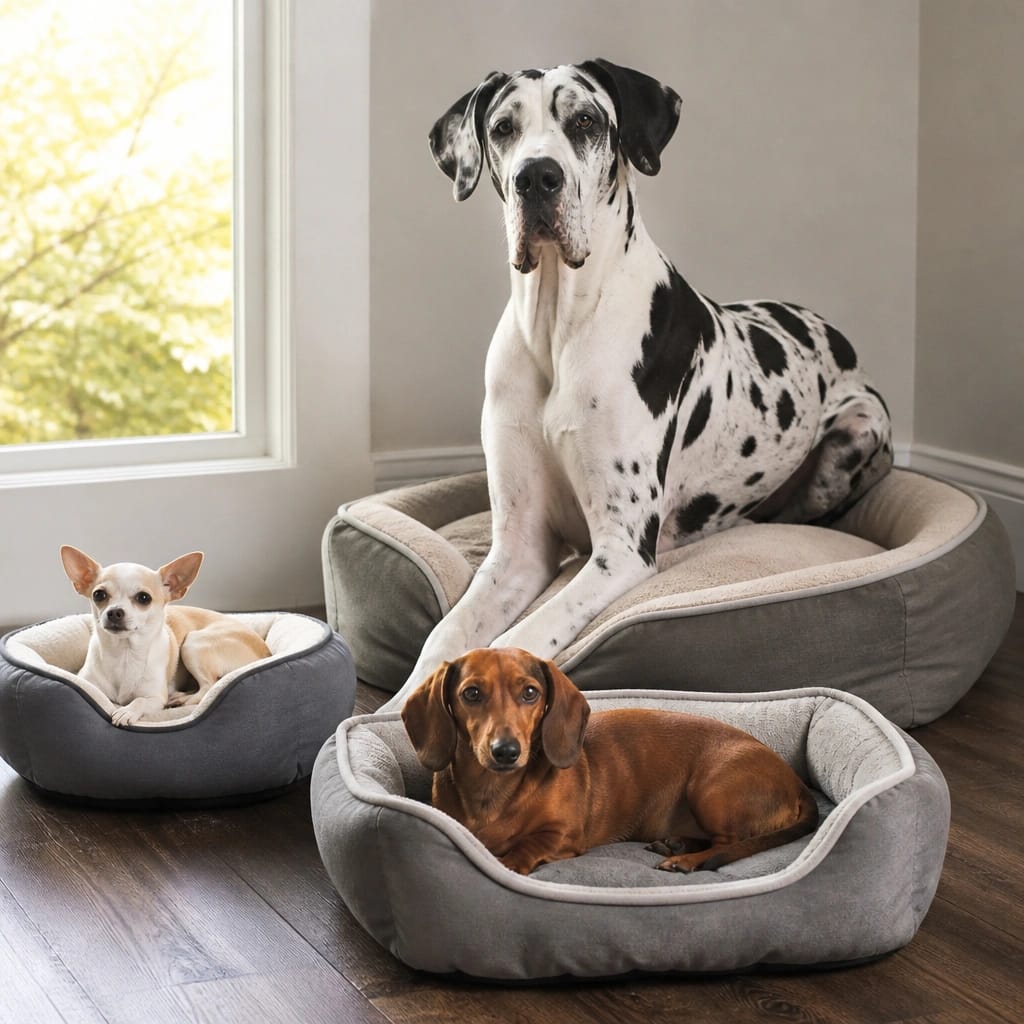
Take the Dachshund and the Corgi. Both are long-backed breeds that weigh around 25 to 30 pounds. A standard weight chart says “Medium.” But their bodies are much longer than a medium bed provides.
They need the length of a large bed, just with a smaller overall footprint.
On the flip side, you have deep-chested breeds like Greyhounds and Boxers. They have narrow waists but long legs. They need a bed that lets them sprawl out fully.
If you just sort by weight, you’ll end up with a bed that’s too short or too narrow. Here is a complete guide on dog beds to understand how shape plays into the design.
The 3 Measurements That Actually Matter
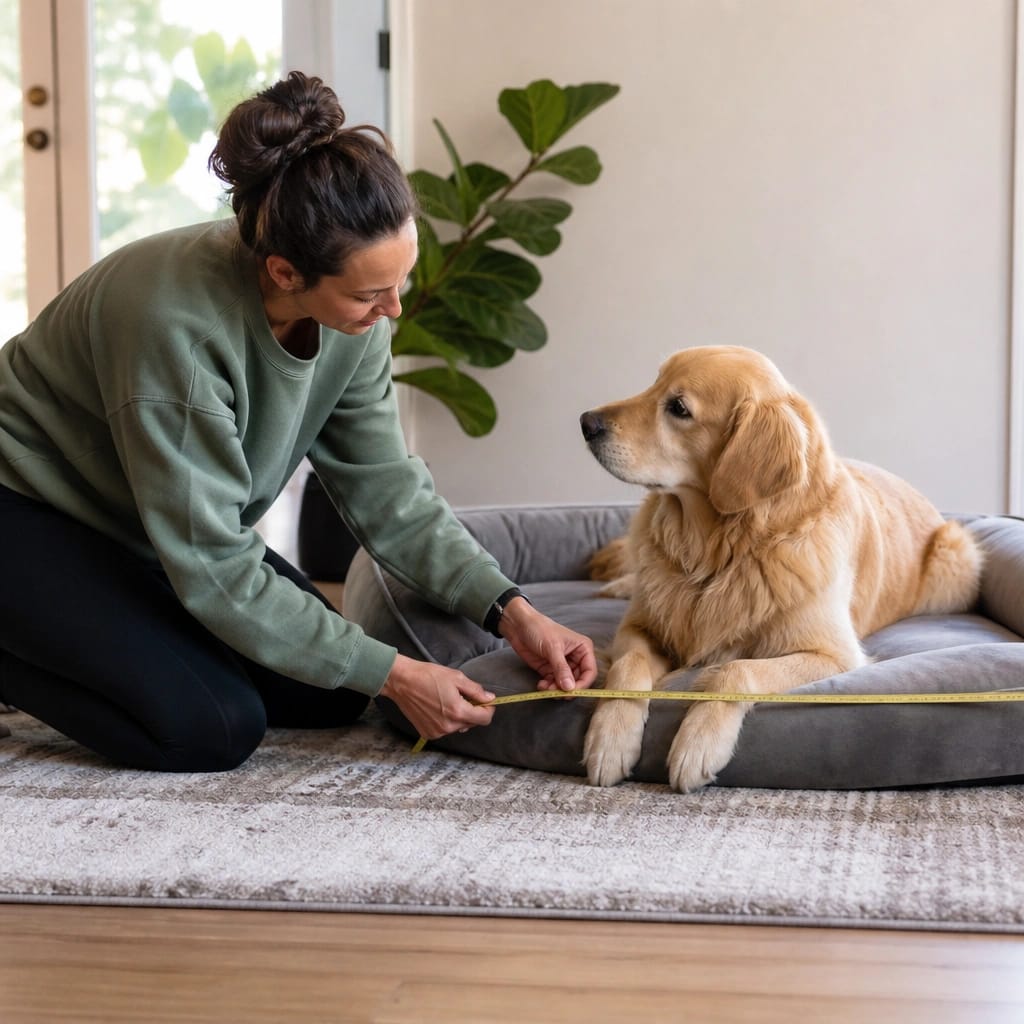
Forget the breed label for a second. Grab a soft tape measure. You need three numbers: nose to base of tail, shoulder height, and weight.
Nose to base of tail. This is the most important number. It tells you the minimum sleeping surface your dog needs. If the dog is 30 inches long, the sleeping area needs to be at least 30 inches.
Shoulder height. This matters for beds with bolsters or raised rims. A tall dog needs a taller bolster to rest their head on.
Weight. Weight helps you pick the right foam density. A heavy dog needs high-density foam so they don’t sink straight to the floor. A light dog can sleep on a softer polyfill bed without issues.
Weight-Based vs. Length-Based Charts: Which Is Better?
Weight-based charts are the industry default. They’re easy to find on any product page. But they often fail because they have zero idea if your dog is long and low or tall and narrow.
Length-based charts are far more reliable. You measure your dog, add a few inches, and compare it to the interior dimensions of the bed. This tells you exactly how the bed will fit your actual animal.
| Feature | Weight-Based Charts | Length-Based Charts | | Ease of use | Very easy | Needs a tape measure | | Accuracy | Poor for long or deep-chested breeds | Good for all breeds | | Best for | Small toy breeds | Medium, large, and giant breeds |
If you have a mixed-breed dog, a weight chart is almost useless. A length chart works perfectly because you’re measuring the dog in front of you. When in doubt, trust the length.
A bed that’s too short is a complete waste of money. A bed that’s a little big just gives your dog extra stretch room. This also ties into why memory foam matters for joint support if you’re eyeing an orthopedic option.
How to Determine Your Dog’s Sleeping Style
Your dog sleeps the way they sleep. You’re not going to change that. But you can buy a bed that matches their style.
Sprawlers. These dogs stretch out flat on their side or belly. They need a bed that’s several inches longer than their nose-to-tail measurement. If they don’t get it, half their body hangs off the edge.
Curlers. These dogs tuck into a tight ball. They can fit in a smaller bed than their length suggests. They also love high bolsters to rest their head against.
A calming donut bed is often a perfect match for them.
Leaners. These dogs flop against the side of the bed, using it like a backrest. For them, a flat mattress is useless. They need a sturdy bolster bed with structure.
Burrowers. These dogs dig under blankets or cushions. They need a covered bed or a donut bed that wraps around them. We have a whole article on why dogs love to burrow if you want to learn more about that instinct.
Dog Bed Size Table by Dog Size
Here’s a practical baseline. Measure your dog from nose to base of tail, then add 4 to 6 inches for stretching room. This is the minimum interior dimension you need.
| Size | Dog Length (Nose to Tail Base) | Recommended Bed Dimensions | | XS | Up to 15 inches | 18″ x 13″ | | Small | 15-20 inches | 22″ x 17″ | | Medium | 20-30 inches | 30″ x 20″ | | Large | 30-40 inches | 35″ x 26″ | | XL | 40-50 inches | 44″ x 32″ | | XXL | 50+ inches | 52″ x 36″ |
If your dog is a known chewer, size up to avoid a cramped fit. Chewing often happens when they’re bored or uncomfortable. A roomier bed gives them space to shift positions and settle down.


