

How to Remove Dog Bed Odor Permanently?
That stale, lingering dog smell isn’t just embarrassing when guests come over. It’s a sign the bed has absorbed more than you can see.
Urine, saliva, dead skin cells, and dander work deep into the foam core and fabric fibers. Regular surface washing often misses the odor completely and the smell keeps coming back, sometimes worse.
The good news? You can fix it. The process involves stripping the bed properly, choosing the right cleaner for the source of the smell, and using techniques most owners skip entirelyikuha.
Let’s get your dog’s bed smelling genuinely clean instead of just covered up.

Why “Normal” Washing Fails
Most people toss the cover in the machine and call it done. That’s the mistake that causes lingering odor. The hidden problem is inside the bed itself.
The foam core is the culprit. Solid foam and shredded foam absorb urine, drool, and skin oils deep below the surface. A quick machine wash on the cover does nothing to the core. Oils and bacteria get trapped inside the foam where standard detergent can’t reach.
According to the waterproof dog bed guide, a waterproof liner between the cover and the foam is the easiest way to prevent this. Without one, the foam is like a sponge, holding onto everything your dog’s fur drags in and everything their body releases.
Additionally, hot water can bake proteins into the fabric. This locks the odor in permanently. If you’ve been washing the cover in warm water and finding the smell returns, this is why.

Why Do Dog Beds Smell Even After Washing?
Dog odor isn’t a single source. It’s a cocktail of urine, drool, skin oils, dander, and bacteria. A regular wash cycle with typical laundry detergent often doesn’t break down these biological compounds.
Enzymes are the real issue. They bind to fabric fibers and foam and survive a normal wash. Hot water sets some of these proteins deeper into the material system, making the smell worse over time.
That’s why a bed can smell fine wet and horrible when it dries.
The other culprit is the foam core. Washing the cover alone never cleans the foam. If the foam absorbed urine or oils over months, it keeps smelling no matter how fresh the cover is.
Interior dog bed care habits often overlook this until the bed reeks.
Your cleaning plan needs to match your dog’s sleeping position and bed type. A flat pad cleans differently than a cavehooded dog bed with deep folds where odor hides in every pocket.
What You Need Before You Start
Gather everything first. Running to find supplies mid-job just gives stains time to set.
Supplies list:
- White vinegar (cheap, safe, odor-reducing)
- Baking soda
- Enzyme cleaner designed for pet urine
- Mild, enzyme-based laundry detergent
- A soft-bristle brush or sponge
- A large tub, bathtub, or deep sink
- Cold water access
- Fabric-safe disinfectant (optional)
Check the care tag on the bed before you begin. Some covers are machine washable on cold. Others require hand washing.
Knowing this upfront saves you from ruining the fabric or needing to buy a waterproof dog bed sooner than planned.
Step 1: Strip the Bed Completely
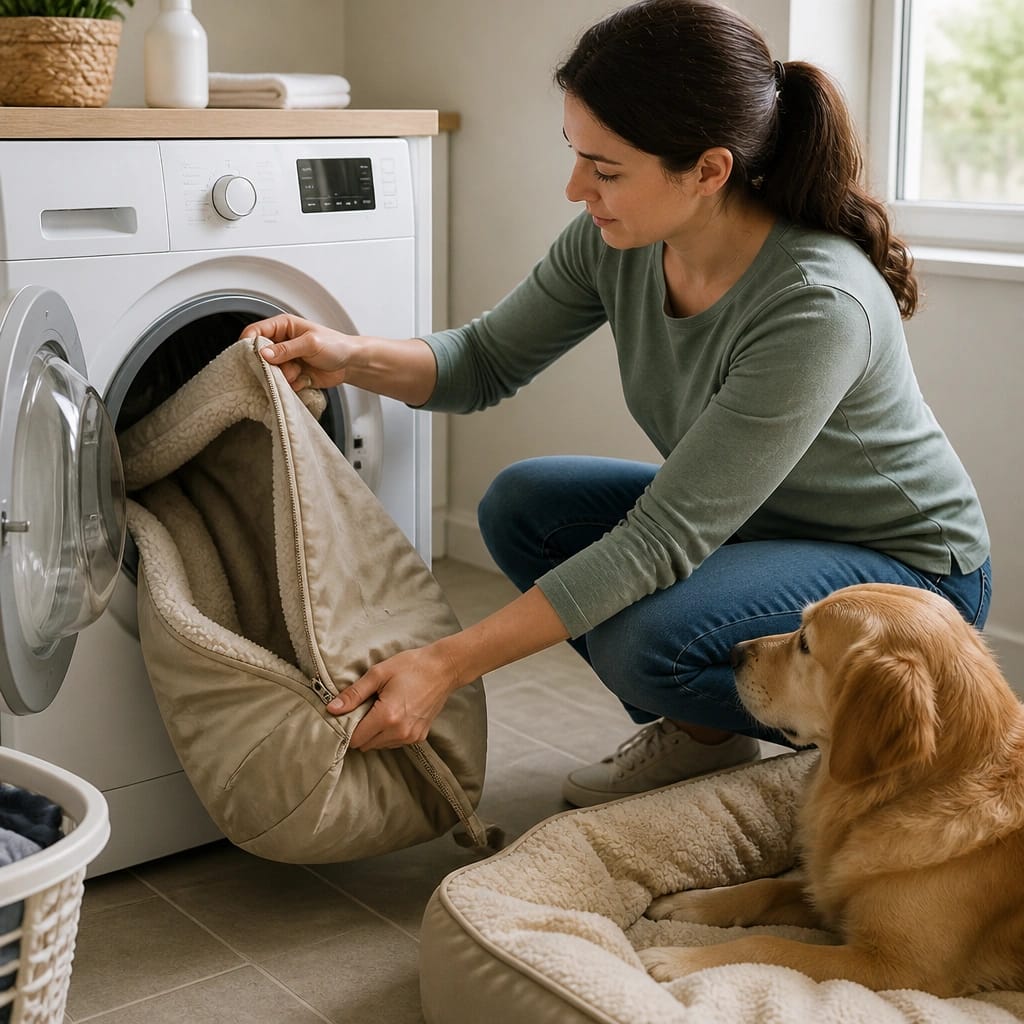
Remove the cover entirely. If the bed has a zipper, unzip it all the way. Remove any inserts, stuffing, or foam cores.
Do not try to wash an entire bed as one piece, the foam will absorb water, hold it for days, and likely trap more odor.
Check the care tag on the cover for washing instructions before you do anything. Most covers are machine-washable, but temperature limits matter. Check the foam separately.
Most foam should not go through a washing machine because agitation destroys the structure and it will never dry fully.
If your bed is a memory foam dog bed or has a solid foam core, treat the cover and foam as two entirely separate cleaning jobs from now on.
Step 1: Strip the Bed Completely
Remove the cover entirely. Unzip it fully and turn the cover inside out. Keep every zipper open.
Shake the foam core out of the cover. Take it outside if you can. Vacuum the loose hairs and debris from the cover’s lining and the seams.
Use an upholstery attachment if you have one.
Brush the foam with a lint roller or vacuum hose to catch hair from the surface. Do this before any washing. Dry hair and dirt can set into the foam when they hit water, stitching the odor deeper into the material.
If it’s been a while since you’ve washed the cover, this step alone makes a huge visible difference.
Image source: PupRestY
Step 1: Vacuum Both Layers Thoroughly
Vacuum before you add any water. Water on top of loose fur and grime turns into mud on the fabric and deepens the smell in foam. Use the upholstery attachment, and go over every surface.
Move slowly across the mattress core, especially the seams where hair and dead skin collect. Flipping the foam and vacuuming both sides matters far more than people expect. Loose particles are the majority of what you smell on rough days.
For the cover, zip it fully closed before washing to protect the zipper. Begin with the cover’s underside too. That is the side in direct contact with the mattress pad or foam, which tends to carry the most dog oil and dander.
How to Break Down the Odor Molecules
Step 1: Tackle Fresh Urine First
Pet store enzymatic sprays use live enzymes to digest urine, saliva, and other proteins at the molecular level. They are the most effective tool against urine smell that has soaked into fabric and foam. Indoor dogs who burrow often hide these spots deep in the bed layers, so dig into every fold and seam.
Apply the enzyme spray generously to fresh urine spots. Let it sit for at least 10 to 15 minutes. It needs time to break down the urine crystals on the fabric surface.
If a fresh spot is on the bed, remove the outer cover first when possible, then spray the affected area. If the urine reached the foam core, spray the foam directly trim loosened. Do not soak through the foam completely, it should remain damp, not dripping.
Give it 10 to 15 minutes to work before building the bed back up.
How Often Should You Wash Your Dog’s Bed?
Wash a standard dog bed at least once every two weeks. Beds with removable covers can go weekly if your dog sheds heavily or has an accident-prone bladder. Wash the foam core itself only when it has an actual stain or smell.
Washing foam too frequently can break it down, causing it to flatten and lose support.
Step 1: Strip and Pre-Treat
Take the cover off the foam or filling. Zip each piece separately. Shake the cover outside to remove loose fur and dirt before washing, which keeps hair from tangling in the washing machine.
Check the tag for temperature guidance. Most polyester and microfiber covers tolerate warm water. Some fabrics, like memory foam options, can’t handle heat well顽 without damage.
Pre-treat truly smelly spots with an enzyme cleaner or a diluted vinegar spray. Let the treatment sit for 10 to 15 minutes. This breaks down the protein bonds holding the smell, which a standard wash often misses.
Step 1: Wash the Cover
Before washing:
Remove all hair and debris using a vacuum or lint roller. Check pockets and seams for hidden toys or fur clumps that might clog your machine.
For machine-washable covers:
- Shake off loose dirt outside
- Zip the cover closed
- Use cold or warm water, hot sets protein stains
- Add regular detergent plus 1 cup of white vinegar to the rinse cycle
- Skip fabric softener, it coats fibers and locks in smells
For hand-wash-only covers:
- Fill a tub with cool water and a vinegar (1 cup) dilution.
- Submerge the cover and soak for 30 minutes.
- Gently scrub stubborn stains with a soft brush.
- Rinse thoroughly until the water runs clear.
Step 2: Treat Stains Before Washing
Fresh urine and drool are easiest to handle before a wash because they haven’t set into the fabric. For dried and old stains, an enzymatic cleaner is the strongest option, it breaks down the odor-causing proteins that regular detergents misseditor.
For fresh or old stains, apply a dedicated enzyme cleaner and give it time to work. The cleaner needs contact time to absorb the odor at the source.
After the cleaner sits, sprinkle baking soda over the area. Let it rest for about 15 minutes to lock in smells, then vacuum it away.
How to Wash the Bed

Step 1: Remove the cover
If the cover zips off, unzip it completely)Skip the cover aside. If you have a waterproof dog bed and the inner lining is waterproof, wipe that layer with a cloth dipped in enzyme cleaner while the cover is in the wash.
Step 2: Pre-treat the cover
Work stain remover or enzyme cleaner into the spots where your dog tends to lie. Let it rest for 15 to 30 minutes so the enzymes can break down the odor molecules.
Step 3: Check the care tag
Washing temperature depends on the fabric. Most covers are safe on a delicate cycle with cold or lukewarm water, but some can handle warm water. Never assume hot is better, too-hot water sets proteins and makes the stain permanent.
Step 4: Wash with pet-safe detergent
Use a dye-free, fragrance-free detergent. If the cover is polyester or canvas, you’re fine to wash a normal cycle. For a padded cover, choose gentle.
Avoid fabric softener, it coats the fibers and traps bacteria, which makes the bed smell faster.
Step 5: Add a vinegar rinse
Pour one cup of white vinegar into the fabric softener compartment. Don’t worry; the vinegar smell disappears when it dries)Skip the fabric softener. It leaves a residue that attracts dirt and odors.
Step 6: Dry completely and sanitize
Tumble dry on low if the label allows, or hang outside in direct sun. Sunlight has natural antibacterial properties, which is good for dog bedding.
Trap to avoid: Never dry a cover on high heat unless the label says it’s safe. Heat locks in any remaining odor at the fiber level)Skip the cover and air dry it if you’re unsure.
How to Clean the Foam Core
The foam is the real problem area. It absorbs urine, drool, and deep skin oils quickly and holds onto them for a long time. So how do you wash foam without destroying it?
Option 1: Baking soda + vacuum
This is the simplest way for a regular refresh. Sprinkle baking soda generously over the foam. Let it sit for at least 2, 3 hours, or overnight for heavy odors.
Vacuum it fully using an upholstery attachment.
Option 2: Enzyme soak
Fill a tub or large basin with cool water and add an enzyme cleaner labeled safe for dog bedding. Submerge the foam and let it soak for a few hours, usually 3, 4 hours. Gently squeeze the foam, but don’t twist it.
Rinse with clean water until the foam runs clear, then press out as much water as you can.
If the foam slides out easilyholst from the cover, wash just the foam alone in the tub or a large sink. Never put foam in a washing machine, it will break apart against the agitator.
Drying the foam:
Foam must air dry completely before you reassemble the bed. Put it in a well-ventilated spot and flip it every few hours during drying. It can take 24 to 48 hours depending on how much water the foam absorbed.
If you want the cover to be ready faster, let it dry separately in a dryer on low heat only if the fabric label allows itwhats okay. Foam goes to air only.
How to Wash a Foam Dog Bed (Older Bed or Large Bed)
If your dog’s bed is a solid one-piece foam base that doesn’t have a removable cover, you’re dealing with the hardest wash job. You can still do it, but it takes a little more patience.
First, choose the correct cleaning method based on your dog’s bed size. A big orthopedic foam slab absorbs a lot of water silently.
Option 1: Spot clean the foam
If the cover isn’t removableable, you can’t soak the whole thing easily. Spot clean by wiping the surface with enzyme cleaner and a damp towel, then blot dry.
Option 2: Full soak
If the foam is in a zippered case that’s not removable, you can fill a tub with warm water and a capful of enzyme cleaner. Submerge the foam and let it soak for 15 minutes. Press gently to work the cleaner through.
Never wring or twist the foam like a sponge. Press it, let the water drain, and dry slowly.
Drying the Bed Completely
This is the step most people rush, and it’s also why the smell keeps returning.
The biggest mistake is putting a damp bed back together. Bacteria and mold multiply in hidden damp spots, which makes odor come back within a day or two even after a fresh wash.
For covers, dry them in the machine on low heat if the label allows. If not, hang it in a sunny spot outdoors: UV rays neutralize some odor-causing bacteria organically.
For foam cores, drying takes time. Never run it in a dryer for a foam bed, you’ll bake the foam. Instead, set it in a well-ventilated spot with air circulation.
Flipping it every few hours speeds up the process.
If the bed has a cavehooded style, patience is key. The soft inner fabric traps oil and moisture deep, so give it a full day to dry before your dog sleeps on it again.
Step 3: Deal With Stubborn Odors
If one wash doesn’t kill the smell, don’t panic. Biological odors can take two or three enzyme treatments to fully break down.
For really stubborn smells, spread baking soda over the foam after it’s dry and let it sit overnight. Vacuum it up the next morning. Baking soda pulls odors out of the foam without adding extra moisture that could lead to mold growth.
Some owners swear by leaving the bed in direct sunlight for a few hours. UV light neutralizes odours better than most households products do. Just keep it out there only as a finishing step, not as a substitute for washing.
If your dog sleeps in that bed every night, the smell tends to return faster. That’s a sign the foam itself is worn outressive. If **the foam feels tired, flattens easily, or the odor returns within days after a deep wash, consider replacing the bed entirely.
Check out our Dog Beds Complete Guide to find a more durable option.
How to Deodorize a Dog Bed Without Washing
Sometimes, a full wash isn’t possible, or the bed isn’t washable. Try these steps instead:
- Sprinkle baking soda generously over the entire surface.
- Let it sit for at least 2 hours (overnight is better).
- Vacuum thoroughly with an upholstery attachment.
- Finish with a light mist of a diluted enzyme spray (1 part cleaner to 5 parts water) and let it dry completely.
This routine works well for spot fixes between full washes Greg Williams
When to Replace Instead of Wash
No cleaner can resurrect foam that’s soaked through with urine or sitting in deep-set odor. If you can still smell it after a full enzyme wash and dry, it’s time to replace the bed.
A few signs it’s beyond saving:
- The foam crumbles or never bounces back after pressure
- The smell returns within days, even after a deep clean
- The cover is torn or the zipper is broken
If you’re replacing a bed that sits in a crate, a crate pad or crate mat is often easier to clean than a deep-filled bed. Many are fully machine-washable from end to end.
How to Stop the Odor From Coming Back
The fastest way to cut odor buildup is prevention. You don’t need elaborate equipment, just a few simple habits.
| Step | What to do | How often |
|---|---|---|
| Vacuum the bed | Use upholstery attachment | Weekly |
| Sun-dry the cover | UV light kills odor-causing bacteria | Monthly |
| Wash the cover | Machine wash with enzyme detergent | Every 2–4 weeks |
| Deep clean the foam core | Enzyme soak and air-dry fully | Every 3–6 months |
Brushing your dog before bed helps too. Loose fur carries oils and dirt that turn into odor as they break down. If your dog loves to burrow, routine brushing matters even more because they’re pushing their face and paws deep into the fill each night.
Does the Bed Type Change the Cleaning Routine?
Yes. The cover-to-core structure changes how you wash.
- Standard flat beds, remove the insert, wash the cover, spot-clean the padding.
- Cave or hooded beds, the hood traps drool and face oils first. You’ll need to clean that area more often than the base. Check out why dogs love burrowing into cave beds to understand the appeal.
- Bolster beds, the raised sides hold the most odor. Wash them separately if they’re detachable, and pay close attention to seams.
How Often Should You Wash?
A weekly vacuuming session helps between washes. For odor control, aim to wash the cover every 2 to 3 weeks if your dog sleeps on it nightly.
Deep-clean the entire bed, including the foam, once a month. You can do this by alternating a full machine wash with an enzyme spray refresh. Doing the refresh every week extends the life of the cover and keeps smells from embedding.
If your dog has skin allergies, wash even more often. Dander and pollen collect quickly in bed fabricsasi. A rinse cycle with vinegar as the final step helps remove leftover soap residue that can cause itching.
This email may contain copyrighted material of which I have not been previously provided a copy.
Now you have a solid plan. Wash what you can, dry it fully, and use the enzyme spray in between washes. If the foam still holds odor after a deep clean, do yourself and your dog a favor, replace the bed.
A fresh bed is a clean bed. Your dog’s nose (and your guests’) will thank you.


