

Can You Wash Dog Bed Foam in a Washing Machine?
Your dog’s bed has seen better days. Between the dirt, drool, and the occasional accident, the foam inside is probably due for a deep clean. So can you wash dog bed foam in a washing machine?
The short answer is yes, but only under the right conditions.
Manufacturer care labels on foam inserts generally recommend spot cleaning only, not full submersion. The mechanical action of a washing machine can break down foam structure, especially in denser memory foam. Knowing your specific foam type and machine capacity makes all the difference.
Yes, you can wash dog bed foam in a washing machine. But it depends on the foam type. Solid memory foam is risky. Shredded foam is safer. Always check the care label first. Never use hot water or high spin.
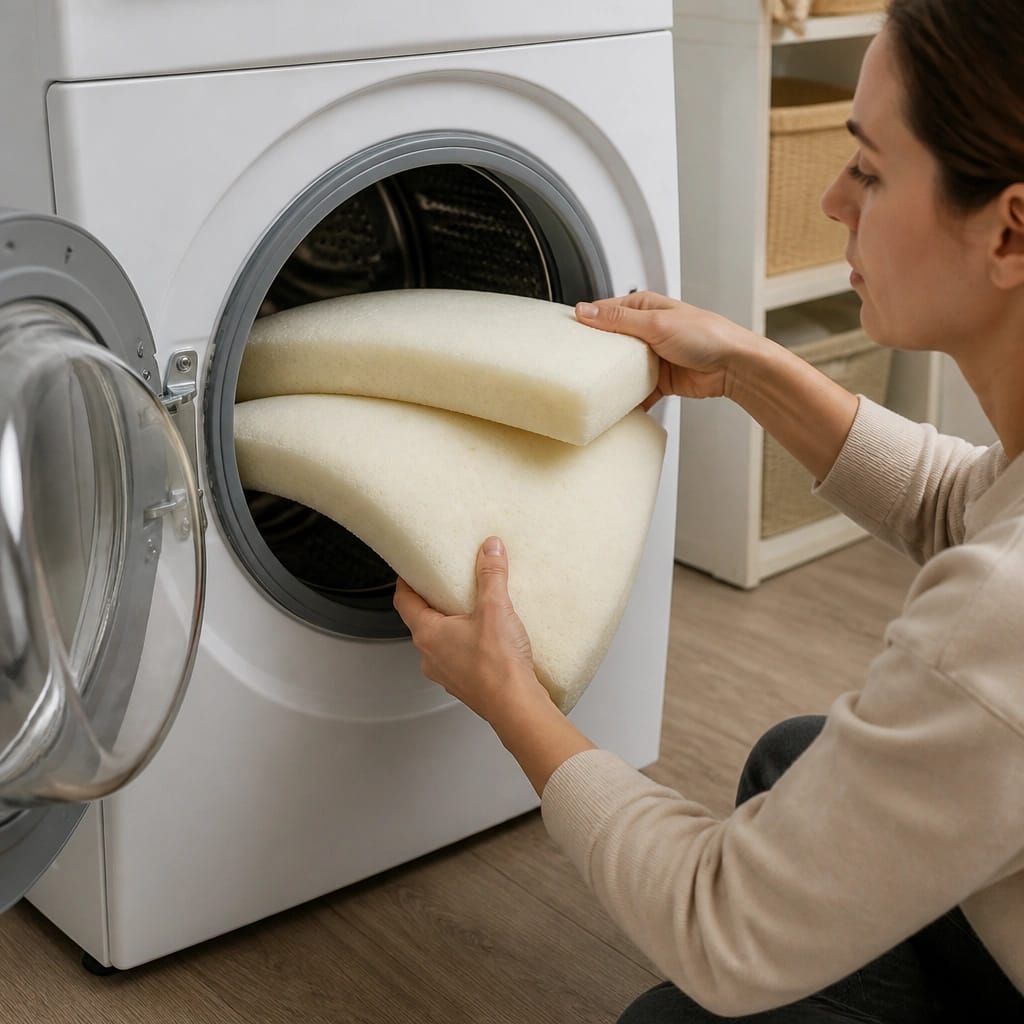
Why This Question Is Trickier Than It Seems
If you toss a thick memory foam slab into a top-loader with a center agitator, you’re asking for trouble. The foam can tear, crumble, or absorb so much water it becomes dangerously heavy. On the other hand, a thin shredded foam insert in a gentle front-loader cycle might come out perfectly clean.
The real issue is that dog bed foam isn’t one thing. It comes in different densities, constructions, and sizes. And your washing machine has limits too.
Most home machines simply can’t handle a thick 4-inch foam slab without risking damage.
That’s why this is a decision tree, not a simple yes or no. The right answer depends on what you’re working with. If you’ve already dealt with a smelly bed, you might be familiar with tackling stubborn odors from foam, but washing the whole slab is a different ballgame.
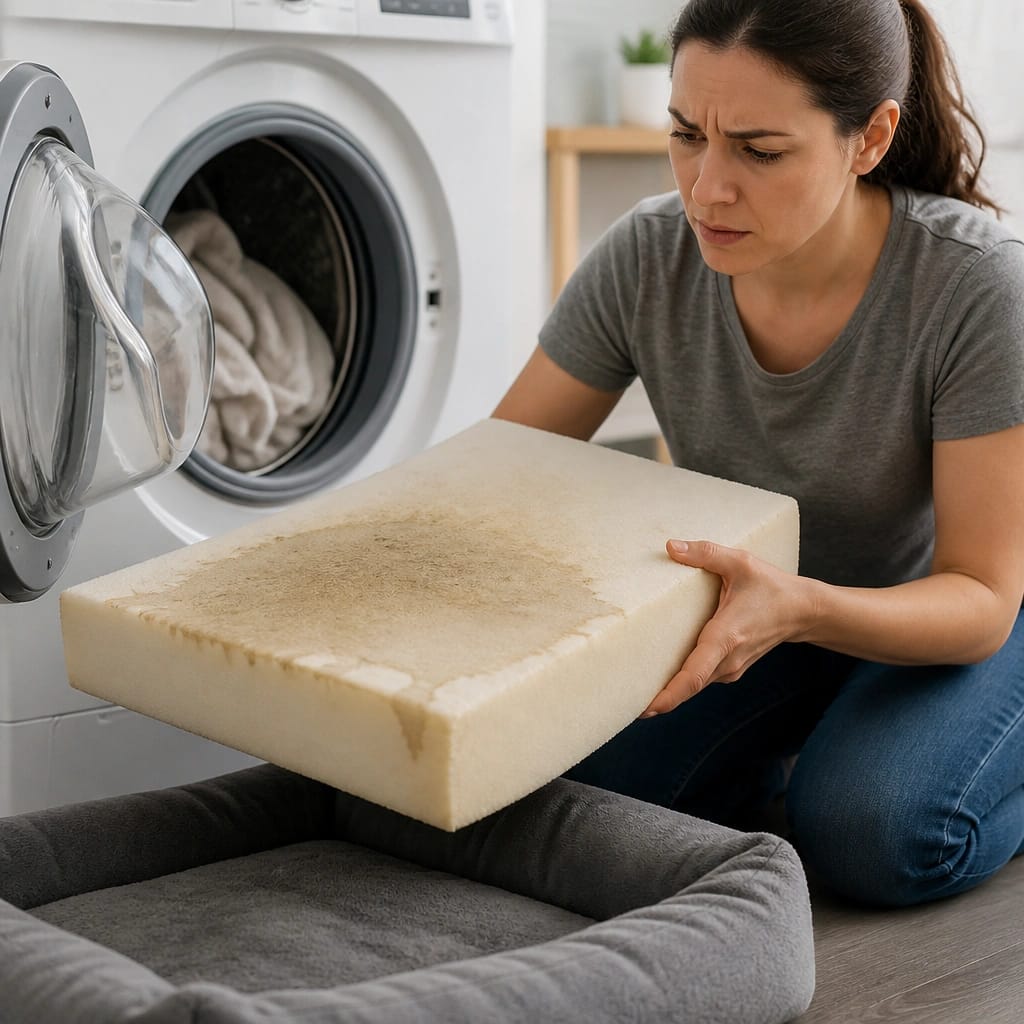
What Kind of Foam Are You Dealing With?
Before you even look at your washing machine, you need to know what’s inside that bed. Three common types exist, and each one handles water differently.
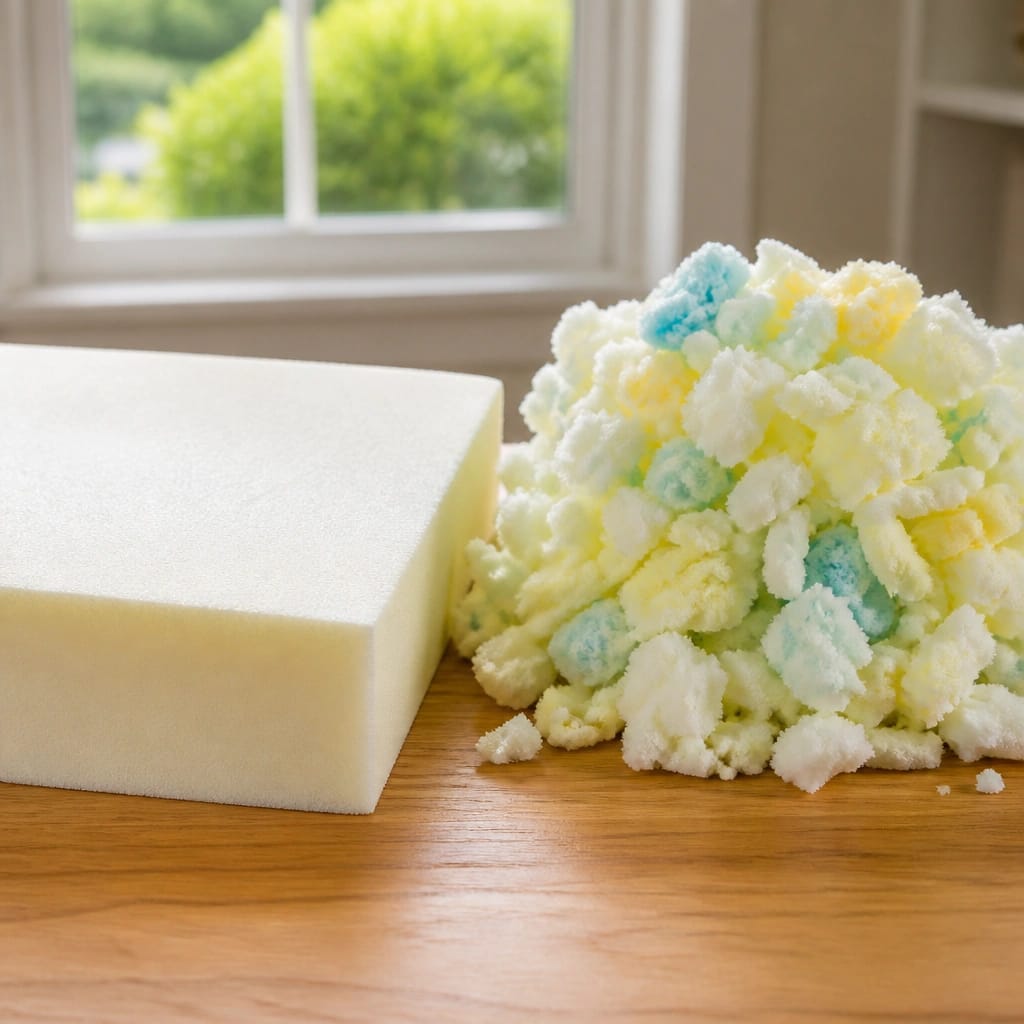
Solid Slab Foam (Memory Foam, Orthopedic Foam)
This is a single piece of foam, usually 3 to 6 inches thick. It’s dense and heavy. Memory foam and orthopedic foam fall into this category.
Machine washing is risky because the foam absorbs a lot of water and can break apart during the spin cycle.
Shredded Foam Fill
This is loose foam pieces inside a pillow-style cover. Shredded foam is more forgiving in the wash because water can move through the gaps. But the fill can clump together if not dried properly.
Multi-Layer or Bonded Foam
Some beds have layers of different foam glued together. The bond can weaken in water, causing the layers to separate. These are generally not machine-washable.
Here’s a quick comparison to help you decide:
| Foam Type | Machine Washable? | Risk Level | Best Cleaning Method |
|---|---|---|---|
| Solid slab (memory foam) | No, generally | High | Spot clean only |
| Shredded foam | Yes, if gentle | Moderate | Gentle cycle, air dry |
| Multi-layer bonded | No | High | Professional cleaning |
If you’re choosing the right bed size for a new puppy, you might avoid the washable foam issue altogether by picking a bed with a removable, washable cover and a separate foam insert.
What Your Washing Machine Can Handle
Your machine matters just as much as the foam. Not all washers are built for foam duty.
Front-Loader vs Top-Loader With Agitator
Front-loaders are gentler and have no center agitator. They handle foam better. Top-loaders with an agitator can tear foam apart.
Top-loaders without an agitator (impeller models) are safer but still need a large drum.
Drum Capacity and Foam Size
A 4.5 cubic foot drum is the minimum for a large foam insert. Anything smaller and the foam won’t have room to move. It will just sit in one spot, not getting clean, and potentially unbalance the machine.
Here’s a quick reference:
| Machine Type | Safe for Foam? | Notes |
|---|---|---|
| Front-loader | Yes, with care | Gentle, no agitator |
| Top-loader with agitator | No | Risk of tearing |
| Top-loader with impeller | Maybe | Check drum size |
As of 2026, most new front-loaders offer a bulky or bedding cycle that works well for foam. Check your manual for cycle recommendations.
When You Should NOT Machine-Wash the Foam
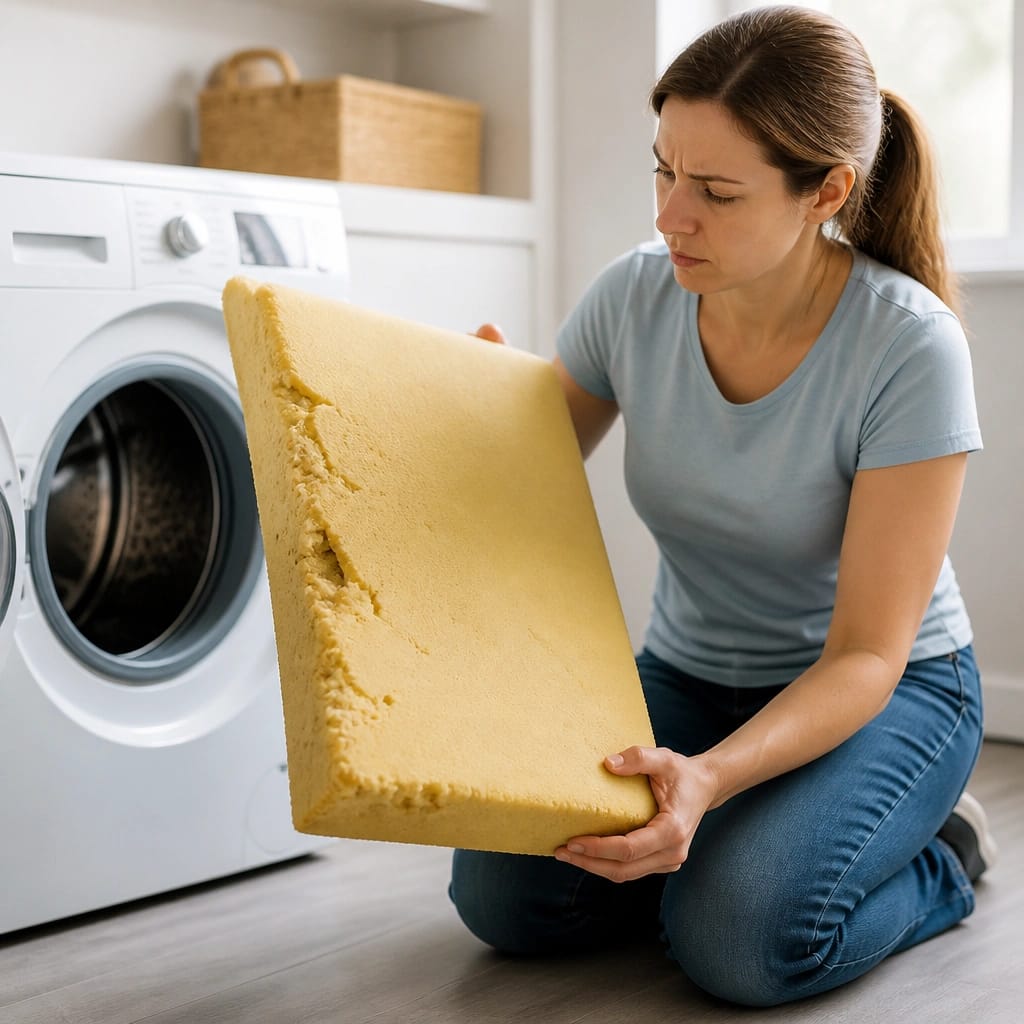
Some situations call for a hard stop. If any of these apply, skip the machine and use an alternative method.
- Foam thicker than 4 inches. It will absorb too much water and become unmanageable.
- Foam that is old or crumbling. Washing will finish the job. Replace it instead.
- Foam with a waterproof liner attached. The liner can trap water and cause mold.
- Care label says “dry clean only” or “spot clean only.” Obey it. Ignoring the label voids any warranty.
- Your machine has a center agitator. The foam will catch and tear.
If you’ve considered using a waterproof liner to prevent future stains, that’s a smart move. But if the liner is already bonded to the foam, don’t machine-wash the assembly.
How to Machine-Wash Dog Bed Foam (Step by Step)
If you’ve checked all the conditions and your foam is a good candidate, here’s the process. Follow these steps carefully.
Step 1: Remove the Cover
Take the cover off and wash it separately. Check the cover’s care label for temperature and cycle settings. Most covers can go in a warm wash and tumble dry low.
Step 2: Pre-Treat Stains and Odors
Spot clean the foam with an enzyme cleaner designed for pet messes. Let it sit for 15 minutes. This breaks down organic stains before the wash.
For tough cases, refer to standard cleaning guidelines from the CDC for safe disinfecting practices.
Step 3: Check the Foam and Machine
Measure the foam thickness. If it’s over 4 inches, stop and hand wash instead. Check your machine drum size.
Make sure the foam fits with room to move.
Step 4: Set the Right Cycle and Settings
Use cold water, delicate or gentle cycle, low spin speed. Add a small amount of mild detergent. No bleach or fabric softener.
These can break down foam cells.
Step 5: The Wash and Rinse
Run the cycle. Stay nearby. If the machine becomes unbalanced, stop and redistribute the foam.
Run an extra rinse cycle to remove all detergent residue.
Step 6: The Tricky Part — Drying
The foam needs to air dry completely. This can take 24 to 48 hours. Lay it flat on towels, flip occasionally, and use fans to speed up drying.
Never put foam in a dryer. The heat will melt it.
If your dog tends to dig at the bed before lying down, a clean, fresh-smelling bed might reduce some of that behavior. But make sure the foam is fully dry before putting the cover back on, moisture trapped inside can lead to mildew.


