

Why Does My Dog Move or Drag Their Bed Around the House?
Most dogs drag their beds because of a natural nesting instinct. Others do it to fix a comfort issue. Some drag due to anxiety or pain.
Watch when it happens, and for how long. If pain is suspected, see a vet.
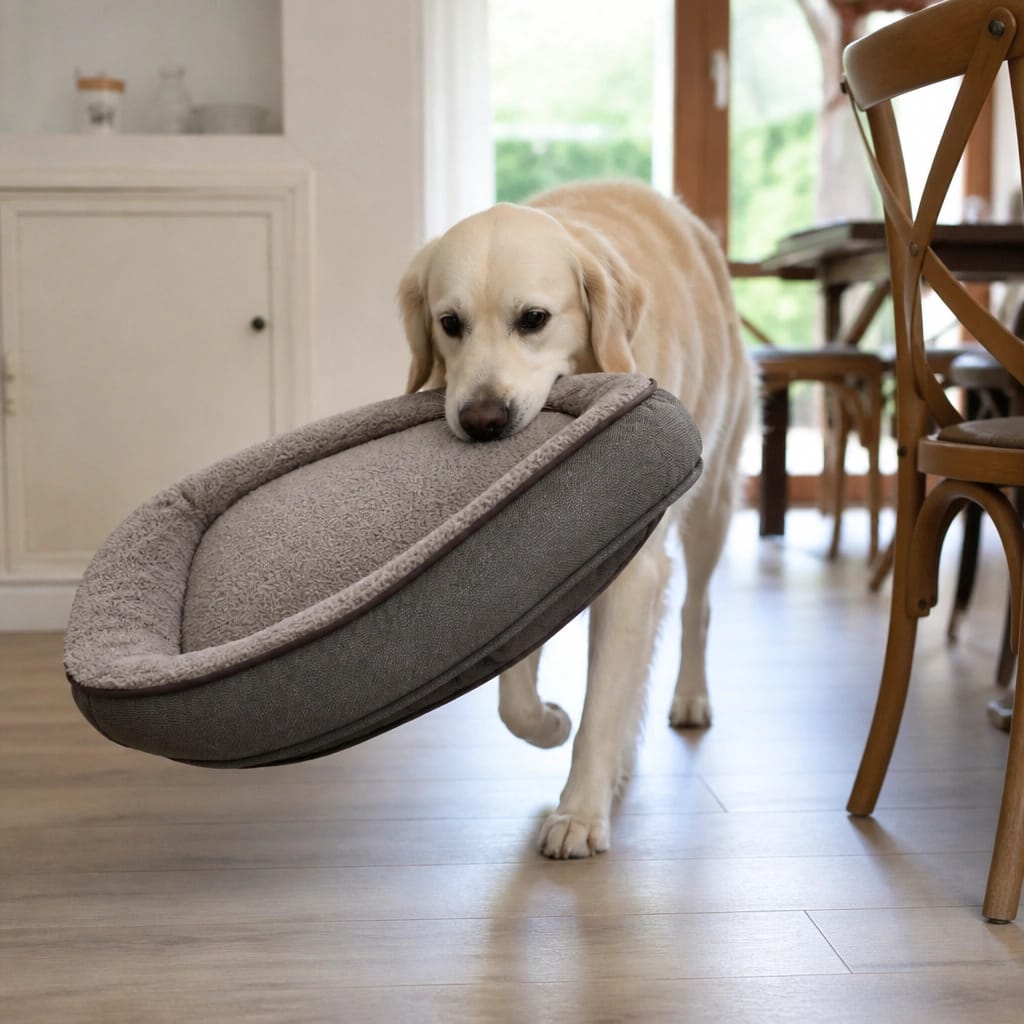
Why Does My Dog Move or Drag Their Bed Around the House? It’s a question nearly every dog owner asks at some point. They watch their dog grab the bed with their teeth, haul it across the room, circle, scratch, and rearrange it somewhere else entirely.
Most of the time this is completely normal, instinct-driven behavior. Your dog isn’t being difficult or defiant. They’re following a deeply rooted biological script.
In our research across veterinary behavior journals and manufacturer specifications, the American Veterinary Medical Association identifies persistent bed relocation as one of the most frequently reported canine behaviors. As of 2026, the most common triggers fall into four categories: instinct, comfort, emotional stress, or physical pain. Understanding which category your dog falls into starts with careful observation.
Let’s break down what’s actually happening.

Why Your Dog Drags Their Bed Around the House
Dogs are descendants of wolves, and wild canines still scrape out shallow dens in dirt or leaves before settling. Your dog dragging their bed is the domestic version of that ritual. Behaviorists call it “denning” or “nesting,” and it typically follows a repeatable sequence: grab, pull, drop, circle, scratch, settle.
The instinct is strongest in certain breeds. Terriers, hounds, and Nordic breeds like Huskies and Malamutes nest more intensely because their ancestors used denning for temperature control and protection. Puppies often nest as they learn to self-soothe.
If you want to understand this burrowing tendency better, that same drive is at work. Senior dogs may nest less, but when they do, it deserves closer attention.
Normal nesting lasts one to three minutes, then your dog settles. The behavior becomes a concern only when it’s constant, obsessive, or destructive.
Is This Normal Nesting or a Sign of a Problem?
Everyday nesting is brief, gentle, and ends with your dog lying down calmly. Problem behavior looks different: repeated dragging that lasts more than ten minutes, constant repositioning through the night, destruction of the bed itself, or any sign of distress like whining, pacing, or panting.
A useful rule: assess how the behavior fits into your dog’s daily routine. If they drag the bed, settle, and sleep well, it’s typically normal. If the dragging never ends in actual settling, or if your dog appears anxious while doing it, then something deeper is going on.
Watch for the “three T’s”: time, triggering, and tearing. Time, how long each episode lasts. Triggering, whether it only happens in specific situations like being left alone or during storms.
Tearing, whether your dog is damaging the bed, which signals frustration rather than comfort-seeking.
When the Bed Itself Is the Problem
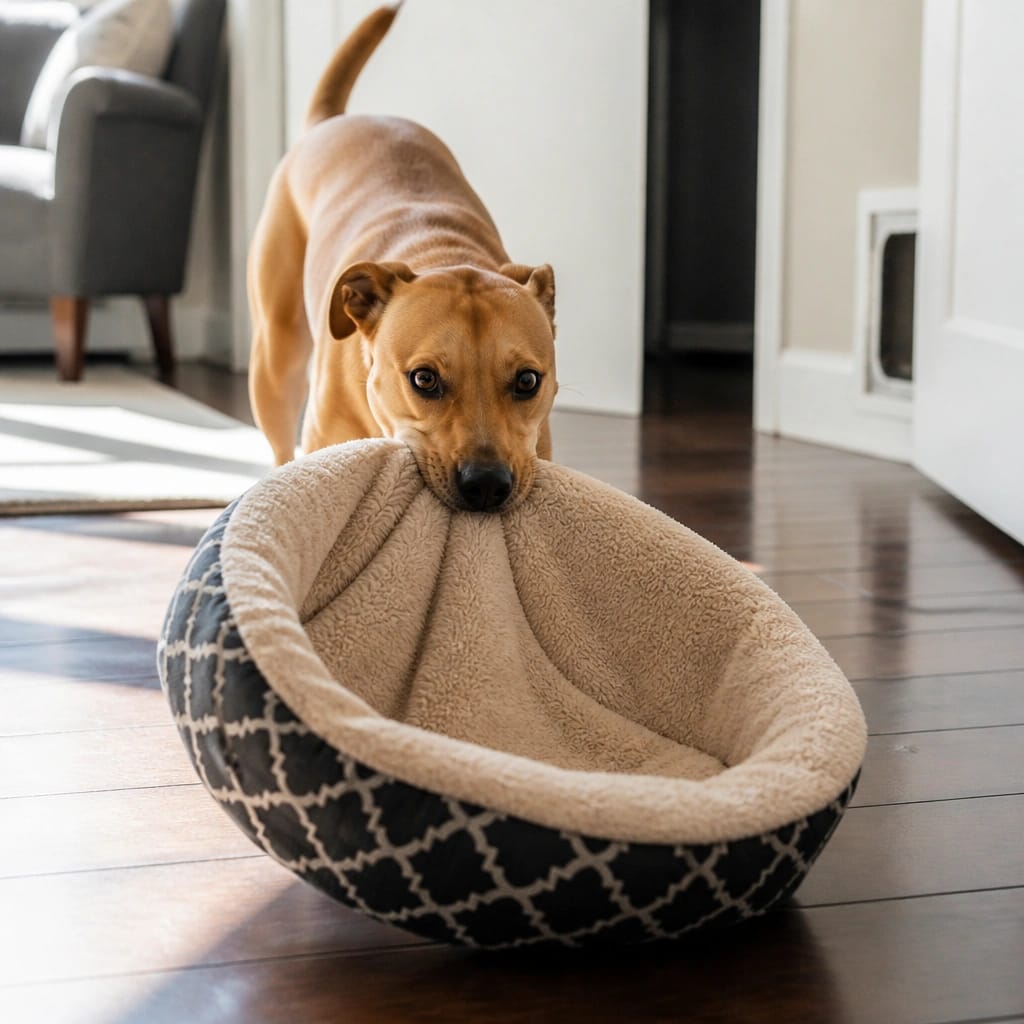
Sometimes the bed itself is the culprit. A bed that’s too small forces your dog to drag it around searching for room to stretch. A bed that’s too large fails to provide the secure, walled-in feeling many dogs seek.
The correct size is your dog’s length from nose to tail base, plus roughly 10 to 15 centimeters. You can cross-check your dog’s measurements by weight against a reference chart.

Shape matters too. Curl-up sleepers prefer a bolster bed, donut bed, or cave-style hideaway, because raised edges mimic a den. Stretch-out sleepers do better with a flat mat or a sofa-style bed.
Match the shape to your dog’s preferred sleeping position. For curl-up dogs, a raised-rim design provides that secure boundary.
Slippery floors are another common culprit. On wood, tile, or laminate, a lightweight bed slides when your dog climbs in or out. Your dog then drags it to a corner or against a wall where it stays anchored.
A non-slip rug underneath solves this fast. Fabric and temperature also play a role: a bed that traps too much heat gets dragged toward a cooler patch of floor.
When Dragging Signals Anxiety or Stress
Anxiety-driven dragging looks different from instinct-driven nesting. A stressed dog may drag frantically, whine, pace, pant, or drool while doing it. These behaviors often appear in specific situations: when you leave, during thunderstorms or fireworks, or after a major change like moving or adding a new pet.
Behaviorists call this a displacement behavior. Your dog redirects nervous energy into a physical action, which temporarily lowers stress. But it doesn’t fix the root cause.
When you identify the trigger, addressing the anxiety itself (with training, environmental adjustments, or veterinary input) works better than changing the bed. Some dogs develop separation-related habits that show up in how they use their sleeping space.
In extreme cases, the behavior turns compulsive. The dog repeats the same pattern over and over, sometimes for minutes, even with no change in the environment. Compulsive behaviors tend to worsen over time.
That warrants a conversation with a veterinarian or an applied animal behaviorist.
When Dragging May Indicate Pain or Medical Issues
Pain is the most important cause to rule out. Dogs with arthritis or joint discomfort may drag their bed because they can’t get comfortable in their current position. They move the bed, circle, lie down, get up, and repeat.
The constant repositioning is an attempt to relieve pressure on sore hips, knees, or spine.
Watch for additional clues: stiffness when getting up, limping, reluctance to climb stairs, whining when touched, or a noticeable change in the way your dog walks. A dog that once settled quickly but now drags endlessly may have worsening joint pain. In such cases, switching to supportive orthopedic bedding can help, but it isn’t a substitute for a proper diagnosis.
In unspayed females, persistent nesting and bed-dragging can be a sign of false pregnancy. Hormone changes trick the body into acting pregnant. This usually happens four to nine weeks after a heat cycle.
Along with bed dragging, you may notice mothering behaviors like carrying toys or blankets around.
If you notice any signs of pain, stiffness, or a sudden behavior change, schedule a veterinary exam. Per the American Veterinary Medical Association, sudden changes in sleeping behavior or repetitive movements should always be investigated before assuming a behavioral cause. Pain management, when caught early, makes a significant difference in quality of life for arthritic dogs.


