
How to Make a Dog Bed From an Old Blanket
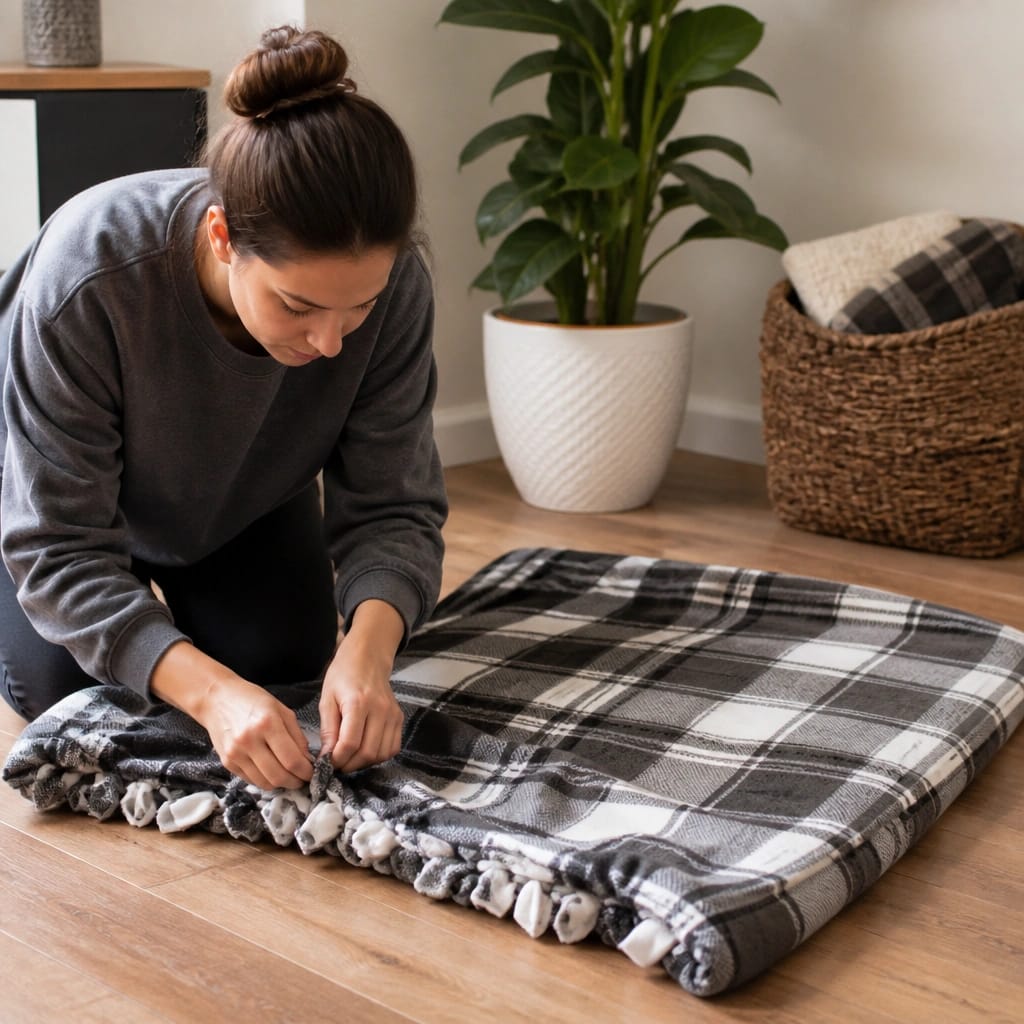
You’ve got a pile of old blankets, and your dog’s current bed is looking pretty sad. The good news is you can make a dog bed from an old blanket in about 20 minutes. I’m going to show you exactly how.
This is a budget-friendly solution that also gives your dog a comfortable spot to sleep.
As of 2026, the average store-bought dog bed costs between $40 and $120. That’s a lot for something that gets chewed, scratched, and washed weekly. A homemade version from a blanket costs you nothing.
And it’s surprisingly comfortable. Let’s walk through the whole process.
Yes, you can make a dog bed from an old blanket in under 30 minutes. Choose a fleece or cotton blanket. Fold it to the right size.
Cut fringe strips along the edges. Tie the strips together to seal the bed. Add stuffing material if you want cushioning.
No sewing required for the easiest method.
Why Make a Dog Bed From an Old Blanket?
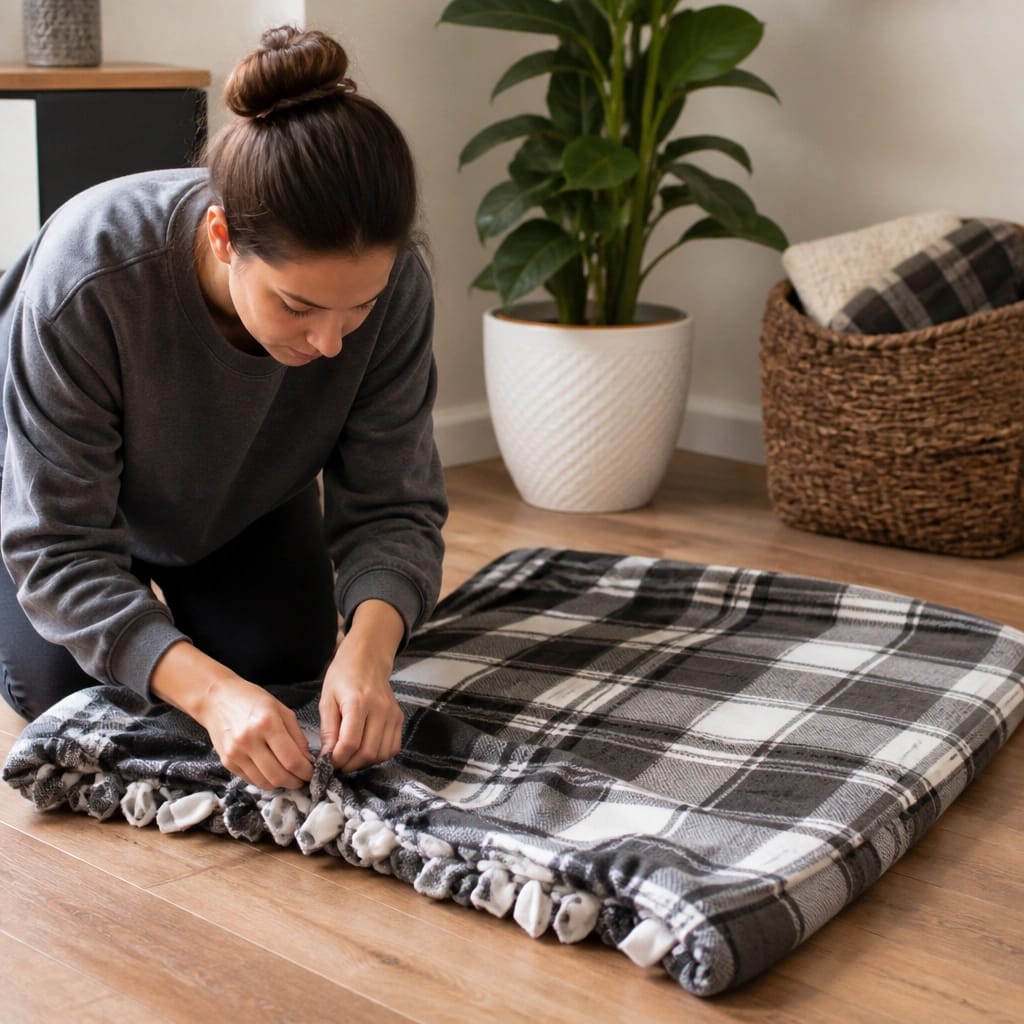
The biggest reason is cost. Your dog doesn’t care if the bed cost $80 or came from a goodwill bin. They care about comfort and smell.
An old blanket that smells like you is instantly familiar and calming.
There are other good reasons too.
- Sustainability. You’re keeping a blanket out of the landfill.
- Customization. You control the size, shape, and thickness. This matters if you have a breed that needs a specific fit.
- Replaceability. Dogs scratch and dig at their beds. That’s normal nesting behavior. When a homemade bed wears out, you just grab another old blanket and start over.
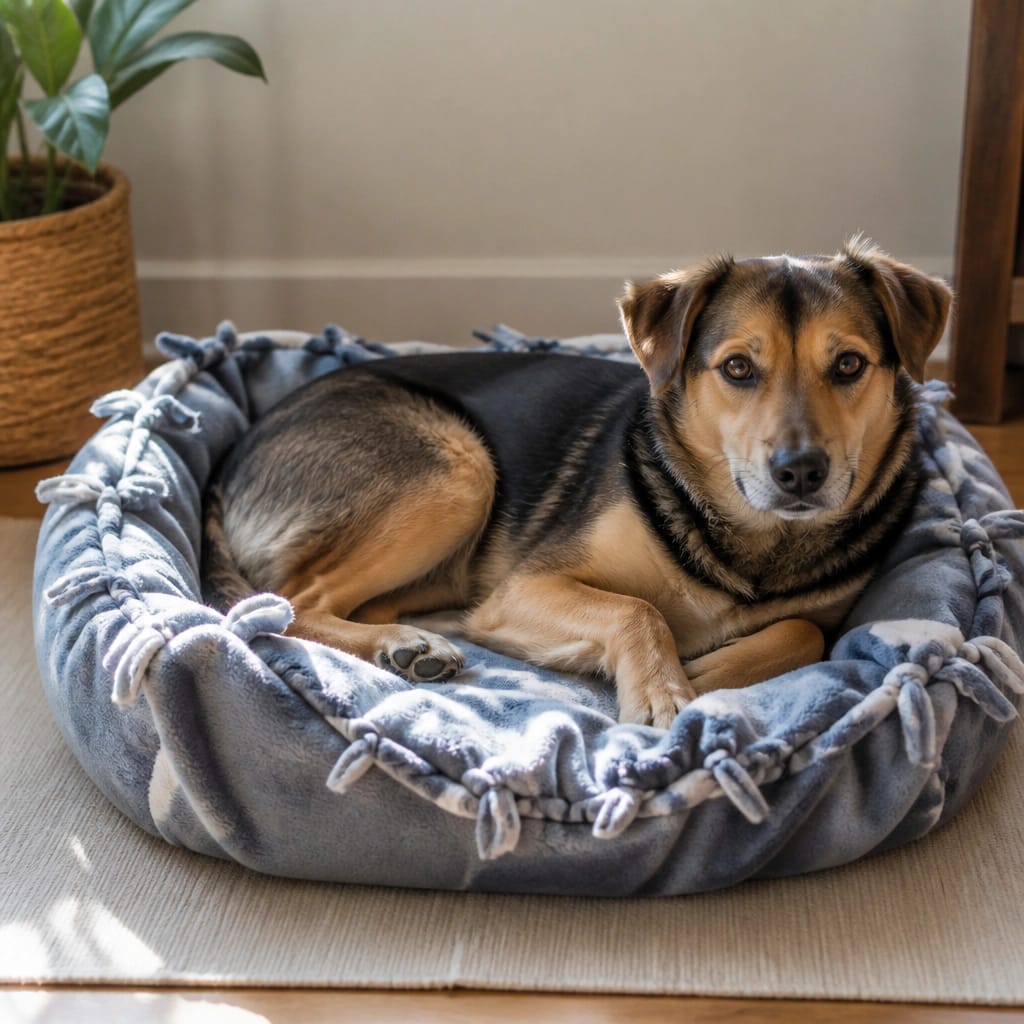
Many dogs who love to burrow or nest will appreciate a blanket bed. It’s soft and pliable. If your dog tends to scratch at their bed before lying down, a soft blanket bed is a safe option that won’t hurt their paws.
What You’ll Need Before You Start
The tools list is short. You probably already own most of this.
| Item | Purpose | Notes |
|---|---|---|
| Old blanket | Main material | Fleece, cotton, or flannel work best |
| Sharp scissors | Cutting fabric | Fabric scissors are ideal but not required |
| Measuring tape | Sizing the bed | A ruler works too |
| Fabric marker | Marking cut lines | Chalk or a pencil also works |
| Pillow or stuffing | Extra cushioning | Polyfill, old pillows, or more blankets |
| Safety pins | Holding layers | Optional, helpful for sewing |
That’s it. No sewing machine needed for the no-sew method. If you choose to sew, you’ll need a needle and thread or a sewing machine.
Choosing the Right Blanket: Material, Size, and Thickness

Not every blanket makes a good dog bed. The material matters more than you’d think.
Fleece is the best option. It’s soft, warm, and doesn’t fray when cut. That makes it perfect for the no-sew method. The edges won’t unravel in the wash.
Cotton and flannel are great too. They’re breathable, machine washable, and durable. They do fray a bit, so you’ll want to sew the edges or use a tight knot.
Wool blankets work well for colder months. They’re heavy and warm. But wool can be scratchy for some dogs. Wash it a few times first to soften it up.
Avoid acrylic or loose-knit blankets. They pill quickly and can snag on your dog’s nails. The bed won’t last more than a few washes.
For size, you need a blanket that’s at least twice as long and wide as your dog. A throw blanket (50×60 inches) works for small dogs. Twin size (68×86 inches) is better for medium breeds.
Anything larger works for big dogs.
Thickness matters too. A thin blanket won’t provide enough cushioning on hard floors. A thick plush blanket gives better support.
If your blanket is thin, you can fold it in half or use two layers.
How to Measure and Size Your Dog Bed Correctly
This is the step most people get wrong. A bed that’s too small is worse than no bed at all. Your dog needs room to stretch out.
Measure your dog from nose to tail base. Don’t include the tail. Write that number down.
Add 6 to 12 inches. This gives your dog room to stretch and shift positions. A dog who curls up needs less space. A dog who sprawls out needs more.
Measure your dog’s height while sleeping. If they stretch out, measure from nose to back paws. Add the same 6 to 12 inches.
Here’s a quick size guide based on breed weight.
| Dog Weight | Finished Bed Size | Blanket Size Needed |
|---|---|---|
| Under 20 lbs | 24 x 30 inches | Throw (50 x 60 in) |
| 20 to 50 lbs | 30 x 40 inches | Twin (68 x 86 in) |
| 50 to 80 lbs | 36 x 48 inches | Full (81 x 96 in) |
| Over 80 lbs | 40 x 60 inches | Queen (90 x 100 in) |
If you’re making a bed for a puppy, remember they grow. A bed that fits now might be too small in three months. You can check our guide on what size bed a puppy needs versus an adult dog for more detail.
The finished bed should be about half the size of your original blanket. When you fold the blanket in half, you get two layers. That’s the base of your bed.
Then you add fill or fold again for more cushioning.
No-Sew Method: Step-by-Step (15–30 Minutes)
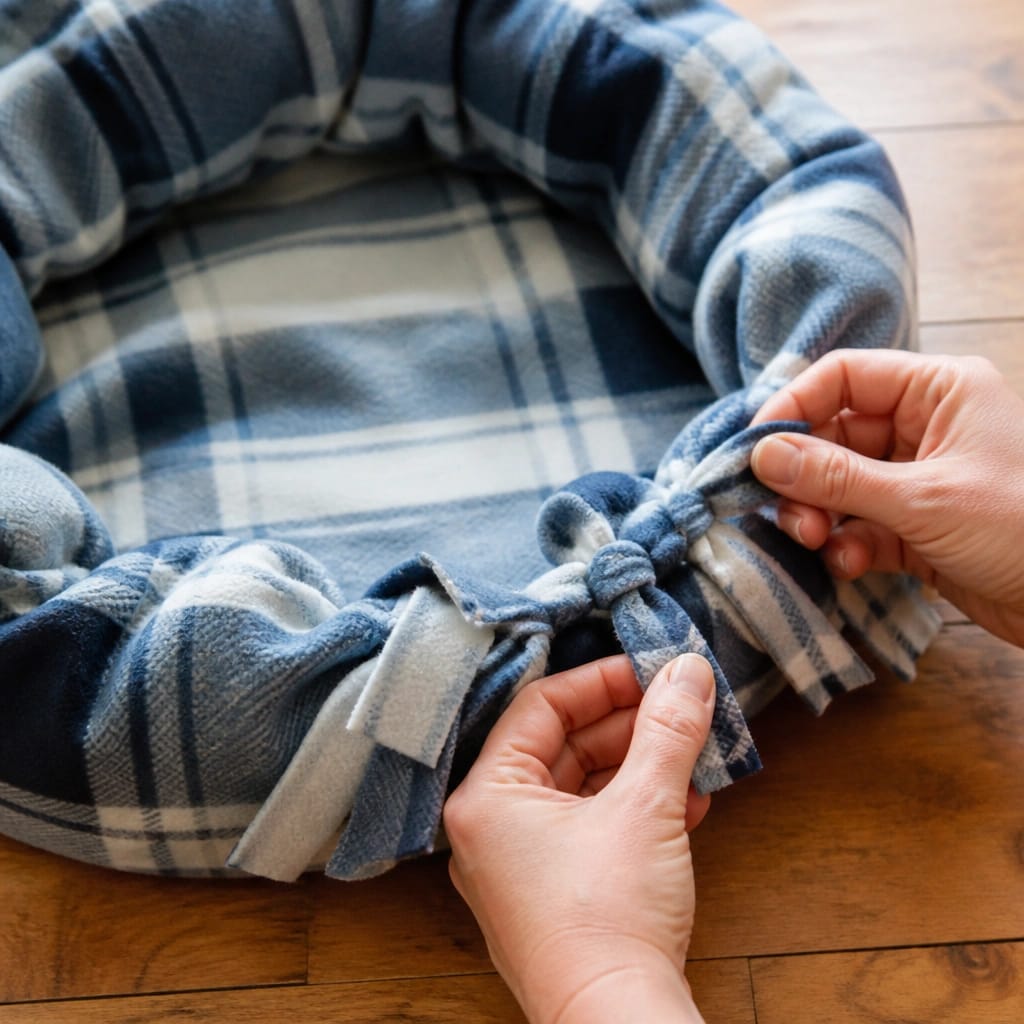
This is the easiest method. No sewing skills required. You just need scissors and about 20 minutes.
Folding and Cutting the Blanket
Lay the blanket flat on the floor. Smooth out any wrinkles.
Fold it in half. Make sure the edges line up evenly. You want a rectangle that’s roughly the size you measured earlier.
Cut out the corners. This creates rounded edges. A square corner creates a lumpy bed. A rounded corner looks cleaner and feels more comfortable.
Cut fringe strips along the edges. Cut 1-inch wide strips about 3 to 4 inches deep. Cut through both layers of the blanket. Space the strips about 1 inch apart.
Do this on all four sides of the blanket.
Tying the Fringe Strips
Take a strip from the top layer and the matching strip from the bottom layer. Tie them together in a double knot. Pull tight.
Repeat for every strip. Go around the entire blanket. The knots seal the edges together.
Leave a 6 to 8 inch gap on one side. This is where you’ll add the filling. Don’t tie these strips yet.
Adding Fill and Closing the Bed
Insert your stuffing material. Old pillows, polyfill, or more folded blankets work well. Distribute it evenly. Don’t overstuff.
The bed should be fluffy but not tight.
Tie the remaining strips closed. Double knot each one. Trim any loose threads.
Fluff the bed and shape it. Shake it out and pat it down. Your dog’s new bed is ready.
This method works great for dogs who like to dig and nest. The soft fleece material is gentle on their paws. If your dog is a heavy chewer, check our guide on chew proof materials for additional tips.
Sewn Method: Step-by-Step (45–90 Minutes)
If you own a sewing machine, this method gives a more polished result. The sewn bed lasts longer and handles more wear.
Start the same way as the no-sew version. Fold your blanket in half. Cut it to size. Round the corners.
Sew three sides closed. Use a straight stitch with a 1/2 inch seam allowance. Leave one side open for filling.
Insert your stuffing material. Distribute it evenly. Don’t clump it in the middle.
Sew the fourth side closed. Double stitch the opening for extra strength. Reinforce the corners with a backstitch.
This method works well if your dog is a serious digger. The sewn seams hold up better than knots. Our guide on why dogs dig at their bed explains this behavior in more detail.
Filling Options: What to Stuff Inside

Your filling choice affects comfort and durability.
| Filling Type | Pros | Cons |
|---|---|---|
| Polyfill | Light, fluffy, cheap | Flattens over time |
| Old pillows | Free, readily available | Uneven fill distribution |
| Folded blankets | Firm, adjustable | Bulky, harder to shape |
| Towels | Absorbent, firm | Can bunch up |
Polyfill is the best option for most dogs. It’s soft and machine washable. You can find it at any craft store for about $5 per bag.
Avoid memory foam scraps. They’re too firm for a blanket bed and shift around inside the cover.
Common Mistakes to Avoid When Making a Dog Bed
Using a blanket that’s too small. Your dog will hang off the edges. That defeats the purpose.
Skipping the rounded corners. Square corners create fabric lumps. Your dog will dig at them trying to get comfortable.
Overstuffing the bed. A tight bed is uncomfortable. Your dog wants to sink in a little, not bounce off the top.
Not washing the blanket first. New blankets shrink. Old blankets carry dust mites. Wash and dry before you start.
When a Blanket Bed Isn’t Enough: Safety and Support Warnings
A blanket bed is not a substitute for orthopedic support. If your dog has arthritis, hip dysplasia, or joint issues, a flat blanket won’t help. The American Kennel Club recommends thick orthopedic foam for senior dogs.
Watch for chewing and ingestion. If your dog shreds blankets, don’t use this method. Ingested fabric or polyfill can cause intestinal blockages. That’s a veterinary emergency.
Puppies need supervision. They chew everything. A blanket bed becomes a chew toy. Our guide on what size bed a puppy needs includes more safety tips.
How to Wash and Maintain Your DIY Dog Bed
Wash the bed every one to two weeks. Dogs track in dirt, dander, and odors. A dirty bed smells bad and can irritate your dog’s skin.
Use cold water on a gentle cycle. Hot water shrinks fleece and cotton. Cold water preserves the fabric.
Air dry or tumble dry on low. High heat melts fleece fibers. It also weakens the knots or seams.
Check for loose threads after each wash. Trim them before they become a hazard. If the bed is falling apart, it’s time to make a new one.
Frequently Asked Questions
Can I use a knitted or crocheted blanket?
Knitted blankets have wide gaps that snag on nails. The loops pull apart under pressure. Stick to fleece, cotton, or flannel for a durable bed.
How do I make the bed waterproof?
Place a waterproof mattress protector or a shower curtain liner inside the blanket before sealing it. This protects the filling from accidents. Check our guide on waterproof dog beds for more options.
Is a blanket bed good for senior dogs?
Not on its own. A flat blanket lacks the joint support older dogs need. The American Kennel Club recommends thick orthopedic foam for dogs with arthritis.
Add a memory foam topper under the blanket for better support.
Can I make a bolster dog bed from a blanket?
Yes, with more work. Roll a second blanket into a log shape. Sew or tie it along the edges of your flat bed.
This creates a raised rim. Our bolster dog bed guide shows the full process.
Final Thoughts
The no-sew method is the fastest and easiest option. It works for any blanket and any skill level.
Pick a blanket that’s at least twice your dog’s length. Use fleece or cotton for the best results. Add polyfill for cushioning.
Wash it weekly.
Your dog will love the familiar scent and soft feel. And you will love the zero cost.


