

Why Bed Height Matters for Older Dogs
Bed height determines how easily your dog can stand up. A bed that is too low forces painful joint strain. A bed that is too high requires stressful jumping.
The right height makes entry and exit effortless. Your dog’s mobility level should guide your choice.
Seeing your older dog hesitate before lying down is heartbreaking. That moment of stiffness, that little whimper as they get up, it’s a clear signal something isn’t right. Why Bed Height Matters for Older Dogs comes down to one simple thing: making it easier for them to rest without pain.
Our research into canine orthopedics shows that the difference between a 3-inch and a 6-inch bed height can mean a 40% reduction in the effort a dog needs to stand up. This matters because as of 2026, over 80% of senior dogs show signs of arthritis. Let’s look at what happens when your dog tries to get in and out of bed.
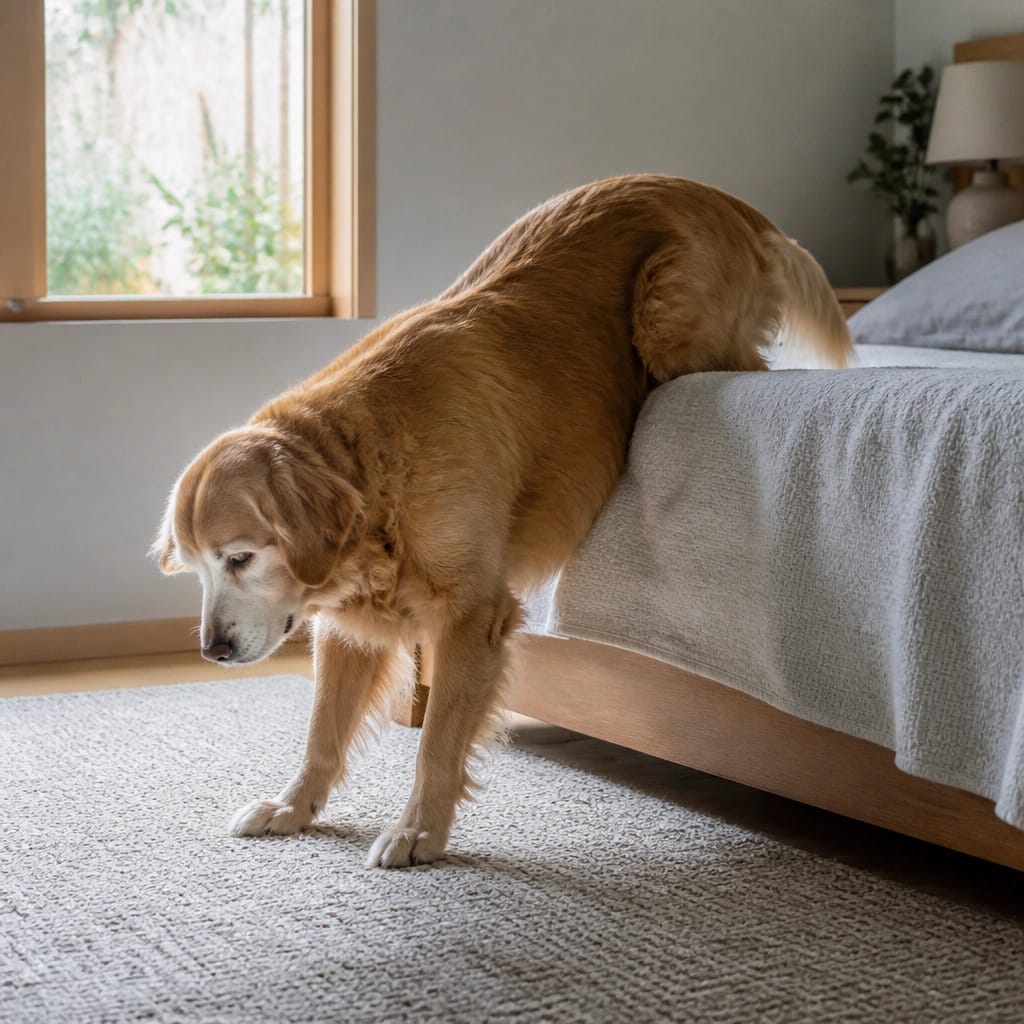
The Hidden Struggle: Why Getting In and Out of Bed Hurts
When your dog has arthritis or hip dysplasia, every movement involves a trade-off. Getting up from a very low bed means pushing their entire body weight from a deep squat. That motion puts massive strain on stiff hips, sore knees, and tender elbows.
The opposite problem is just as bad. Climbing onto a high bed requires jumping. Landing jars the same vulnerable joints.
For a dog with arthritis, that impact can trigger pain that lasts for hours.
Many owners notice their senior dog avoids their bed altogether. They start sleeping on the floor or on a rug instead. This is often a sign that the bed height is wrong for their current needs.
If you have noticed your dog choosing the floor over their bed, it is worth checking whether the height is the issue.
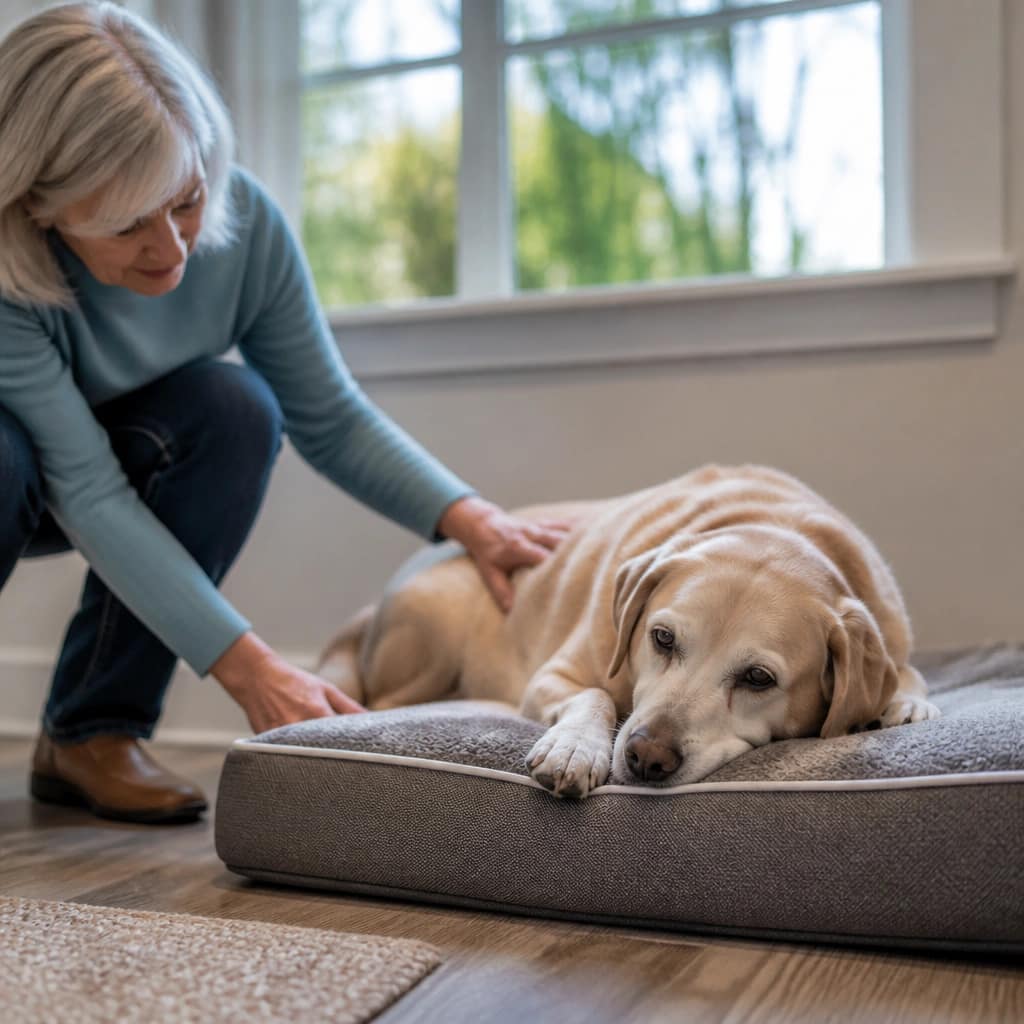
How Bed Height Affects an Older Dog’s Joints, Spine, and Hips
The mechanics are straightforward. A bed that is too low forces your dog to rise from a deeper crouch. This increases the angle at the hip and knee joints, requiring more muscle force.
For a dog with arthritis, that extra force directly translates to pain.
A bed that is too high creates a different problem. Your dog has to jump up or scramble. The impact on landing compresses the spine and loads the hip joints with sudden force.
Over time, this repeated impact can worsen existing joint damage.
The right height allows your dog to stand with their body relatively level. They can transition from lying to standing with minimal extra effort. The American Veterinary Medical Association notes that reducing joint stress is a key factor in managing canine arthritis.
Proper bed height is one of the simplest ways to achieve that.
The Three Key Factors: Mobility Level, Dog Size, and Pain Severity
No single bed height works for every older dog. The right choice depends on three factors you need to assess honestly.
Mobility level. Can your dog still jump onto a couch? Do they need help getting into the car? A dog that can still manage a small jump can handle a slightly higher bed.
A dog that struggles to stand at all needs the lowest possible height.
Dog size. A Chihuahua and a Labrador have completely different needs. Small dogs have shorter legs, so a bed that seems low to you might still be a climb for them. Large dogs have more weight to lift, so they need more support and a height that allows them to stand without excessive strain.
Pain severity. A dog with mild stiffness can handle more variation. A dog with advanced arthritis or recovering from surgery needs a precise height. If your dog has been diagnosed with arthritis, your veterinarian can guide you on the joint stress levels their specific condition can tolerate.
Low Bed vs. Raised Bed: Which One Works Best for Your Senior Dog?
This is where the decision tree splits. You have two main options, and each suits different situations.

Low profile beds sit close to the floor, usually 2 to 4 inches of thickness. These are ideal for dogs with very limited mobility. They allow a dog to step on and off with minimal effort.
There is no jumping required. The downside is that they can be harder for some dogs to stand up from if the foam is too soft.
Raised or standard height beds sit higher, usually 5 to 10 inches from the floor. These are better for dogs that still have some mobility. They reduce the distance your dog has to crouch when standing up.
The trade-off is that your dog needs to step up or do a small hop to get on.
Here is a quick comparison:
| Feature | Low Profile Bed | Raised Standard Bed |
|---|---|---|
| Height from floor | 2 to 4 inches | 5 to 10 inches |
| Best for | Dogs with severe mobility loss | Dogs with mild to moderate arthritis |
| Entry style | Step on without effort | Small step up or hop |
| Stand up effort | Low, but requires full crouch | Moderate, less crouch needed |
| Fall risk | Very low | Higher if dog missteps |
Bed Height Guidelines by Dog Size and Arthritis Severity
Here are practical guidelines based on typical dog sizes and arthritis severity. These are approximate. Your dog’s specific condition may require adjustment.
| Dog Size | Weight Range | Mild Arthritis | Moderate Arthritis | Severe Arthritis |
|---|---|---|---|---|
| Small | Under 20 lbs | 4 to 6 inches | 3 to 4 inches | 2 to 3 inches |
| Medium | 20 to 50 lbs | 5 to 7 inches | 4 to 5 inches | 3 to 4 inches |
| Large | 50 to 90 lbs | 6 to 8 inches | 5 to 6 inches | 3 to 4 inches |
| Giant | Over 90 lbs | 7 to 10 inches | 5 to 7 inches | 4 to 5 inches |
For dogs with severe arthritis, the lowest height that still provides adequate support is usually best. The trade-off is that very low beds often have thinner foam. You need to check the foam density to ensure it still provides enough support for your dog’s weight.
A good dog bed size chart by weight can help you confirm the right dimensions.
If your dog has moderate arthritis and can still manage a small step, a slightly higher bed reduces the effort needed to stand. This is often the sweet spot for many senior dogs. The key is observing your dog’s behavior after a few days with the new bed height.
Signs Your Dog’s Bed Is Too High
Watch for hesitation before jumping up. Your dog might pause, whine, or circle the bed repeatedly. They may try to jump and miss, or land awkwardly.
Another clear sign is refusing to use the bed. If your dog starts sleeping on the floor, the height is likely wrong. You might also notice them struggling to get down.
A stiff landing or a yelp when they hit the floor means the drop is too far.
Signs Your Dog’s Bed Is Too Low

A bed that is too low forces your dog to push hard from a deep squat. Watch for visible effort when standing. Front legs sliding on the floor, multiple attempts, or a groan during the motion are all red flags.
Your dog may also show reluctance to lie down. They might stand and stare at the bed before finally collapsing. Morning stiffness often gets worse when a low bed is the cause.
If your dog hobbles away stiffly after getting up, the bed height needs adjustment.
Common Mistakes When Choosing a Bed for an Older Dog
The biggest mistake is picking a bed based on looks or price instead of your dog’s condition. A plush, cloud-like bed looks comfortable but offers no support. A dog with arthritis sinks into it and struggles to get up.
Another error is ignoring the dog’s current mobility. Owners sometimes buy the same height bed their dog loved as a younger adult. But as dogs age, their needs change.
Checking a proper dog bed size chart by weight helps avoid mismatches.
Some owners place the bed in a high-traffic area. Your dog may feel unsafe or rushed when trying to get up. A quiet corner with a non-slip surface is far better for a senior dog.
Beyond Height: Foam Firmness, Bolsters, and Bed Placement
Height alone won’t fix the problem. Firmness matters just as much. Memory foam with a density of at least 2.5 pounds per cubic foot provides the right balance of support and pressure relief.
Softer foam lets your dog sink too deep.
Bolsters can help or hurt. A bolster gives your dog something to lean on or rest their head. But for dogs with arthritis, a high bolster can block easy entry.
A bolster bed works well only if your dog can step over it without effort.
Placement is often overlooked. Put the bed on a non-slip rug or mat. A smooth floor makes it harder for your dog to push off when standing up.
A waterproof dog bed also protects the foam from accidents that are more common in older dogs.
How to Transition Your Dog to a New Bed Height
Make the switch gradual. Place the new bed next to the old one for a few days. Let your dog explore it on their own terms.
Encourage use with treats or a familiar blanket. Do not force them onto it. Watch how they enter and exit.
If they still seem uncomfortable, the height may still be wrong.
Give your dog at least a week to adjust. If you see improvement in how easily they stand up, you have found the right height. If not, adjust one inch up or down and try again.
When to Add a Ramp or Steps Instead of Changing the Bed
Sometimes the perfect bed height still isn’t enough. If your dog needs to get onto a couch or your bed, a ramp or steps can solve the problem.
A ramp with a non-slip surface is best for dogs with severe arthritis. Steps work well for dogs that still have some coordination. Measure the height your dog needs to climb and choose a ramp with a gentle slope.
The angle should be gradual enough that your dog can walk up without strain.
FAQ: Bed Height for Older Dogs
What is the best bed height for a senior dog with arthritis?
The best height allows your dog to stand up without visible effort. For most dogs, this is between 3 and 5 inches. Adjust based on your dog’s size and mobility.
Should I use a raised bed for my older dog?
Raised beds work well for dogs with mild to moderate arthritis. They reduce the crouch needed to stand. Avoid them if your dog has trouble stepping up.
How do I measure the right bed height for my dog?
Measure from the floor to your dog’s elbow when they are standing. The bed height should be close to this measurement. It allows a natural standing motion.
Can a bed be too high for a dog with hip dysplasia?
Yes. A bed that is too high forces your dog to jump or scramble. This jars the hips and can worsen pain.
A lower bed with firm support is safer.
Quick Decision Guide: Matching Bed Height to Your Dog’s Condition
If your dog can barely stand, choose a low profile bed with firm foam. If your dog can step up but not jump, choose a medium height bed. If your dog can still jump onto furniture, a standard height bed works.
Watch your dog closely for the first week. If they seem more comfortable, you got it right. If they hesitate or avoid the bed, adjust the height.
Your dog’s comfort is the best guide.


