

Can You Use Vinegar to Clean a Dog Bed?
Yes, vinegar can clean a dog bed safely. It kills bacteria and neutralizes odors. Always dilute it with water first. Use a 1:3 vinegar to water ratio. Test on a hidden spot before full cleaning. Never use it on memory foam without a waterproof liner.
Yes, you can use vinegar to clean a dog bed. White vinegar is a safe, natural option for most beds when you do it correctly. It cuts through odors, breaks down urine stains, and costs pennies per use.
But here’s what many guides skip: vinegar can damage certain materials and irritate your dog’s skin if you get the mix wrong. Standard white vinegar contains about 5% acetic acid, which is mild but still strong enough to cause problems at full strength. As of 2026, veterinary guidance remains clear on using it properly.
Is Vinegar Actually Safe for Dog Beds?
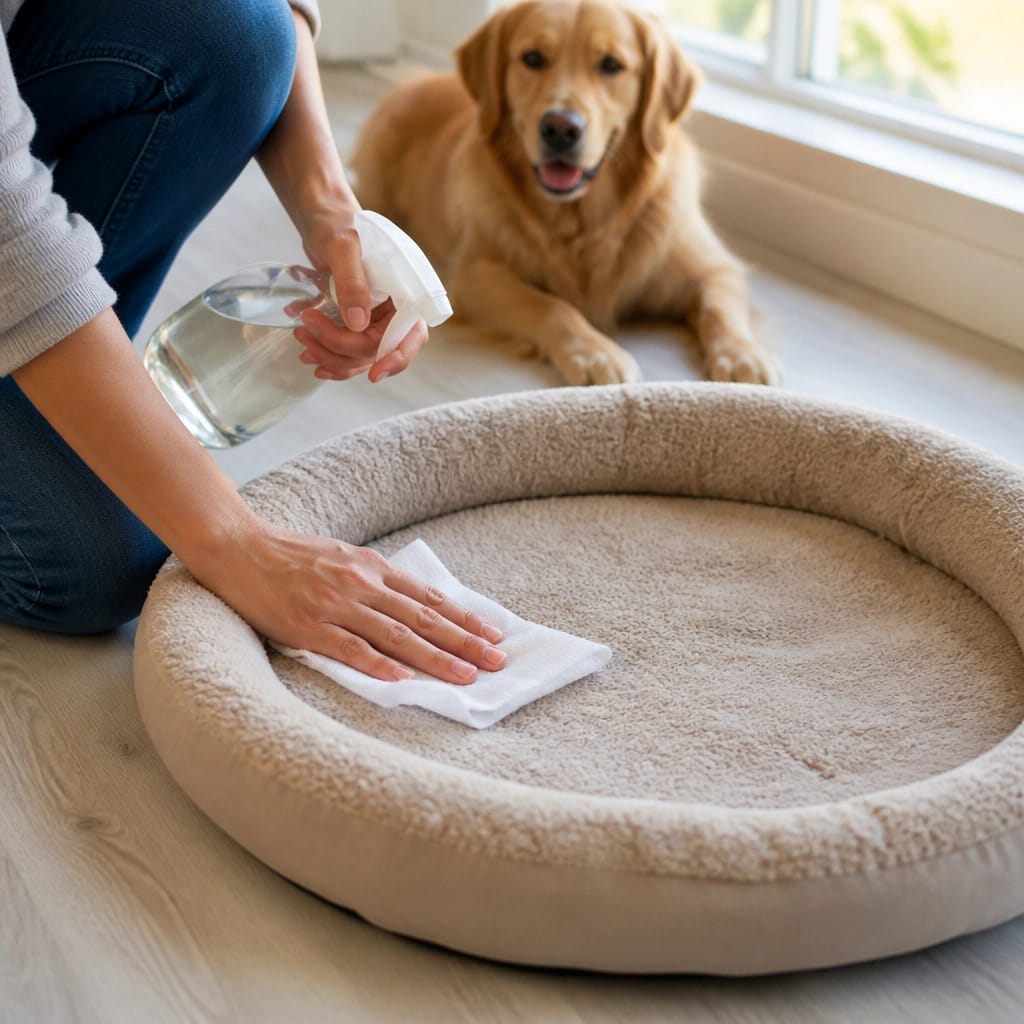
The short answer is yes, with conditions. Vinegar is non-toxic to dogs when used correctly. It’s a common household ingredient that the ASPCA lists as generally safe for pets when diluted.
But safety depends on three things.
Dilution matters. Undiluted vinegar has a pH around 2.5, which is acidic enough to irritate your dog’s sensitive skin. That’s especially true for dogs with allergies, hot spots, or bare patches. A 1:3 ratio (vinegar to water) brings the pH closer to neutral.
Material matters. Vinegar can degrade waterproof coatings on some beds. It can also break down the structure of memory foam over time. If your dog tends to chew on their bedding, you need to be extra careful about lingering vinegar smell.
Dogs have a much stronger sense of smell than we do.
Drying matters. A damp bed is a breeding ground for mold and mildew. Even if the vinegar cleaned the surface, trapped moisture inside the foam can create bigger problems. Always ensure the bed is completely dry before your dog uses it again.
When Vinegar Works Best (and When It Doesn’t)
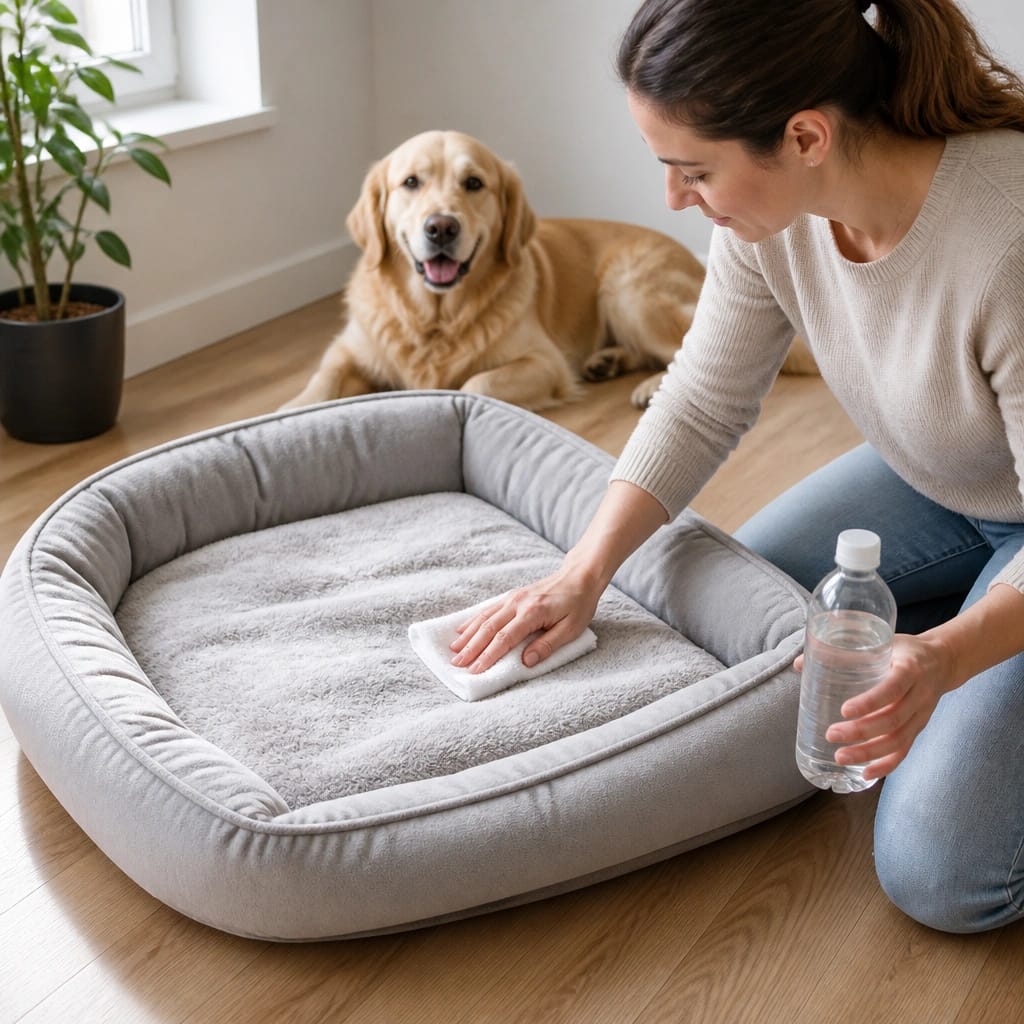
Vinegar is not a universal cleaner. It works well for some situations and poorly for others.
| Best for | Not ideal for |
|---|---|
| Urine odors (neutralizes alkaline buildup) | Deep-set mold or mildew inside foam |
| Surface dirt and mild stains | Beds with heavy waterproof coatings |
| Deodorizing synthetic fabrics | Memory foam without a removable cover |
| Spot cleaning between full washes | Raw wood or untreated surfaces in frame beds |
Vinegar excels at neutralizing ammonia-based odors from urine. The acetic acid reacts with the alkaline salts, turning them into less smelly compounds. That’s why it works better than plain water for pee stains.
It falls short on heavy grease, dried mud, or fecal matter. Those require a pretreatment with enzymatic cleaner or dish soap first. Vinegar alone won’t break down proteins or fats.
If your dog has a bed with a waterproof design, check the manufacturer’s care label. Some waterproof liners are vinegar-safe, but others can peel or crack over time.
The Right Way to Dilute Vinegar for a Dog Bed
Getting the ratio right is the most important step. Too strong and you risk skin irritation. Too weak and it won’t clean effectively.
The standard dilution is 1 part white vinegar to 3 parts water. For a typical spray bottle, that’s about 1/4 cup vinegar to 3/4 cup water. For a bucket soak, use 1 cup vinegar to 3 cups warm water.
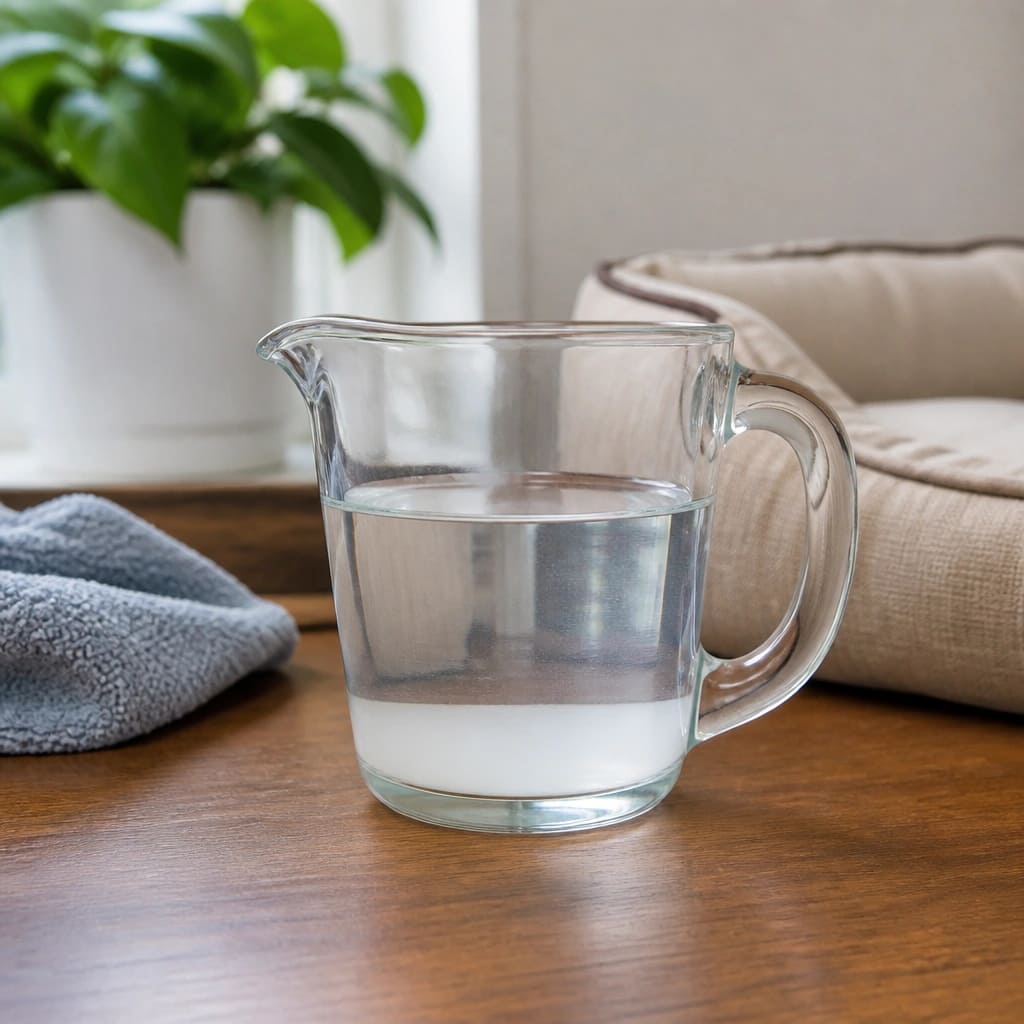
Use warm water, not hot. Hot water can set protein stains and damage some fabrics. Warm water helps the vinegar mix evenly and lifts dirt more effectively.
Always use white distilled vinegar. Apple cider vinegar can stain lighter fabrics. Cleaning vinegar (6% acetic acid) is stronger and needs more dilution. Stick with standard 5% white vinegar for safety.
Test on a hidden spot first. Dab a small amount of the diluted solution on an inside seam or bottom corner. Wait 10 minutes and check for color change, fabric damage, or coating peeling.
How to Clean a Dog Bed with Vinegar (Step-by-Step)
This process works for most machine-washable beds with removable covers. For foam-only beds, see the memory foam section later.
1. Remove the cover and shake it out. Take the bed outside and give it a good shake to remove loose hair, dirt, and debris. Vacuum the cover if your dog sheds heavily.
2. Pre-treat stains. Spray the diluted vinegar solution directly on urine spots, drool marks, or muddy areas. Let it sit for 10 to 15 minutes.
For stubborn stains, rub gently with a soft brush.
3. Wash the cover in the machine. Use warm water and a mild pet-safe detergent. Add 1/2 cup of vinegar to the rinse cycle for extra deodorizing.
Avoid fabric softener. It can irritate your dog’s skin and reduce the bed’s waterproofing.
4. Hand wash the foam core. Most foam inserts cannot go in the machine. Spray the diluted vinegar solution lightly over the foam.
Wipe with a damp cloth, then blot with a dry towel. Do not soak the foam. Vinegar can break down foam structure over time.
5. Dry everything completely. Tumble dry the cover on low heat or air dry it outdoors. Foam must air dry completely.
Place it in a sunny spot and flip it every few hours. A damp foam core can develop mold within 24 hours. If you’ve tackled a serious accident, you may also need tips for dealing with deeper-set odors.
Common Mistakes That Ruin a Dog Bed

The biggest mistake is using undiluted vinegar. Full-strength vinegar can damage fabric fibers and irritate your dog’s skin. It’s also strong enough to weaken stitching over time.
Another common error is soaking the foam core. Memory foam and polyfill act like sponges. They hold moisture for days, which leads to mold and mildew.
If your dog already has a habit of digging or scratching at their bed before lying down, a damp bed will only make things worse.
Skipping the rinse cycle is another one. Vinegar residue left in the fabric can cause skin irritation. Always run an extra rinse cycle to remove any lingering scent.
Safety Risks You Need to Know
Vinegar is safe when diluted, but it’s not risk-free. Dogs with sensitive skin, allergies, or raw spots can react to even mild vinegar solutions. Watch for redness, scratching, or licking after the bed goes back in use.
If your dog chews or licks their bedding, the strong smell can be off-putting or even irritating. Some dogs will avoid their bed entirely if it smells like vinegar. A good rinse and thorough drying usually solves this.
Never mix vinegar with bleach or hydrogen peroxide. The combination creates toxic chlorine gas or peracetic acid. Both are dangerous for you and your dog.
What About Baking Soda, Enzymatic Cleaners, or Bleach?
Baking soda works well alongside vinegar. Sprinkle it on the dry bed, let it sit for 15 minutes, then vacuum it up before washing. It absorbs odors without the acidity.
Enzymatic cleaners are better for serious urine stains. They break down the proteins and bacteria that cause lingering smells. Vinegar is cheaper, but enzymatic cleaners are more effective on deep-set accidents.
Bleach is not recommended for dog beds. It’s harsh on fabrics, leaves toxic residue, and can cause respiratory issues for dogs. Stick with vinegar or pet-safe enzymatic products.
If you’re dealing with a stubborn urine smell, combining a vinegar pre-soak with an enzymatic cleaner gives the best results. For memory foam beds specifically, there are more targeted approaches worth considering.
Can You Use Vinegar on Memory Foam or Waterproof Beds?
Memory foam and vinegar have a complicated relationship. The acetic acid in vinegar can break down the foam’s cellular structure over time. That leads to sagging, crumbling, and reduced support.

If the bed has a removable waterproof cover, you’re fine. Wash the cover with vinegar. Spot clean the foam with a damp cloth and mild soap only.
Never soak or spray foam directly.
If the bed is one piece with no removable cover, vinegar is risky. The solution can penetrate the fabric and reach the foam. In that case, use a damp cloth with plain water and a tiny drop of dish soap instead.
For waterproof beds, vinegar can degrade the coating over time. Check the manufacturer’s care label. Most recommend mild soap and water, not acidic cleaners.
Frequently Asked Questions
Can I use vinegar on a dog bed with a waterproof liner?
Yes, but sparingly. The diluted vinegar solution is safe for the fabric cover. Avoid soaking the waterproof liner itself.
Over time, vinegar can weaken the seal of the waterproof layer.
How often should I clean my dog’s bed with vinegar?
Once a month is plenty for most beds. If your dog has accidents or drools heavily, you can do it every two weeks. Overwashing can wear out fabrics faster.
Does vinegar kill bacteria on dog beds?
It kills some bacteria and fungi, but it’s not a registered disinfectant. For serious bacterial issues, use an enzymatic cleaner or a pet-safe disinfectant spray. Vinegar works best for odor control, not sterilization.
Can I use apple cider vinegar instead of white vinegar?
Technically yes, but it can stain lighter fabrics. Apple cider vinegar has a darker color and a stronger smell. White distilled vinegar is the better choice for cleaning.
Will vinegar stop my dog from peeing on their bed?
No. Vinegar cleans the smell, but it won’t change your dog’s behavior. If your dog is repeatedly soiling their bed, check for medical issues or talk to your vet.
A clean bed is a good start, but it’s not a training solution.
The Bottom Line: Should You Use Vinegar?
Yes, vinegar is a solid choice for cleaning most dog beds. It’s cheap, non-toxic, and effective against odors. Just keep it diluted and use it on the right materials.
Skip vinegar on memory foam cores without a removable cover. Avoid it on heavily waterproofed beds. Stick with enzymatic cleaners for deep-set urine stains or heavy soiling.
A monthly vinegar wash keeps your dog’s bed fresh without harsh chemicals. Pair it with baking soda for extra odor control. Your dog gets a clean, safe sleeping spot and you save money on specialty cleaners.


