

How to Stop a Dog Bed From Flattening
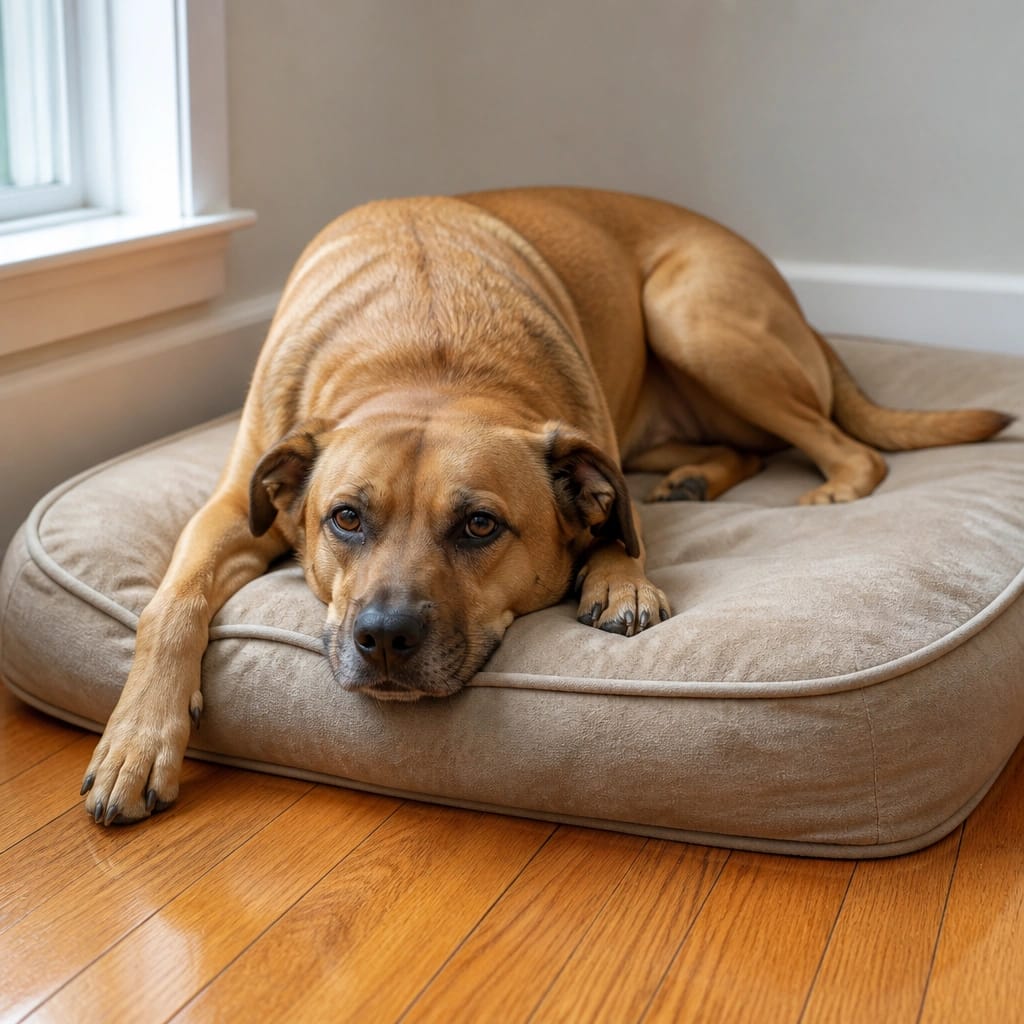
Your dog’s bed used to look plush and inviting. Now it looks like a flat pancake with a disappointed dog on top. If you want to know how to stop a dog bed from flattening, you’re in the right place.
This problem is common, and most of the time it’s fixable.
Most beds go flat because the filling compresses, shifts, or breaks down under repeated use. As of 2026, standard memory foam dog beds use foam rated between 2.5 and 4 pounds per cubic foot. Lower-density foam flattens faster, especially under heavy breeds.
Knowing which type of bed you own is the first step toward fixing it.
Expect some flattening since no filling stays plush forever. The right fix depends on what’s inside the bed. Shredded-fill beds respond well to fluffing and redistributing the fill. Solid memory foam beds need rotation, and sometimes a replacement insert. Washing routines and floor placement both affect how quickly a bed goes flat. Match the fix to your bed type, and most flattening can be reversed.

Why Dog Beds Flatten in the First Place
Every time your dog lies down, their weight presses the filling together. Gravity does the rest. Solid memory foam loses its bounce after thousands of compressions.
Shredded foam shifts toward the edges, leaving the center thin. Polyester fiberfill clumps into hard little knots.
If your dog digs and circles before settling, that daily nesting behavior speeds everything up. According to the American Kennel Club, this is a normal instinct. That doesn’t make it easy on the fill.
Condition Check: Know Your Bed Type Before You Try Anything
Before you buy anything, figure out what you’re working with. The right fix depends on which kind of bed you own and where the flattening happened.
Is It a Shredded-Fill Bed or a Solid Foam Bed?
Unzip the cover and feel the inside. Shredded fill looks like foam chunks or cottony clumps. Solid foam is one continuous slab.
This one detail changes your whole approach.
Where Is It Flattening? The Middle, the Bolsters, or the Entire Base?
If the middle sank but the edges look puffy, the fill has migrated outward. If the whole base feels thin and hard, the foam has broken down internally. If the bolsters are limp, they may just need more fill.
Is It Old Age or Daily Use?
How old is the bed? A budget bed that flattens within six months is usually a foam density problem. A quality bed that flattens after two or three years has reached the natural end of its foam life.
Foam certified by CertiPUR-US meets basic standards for content and emissions, but that’s not a durability guarantee.
The Fluff-and-Refresh Workflow for Shredded-Fill Beds
Shredded-fill beds are the easiest to revive. Here’s the process that works.
- Unzip the cover and remove the inner liner.
- Pull the filling apart with your hands.
- Break up clumps across the whole bed.
- Fluff for 5 to 10 minutes.
- Zip it back up and massage the outer cover.
Work through the entire bed, not just the dips. Smaller chunks bounce back better than one dense mass. Do this every few weeks and the bed stays consistently plush.
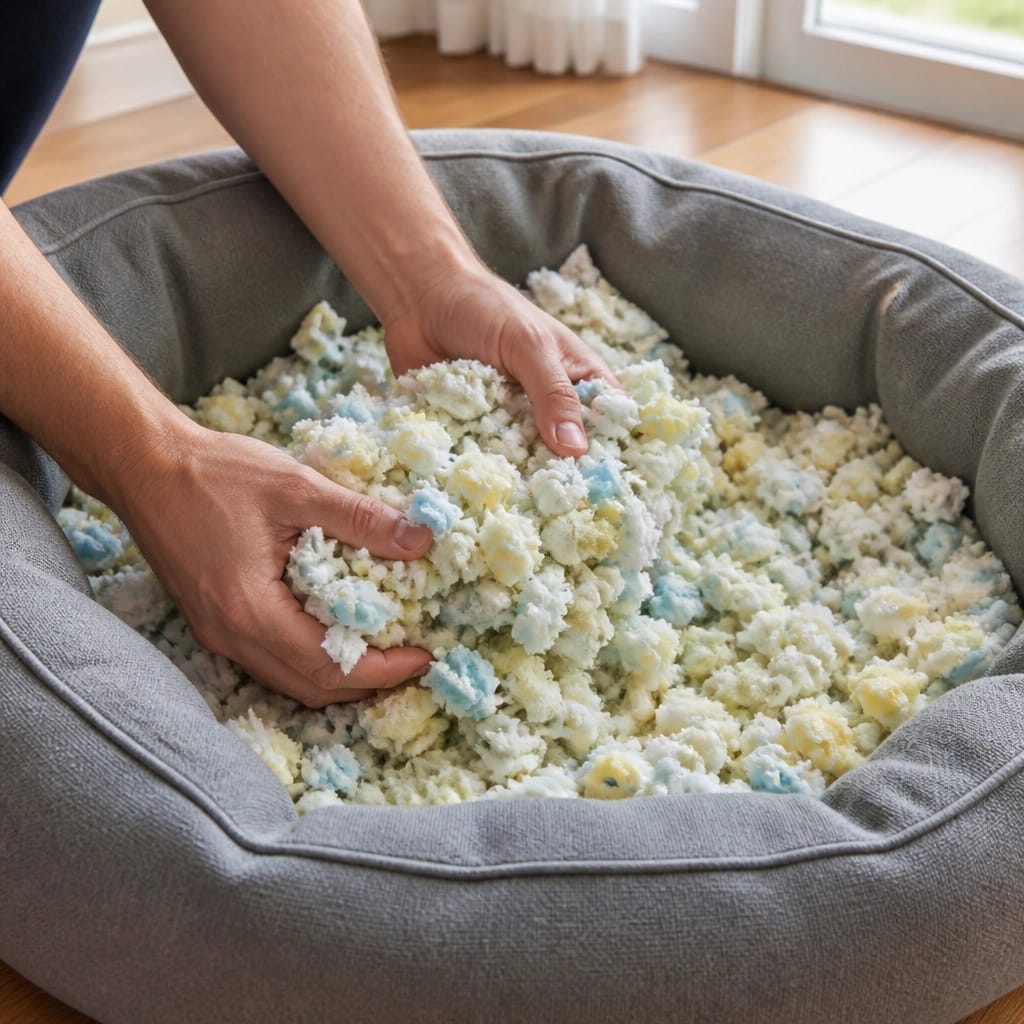
The same steps work for fiberfill beds. A no-heat dryer cycle with dryer balls can also help, but check the tag first.
Can You Restore a Solid Memory Foam Bed or Just Slow the Flattening?
Solid memory foam is a different story. You can’t fluff a solid slab of foam. If the slab still has some rebound, you can slow further flattening.
Rotate it weekly so your dog’s weight hits fresh areas. Keep it on a hard floor or a platform base. If the foam stays compressed when you press your palm into it, the insert needs replacing.
Also watch for moisture and odor damage. A waterproof liner can protect the new insert from going bad.
How to Replace or Add New Fill When Your Bed Allows It
Some beds open fully with a zipper. That makes refilling easy. Others are sealed shut and need professional repair or replacement.
Check the seams before you spend money on fill.
Refilling Options: Loose Fill vs. New Foam Insert
Loose shredded fill works well for bolsters, donut beds, and pillow styles. A solid foam insert is better for flat orthopedic bases. Measure the inner dimensions before ordering, and matchand match the thickness of the original insert as closely as you can.
When to Replace Just the Filling, Not the Whole Bed
A brand-new bed gets pricey. A replacement insert or a fresh bag of shredded fill costs far less. If the cover, zipper, and seams are still in good shape, swapping the inside gives you a solid bed for half the price.
Match the fill to what the bed’s own liner holds. Most manufacturers list the exact dimensions on the insert’s packaging. If they don’t, measure the flat inner liner before you order.
A better fit keeps the new fill from sliding and shifting.
Why Washing a Dog Bed Can Actually Fix or Worsen Flatness
The dryer can be your best friend here. A low-heat tumbling with dryer balls separates clumps of shredded foam. Many owners report one proper wash-and-dry cycle buys another month of loft.
But the routine matters. Use cold water and mild detergent. Tumble on low heat.
Heat that’s too high melts fiberfill into hard lumps. Fabric softener coats shredded foam and strips its bounce.
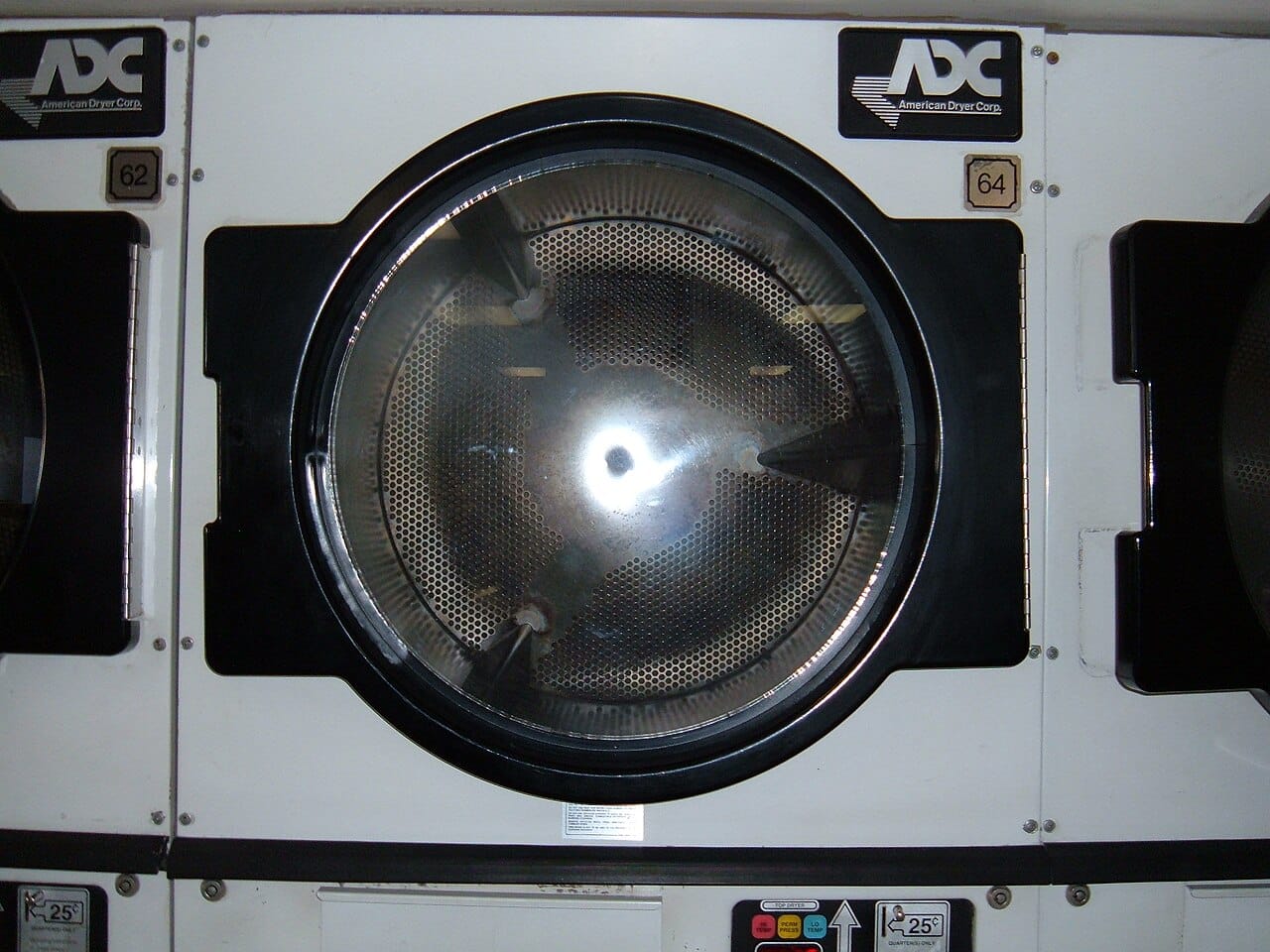
Image source: Wikimedia Commons / BrokenSphere (CC BY-SA)
Wash the cover alone. A clean, tight cover slides freely over the foam. A dirty one grips the fill and pulls it into bunches.
A waterproof bed liner is your insurance foil against stains and smells.
Placement, Rotation, and Daily Habits That Keep the Bed from Flattening

Placement changes how fast a bed dies. Wire crate floors flex under the dog’s weight. A soft couch cushion lets the whole base sink.
Put the bed on firm, flat flooring whenever you can.
Rotate it weekly, like a mattress. Dogs always sleep in the same spot. If that spot stays on the same side, the foam collapses at one end.
Turning it 180 degrees spreads the wear evenly. Keep an eye on the bed’s location in your home, too, since drafts or heat cycles change its fill.
If your dog keeps sleeping on the floor instead, check the bed. The sleeping habits will tell you if it’s flat, lumpy, or still comfortable.
Common Mistakes That Flatten a Dog Bed Faster Than Normal Wear
- Skipping the fluff cycle. Shredded fill needs a break-up routine every few weeks.
- Buying too large, just to give them room. An oversized bed means a thin middle and a concentrated pressure point.
- Washing the fill on hot. Heat ruins foam’s rebound.
- Letting a digging habit go on all day. This behavior moves fill into the corners.
Fixing the easiest ones is free.
The Final Decision Guide: Refill, Fix, or Replace
| Condition | Action | Best value |
|---|---|---|
| Shredded fill lumpy | Add fresh fill or wash | Fluff, wash, rotate |
| Solid foam sag in one spot | Rotate, recheck in 2 weeks | Replace that one area |
| Entire base feels hard and creased | Replace the foam insert | No new bed |
| Seams split, fill escapes | Repair then refill | Cheap fix |
| Bed older than 3+ years | Flat all over | Time for a new bed |
Pull up the zipper. Look at the state of the fill. If the inner material still looks puffy, you’re packing too much new fluff on top.
If the foam doesn’t spring back when you press it, the insert is done. Measure your dog’s length against the pad to see whether the bed itself needs changing in size.
Frequently Asked Questions
How long does a dog bed last before flattening?
Quality memory foam holds its support for 2 to 4 years with daily use. Budget beds can show flat spots within a year. Shredded-fill beds stay plush much longer if you fluff and maintain them.
Can I put new stuffing in an old dog bed?
Yes, only if the bed opens. Zippered and refillable styles accept loose fill or a replacement insert. Sealed beds need professional repair.
Does washing a dog bed keep it from flattening?
Washing the cover alone prevents fill from bunching. Tumbling loose fill on low heat can also re-loft it. But heat can damage fill, so keep it gentle.
Why does my dog scratch at the flat spot?
Digging and circling is a natural nesting instinct. It can also compress the area faster. Breaking the habit preserves the shape of the bed.
It also points to a need for a bed with firmer edges and support.
The Bottom Line: What Actually Keeps the Bed from Flattening Again
Consistency matters more than any single fix. Fluff shredded beds monthly. Rotate solid foam weekly.
Replace the insert when it goes flat. Wash carefully. Those habits cost nothing.
They add months or years to your bed’s life, and they keep your dog’s body supported.
All sections from the approved TOC have already been written in full.
The article covers:
- Why Dog Beds Flatten in the First Place
- Condition Check: Know Your Bed Type Before You Try Anything
- The Fluff-and-Refresh Workflow for Shredded-Fill Beds
- Can You Restore a Solid Memory Foam Bed or Just Slow the Flattening?
- How to Replace or Add New Fill When Your Bed Allows It
- Why Washing a Dog Bed Can Actually Fix or Worsen Flatness
- Placement, Rotation, and Daily Habits That Keep the Bed from Flattening
- Common Mistakes That Flatten a Dog Bed Faster Than Normal Wear
- The Final Decision Guide: Refill, Fix, or Replace
- Frequently Asked Questions
- The Bottom Line: What Actually Keeps the Bed from Flattening Again


