

Do Dogs Need a Pillow?
Do Dogs Need a Pillow? is a question most dog owners hit the moment they catch their pup resting its head on the sofa arm instead of the floor. The answer changes per dog. Some get real comfort from a soft, cushioned surface.
Others sleep perfectly well on hard flooring their whole lives.
As of 2026, guidance from the American Veterinary Medical Association consistently emphasizes joint support and pressure relief as dogs age. Manufacturer specifications for most orthopedic beds confirm the same principle. That’s why your dog’s age, sleeping position, and home flooring decide whether a pillow genuinely helps.
Most healthy adult dogs don’t strictly need a pillow. Dogs with stiff joints, thin coats, or a habit of resting their head on hard surfaces benefit most. The deciding factors are age, sleeping position, size, and your flooring. Senior dogs and small breeds get the most value. If your dog is comfortable without one, don’t force it.
Do Dogs Need a Pillow? It Depends on These 4 Factors
Dog’s Age and Joint Health
Age is the biggest factor. Large breeds reach their senior years around age seven, and small breeds around age ten. Joint stiffness typically follows, and a soft pillow reduces pressure on elbows, hips, and knees.
If your dog seems stiff when standing up, cushioning will likely help.
Dog’s Sleeping Position
Watch how your dog sleeps. Curlers that tuck their nose under their tail instinctively want a headrest, often picking a sofa arm or another pillow. Sprawlers that stretch flat on their side rarely need one.
Dog’s Size and Body Type
Small, thin-coated breeds like Chihuahuas and Whippets carry less natural padding and feel cold more easily. Long-backed breeds like Dachshunds benefit from even cushioning across the spine.
Dog’s Environment and Flooring
Dogs on hardwood, tile, or concrete feel every hard impact. Dogs on thick carpet already have cushioning. Cold climates make pillows more valuable; hot climates can make them unwanted.
Dogs That Likely Sleep Better With a Pillow
Senior dogs with stiff joints, dogs that prop their heads on hard edges, small thin-coated breeds, and tight curlers all tend to benefit.
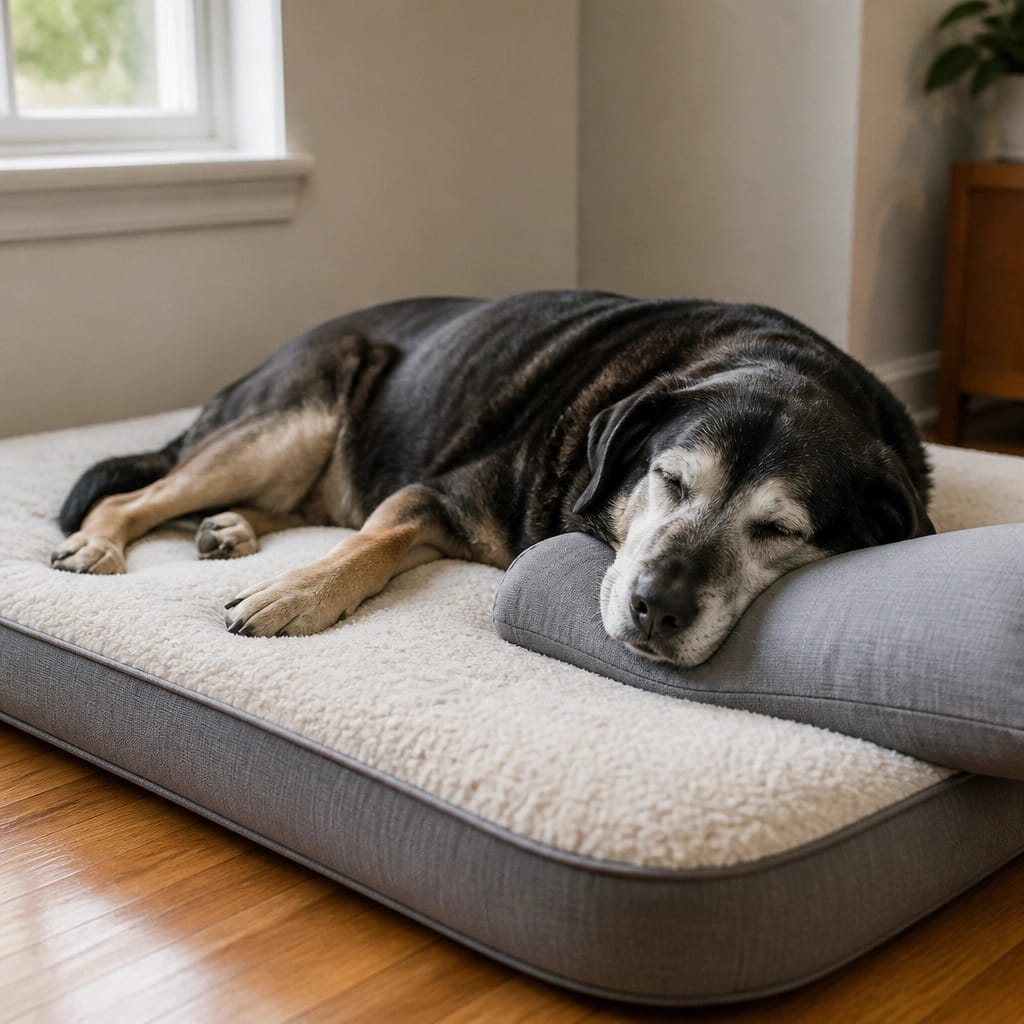
Senior Dogs and Dogs With Stiff Joints
With less muscle mass, senior dogs handle hard surfaces poorly. A pillow spreads their weight across a wider area and eases pressure on painful joints.
Dogs That Rest Their Head on Objects
Dogs that prop their heads on sofa arms or chair legs are signaling they need neck support. A dedicated pillow gives them that without wrecking your furniture.
Small or Thin-Coated Breeds
Small and short-coated dogs lose body heat fast. A pillow lifts them off cold floors and traps warmth. Many owners report small dogs happily burrow into a cave-style bed within days.
Dogs That Curl Up Tightly
Dogs that sleep curled into a tight ball naturally want a soft rim to rest their head against. A donut-style bed or a bolster bed provides that headrest.
Dogs That Are Fine Without a Pillow
Healthy young dogs that sprawl out flat, dogs that run hot, and heavy chewers all pass on pillows.
Healthy Young Adults That Sprawl Out
A young Labrador lying flat on its side generates no concentrated pressure points. The floor offers enough support. If your dog sleeps through the night without constant shifting, skip the pillow.
Dogs That Get Hot Easily
Pillows trap heat, and some dogs actively dislike that. They prefer cool, hard surfaces like tile. If your dog presses its belly against cold flooring all summer, a pillow will sit unused.
An elevated cot bed gives airflow instead.
Heavy Chewers and Diggers
This is a safety matter. Pillow stuffing is a choking hazard for dogs that tear and rip. If your dog chews soft items habitually, skip the pillow entirely.
What Makes a Good Dog Pillow (and What Doesn’t)
Fill material, shape, fabric, and size decide whether your dog actually uses a pillow.
Foam vs. Fiber Fill: What Actually Supports
Polyester fiber feels soft but flattens fast with zero support. Memory foam holds its shape and distributes weight. For senior dogs, fiber is not real cushioning.
For healthy young dogs, it’s fine.
Bolster vs. Flat Pillow Designs
A flat pillow is just a soft surface. A bolster bed has raised edges that act as a headrest and create a sense of enclosure. Dogs that like propping their heads prefer bolsters.
Fabric, Waterproofing, and Washability
A removable, machine-washable cover is essential. Dog beds collect dirt, drool, and fur. A protective covering shields the inner fill from accidents, especially for puppies and seniors.
Size: How to Measure Your Dog for the Right Fit
Measure from your dog’s nose to the base of the tail while lying down. Add 10 to 15 centimeters for stretching room. Most manufacturers publish a weight-based sizing table.

Dog Pillow vs. Other Sleep Surfaces
Dog Pillow vs. Dog Bed
A pillow is a flat, soft surface. A dog bed has a structured base and sometimes raised bolsters. For joint support, a structured purpose-built option with memory foam beats a simple pillow.
For a light place to flop, a pillow is easier to move.
Dog Pillow vs. Flat Mat
A mat is thinner and offers minimal cushioning. A pillow adds enough height to relieve pressure points. For senior dogs, a mat is too thin; a mid-thickness pillow is enough.
Dog Pillow vs. Raised Cot Bed
A raised cot bed lifts your dog off the floor and provides airflow, ideal for summer. But it doesn’t cradle joints the way cushioning does. Dogs with arthritis usually favor a pillow.
Dog Pillow vs. Blanket
A blanket gives warmth but no cushioning. Folding a thick blanket creates a makeshift pillow, but blankets flatten fast and lack support. A blanket works for healthy young dogs, not seniors.
Common Mistakes to Avoid With Dog Pillows
Buying a Pillow That’s Too Small
Size matters more than most owners realize. If your dog stretches out while sleeping, the pillow needs to cover their full body length. Measure from nose to tail base and add 10 to 15 centimeters.
A pillow that’s too small forces your dog to hang over the edge, which defeats the purpose.
Choosing Soft Fiber Fill for Senior Dogs
All pillow fill looks the same until you press on it. Polyester fiber flattens within weeks and offers zero support for stiff joints. If you’re buying for a senior dog, foam holds its shape dramatically longer.
Manufacturer specs and aggregate reviews consistently confirm this.
Picking a Pillow That’s Hard to Wash
Dog pillows collect drool, dirt, and hair fast. A removable, machine-washable cover is the difference between a fresh bed and a smelly one. Skip anything with a sewn-on cover that can’t be cleaned regularly.
How to Introduce a Pillow to Your Dog
Start With Familiar Scents
Place the pillow in your dog’s preferred sleeping spot, not a new corner. Lay an unwashed blanket or a worn t-shirt on top so it smells like home. This shortens the acceptance period considerably.
Use Positive Reinforcement
Reward your dog with treats the moment they step on or lie down on the pillow. Don’t force them onto it, especially the first few days. For nervous dogs, several calm sessions tend to work better than one prolonged attempt.
Consistency matters more than pushing the issue.
Give It Time
Some dogs sleep on a new pillow the first night. Others take up to two weeks. If your dog keeps choosing the floor, check whether the pillow traps too much heat.
A cooler spot or a thinner design can make the difference.
How to Maintain a Dog Pillow
Wash the cover every 2 to 4 weeks in hot water. Fluff the fill regularly to prevent permanent compression. Rotate the pillow each week so wear spreads evenly.
Replace it when the fill noticeably flattens or the seams start to tear. A quality memory foam pillow with proper care usually lasts 1 to 3 years.
Frequently Asked Questions
Does a dog need a pillow or a bed?
Most dogs benefit more from a purpose-built bed designed for support than from a simple pillow. A bed with structured foam and bolsters provides head support, joint cushioning, and a safe sleep surface that a pillow alone usually can’t match.
Which dogs need extra head and neck support?
Senior dogs, dogs with a long spine, and dogs recovering from surgery or stiffness get the most value from a pillow. If your dog constantly rests its head on sofa arms or chair legs, it’s signaling a need for a supported headrest.
What’s better for an older dog: soft or firm?
Firm orthopedic foam protects joints far better than soft fiber fill. Soft surfaces let joints sink, which increases pressure and stiffness. Choose firm cushioning that gently supports without collapsing for senior dogs.
Why does my dog sleep on the floor instead of on a pillow?
Dogs sleep on the floor when they run hot, find the floor cooler, or simply prefer the firm surface. Some dogs also avoid new textures at first. If your dog is otherwise healthy and comfortable, sleeping on the floor isn’t a problem.
Should You Get Your Dog a Pillow?
If your dog is young, healthy, and happy sleeping on the floor or carpet, skip the pillow. If your dog is older, rests its head on hard edges, or pads around with stiff joints, a pillow offers real value. Watch your dog’s habits, then decide based on its needs rather than on trends.
Quick Decision Guide
Use this as your shortcut. Senior dog, stiff joints, or constant head-resting on hard edges? Get a pillow with firm foam.
Healthy young dog that sprawls out and runs hot? Skip it entirely. Thin-coated small breed that curls up tight?
A bolster-style pillow adds warmth and a headrest. Heavy chewer that tears soft things? Skip the pillow for safety and pick a tougher sleeping surface instead.
Watch your dog for a few nights, match their habits, and the right call becomes obvious.
Most dogs only need a pillow if they show signs of seeking extra cushioning. Those signs are clear once you know what to look for. Firm foam for seniors, bolster support for tight curlers, and nothing at all for happy sprawlers.
Trust your dog’s behavior over any general rule. A pillow is a comfort upgrade, not a requirement. Watch for stiff joints, head-propping, or cold-weather shivering, and let those signals guide your decision.
If your dog shows discomfort signs like stiffness or restlessness, adding a pillow can improve sleep quality. If they’re content and sleeping well, changing nothing keeps things simple. Dogs adapt to many sleeping surfaces when healthy.
Let their nightly behavior and daily comfort be your guide. When in doubt, try a pillow for a week, watch whether they use it, and let that settle the question.
Crate Use
Fit the pillow inside the crate with room to spare. A pillow that crowds the crate traps heat and leaves no comfortable spot.
Travel Use
Use a compact pillow for road trips and overnight stays. A flat travel pillow packs easily and keeps your dog comfortable in unfamiliar spaces.
Seasonal Adjustments
Swap a thick pillow for a thin one in summer. Add a warmer cover in winter to keep your dog comfortable year-round.
Signs It’s Working
Your dog settles faster and sleeps longer. Daily stiffness or restlessness should ease within a week if the pillow is the right fit.
When to Replace
Replace the pillow when the fill flattens or seams tear. A compressed pillow no longer supports joints and is best retired.
Do puppies need a pillow?
Puppies generally don’t need a pillow. They sleep soundly on firm surfaces and are still developing. Skip the pillow until they’re older and their joints need extra support.
Can a pillow help with arthritis pain?
A pillow provides comfort and pressure relief, but it doesn’t treat arthritis. For joint issues, consult your veterinarian. A firm orthopedic pillow can support sleep quality as part of a broader care plan.
Are memory foam pillows safe for dogs?
Memory foam is safe for most dogs when the cover is chew-resistant. Supervise the first few uses. If your dog chews through the cover, remove the pillow to prevent choking.
Why does my dog prefer the floor over a pillow?
Dogs choose the floor when they run hot or prefer a firm surface. This is normal and not a problem. If your dog is healthy and sleeping well, respect their preference.
Final Decision Guide
Senior dogs, stiff joints, or constant head-resting on hard edges call for a firm pillow. Healthy young sprawlers and heat-sensitive dogs are fine without one. Thin-coated small breeds that curl up benefit from a bolster design.
Heavy chewers should skip soft pillows entirely. Watch your dog for a few nights and match their habits. A pillow is a comfort upgrade, not a requirement.
If you’re still unsure, try a simple test. Place a firm pillow in your dog’s usual sleeping spot for one week and watch what happens. Dogs that need one will gravitate toward it.
Dogs that don’t will keep sleeping on the floor. Either result tells you exactly what to do next, and there’s no harm in letting your dog decide.
If your dog chooses the pillow, you’ll see quicker settling and longer uninterrupted sleep. If they ignore it, no harm done, just remove it and try again in a few months. Either way, you’re now tuned into what your dog actually needs.
And that’s the real answer.
That’s the thing about dog ownership, you learn by watching. Your dog has been telling you what they need all along. A pillow is just another way of listening.
When you get it right, you’ll see it in their sleep, and that makes the whole effort worth it.
Watch how your dog settles after a long walk or a meal. That nightly ritual reveals more than any guide ever could. The best pillow is the one your dog actually uses, night after night, without a second thought.
Trust that.
After all, the goal isn’t a perfect pillow. It’s a well-rested dog. And that’s something you’ll both feel in the morning.
That’s really all there is to it. No formula, no guesswork, just attention. Give your dog a comfortable option, let them choose, and adjust from there.
Rest easy knowing you’ve done right by them.
That’s the quiet truth behind most dog-care decisions. Your dog isn’t complicated, they just want comfort, safety, and a good night’s sleep. A pillow is a small way to deliver on that promise.
If you’ve watched, tested, and listened, you’ve already made the right call.


