

Are Dog Bed Zippers Safe for Dogs?
Most dog bed zippers are safe for dogs that don’t chew them. The danger comes from ingestion, sharp edges, or entrapment. Heavy-duty zippers with recessed placement and breakaway pulls are the safest option.
Dogs with a history of chewing bedding need extra precautions or zipperless alternatives. Always inspect the zipper area regularly for damage.
Are dog bed zippers safe for dogs? That’s a fair question, especially if you’ve ever watched your dog gnaw at the edge of their bed. The short answer is it depends on the zipper, the dog, and a few key design details.
Most zippered covers are perfectly fine for calm dogs, but they can pose real risks for determined chewers.
According to the ASPCA Animal Poison Control Center, foreign body ingestion cases involving fabric and zipper hardware are reported every year. As of 2026, the most common incidents involve dogs swallowing zipper pull tabs or chewing through the zipper track. Understanding what makes a zipper safe or dangerous starts with knowing how these beds are actually built.
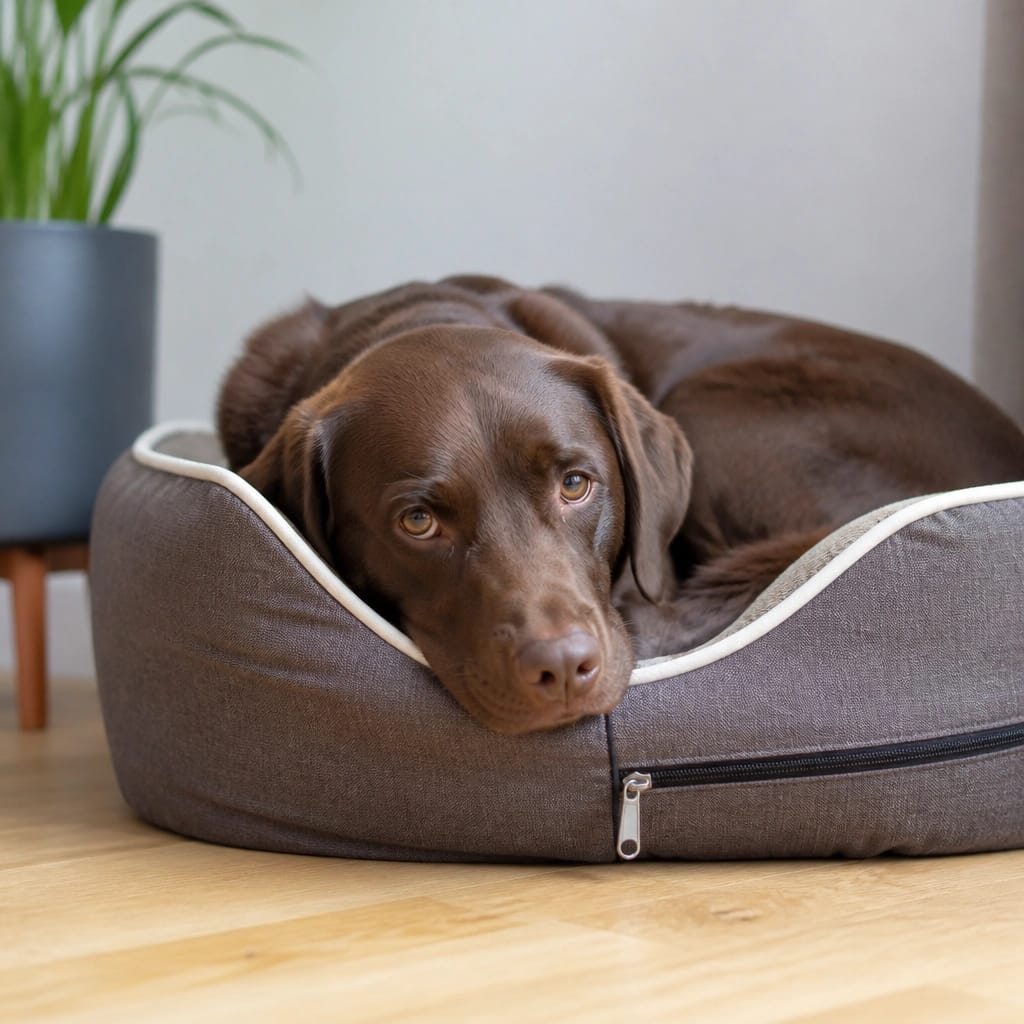
Why This Question Matters More Than It Seems
Dog bed zippers are a convenience feature. They let you remove the cover for washing, which is essential for hygiene. But that convenience comes with a trade-off.
A zipper is a foreign object sewn into something your dog sleeps on every night.
Dogs explore the world with their mouths. Puppies test everything with their teeth. Adult dogs with separation anxiety or boredom may turn to their bed as a chew toy.
That means the zipper, pull tab, and surrounding fabric all become potential hazards.
The stakes are higher than most owners realize. A swallowed zipper pull tab can cause an intestinal blockage requiring surgery. Those surgeries cost anywhere from $1,500 to $7,000 depending on severity.
The recovery period is rough for both dog and owner.
This isn’t about scaring you. It’s about giving you the information to make an informed choice. If your dog has a habit of chewing their bedding, you need to know what you’re working with.
That’s why we cover the specific risks and what to look for when checking your dog’s bed for safety.
What Makes a Dog Bed Zipper Safe or Dangerous
Not all zippers are created equal. The safety of a dog bed zipper depends on several factors that work together. Understanding these will help you evaluate any bed you already own or are considering buying.
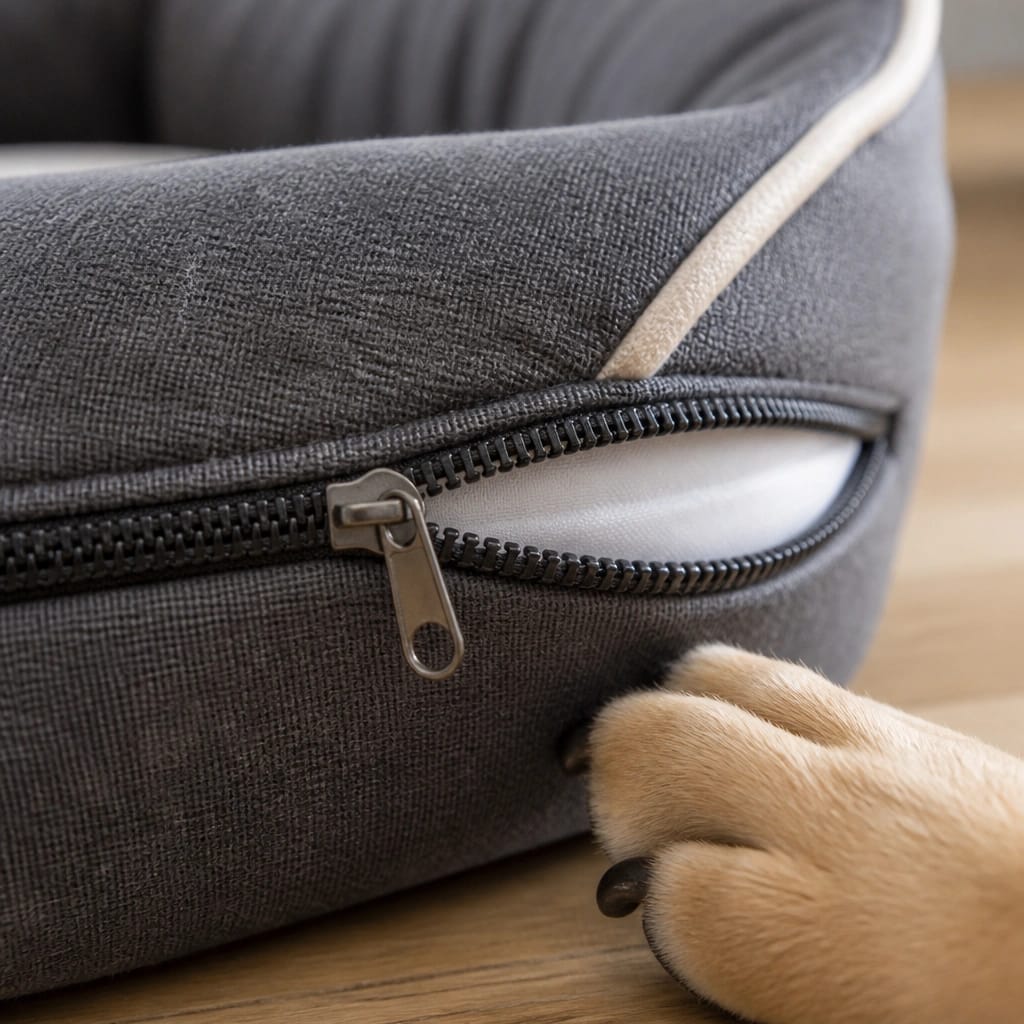
Zipper Size and Gauge
Zipper gauges are numbered from small to large. A #3 zipper is lightweight and common on cheap beds. A #8 or #10 zipper is heavy-duty and much harder for a dog to damage.
The gauge matters because thicker zipper teeth are more difficult to bite through. They also resist bending and breaking. If a dog manages to crack a plastic zipper tooth, the sharp edges can cut gums or get swallowed.
Metal zippers are stronger than plastic ones. But they can corrode over time, especially after repeated washing. Rusted metal zippers become weak and may develop sharp edges.
Stainless steel or nickel-plated zippers hold up better.
Zipper Placement (Where It Sits on the Bed)
Where the zipper sits on the bed is just as important as what it’s made of. A zipper placed on the bottom of the bed or along a hidden seam is much safer than one on the top surface.
Dogs naturally target edges and corners when they chew. A zipper running along the top edge of the bed is an invitation. A zipper tucked underneath or along a recessed seam is much harder to reach.
Some premium beds use a recessed zipper channel. This means the zipper sits in a fabric groove, making it nearly impossible for a dog to get their teeth on it. That’s a smart design choice worth looking for.
Zipper Pull Tab Design
The small plastic or metal tab at the end of the zipper is the most common ingestion hazard. It’s small, easy to chew off, and easy to swallow.
Some manufacturers use breakaway pull tabs. These are designed to snap off if enough force is applied, which reduces the risk of a dog chewing them off and swallowing them. Other tabs are sewn into a fabric flap that covers the zipper end entirely.
If your dog’s bed has a dangling pull tab, you can trim it down or remove it. Just leave enough material to grip when you need to open and close the zipper.
Fabric and Seam Quality Around the Zipper
A zipper is only as safe as the fabric holding it in place. If the seam is weak, the zipper can separate from the cover. That creates sharp fabric edges and exposes the zipper track.
High-denier fabrics like 600D or 1200D polyester are more resistant to chewing. They also hold zippers more securely. Double-stitched or reinforced seams add another layer of protection.
Cheap beds often use single-stitched seams that can pull apart with minimal effort. If you can see the zipper tape through the fabric, the cover is too thin to be safe around a determined chewer.
The Real Risks: What Vets Actually See
Veterinary emergency rooms see a handful of zipper-related incidents every year. They’re not extremely common, but they’re serious enough to warrant attention. The three main risks are ingestion, cuts, and entrapment.
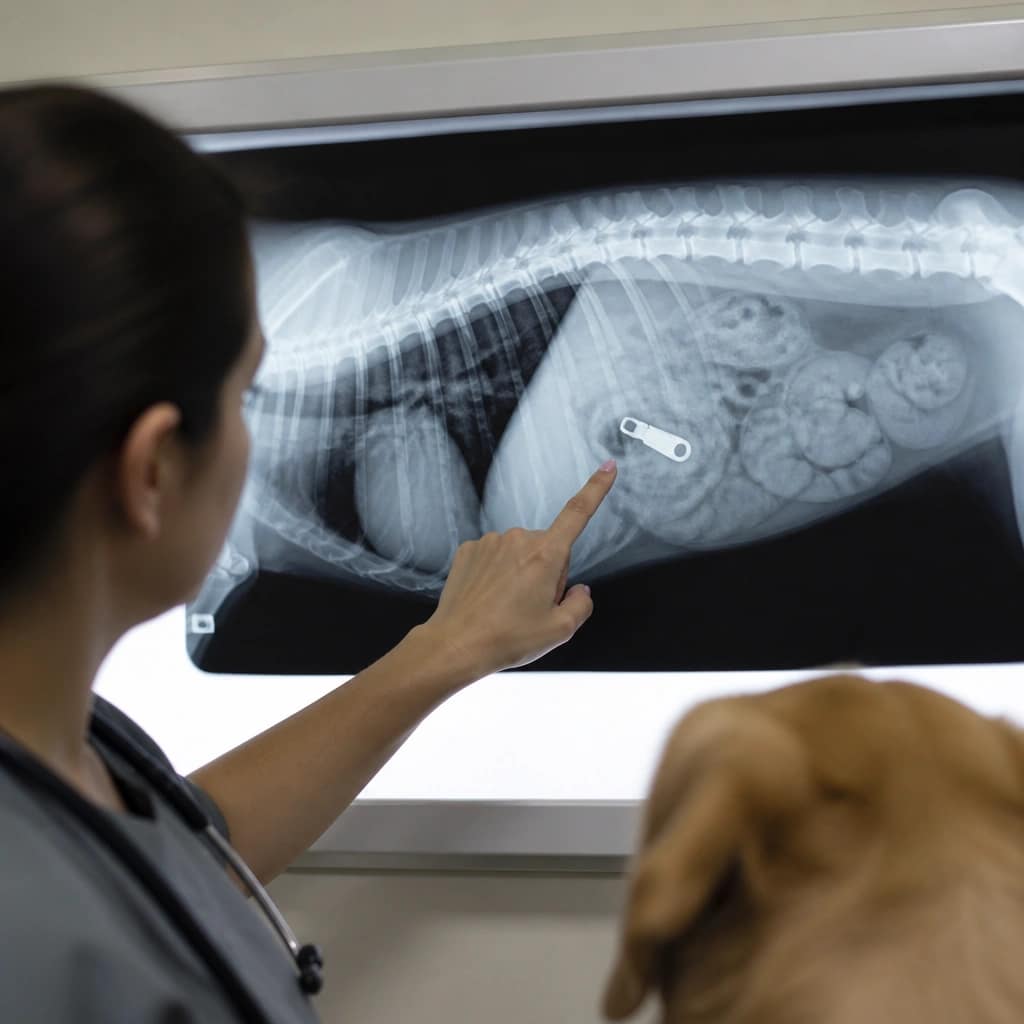
Ingestion and Intestinal Blockage
This is the most dangerous scenario. A dog chews off the zipper pull tab, a zipper tooth, or a piece of the zipper tape and swallows it. Small plastic pieces can pass through the digestive system.
Larger or sharper pieces can get stuck.
Intestinal blockage is a life-threatening emergency. Symptoms include vomiting, loss of appetite, abdominal pain, and constipation. If you suspect your dog swallowed a zipper part, contact your vet or the ASPCA Animal Poison Control Center immediately.
The AVMA notes that foreign body ingestion is one of the most common emergency surgeries in dogs. Zipper parts are small enough to be overlooked until symptoms appear.
Cuts, Scratches, and Paw Injuries
A damaged zipper can develop sharp edges. Metal zippers that have been chewed or corroded can cut a dog’s gums, tongue, or paws. Dogs that dig and scratch at their bed before lying down are especially at risk.
If you notice your dog avoiding their bed, check the zipper area. A small cut on the paw pad or tongue can make the bed feel unsafe. Dogs can’t tell you what’s wrong, so they just stop using the bed.
Some dogs develop a habit of chewing at the zipper area out of boredom or anxiety. This can create a cycle where the damaged zipper becomes more interesting and more dangerous over time.
Dogs Learning to Open Zippers
This sounds surprising, but some smart dogs figure out how to unzip their bed covers. They grab the pull tab with their teeth and pull. Once the cover is open, they have access to the foam filling.
Dogs that rip open their bed covers often end up eating foam pieces. Foam ingestion is another foreign body risk. This is why some owners end up switching to a bed with a zipperless design or a locking zipper.
If your dog has figured out how to open the zipper, you need to address the root cause. Boredom, anxiety, or a need for mental stimulation are common triggers.
Signs Your Dog’s Bed Zipper Has Become Unsafe
You don’t need to inspect the bed every day. But a quick check once a week can catch problems before they become emergencies. Here’s what to look for.
Missing pull tab. If the pull tab is gone, your dog likely chewed it off. Check the floor and their stool for the missing piece. If you find it, remove the rest of the tab and monitor your dog for symptoms.
Bent or broken zipper teeth. Run your finger along the zipper track. If you feel sharp edges or gaps, the zipper is compromised. Replace the cover or the entire bed.
Fabric fraying around the zipper. This is a sign that your dog has been chewing or scratching at the area. Once the fabric weakens, the zipper can separate from the cover.
Zipper doesn’t close smoothly. A zipper that sticks or skips teeth is likely damaged. It may also have fabric caught in the track. Both issues can lead to the zipper failing entirely.
Visible rust or corrosion. This is more common on beds that are washed frequently or stored in humid areas. Rust weakens the zipper and creates sharp edges.
Your dog suddenly avoids the bed. If your dog used to sleep on their bed and now ignores it, the zipper or something else about the bed may be bothering them. Check for any visible damage or discomfort.
How to Make a Zippered Dog Bed Safer
You don’t always need to replace the bed. There are several practical steps you can take to reduce the risks associated with dog bed zippers.
Inspect Before Every Wash
Make it a habit to check the zipper before you throw the cover in the washing machine. Washing a damaged zipper can make it worse. Loose threads can get caught in the mechanism, and broken teeth can snag other fabrics.
Run the zipper all the way open and closed a few times. If it catches or feels rough, inspect it more closely. If you find damage, repair or replace the cover before using it again.
Add a Fabric Zipper Flap
This is one of the most effective modifications you can make. A fabric zipper flap is a strip of fabric sewn over the zipper track. It covers the zipper entirely, making it inaccessible to your dog.
You can sew a flap yourself if you’re handy with a needle and thread. Some pet bed manufacturers sell replacement covers with built-in zipper flaps. If you’re buying a new bed, look for one that includes this feature.
Reinforce Weak Seams
If the fabric around the zipper feels thin or loose, reinforce it. You can sew a strip of heavy-duty fabric along the seam using a strong thread. This prevents the zipper from pulling away from the cover.
For dogs that are heavy chewers, consider using a chew-resistant material like ballistic nylon or Cordura for the reinforcement. These materials are designed to withstand aggressive chewing.
Trim or Replace Hazardous Pull Tabs
If the pull tab is small enough to fit in your dog’s mouth, trim it down. Leave just enough material to grip when opening the zipper. You can also replace the pull tab with a larger, more secure option.
Some owners use a small piece of paracord or a key ring as a replacement pull tab. Just make sure the replacement is too large to swallow and securely attached.
When the Zipper Is the Problem, Not the Bed
Sometimes the zipper itself is fine. The real issue is why your dog targets it in the first place.
Chewing at the zipper area often signals boredom, anxiety, or a need for mental stimulation. Dogs that lack sufficient exercise or enrichment will find their own outlets. Your bed’s zipper becomes a convenient target.
If your dog is otherwise calm and only chews occasionally, the zipper is probably safe enough. But if they’re persistently chewing at the same spot, address the underlying behavior. A tired dog is less likely to destroy their bedding.
Zipperless Alternatives: Do You Need Them?
Zipperless dog beds exist for a reason. They eliminate the risk entirely by removing the zipper from the equation.
Envelope-Style Covers
These covers use a flap that tucks into itself. No zipper, no hardware. They’re common on crate mats and smaller beds.
The trade-off is that the cover can shift or come loose if your dog digs aggressively.
One-Piece Beds (No Removable Cover)
Some beds are a single unit with no removable cover at all. You wash the entire bed. This eliminates the zipper but makes cleaning more difficult.
These beds are best for dogs that don’t have accidents or get dirty often.
Heavy-Duty “Chew Proof” Beds
These beds use reinforced stitching and ballistic fabrics. Some have hidden zippers with protective flaps. Others use a completely zipperless design.
They’re heavier and more expensive, but they’re built for dogs that destroy standard beds.
Dogs That Are Higher Risk (and Dogs That Are Fine)
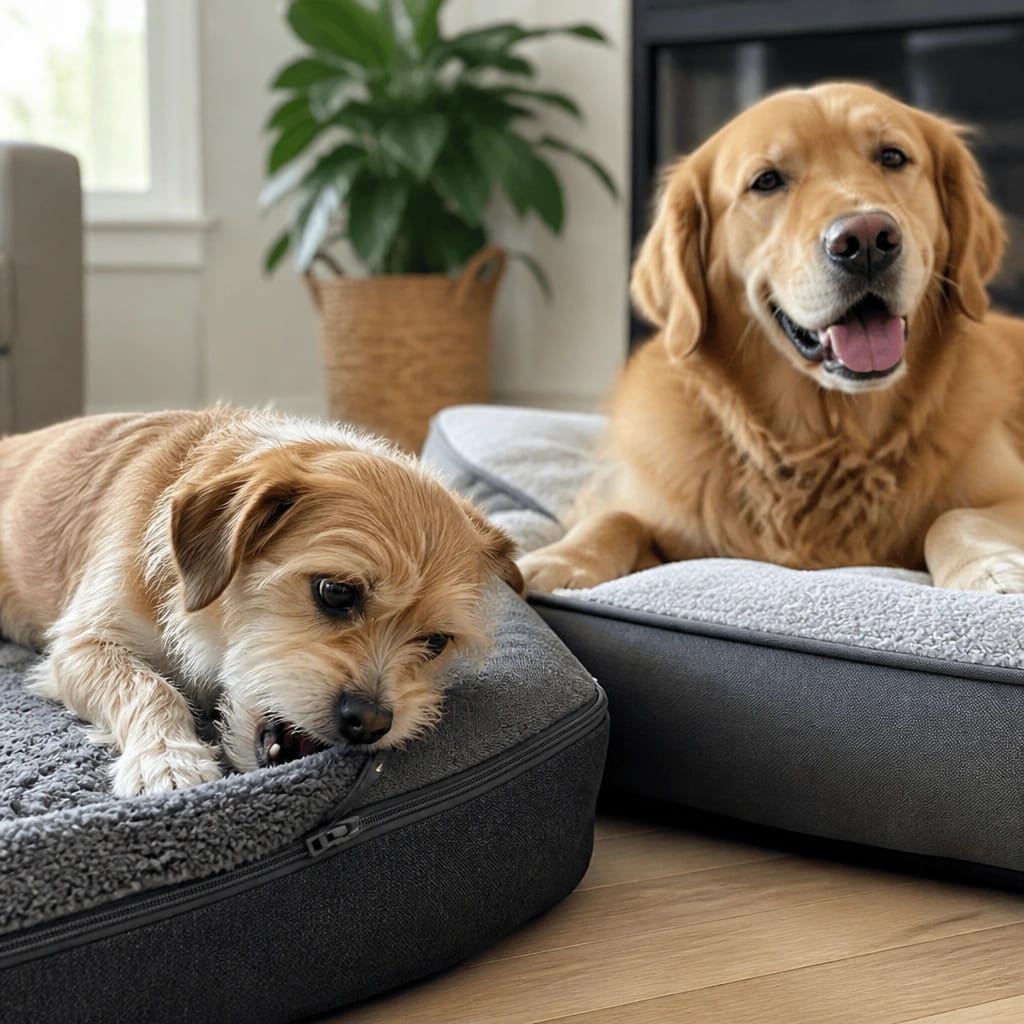
Not every dog needs a zipperless bed. The risk level depends on the individual dog.
Higher risk dogs include:
- Puppies under 12 months that are still teething
- Dogs with a history of chewing bedding or furniture
- Dogs with separation anxiety that are left alone
- Heavy chewers that target seams and edges
Lower risk dogs include:
- Senior dogs that sleep quietly
- Dogs that never chew objects
- Dogs that are supervised when using the bed
- Small breeds with less jaw strength
If your dog falls into the higher risk category, consider a zipperless or reinforced bed. If they’re lower risk, a standard zippered bed with a fabric flap is likely fine.
What to Do If Your Dog Swallows Part of a Zipper
Act fast. Time matters in foreign body cases.
First, check your dog’s mouth for any remaining pieces. Remove them carefully. Watch for signs of distress: vomiting, drooling, pawing at the mouth, or loss of appetite.
Contact your veterinarian or the ASPCA Animal Poison Control Center immediately. Do not wait for symptoms to appear. Some objects pass without issue, but you can’t know that without a professional assessment.
If your vet recommends monitoring at home, check your dog’s stool for the next 48 hours. If the object doesn’t pass or symptoms develop, follow up with your vet. Surgery may be needed, and early intervention improves outcomes.
Common Mistakes Owners Make With Zippered Beds
The most common mistake is ignoring the zipper entirely. Many owners never check the zipper until a problem appears. A quick weekly inspection takes thirty seconds and prevents emergencies.
Another mistake is buying the cheapest bed available. Budget beds often use thin fabric and lightweight zippers. They’re more likely to fail and more likely to cause injuries.
A quality bed costs more upfront but saves money and stress in the long run.
Some owners try to sew a damaged zipper back into place. That’s usually a temporary fix at best. If the zipper or surrounding fabric is compromised, replace the cover.
A patched zipper is a weak point waiting to fail.
When to Throw Away the Bed (Not Just the Cover)
If the zipper has failed completely or the fabric around it is torn, the whole bed may need replacing. A damaged cover exposes the inner foam. Dogs can chew and swallow foam pieces, which is another foreign body risk.
Replace the bed if the foam itself is damaged, compressed, or stained. Old foam can harbor bacteria and allergens. A new cover on bad foam isn’t doing your dog any favors.
Quick Decision Guide: Keep, Modify, or Replace
If the zipper is intact and your dog doesn’t chew it, keep the bed. Add a fabric flap for extra safety.
If the zipper is damaged but the cover is otherwise fine, replace the cover. Look for a replacement with a recessed zipper or built-in flap.
If your dog has chewed through the zipper or the cover, or if they’ve swallowed any part of the hardware, replace the entire bed. Consider a zipperless design or a heavy-duty chew proof option.
Frequently Asked Questions
Are all dog bed zippers dangerous?
No. Most are safe for dogs that don’t chew them. The danger comes from ingestion, sharp edges, or entrapment.
Heavy-duty zippers with recessed placement and breakaway pulls are the safest option.
Can a dog swallow a zipper pull tab?
Yes. Pull tabs are small enough to fit in a dog’s mouth. Swallowing one can cause an intestinal blockage.
If you suspect your dog swallowed a zipper part, contact your vet immediately.
How do I make my dog’s zippered bed safer?
Inspect the zipper weekly. Add a fabric flap over the zipper track. Trim or remove small pull tabs.
Reinforce weak seams. If your dog is a chewer, consider a zipperless bed.
What should I do if my dog chews the zipper?
Remove the bed immediately. Check for missing pieces. If your dog swallowed any hardware, call your vet.
Replace the cover or bed with a more durable option.
Are zipperless beds better for dogs?
They eliminate the zipper risk entirely. But they’re harder to clean and may not fit all bed styles. For heavy chewers, a zipperless design is usually the safer choice.
How often should I check my dog’s bed zipper?
Once a week is sufficient for most dogs. Check more often if your dog is a known chewer or if you notice any damage. Quick inspections prevent emergencies.
The safest bed is the one that matches your dog’s behavior. A calm dog does fine with a zippered cover and a fabric flap. A determined chewer needs a zipperless or heavy-duty build.
Inspect regularly, address problems early, and choose the right bed for your dog’s habits.


