

Why Won’t My Dog Use Their New Bed?
Most dogs refuse a new bed because it doesn’t smell like them. They also reject beds that are too small, too firm, or the wrong style. Location matters too.
A bed in a high-traffic area feels unsafe. Health issues like arthritis can also make certain beds uncomfortable.
Your dog has a brand-new bed, but they keep sleeping on the cold floor. It’s frustrating, but it’s also incredibly common. If you’re asking yourself, “Why Won’t My Dog Use Their New Bed?”, the answer usually comes down to scent, size, style, or location.
Dogs are creatures of habit. They sleep where they feel safe, and a new bed doesn’t automatically feel safe. Most dogs need a transition period of three to seven days to accept a new sleeping surface.
As of 2026, manufacturer specifications indicate that most memory foam beds require 24 to 48 hours to fully expand after unboxing. Let’s break down exactly why your dog is avoiding their new bed and how to fix it.
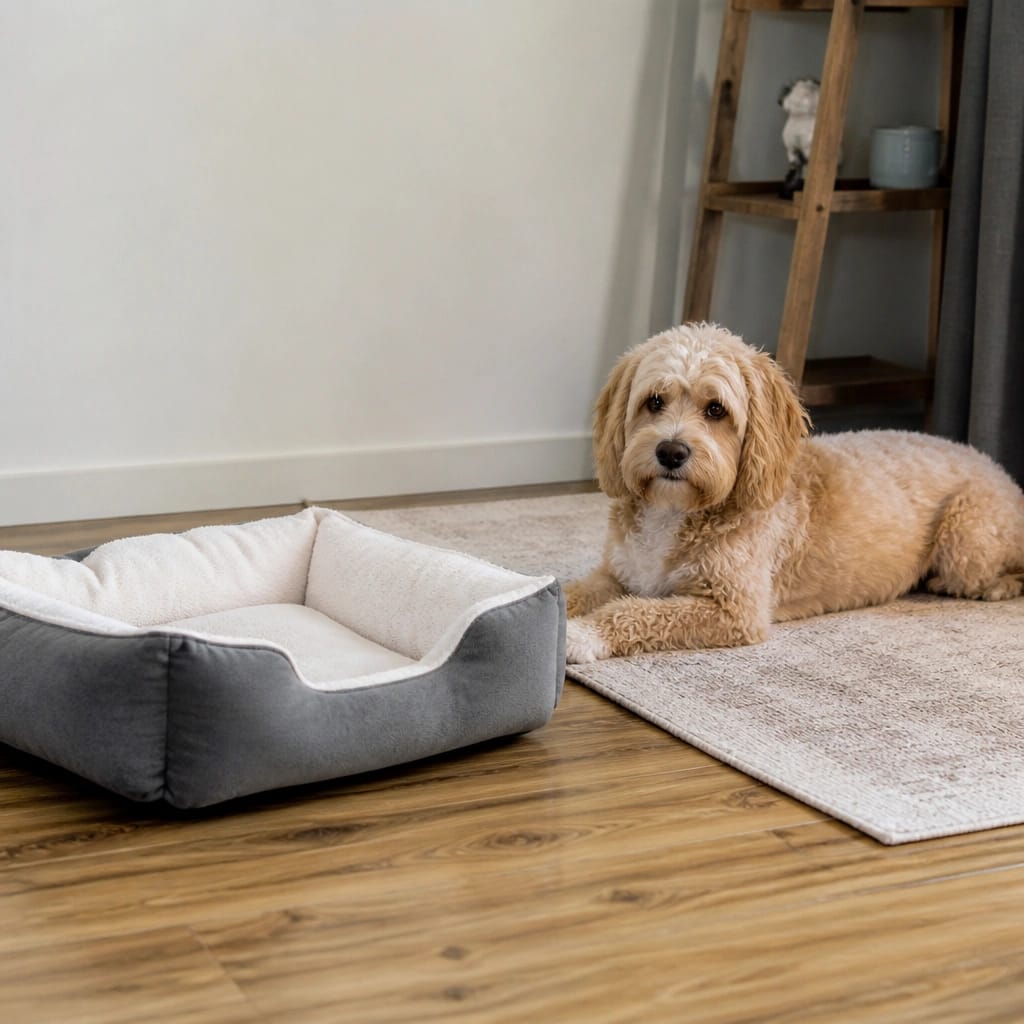
The Real Reasons Behind Bed Refusal
Scent and Familiarity Issues
Your dog’s nose is their primary way of understanding the world. A new bed smells like the factory, the packaging, and your home. It doesn’t smell like them.
In our research, the number one reason dogs avoid new beds is the absence of their own scent.
The fix is simple. Rub an unwashed blanket or worn t-shirt over the bed’s surface. Leave it on the bed for the first few days.
This transfers your scent and your dog’s scent onto the fabric. If your dog already has a favorite blanket, place that on the bed immediately.
Size and Fit Problems
Dogs need to stretch out or curl up comfortably. A bed that’s too small makes them feel cramped. A bed that’s too large can feel exposed and unsafe.
Either way, they’ll choose the floor.
Measure your dog from the tip of their nose to the base of their tail. Add 10 to 15 centimeters to that number. That’s your ideal bed length.
For a more detailed breakdown, consult our guide on finding the right size based on your dog’s weight.
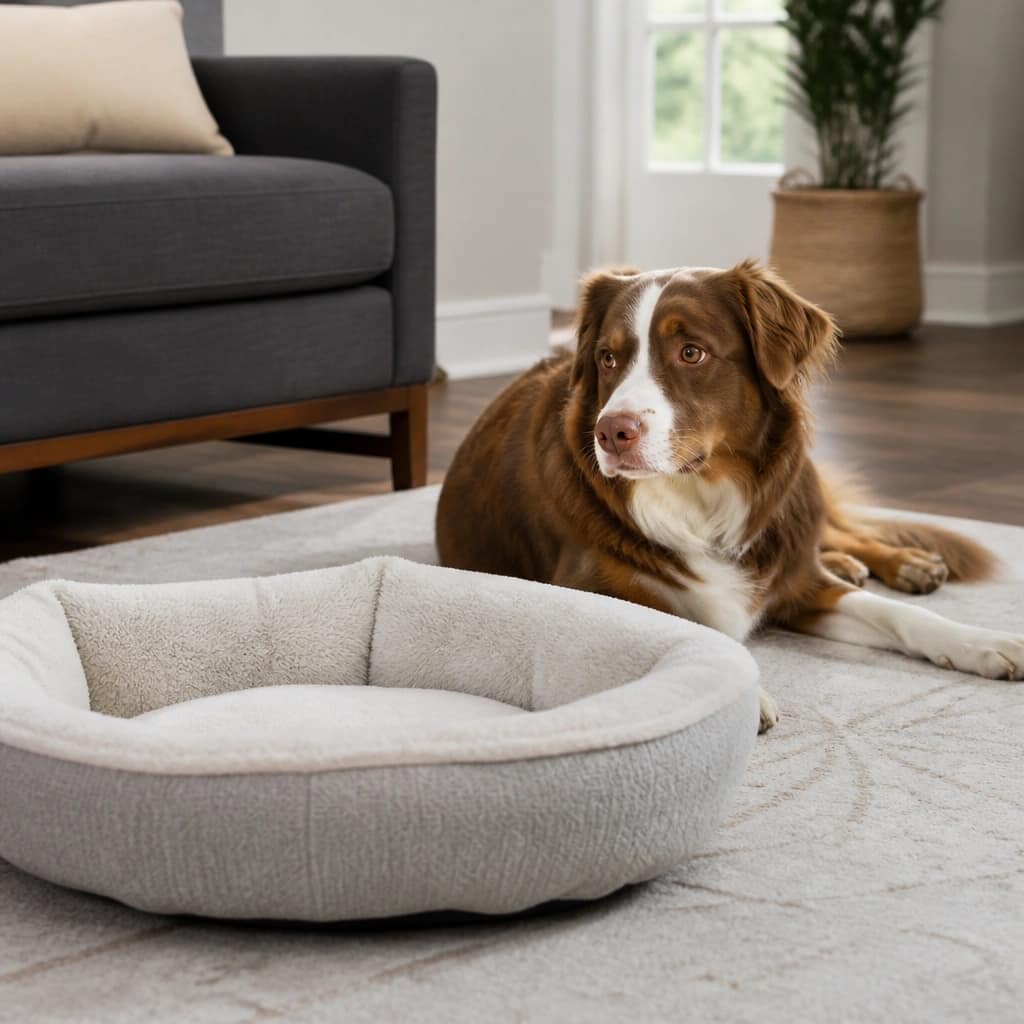
Wrong Bed Style for Your Dog’s Sleeping Preferences
Every dog has a preferred sleeping position. Curlers need a bolster dog bed with raised edges. Burrowers need a cavehooded dog bed they can dive into.
Sprawlers need a flat, open mat. If you bought a style that conflicts with your dog’s instincts, they’ll reject it.
Watch your dog sleep on the floor. Do they curl into a tight ball? Do they stretch out flat?
Do they push their head against the sofa cushions? Match the bed style to their natural position. If your dog loves to dig and nest, they’ll likely prefer the calming donut dog bed which offers a contoured nest shape.
Location and Environmental Factors
Location is a major factor. Dogs avoid beds placed in noisy hallways, near air vents, or in high-traffic areas. They need a quiet, sheltered spot where they feel secure.
Move the bed to a corner of the living room or your bedroom. Place it away from doors, windows, and heating vents. If your dog is used to sleeping in a crate, place the bed just outside the crate door.
This maintains a sense of familiarity while transitioning to an open bed.
Negative Associations or Past Experiences
If you’ve ever forced your dog onto the bed, scolded them for getting off, or used the bed as a timeout spot, they may associate it with stress. Dogs have long memories. A bad experience can make them avoid the bed for weeks.
If your dog has a history of being punished around their sleeping area, you’ll need to rebuild trust. Start by simply placing high-value treats on the bed. Let your dog approach on their own terms.
Never push or force them. This is especially relevant if your dog also refuses to sleep on the floor, which we cover in our article on why dogs reject the floor.
Underlying Health Issues That Affect Sleeping
Sometimes the problem isn’t the bed. It’s pain. Arthritis, hip dysplasia, or joint stiffness can make a too-soft or too-firm bed uncomfortable.
If your dog is older or recovering from surgery, they may avoid the bed because it hurts to get in or out.
Watch for signs of pain. Limping, reluctance to climb stairs, or stiffness after waking are red flags. A low-profile memory foam bed with a firm base is easier for senior dogs to enter and exit.
If these symptoms persist, consult your veterinarian. We discuss supportive options in our memory foam dog bed guide.
How to Tell Which Reason Applies to Your Dog
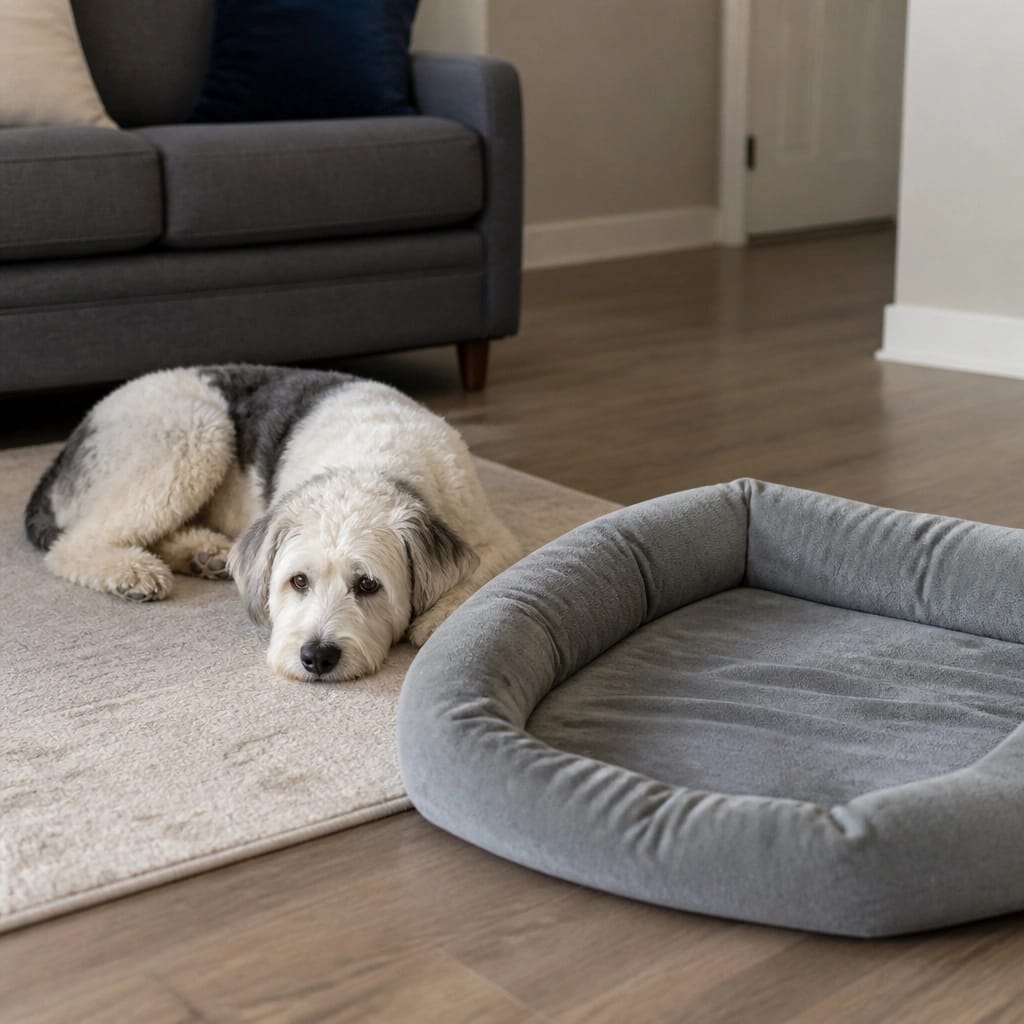
Start with observation. Watch your dog’s behavior around the bed for two days without intervening. Take notes.
If your dog sniffs the bed but walks away, it’s likely a scent issue. If they try to lie down but keep shifting or getting up, it’s likely a comfort or size issue. If they approach the bed but won’t step on it, it may be a negative association or location issue.
| Behavior | Likely Cause |
|---|---|
| Avoids bed entirely, sleeps elsewhere | Scent, location, or negative association |
| Sniffs bed, circles, but leaves | Scent or size |
| Lies down briefly, then gets up | Comfort, firmness, or health |
| Tries to dig or scratch aggressively | Style mismatch or nesting instinct |
| Pants, limps, or hesitates to lie down | Possible pain or health issue |
Checking Bed Size and Fit
Place your dog next to the bed. If their body extends beyond the edges, the bed is too small. If the bed swallows them completely and they can’t find the edges, it’s too large.
A good rule of thumb is that your dog should fit comfortably with room to spare, but still feel the raised edges or sides if the bed has them. For a more detailed breakdown, check our dog bed size chart by weight to confirm your choice.
Step-by-Step Guide to Getting Your Dog to Use Their Bed
Step 1: Make the Bed Smell Like Home
Unbox the bed and let it air out for 24 hours. Memory foam often has a temporary off-gassing smell. Wash the cover according to the manufacturer’s instructions.
Then rub an unwashed item of your clothing over the entire surface.
Step 2: Position the Bed in the Right Spot
Place the bed in a quiet, low-traffic area. Ideally, it should be near where your dog already sleeps. If your dog sleeps in your bedroom, put the bed next to your bed.
If they sleep in the living room, put it near the sofa but not directly in the path of foot traffic.
Step 3: Use Positive Reinforcement
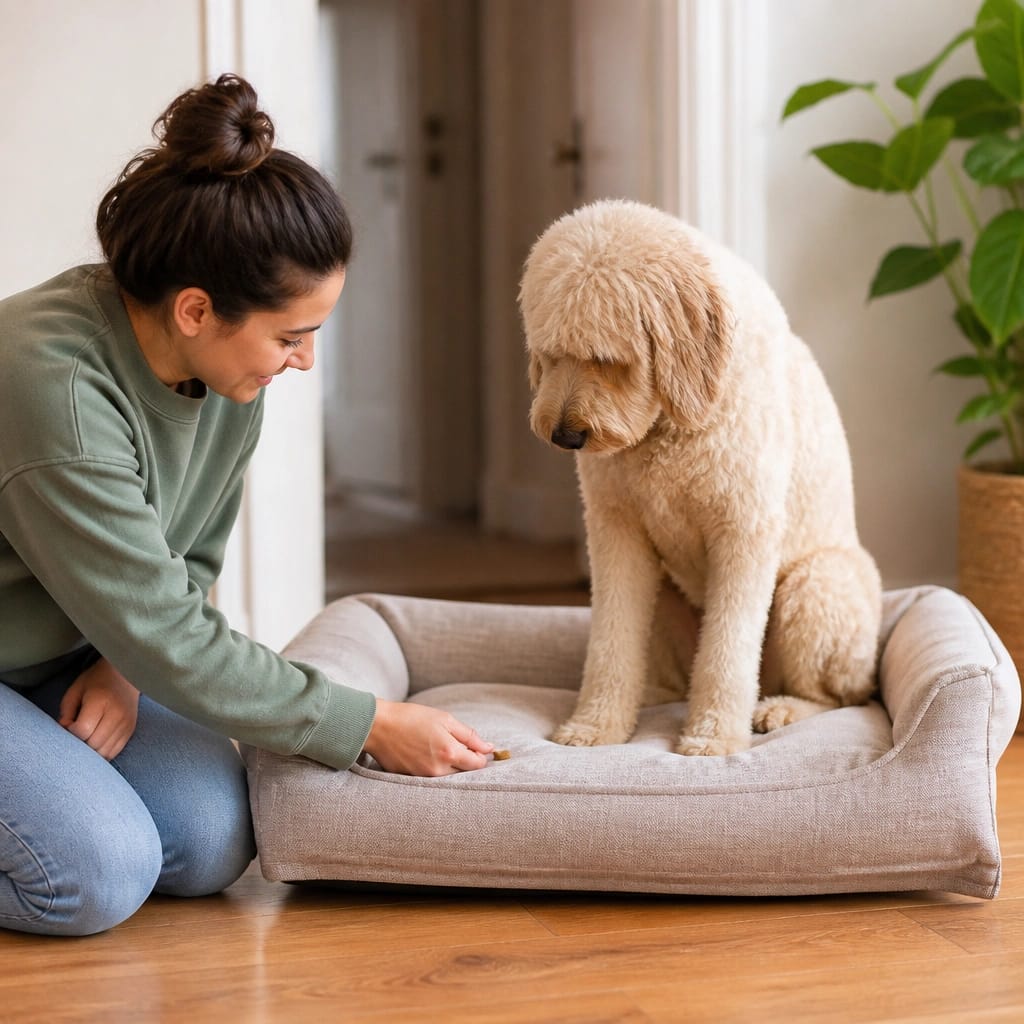
Toss a treat onto the bed every time your dog walks past it. Don’t demand anything. Just let them discover that the bed equals rewards.
Use high-value treats like chicken or cheese. Repeat this several times a day.
Step 4: Gradual Introductions and Short Sessions
Once your dog willingly steps on the bed to get treats, encourage them to stay. Give them a chew toy or a stuffed Kong while they’re on the bed. Start with short sessions of two to three minutes.
Gradually increase the duration over several days.
Insert image of dog being rewarded on bed
Step 5: Be Consistent and Patient
Consistency is key. If your dog gets off the bed and lies on the floor, gently guide them back. Don’t scold.
Just redirect. With repetition, the bed becomes their default spot. Most dogs accept a new bed within a week.
If your dog is especially stubborn, review our complete guide to dog beds for additional context on what they need.
Common Mistakes Owners Make When Introducing a New Bed
The biggest mistake is forcing the issue. Pushing your dog onto the bed creates a negative association that’s hard to undo. Another common error is placing the bed in a bad location, like near a washing machine or a door that opens frequently.
Don’t remove your dog’s old blanket or crate mat right away. If they’re used to it, keep it nearby. You can transition gradually by placing the new bed next to the old one, then slowly moving the old one away.
Ignoring potential pain is another mistake. If your dog is older and suddenly refuses to sleep on any surface, it’s a health warning sign. If your dog has always preferred fabric that retains warmth, a heated option might be worth considering once the basics are covered.
We explore this in our heated dog bed guide. And if your dog is a heavy chewer or digger, a durable, waterproof dog bed will survive the introduction period better than a delicate one.


