

How to Protect an Outdoor Dog Bed From Sun Damage
Your dog’s outdoor bed is getting cooked. The fabric fades. The foam turns brittle.
The bed that looked great in spring looks sorry by fall. If you’re wondering how to protect an outdoor dog bed from sun damage, the answer changes based on your bed’s material and how much direct sunlight it gets.
Manufacturer specs confirm that untreated outdoor fabric exposed to direct UV for eight hours a day can lose up to 50% of its tensile strength within six months. That’s your bed turning into dust before your eyes. Let’s walk through what’s really happening and what you can do about it.
Quick Answer
The best way to protect an outdoor dog bed from sun damage is to combine shade with a UV fabric protectant. Move the bed out of direct sun during peak hours. Choose a bed made from solution-dyed fabric for long-term durability.
Reapply protectant every three months or after washing.
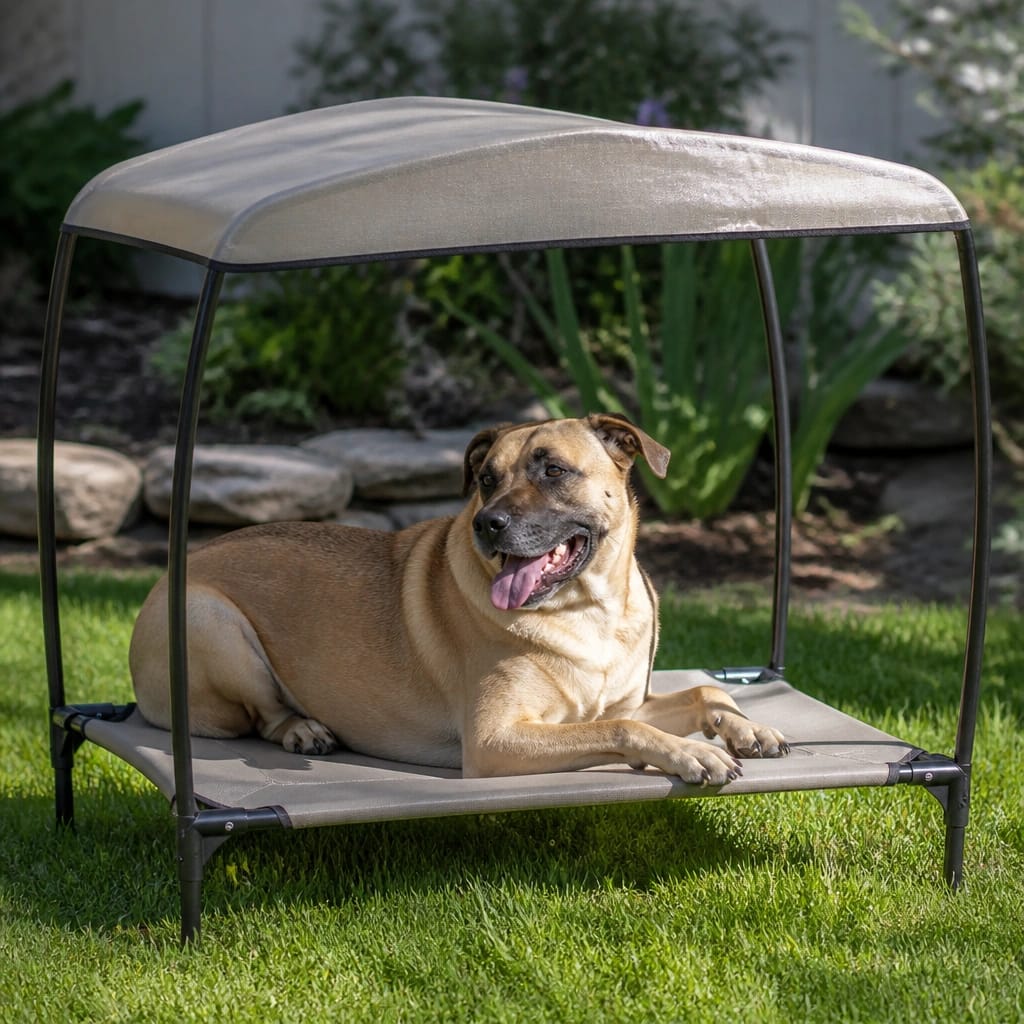
Why Sun Damage Is a Real Problem for Outdoor Dog Beds
Outdoor dog beds face a completely different environment than indoor ones. They bake in direct sunlight for hours. They get rained on.
They deal with temperature swings that indoor beds never see.
The sun is the biggest culprit. UV radiation doesn’t just fade the color. It breaks down the molecular structure of the fabric and the foam inside.
What starts as a comfortable, supportive bed turns into a stiff, faded, crumbly mess.
This is a real problem because it’s not just cosmetic. A bed that’s been degraded by the sun offers less cushioning and support. Your dog ends up sleeping on a sad, flattened pancake.
And if the foam starts to break down, your dog can inhale those particles.
The good news? You can prevent most of this damage. A few simple steps can double or triple the life of an outdoor bed.
The key is understanding what you’re up against.
How UV Rays Actually Damage Your Dog Bed
UV radiation has two main effects on outdoor dog beds. First, it attacks the fabric’s polymer chains. This makes the fibers weaker and more likely to tear.
That’s why a bed that seemed fine suddenly develops a rip when your dog jumps on it.
Second, UV light triggers oxidation in the foam. Memory foam and polyurethane foam both suffer from this. The foam turns yellow, then crumbly.
It loses its ability to bounce back.
The process is accelerated by heat. Dark-colored beds absorb more heat, which speeds up the chemical reactions. A black bed in full sun can reach surface temperatures well over 130 degrees Fahrenheit.
That’s not just damaging to the bed. It’s uncomfortable for your dog.
The solution is to block or reflect that UV radiation before it reaches the materials. You have three main options, and which one you choose depends on your situation.
First, Assess Your Situation: What Kind of Bed Do You Have?
Before you grab a spray or a cover, take a close look at your bed. The material matters more than almost anything else.
Check the fabric type. Solution-dyed polyester or olefin fabric handles UV much better than regular polyester or nylon. Solution-dyed fabric has the color baked into the fiber itself, so fading is minimal. Regular fabric has dye only on the surface, which is why it fades fast.
Check the cover. Is it removable? If yes, you can buy a replacement cover made from UV-resistant material. That’s often the easiest fix.
If the cover is sewn on, you’re stuck with protection methods like sprays or shade.
Check the foam. Most outdoor beds use open-cell foam that soaks up moisture. Some use closed-cell foam that resists water. The foam type matters because UV damage combined with moisture creates mold problems.
Check the location. How many hours of direct sun does the bed get? Is it in full sun from 10 AM to 4 PM? That’s the danger zone.
A bed that gets only morning sun is much easier to protect.
Decision Tree: Which Protection Method Is Right for You?
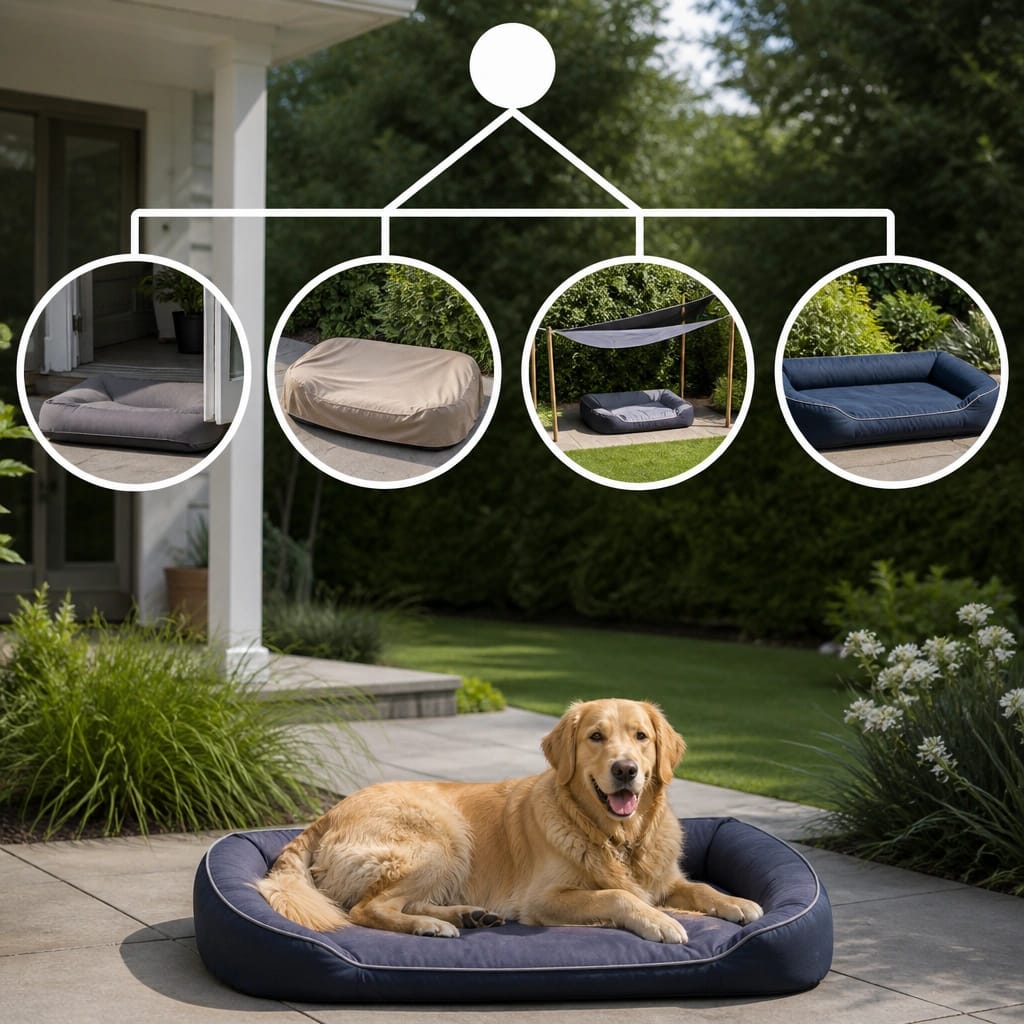
Here’s the simple decision tree to follow.
If you can move the bed indoors at night or during peak sun hours: Do that. It’s the simplest and most effective method. No spray, no cover, no fuss.
Just bring the bed inside when the sun is strongest. This works best for dog owners who are home during the day.
If you cannot move the bed but it has a removable cover: Buy a replacement cover made from UV-resistant fabric. Solution-dyed polyester or olefin covers are the best. They can take years of sun exposure without fading or weakening.
If the bed is sewn shut or you want to keep the existing cover: Use a UV fabric protectant spray. This adds a sacrificial layer that absorbs UV before it reaches the fabric. You need to reapply it every few months.
If you are buying a new bed: Choose one specifically designed for outdoor use. Look for solution-dyed fabric and closed-cell foam. These beds cost more upfront but last two to three times longer than regular beds left outside.
If the bed is in a spot that gets full sun all day: Add a shade structure. A simple patio umbrella, a shade cloth canopy, or even moving the bed under a table can reduce UV exposure by 80 percent or more.
How to Use a UV Fabric Protectant Spray (Step-by-Step)
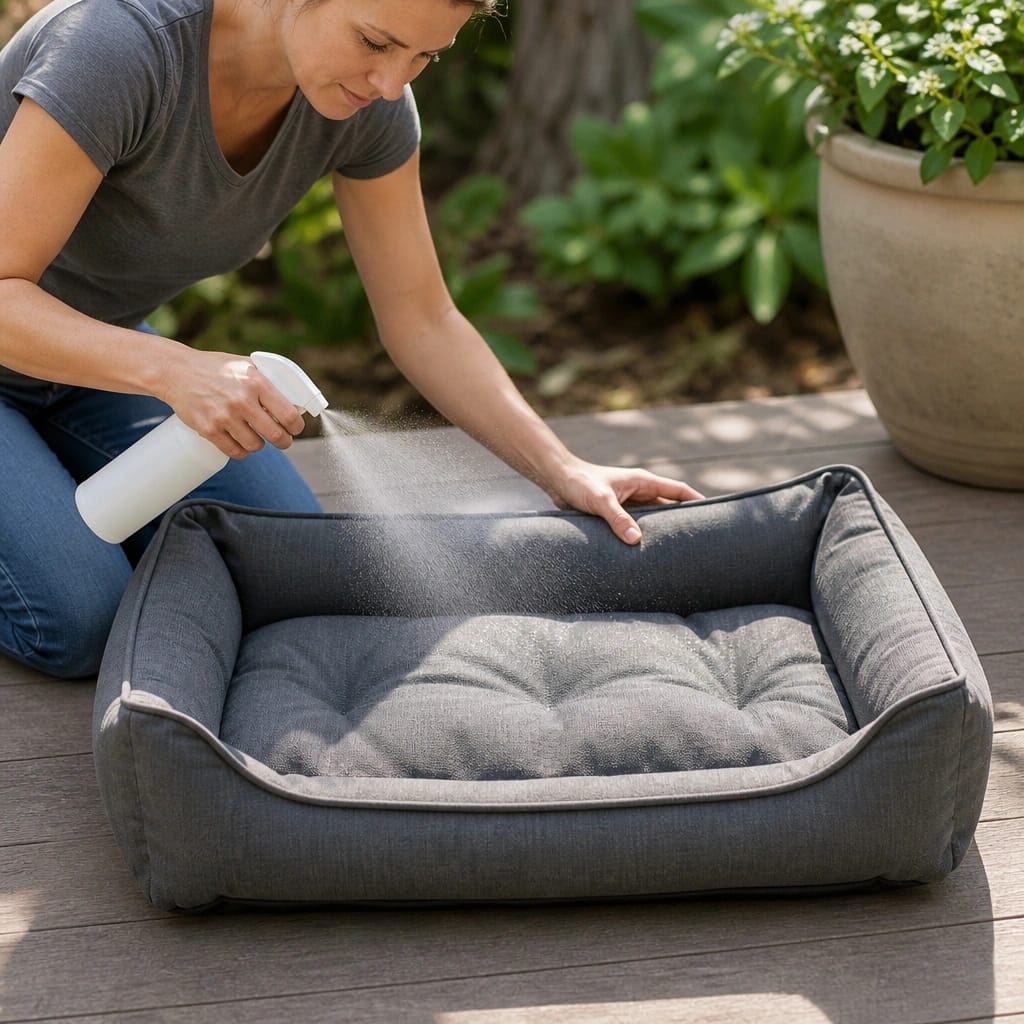
If you decide to go with a spray, here’s how to do it right.
Step 1: Clean the bed thoroughly. Dirt and oils block the protectant from bonding with the fabric. Use a mild soap and water. Rinse completely.
Let it dry fully. This takes 24 to 48 hours depending on humidity.
Step 2: Test on a small area first. Spray a hidden spot and check for color changes or staining. Most protectants are clear, but some can darken certain fabrics.
Step 3: Apply in a well-ventilated area. Do this outside. Spray evenly from about six inches away. Cover the entire surface.
Don’t oversaturate. A light, even coat is better than a heavy one.
Step 4: Let it cure for 24 hours. The spray needs time to bond with the fabric. Do not let the dog use the bed during this time. If you apply it and immediately put the bed outside, you’re wasting your effort.
Step 5: Reapply every three months. Mark your calendar. UV protectants break down over time, especially if the bed gets rained on. Reapply after any heavy rain or washing.
One thing to note: spray protectants are not permanent. They are a maintenance item. But they work well when applied correctly, and they’re much cheaper than replacing a bed every season.
How to Choose and Install a UV-Resistant Cover
If the bed has a removable cover, replacing it with a UV-resistant version is the best long-term fix. Look for solution-dyed polyester or olefin. These fabrics resist fading and weakening for years.
Measure your bed carefully before ordering. A tight fit protects the foam underneath. A loose cover bunches up and wears unevenly.
Slide the new cover on and zip it up fully. That’s the whole process. This is much simpler than reapplying spray every few months, and it works better for keeping any bed outside.
Using Shade: Simple Placement Tricks That Work
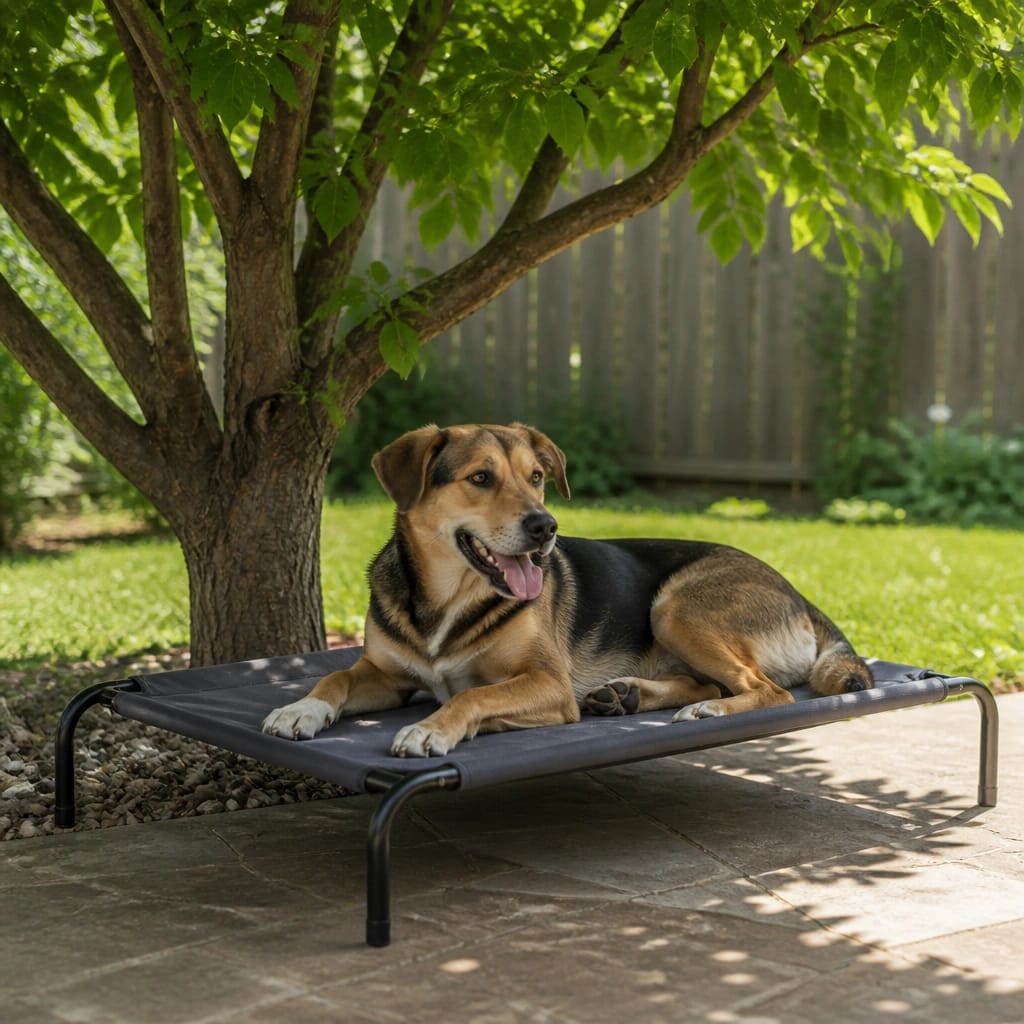
Shade blocks up to 80 percent of UV radiation. A bed under a patio umbrella or tree canopy lasts far longer than one in open sun. Even partial shade makes a big difference.
Morning sun is less damaging than afternoon sun. Place the bed on the north side of your house if you’re in the northern hemisphere. Check the NOAA UV Index for your area.
Days with a UV Index of 6 or higher require more aggressive protection. Think about where you put the bed before you spend money on sprays or covers.
Common Mistakes That Ruin Outdoor Dog Beds Fast
The biggest mistake is skipping reapplication of protectant spray. UV sprays break down over time. Set a reminder every three months.
Another common error is ignoring the foam. The cover may look fine, but the foam underneath could be crumbling. Check it every few months.
If it’s yellowing or losing shape, replace the bed. Don’t forget to clean the bed before applying protectant either. Dirt blocks the spray from bonding with the fabric.
And when you wash the cover, avoid harsh chemicals that weaken the fibers. The same goes for cleaning accidents properly.
How to Maintain Your Bed for Long-Term Protection
Brush off dirt weekly. Dirt holds moisture, which speeds up UV damage. Wash the cover monthly with mild detergent.
Air dry only. High heat from a dryer can damage UV coatings.
Reapply protectant spray every three months. Do it after a wash for best results. Check zippers regularly.
A broken zipper lets UV light reach the foam. Lubricate zippers with silicone spray. If you live in a wet climate, consider keeping moisture out with a waterproof liner underneath the cover.
Frequently Asked Questions
Can I use regular fabric protectant on a dog bed?
No. Regular fabric protectant lacks UV stabilizers. Use a product specifically labeled for UV protection on outdoor fabrics.
How often should I replace an outdoor dog bed?
With proper protection, two to three years. Without protection, expect six to twelve months. The foam usually fails before the fabric.
Is it safe to leave a dog bed outside overnight?
Moisture is the bigger risk. Dew and dampness can cause mold. Bring it in during wet weather or use a waterproof liner.
What’s the best fabric for outdoor dog beds?
Solution-dyed polyester or olefin with a UPF 50+ rating. These handle sun exposure much better than standard polyester or nylon.
Does a waterproof cover also protect against UV?
Not necessarily. Waterproof covers block moisture but may not block UV. Look for covers that specifically mention UV resistance or a UPF rating.
And if your dog tends to chew, choose a material that resists damage as well.
Quick Decision Guide: What to Do Right Now
Walk outside and check your bed. Touch the fabric. Look at the foam if you can.
If the fabric feels brittle or the foam is yellowing, replace the bed. If everything looks good, pick one action from the decision tree above. Move the bed to shade first.
That’s the cheapest and fastest fix.
Apply a UV protectant spray next. Or buy a UV-resistant cover if your bed has a removable one. Set a three-month reminder to reapply.
That’s it. Your bed will last two to three seasons instead of one.


