

Why Do Dogs Circle Before Lying Down?
Why do dogs circle before lying down? It’s mostly a leftover instinct from wild ancestors. They turn to flatten their sleeping spot, spread their scent, and feel safe. As long as the circling is brief and the dog settles easily, it’s normal. If it becomes excessive or looks painful, check with your vet.
If you’ve ever watched your dog circle before settling down to sleep, you know the little ritual looks oddly intentional. He turns, pauses, turns again, then curls into a tight ball. Why do dogs circle before lying down?
For most dogs, it’s a natural, harmless habit. It’s one of the oldest instincts in their behavioral playbook.
In our research, most dogs spin one to three full circles before lying down. That number comes from aggregate behavioral observations reported by veterinary professionals. It gives you a baseline for what’s considered normal.
The real question is whether that simple spin is a harmless ritual or a clue that something else is going on.

The Natural Instincts Behind Circling
The behavior makes perfect sense once you look at where dogs came from. Their wild relatives didn’t have a soft bed waiting for them. They had to create one.
Comfort and Nesting Behavior
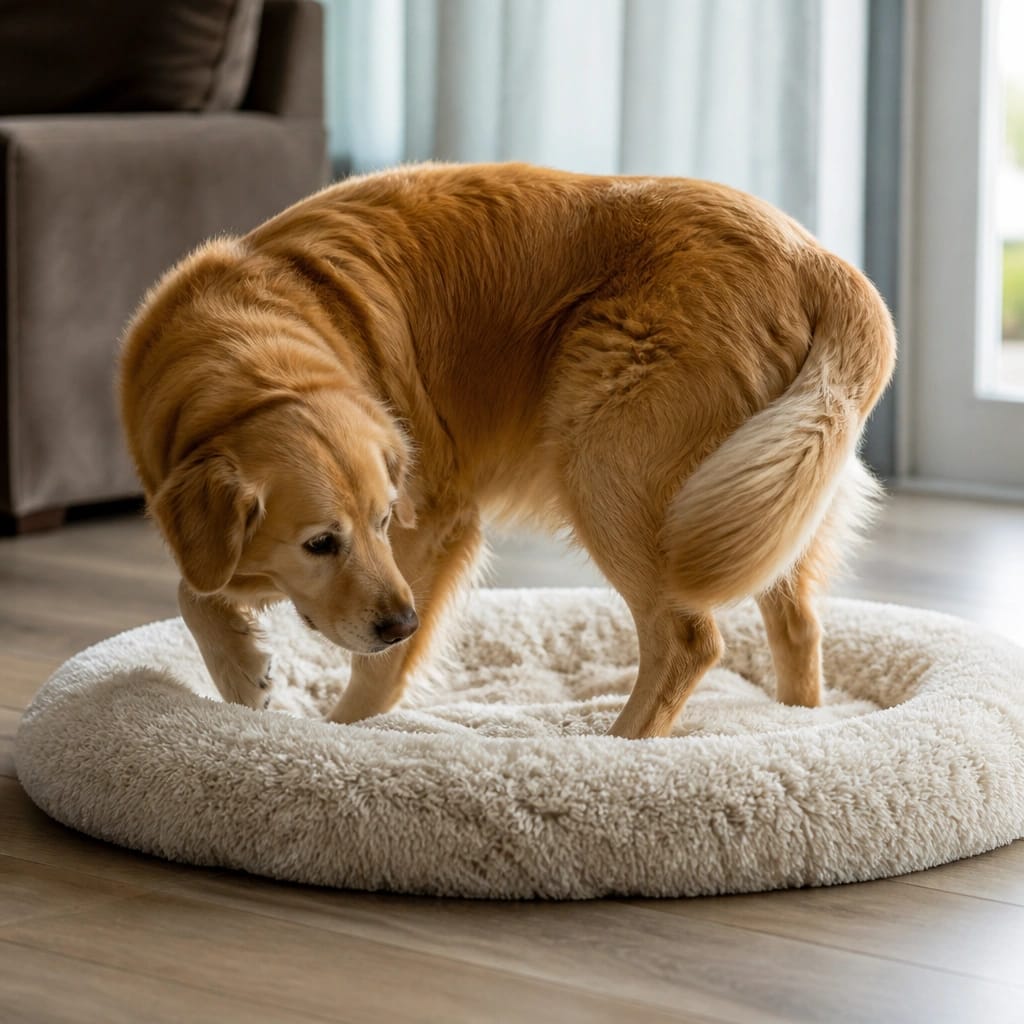
Your dog’s ancestors lived in forests and grasslands. They had to press down tall grass, leaves, or snow to create a comfortable, flat spot. That quick spin helps flatten and pack the surface.
You might recognize the same paws at the surface when your dog settles in at home.
Scent Familiarization and Territory
Dogs have scent glands in their paw pads. Each step releases a tiny bit of their unique chemical signature. When your dog circles, they’re stamping that scent into the surrounding area.
It’s a way of claiming the space as theirs, even when that space is your living room rug.
Temperature Regulation and Survival Instincts
Circling also lets a dog scan for the right temperature. In hot weather, turning helps them find the coolest patch of ground. In winter, tucking their nose under their tail traps warm air near their body.
Veterinary organizations including the American Veterinary Medical Association confirm this behavior has deep evolutionary roots.

How Much Circling Is Normal?
Most dogs make between one and three circles before lying down. That holds true across breeds, ages, and living situations. The American Kennel Club’s canine behavior resources describe this range as standard.
Anything beyond that, especially on a regular basis, deserves a closer look.
| Dog’s Age | Typical Circling | Time to Settle |
|---|---|---|
| Puppy | 1–2 circles | A few seconds |
| Adult | 1–3 circles | Under 15 seconds |
| Senior | 2–4 slow circles | Up to a minute |
Note that this is a general pattern, not a strict rule. The key is consistency. If your dog suddenly starts circling far more than usual, pay attention.
That change is more important than the exact number of turns.
When Circling Becomes a Problem
There’s a big difference between a quick comfort spin and relentless circling. The distinction often comes down to age, pain, and mental state.
Pain and Joint Stiffness
Pain is the most common red flag. Dogs with arthritis or hip dysplasia often circle more because they’re searching for a position that relieves pressure. They might also pace, shift, grunt, or whine before sinking down.
If you notice stiffness when your dog rises afterward, consider a veterinary exam. Some dogs with joint discomfort benefit from the right head and neck support as well.
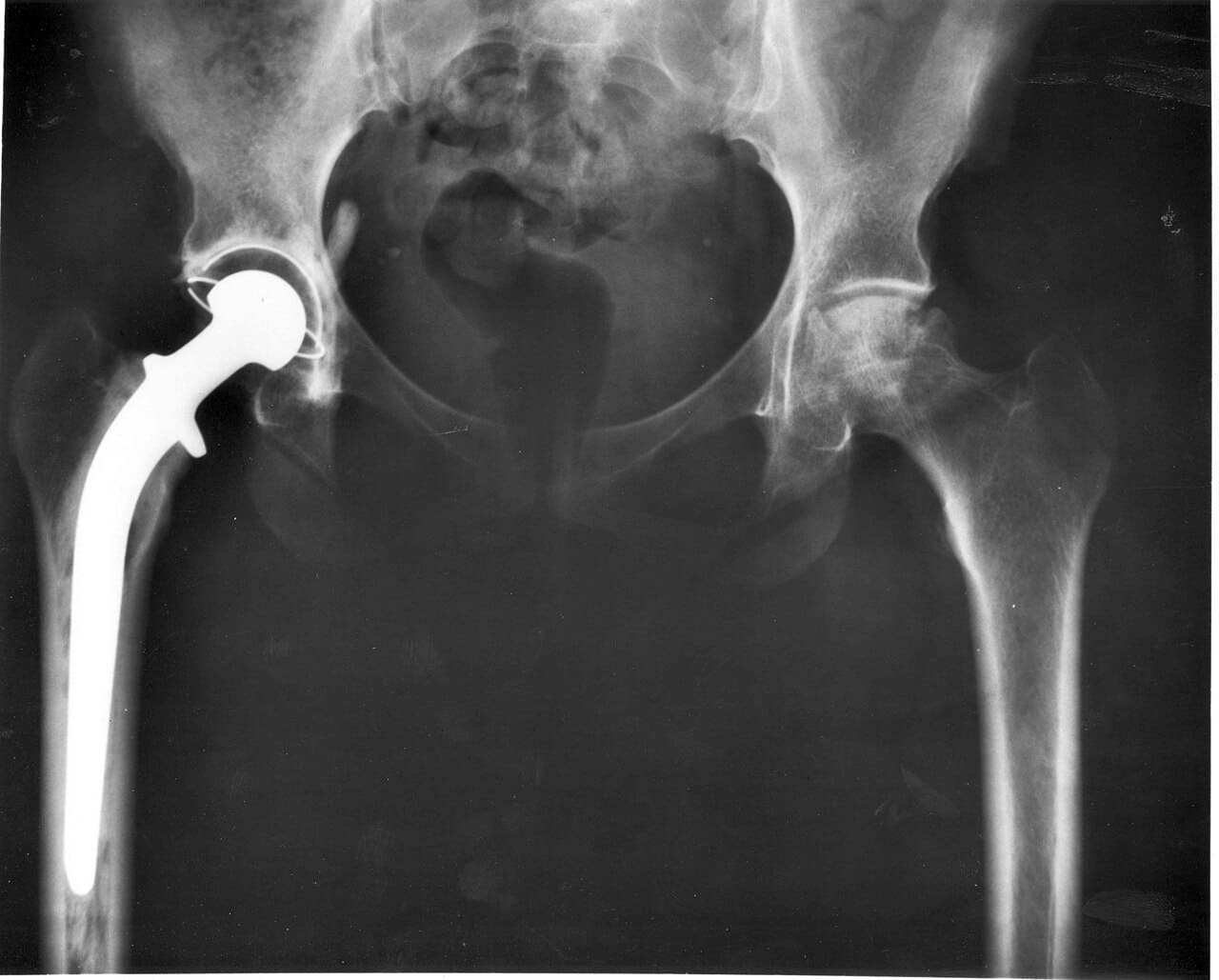
Image source: Wikimedia Commons / X-ray Image ID: 3684. Photographer: Unknown.
Cognitive Decline and Anxiety
Senior dogs in cognitive decline can circle excessively, sometimes getting stuck in the motion. It’s not a choice. Their brain struggles to process the simple act of lying down.
Anxiety looks different. Anxious dogs pace, circle, and repeatedly check the area before settling. For them, the answer may be a secure, den-like bed that reduces stress.
How to Evaluate Your Dog’s Circling Step by Step
Start by watching the full routine. Notice how many circles your dog makes and how long the ritual lasts.
Then check their body language. Watch for stiff limbs, panting, whining, or an arched back. These are common signs of discomfort.
Also look at the bed itself. Is it big enough for your dog to stretch out completely? One common cause of restless circling is a bed that’s too small.
Our dog bed sizing chart by weight can help you identify the right fit.
Finally, consider the environment. Does the circling happen only at night, or also during the day? Does your dog settle immediately after a few turns?
If yes, it’s almost certainly normal. If the circling drags on for minutes, keep a record of what you see and share it with your vet.
Quick Decision Guide: Normal Habit or Vet Visit?
Use this table to make a quick judgment call about your dog’s behavior.
| Observation | Normal Habit | Vet Visit Warranted |
|---|---|---|
| Number of circles | 1–3, calm | 10+ or non-stop |
| Body posture | Relaxed, loose | Tense, arched, trembling |
| Settling time | Under 15 seconds | Takes minutes or never settles |
| Additional signs | None | Limping, panting, whining |
| Age of dog | Any age | Senior with new excessive circling |
If any of the “Vet Visit” column fits your dog, book an appointment. It’s always safer to have a professional rule out underlying health problems. And if your dog settles into a cozy position after a normal spin, you can relax and enjoy the show.
That instinct deserves a little respect.
Common Mistakes Owners Make

The biggest mistake is assuming every spin means something is wrong. That’s just as unhelpful as ignoring a sudden change in behavior. Here’s the middle ground.
Don’t punish the circling. It’s instinctive and not something your dog can turn off. Scolding just creates stress around bedtime, which can make the behavior worse.
A calmer approach works better.
Don’t automatically upgrade the bed either. Restless settling isn’t always a comfort issue. Sometimes it’s pain, anxiety, or cognitive decline.
Jumping straight to a new purchase without observation means you might miss the real cause.
Do keep a simple log. Count the circles, note the time, and watch how quickly your dog relaxes. That record is pure gold when you talk to your vet.
It turns vague worry into concrete information.
When to Call the Vet
Schedule a vet visit if the circling is new, excessive, or paired with other signs. That includes limping, stiffness, whining, panting, or a visible change in posture.
Senior dogs deserve extra attention. New or worsening circling after age seven often links to arthritis or cognitive dysfunction. Both conditions respond better with early intervention, so don’t wait weeks to check.
A quick baseline is also wise for puppies. Occasional circling is normal, but constant spinning or trouble settling can point to discomfort or developmental issues. Your vet can rule out the scary stuff and put your mind at ease.
Most dogs circle because it’s hardwired. Trust your instincts as an owner. If something feels off, a professional opinion is always worth the appointment.
Frequently Asked Questions
Why does my dog circle so much before lying down?
Most dogs circle one to three times as a normal nesting ritual. If your dog circles far more than that, it could indicate pain, anxiety, or cognitive decline. Watch for stiffness, whining, or pacing alongside the circling.
Any of those signs makes a veterinary check worthwhile.
Is circling before lying down a sign of pain?
It can be. Arthritis and hip dysplasia often make dogs circle more as they search for a pain-free position. Look for supporting clues like limping, grunting, stiffness when rising, or shifting positions after lying down.
Pain-related circling typically appears suddenly or worsens over time.
Does a dog circling mean they don’t like their bed?
Not necessarily. Circling is an instinctive behavior that predates dog beds entirely. That said, a bed that’s too small or too flat can cause extra restless turning.
Check that your dog can stretch out fully. A bed that supports the body and joints often reduces excessive circling.
Should I stop my dog from circling?
No. Circling is a natural, harmless habit in most dogs. Interrupting it can create anxiety around settling down.
Let your dog complete the ritual as long as it’s brief. Focus your attention on changes in frequency, duration, or associated signs of discomfort instead.
At what age does circling become a concern?
Circling becomes more concerning in senior dogs, especially past age seven. New or increasing circling at that stage often links to arthritis or cognitive dysfunction. In puppies, occasional circling is normal.
Constant spinning or an inability to settle deserves a vet’s opinion at any age.
What to Do Next
Start by watching your dog’s next few bedtimes. Count the circles and time how long it takes to settle. If the pattern matches a habitual spin, there’s nothing to fix.
If anything feels off, keep a short log. Note the circling frequency, posture, and any new signs like limping or whining. Share that record with your vet.
A quick professional check can rule out pain, arthritis, or cognitive decline.
And when your dog finally curls up after a few perfect turns, you’ll know that instinct is doing exactly what it was designed to do.


