

How to Make a Dog Bed Easier for an Older Dog to Access
Lower or modify your dog’s bed to match their mobility. The goal is easy entry and exit. Watch how your dog moves first.
Then adjust the height, firmness, or surface. Small changes make a big difference.
If your senior dog has started hesitating before jumping onto their bed, you’re not alone. How to Make a Dog Bed Easier for an Older Dog to Access is a question more owners face as their dogs age and their mobility changes. The good news is that most access issues can be solved with a few practical adjustments, no expensive vet visits required.
Manufacturer specifications for orthopedic dog beds as of 2026 show that standard bed heights range from 4 to 12 inches off the floor. For a dog with arthritis or weak back legs, even a few inches can feel like a wall. Let’s walk through what to look for and how to fix it.
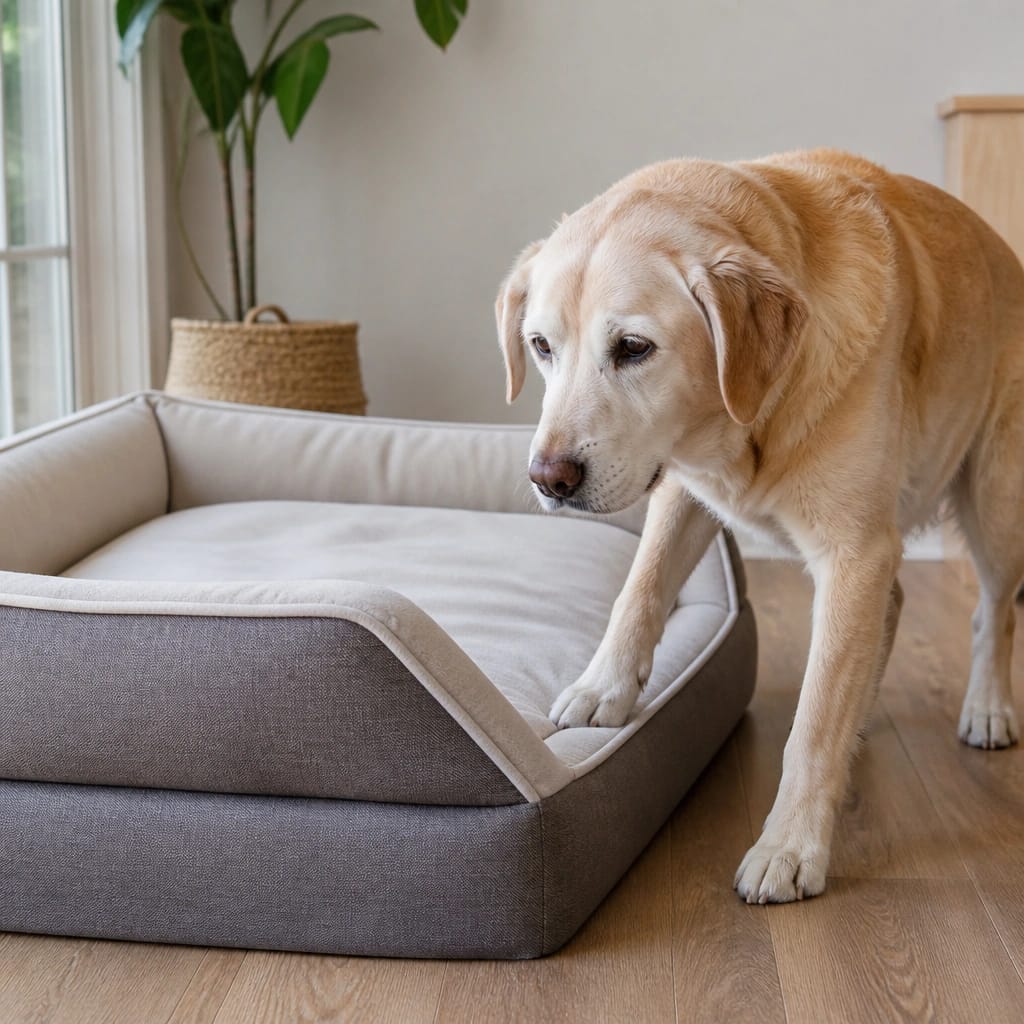
Why Your Senior Dog Might Be Struggling With Their Bed
Dogs don’t complain about their beds the way we do. They just stop using them. If your older dog has started sleeping on the floor, avoiding their bed, or hesitating before climbing on, there’s usually a physical reason.
The most common culprits are height, surface firmness, and stability. A bed that was perfect two years ago may now be too tall, too soft, or too slippery. Arthritis, hip dysplasia, and general muscle loss make it harder to jump, push up, or balance.
Your dog isn’t being stubborn. They’re being practical. The floor is flat, stable, and easy to get on and off.
If you want them back in their bed, you need to make the bed work for their current body.
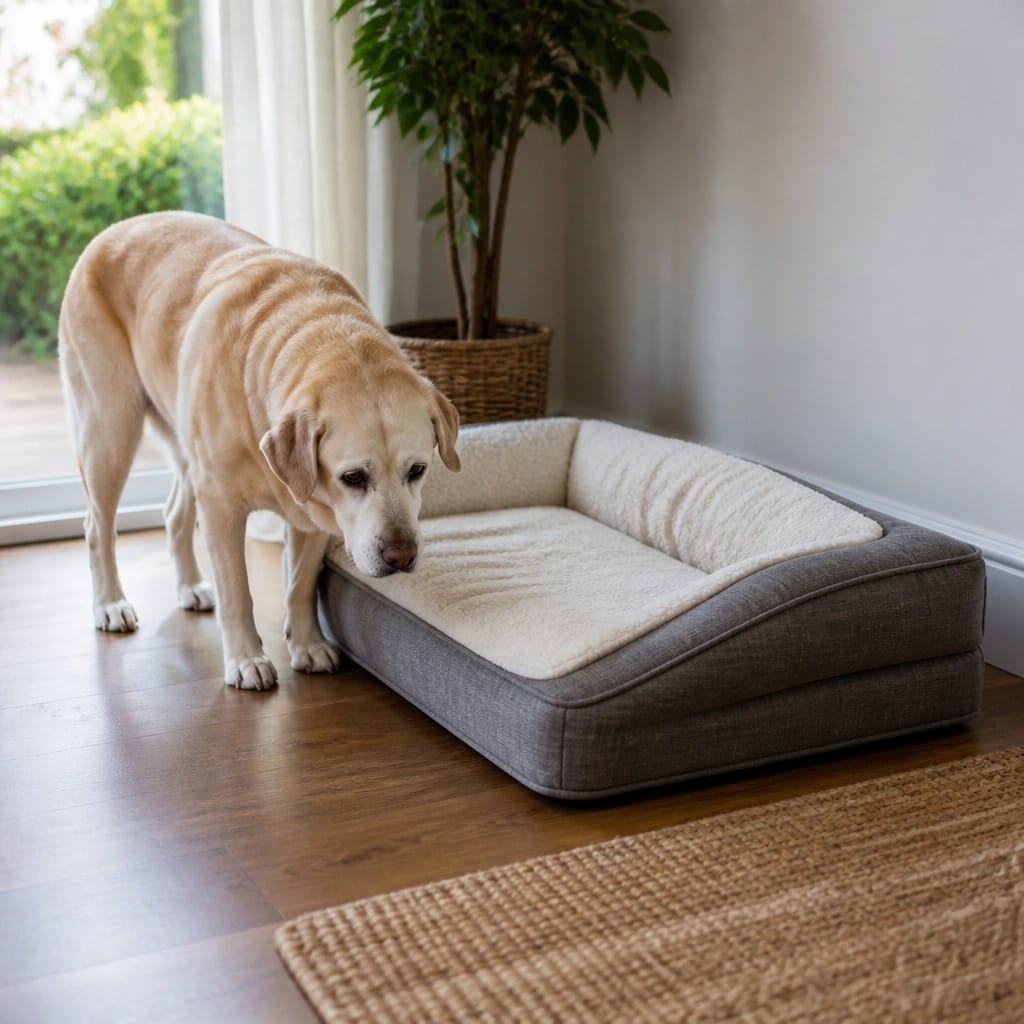
The First Step: Watching How Your Dog Gets On and Off Their Bed
Before you change anything, spend a few days watching your dog use their bed. Pay attention to the specific movement that gives them trouble. This tells you exactly what to fix.
Is jumping the problem?
If your dog stands at the edge of the bed and hesitates, or tries to jump and misses, the bed is likely too high. Senior dogs lose muscle mass in their back legs, which makes jumping harder. They also lose confidence.
A failed jump can hurt, and one bad experience is enough to make them avoid the bed entirely.
Is standing back up the problem?
Some dogs can get onto the bed just fine but struggle to stand up afterward. They might circle, paw at the surface, or rock back and forth before finally getting up. This usually means the bed is too soft.
Their legs sink in, and they don’t have the strength to push up from a deep surface.
Is slipping or sliding the problem?
If your dog’s legs slide out from under them when they try to get on or off, the issue is traction. Smooth bed covers on smooth floors create a slip hazard. Your dog may also slide off the bed during sleep if the surface is too slick or the bed moves around.
How to Decide What to Change First
The right fix depends on the specific problem. Here’s how to match the issue to the solution.
If the bed is too tall
Measure the distance from the floor to the sleeping surface. For most senior dogs, anything over 4 inches is hard to climb onto. Large breeds may manage 5 or 6 inches, but smaller dogs need lower.
The fix is to lower the bed or add a ramp.
If the bed is too soft or deep
Press your hand into the center of the bed. If your hand sinks more than 2 inches, the foam is too soft for a senior dog with mobility issues. They need a firm surface that supports their weight without letting them sink.
A memory foam bed with a density of at least 2.5 pounds per cubic foot is a better option for dogs that struggle to push up.
If the bed is too slippery
Run your hand across the bed cover. If it feels smooth or silky, your dog’s nails will slide on it. Look for a cover with a textured or matte finish.
You can also place a non-slip mat under the bed to stop it from shifting.
If the bed is hard to find
Vision loss is common in older dogs. If your dog wanders past the bed or bumps into it, they may not be able to see it clearly. Choose a bed in a contrasting color to your floor.
Place it in a consistent spot where your dog can find it by memory.
Lowering the Bed Without Buying a New One
You don’t always need to buy a new bed. Many existing beds can be modified to work better for a senior dog.
Removing legs or bolsters
Some elevated beds have removable legs. If your bed frame has screw-in legs, you can take them off and place the bed directly on the floor. For bolster beds, you can remove the bolsters or unzip them and take out the stuffing.
This lowers the sides and makes entry easier.
Switching to a mattress-style bed
Bolster beds look cozy, but the raised edges can be a barrier for an older dog. A flat mattress-style bed has no walls to climb over. If your dog likes to stretch out, this is often the best option.
You can find one that fits your current bed cover or use the mattress as a topper on an existing frame.
Using a bed topper instead of a full replacement
If the foam in your dog’s bed has worn out, you don’t need to replace the whole thing. A firm foam topper placed on top of the existing bed can restore support and raise the surface slightly. This is a budget-friendly option that works well for dogs who just need a firmer surface.
Adding a Ramp or Steps for Easier Access
For beds that are too high to lower, a ramp or set of steps can bridge the gap. The key is choosing the right option for your dog’s size and mobility level.
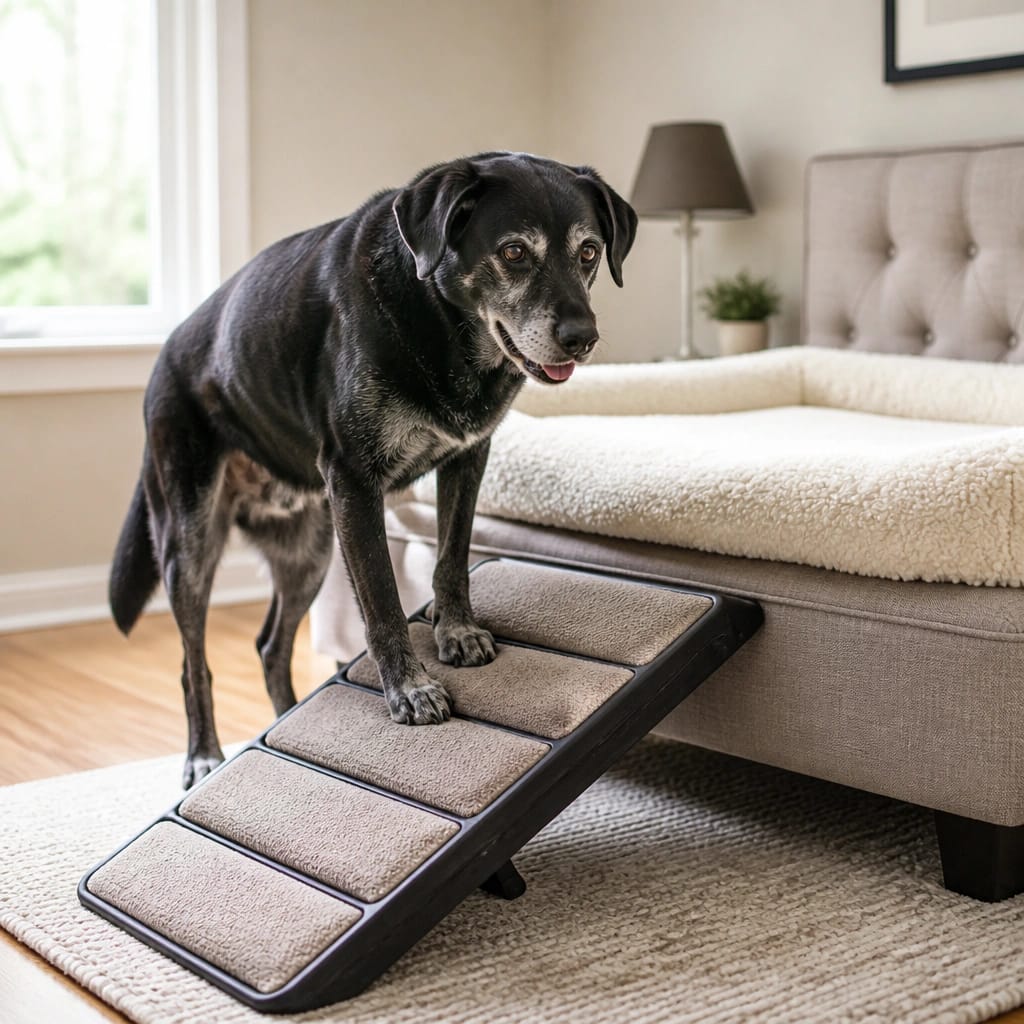
When a ramp makes more sense than stairs
Ramps are better for dogs with arthritis, back problems, or balance issues. Stairs require your dog to lift each paw and shift weight, which can be painful. A ramp lets them walk up at a steady, comfortable pace.
It’s also easier on sensitive joints.
How to choose the right ramp width and angle
A ramp should be wide enough for your dog to walk comfortably. For small breeds, 12 inches is enough. For large breeds, aim for 18 to 24 inches.
The angle matters too. A gentle slope of 15 to 20 degrees is ideal. Steeper ramps are harder to climb and increase the risk of slipping.
Securing the ramp or steps so they don’t shift
A ramp or set of steps that moves when your dog steps on it is worse than no ramp at all. It creates a fall risk. Look for a ramp with a non-slip surface and rubber feet.
Place it against the bed frame so it stays in place. You can also add a non-slip mat underneath for extra grip.
Fixing Slipping Problems on the Bed Surface
Slipping is one of the most overlooked issues for senior dogs. A bed that slides on the floor or has a slick cover can make your dog nervous about getting on and off.

Image source: Openverse / JohnLEE Brothers
Choosing a cover with better grip
Look for a bed cover made from canvas, microfiber, or fleece. These fabrics give your dog’s paws something to grip. Avoid satin, faux silk, or any smooth material.
If your current cover is too slick, a simple cover swap can fix the problem without buying a new bed.
Adding a non-slip mat under the bed
A non-slip mat placed under the bed stops it from sliding across the floor. This is especially important on hardwood, tile, or laminate. The mat keeps the bed in one place so your dog can push off it without the bed moving away.
Placing the bed against a wall for stability
Position the bed so one side is against a wall. This gives your dog a solid surface to brace against when getting on or off. It also helps them feel more secure.
Dogs with vision loss especially benefit from having a wall as a reference point.
Helping a Dog With Vision Loss Find Their Bed
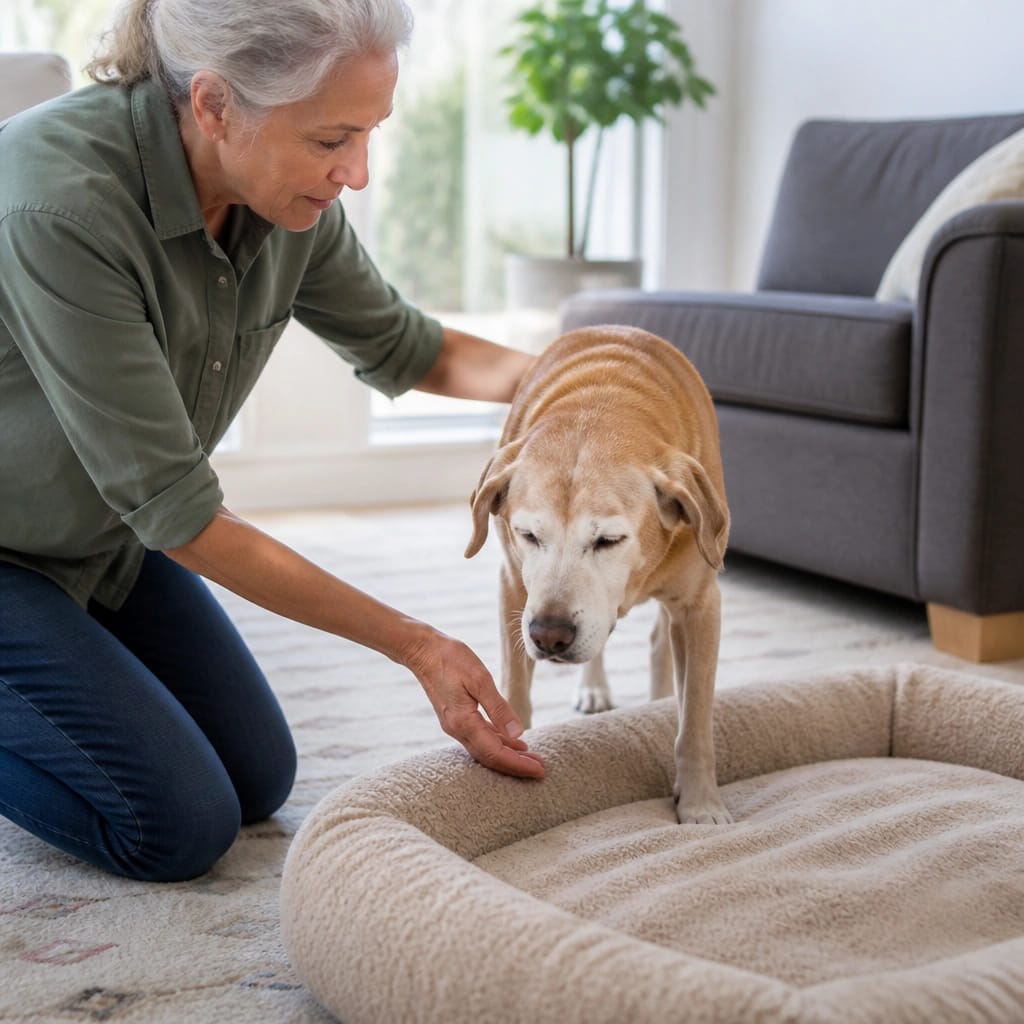
Older dogs often lose their sight gradually. They may not be able to see the bed clearly, especially if it blends into the floor.
Using scent cues
Place a familiar blanket or toy on the bed. Your dog’s sense of smell is still strong. A familiar scent helps them locate the bed even if they can’t see it.
Keeping the bed in a consistent spot
Never move the bed once your dog has learned where it is. Senior dogs rely on spatial memory. Moving the bed forces them to search, which can be confusing and stressful.
Adding tactile markers like a rug or mat
Place a textured rug or mat leading up to the bed. Your dog can feel the change in texture under their paws. This tells them they’re getting close.
A simple bath mat works well for this.
Common Mistakes That Make Things Worse
Some well-intentioned changes can actually hurt your senior dog. Here’s what to avoid.
Raising the bed instead of lowering it
It’s tempting to add a thicker mattress pad for extra comfort. But raising the bed makes it harder to climb onto. Focus on firmness, not height.
A firm low bed is better than a soft tall one.
Using a ramp that’s too steep
A steep ramp is harder to climb than a set of stairs. Your dog has to work against gravity with every step. If the ramp angle is more than 30 degrees, it’s too steep.
Aim for a gentle slope.
Ignoring the foam condition
Old foam loses its support. If your dog’s bed has sagging or lumps, the foam is worn out. A worn-out bed can cause joint pain and make it harder for your dog to get comfortable.
Replace the foam or the entire bed when it no longer holds its shape.
Making too many changes at once
Change one thing at a time. If you lower the bed, add a ramp, and change the cover all in one day, your dog may be confused. Give them a few days to adjust to each change before making another.
When to Replace the Bed Instead of Modifying It
Sometimes modifications aren’t enough. If the foam is completely worn out, the cover is torn, or the bed is simply too small for your dog, it’s time for a new one.
Look for a bed that is low to the ground, firm, and has a non-slip bottom. A flat mattress-style bed with a removable cover is the easiest to clean and maintain. If your dog has incontinence issues, a waterproof liner is essential.
Testing the New Setup: What to Watch For Over the First Week
After you make a change, watch your dog closely for the first week. They should start using the bed more often. If they still avoid it, something is still wrong.
Check for signs of discomfort. Is your dog restless at night? Do they shift positions frequently?
Are they sleeping on the floor again? These are signs that the bed still isn’t right.
If your dog is using the bed regularly, sleeping soundly, and getting up easily, you’ve solved the problem. Give them extra praise for using their bed. Senior dogs respond well to positive reinforcement.
Frequently Asked Questions
How low should a dog bed be for an older dog?
Aim for 2 to 4 inches off the floor. This is low enough for most senior dogs to step onto without jumping. For very large breeds, 4 to 6 inches may work if they have good leg strength.
Measure your dog’s current bed and compare.
Can I use a human bed ramp for my dog?
Human bed ramps are often too wide and steep for dogs. They’re designed for people to sit on, not for dogs to walk up. Look for a ramp specifically made for pets.
It will have a gentler slope and a non-slip surface.
Should I get a heated bed for my senior dog?
Heated beds can help with arthritis pain, but they come with safety concerns. Look for a bed with automatic shut-off and a chew-resistant cord. Never use a heated bed with a dog that chews or licks things.
A self-warming bed that uses your dog’s body heat is a safer alternative.
How do I know if my dog’s bed is too soft?
Press your hand into the center of the bed. If your hand sinks more than 2 inches, the bed is too soft for a senior dog. A firm surface supports their joints and makes it easier to stand up.
Memory foam with a density of 2.5 pounds per cubic foot or higher is ideal.
Is it better to have a bed with bolsters or without for an older dog?
It depends on your dog’s mobility. If your dog can step over the bolsters, they can provide head and neck support. If your dog struggles to climb over them, remove the bolsters or switch to a flat mattress-style bed.
Watch your dog’s movements to decide.


