

Which Dog Bed Materials Stay Coolest?
The coolest dog bed materials are elevated mesh, gel-infused foam, and phase-change fabrics. Each works differently, mesh relies on airflow underneath, gel draws heat away from the body, and phase-change materials absorb excess warmth. No single material is best for every dog. Your choice depends on your dog’s sleeping position, coat type, and whether they need joint support. Understanding these differences helps you pick a bed your dog will actually use.
Your dog can’t tell you they’re overheating, but you can see the signs, panting, restlessness, moving to the tile floor. That’s why the question “Which dog bed materials stay coolest?” matters more than just comfort. A bed that traps heat can make your dog miserable, especially in warm weather or if you have a breed prone to overheating.
Manufacturer tests show that elevated mesh beds can reduce surface temperature by 3, 5°C compared to standard memory foam. And cooling gel inserts stay noticeably cool to the touch for about 30, 60 minutes before warming up. Knowing these differences helps you avoid wasting money on a bed that looks cool but doesn’t perform.
Let’s break down why material choice matters so much.
Why Cooling Materials Actually Matter for Your Dog
Dogs regulate body temperature differently than humans. They don’t sweat through their skin, they pant and release heat through their paw pads and nose. When your dog lies on a bed that holds heat, their body can’t cool down as efficiently.
Over time, that leads to restless sleep and can even contribute to heat stress in vulnerable breeds.
The material your dog sleeps on directly affects how well they shed body heat. A thick, dense foam with poor airflow acts like an insulator, it traps warmth against your dog’s belly and joints. That’s fine in winter, but in summer it’s a problem.
Cooling materials work by either letting air circulate under and around your dog, or by actively moving heat away from their body.
If your dog already avoids their bed and sleeps on the floor, the material might be the culprit. Many owners assume their dog just prefers hard surfaces, but the real issue could be that their bed is too warm.
The Three Ways Dog Beds Keep Cool (and Which One Works)
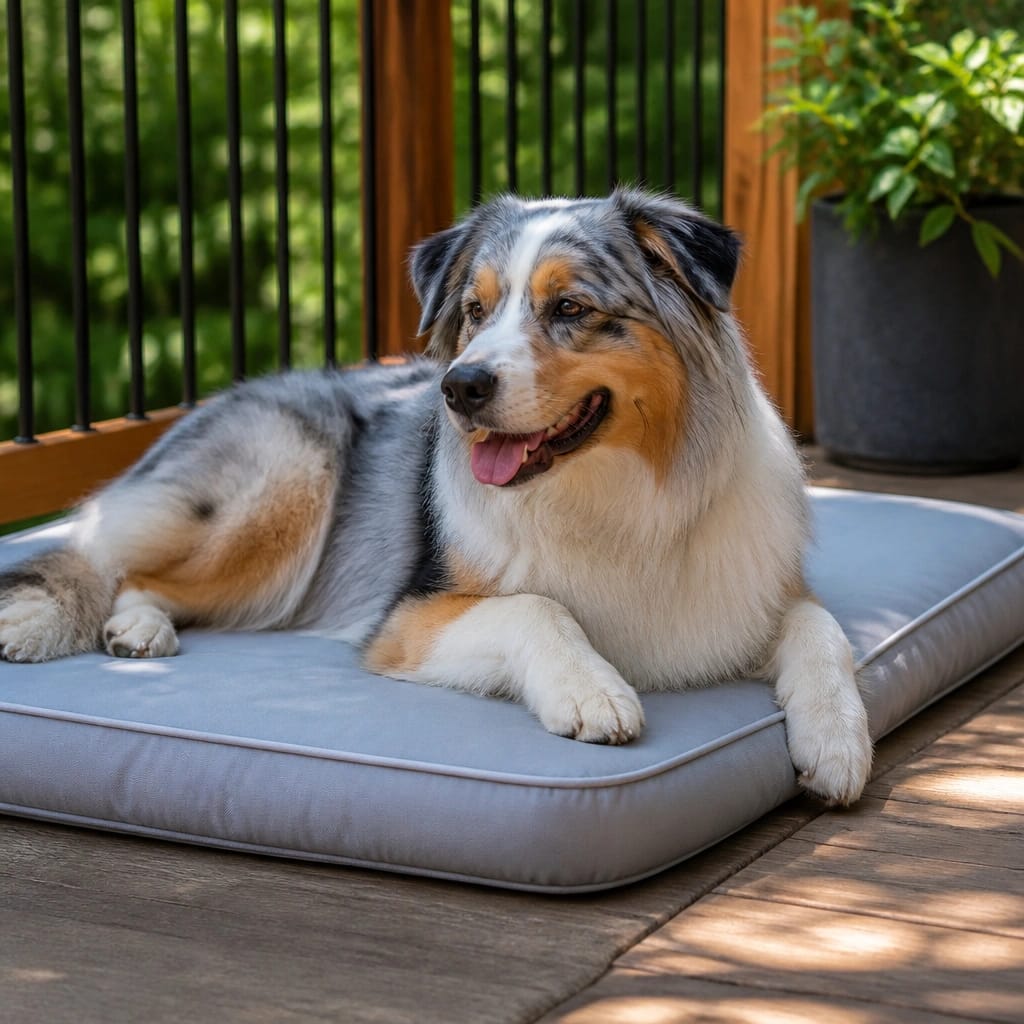
There are three distinct cooling mechanisms used in dog beds. Each has trade-offs.
Airflow-Based Cooling: Elevated Mesh and Cot Beds
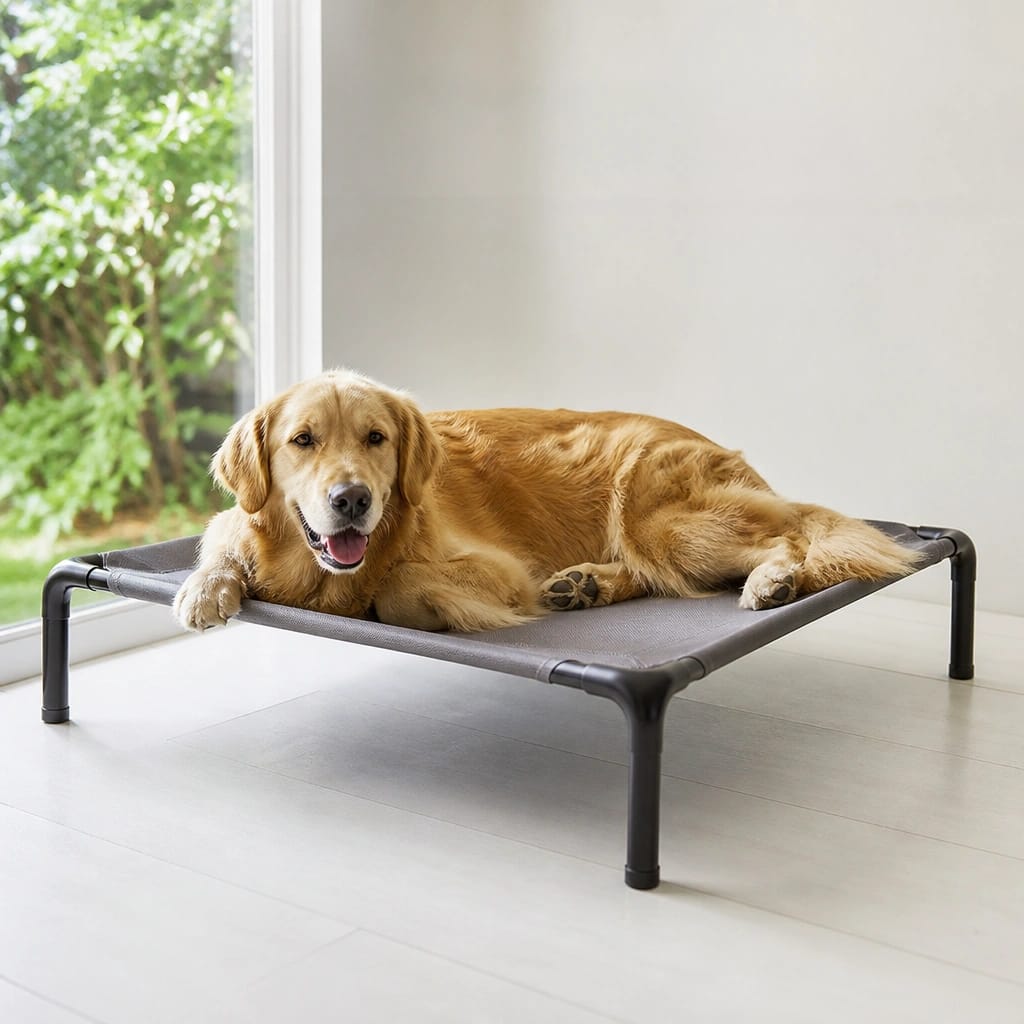
Elevated beds sit on a frame, typically metal or plastic, with a mesh fabric stretched across. Air moves freely underneath the dog and through the mesh. This creates constant ventilation, no battery, no gel, no gimmicks.
| Mechanism | How it works | Best for | Limitations |
|---|---|---|---|
| Airflow (elevated mesh) | Open air circulation under the body | Heavy-coated breeds, outdoor use | Less padding, may not suit seniors |
| Conductive (gel/PCM foam) | Material pulls heat away from skin | Dogs that curl up, indoor use | Cooling effect fades over time |
| Moisture-wicking (cotton/bamboo) | Fabric absorbs and evaporates sweat | Mild climates, lighter dogs | No active cooling, just comfort |
Elevated beds are great for dogs that sprawl out. But they offer minimal cushioning, which can be problematic for dogs with arthritis or hip dysplasia.
Conductive Cooling: Gel Pads and Phase-Change Foam
Gel-infused memory foam and phase-change materials (PCMs) use physical properties to absorb heat. Gel feels cold to the touch initially. PCMs change state from solid to liquid at a specific temperature, absorbing heat in the process.
Both are effective, but the cooling effect is temporary, once the gel warms up to your dog’s body temperature, it stops cooling.
Moisture-Wicking Fabrics: Cotton, Bamboo, and Technical Blends
These fabrics don’t actively cool. Instead, they pull moisture away from the skin so evaporation happens faster. That can make your dog feel cooler, especially in humid conditions.
But if the bed underneath is thick foam, the benefit is limited.
Side-by-Side: Cooling Performance Across Common Materials
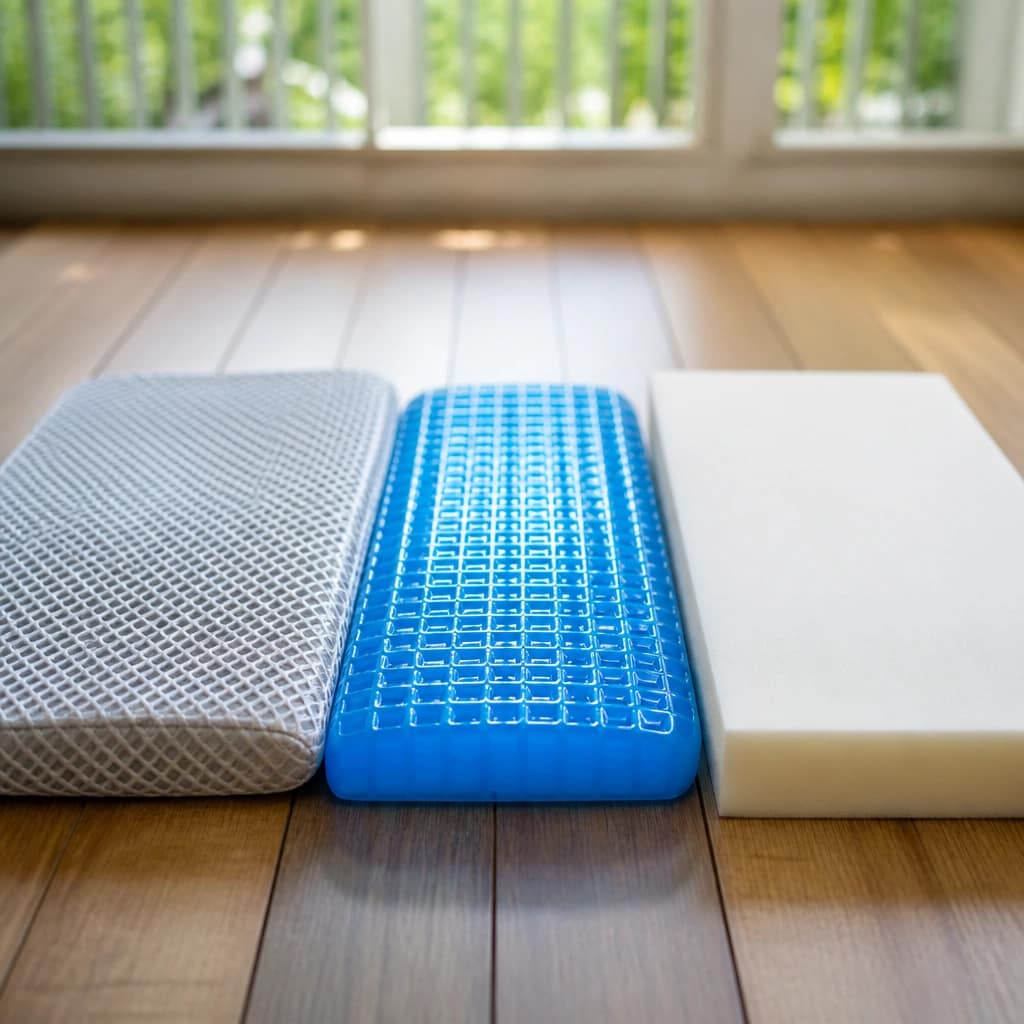
The table below shows how the main material categories compare in real-world conditions, based on aggregate owner feedback and manufacturer specs.
| Material | Initial cooling | Sustainability (1 hour) | Padding level | Best climate |
|---|---|---|---|---|
| Elevated mesh | Moderate | Excellent | Low | Hot, dry |
| Gel-infused foam | High | Moderate | High | Moderate |
| Phase-change foam | High | Good | High | Variable |
| Cotton/bamboo cover | Low | Low | Depends on fill | Mild |
| Standard memory foam | None | None | High | Cold |
Elevated mesh wins for sustained cooling. Gel foam wins for immediate cool feel. For a senior dog that needs both joint support and cooling, a PCM foam bed with a breathable cover is your best bet.
Which Cooling Material Suits Your Dog’s Sleeping Style?
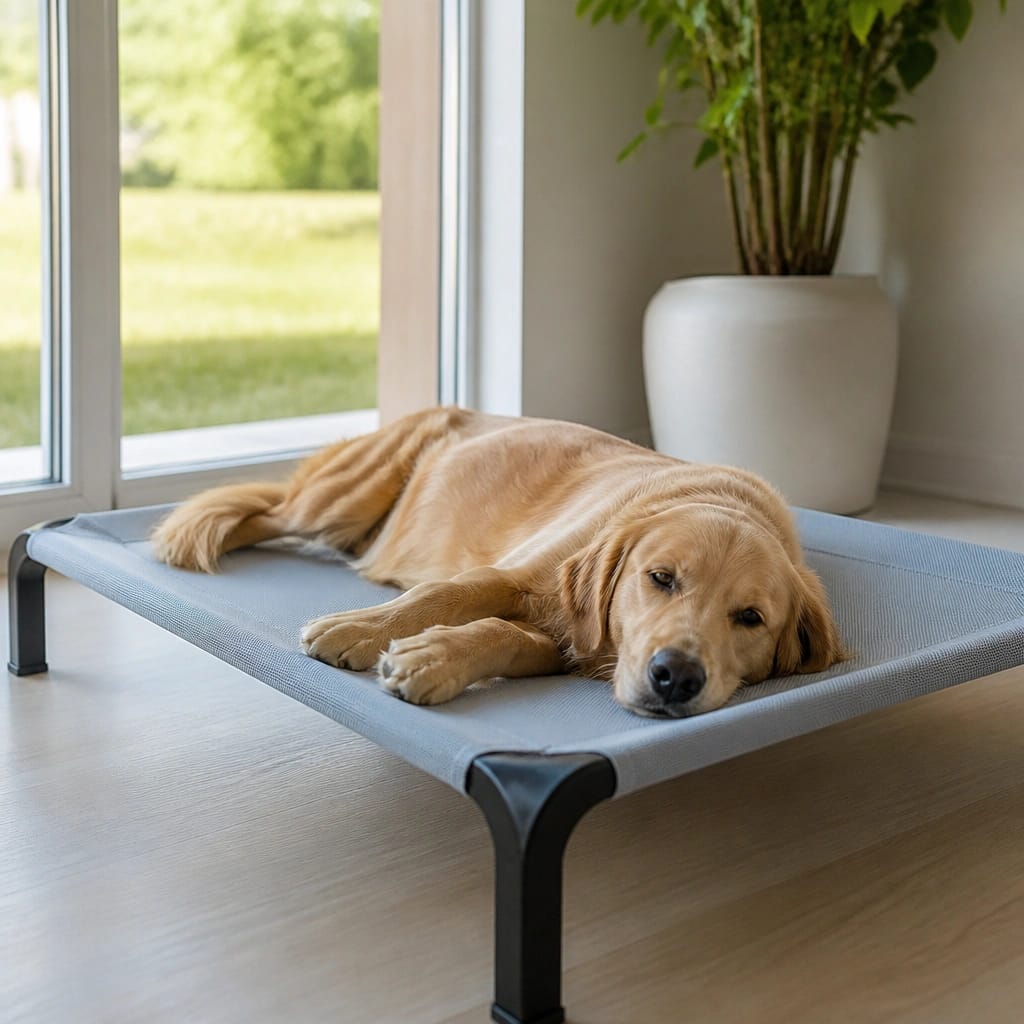
Your dog’s preferred sleeping position tells you more than any product label.
The Curler vs. The Sprawler — Why Position Changes the Answer
Curling dogs (like many terriers and huskies) tuck their nose under their tail. They lose less body heat, so cooling needs are lower. A gel or PCM foam bed works fine for them because contact area is small.
Sprawlers (like labs and golden retrievers) stretch out flat, exposing their belly and legs. They need maximum airflow. Elevated mesh or a well-ventilated gel bed is better.
If your dog is a side-sleeper who rests on one hip, look for a bed that combines a cooling top layer with enough cushion to support pressure points.
Heavy-Coated Breeds vs. Short-Haired Breeds
Double-coated dogs (Huskies, Malamutes, Samoyeds) overheat fast. They need elevated mesh or at least a bed with a mesh top layer and open sides. For French Bulldogs and Pugs, cooling is critical too, but they also need a softer surface.
A bed designed for brachycephalic breeds often uses a hybrid approach.
Short-haired breeds like Boxers and Dalmatians produce less insulation, so they can sleep on gel foam without overheating. But they still benefit from breathable covers.
Senior Dogs: When Cooling Meets Joint Support
Arthritic dogs need thick, supportive foam. Traditional memory foam traps heat. A phase-change foam bed gives you both support and cooling.
Some owners also use a heated dog bed in winter, that’s fine, but in summer swap it for a cooling version.
Common Cooling Bed Mistakes Owners Make
The biggest mistake is buying a bed because the label says “cooling” without checking the actual mechanism. Some beds use a thin gel layer over standard foam, the gel warms up fast, and then you’re left with a heat-trapping mattress.
Another mistake: putting a cooling bed in direct sunlight or near a heat vent. Even the best cooling material can’t overcome an external heat source. Also, many owners don’t wash the cover regularly.
A dirty cover blocks airflow and reduces cooling performance.
Finally, size matters. A bed that’s too small for your dog restricts airflow. Make sure there’s at least a few inches of clear mesh or breathing space around your dog’s body.
For more guidance on measuring, check the dog bed size chart by weight.
How to Care for a Cooling Dog Bed (So It Stays Cool)
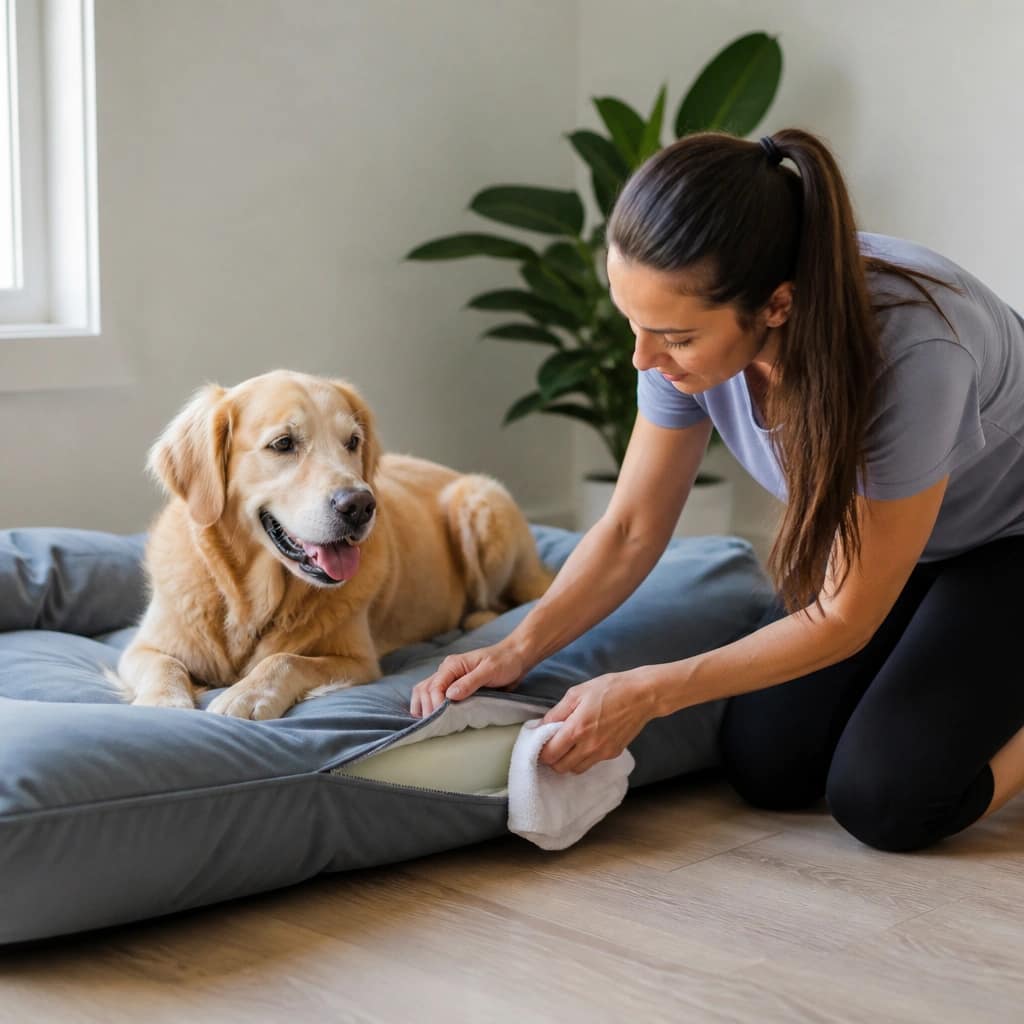
Wash the cover every two weeks. Dirt and oils clog the mesh or gel layer and block airflow. Most removable covers are machine washable in cold water.
Air dry or use low heat, high heat can damage phase-change materials.
For gel pads, avoid sharp objects and dog nails. A puncture means leaks. Lay a thin blanket over the pad if your dog scratches.
You can spot clean foam cores with mild soap and water. But don’t soak them. Wet foam loses cooling ability and can develop mold.
Store elevated beds in the shade when used outdoors. UV rays degrade the mesh over time. Replace loose or sagging mesh immediately, it won’t circulate air properly.
Frequently Asked Questions About Cooling Dog Bed Materials
How long does the cooling effect last on a gel bed?
Gel pads stay cool for roughly 30 to 60 minutes after your dog lies down. Once the gel reaches body temperature, it stops cooling. It will cool again once your dog gets up and the pad recharges in ambient air.
Are elevated mesh beds safe for senior dogs?
They can be, but only if your dog has good mobility. Climbing onto an elevated frame is harder for dogs with arthritis. For senior dogs needing joint support, a PCM foam bed with a breathable cover works better.
Can I put a cooling bed in a crate?
Yes, but size matters. The bed must fit without folding or bunching. Overcrowding reduces airflow and defeats the cooling purpose.
Measure crate dimensions against the bed’s actual surface area.
Do cooling beds work for heavy-coated breeds?
Elevated mesh is best for double-coated breeds. Gel and foam beds don’t provide enough ventilation for thick fur. A dog with a heavy coat needs air moving underneath and around its body at all times.
Final Decision Guide: What to Look for on the Label
Check three things before you buy. First, the cooling mechanism, is it airflow, gel, or phase-change material? Avoid vague terms like “cooling technology” without specifics.
Second, the cover fabric. A breathable cotton or mesh cover is best. Microfiber traps heat.
Third, the bed’s construction. Look for open-cell foam if you choose foam. Open-cell foam lets air pass through.
Closed-cell foam insulates and retains heat.
Match the bed to your dog’s typical sleeping position and climate. A sprawler in a warm house needs elevated mesh. A side-sleeping senior needs PCM foam.
For puppies who chew, consider chew proof materials for the frame and cover. And remember that even the best cooling bed needs regular cleaning and proper placement to actually work.


