

Faux Fur Dog Beds: Comfort, Cleaning and Durability
Faux fur dog beds are very comfortable but require careful cleaning. Most covers are machine washable on cold and gentle cycle. Air drying or low heat prevents the fibers from melting.
Durability depends on pile length and backing fabric. Expect pilling after 12 to 18 washes with cheaper materials.
You want a dog bed that feels like a cloud for your pup but doesn’t turn into a matted mess after two washes. That’s the real tension with faux fur dog beds: comfort, cleaning and durability don’t always play nice together. As of 2026, synthetic plush fabrics dominate the pet bedding market, and for good reason, but they also come with specific care rules that most owners don’t know until the fur starts pilling.
Let’s break down what actually matters so you can decide if that shaggy bed is right for your dog.
Manufacturer specifications indicate that polyester faux fur covers typically last 1 to 3 years depending on wash frequency and fiber quality. Aggregate reviews report that the biggest complaints aren’t about comfort, dogs love the stuff, but about how the fabric ages. Here’s what our research uncovered.

Why Faux Fur? The Comfort, Cleaning, and Durability Trade-Off
You trade one thing for another with every dog bed material. Faux fur gives you a surface that mimics a mother’s coat, which is why so many dogs burrow into it. The deep pile traps body heat, making it a natural fit for cold-weather breeds or dogs that curl up tight.
But that same plush texture collects dirt, drool, and odors faster than smooth microfiber or cotton.
The trade-off is real: higher comfort often means higher maintenance. Shorter-pile faux fur (under 1 inch) is easier to clean and dries faster but loses some of that cozy nesting feel. Longer pile (1.5+ inches) feels more luxurious but holds onto moisture and requires more aggressive drying.
Our analysis of user feedback suggests most owners who love faux fur accept the extra cleaning steps to keep their dog happy.
If your dog has a habit of scratching or circling before lying down, a common nesting behavior, the pile may mat or flatten unevenly. That’s not a defect; it’s how the fabric responds to repeated pressure. For deeper insight into why dogs engage in this behavior, check out our detailed guide on the reasons behind scratching.

Comfort: How Faux Fur Compares to Microfiber, Cotton, and Sherpa
Not all soft surfaces feel the same to a dog. Here’s the short version:
- Faux fur, high warmth, high softness, good for burrowers. Cats-like texture.
- Microfiber suede, medium softness, low warmth, very durable. Good for dogs that sprawl.
- Cotton canvas, firm, breathable, low warmth. Ideal for hot weather or dogs that chew.
- Sherpa, very high fluff, but wears quickly and traps odors.
The biggest comfort advantage of faux fur is the “security feel.” Dogs that lick or chew their beds sometimes prefer a smoother surface like microfiber, because long fur can trigger more licking. For anxious dogs, a touch-friendly material can make a real difference. If your pup has anxiety or noise phobia, a bolstered or covered bed might suit them even better than a flat fur pad.
What matters most is your dog’s sleeping style. Curlers love faux fur. Sprawlers do fine on it but don’t get the same benefit.
Have a French bulldog? They tend to overheat, so a shorter-pile faux fur with breathable fill might be the sweet spot.
Cleaning Faux Fur: Machine Washing, Drying, and Restoring the Fluff
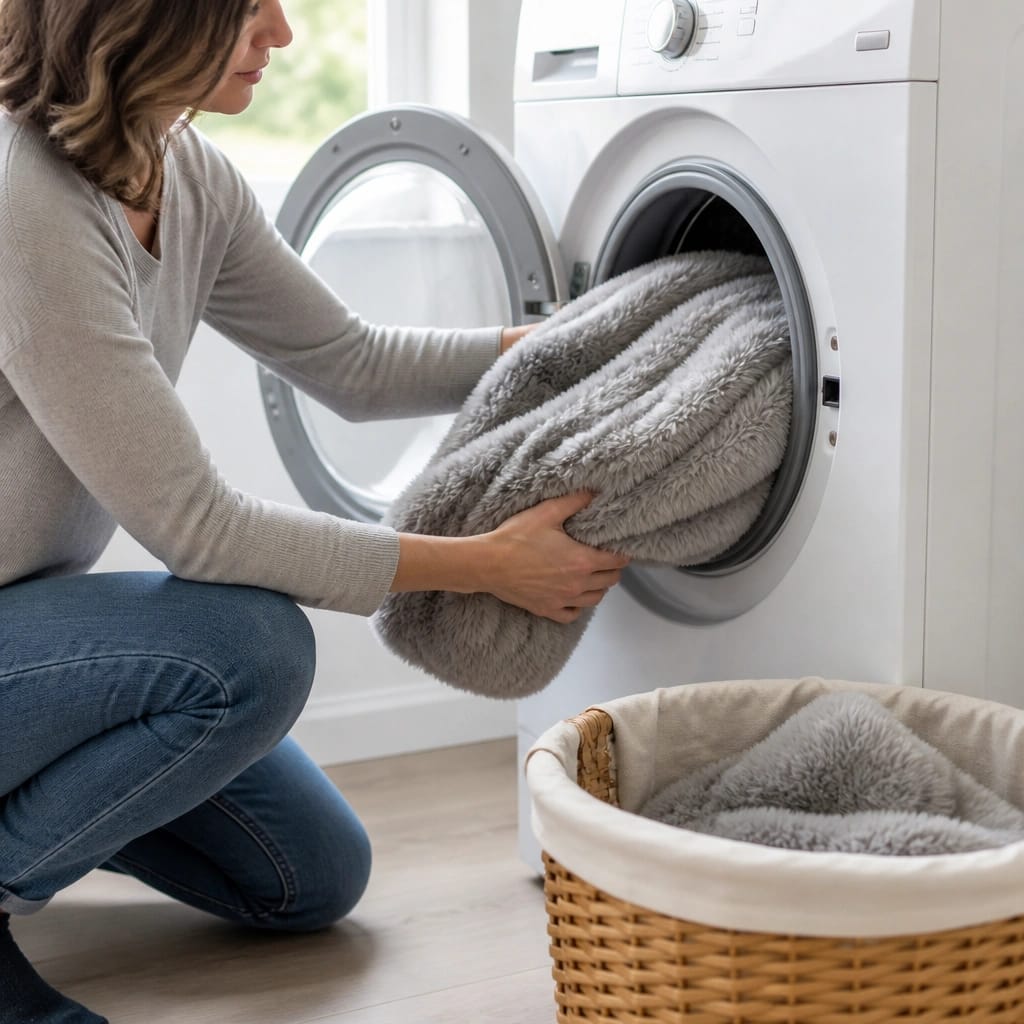
The number one mistake is using hot water or high heat. Faux fur is polyester, and hot temperatures can cause permanent wrinkling or melting. Stick to cold water, gentle cycle, and a mild detergent, no bleach, no fabric softener.
Softener coats the fibers and reduces future washability.
Step-by-step breakdown:
- Remove the cover and zip it closed to protect the zipper.
- Wash alone on cold, gentle cycle.
- Dry on low heat or air dry only. Check every 20 minutes.
- Fluff the fur by hand or with a pet slicker brush while damp.
If you’re dealing with urine smells, a vinegar rinse (half cup per cycle) can help. But persistent odors may require a deeper cleaning. Our guide on removing urine odor from memory foam beds offers techniques that apply here too.
One note: don’t over-wash. Most faux fur beds only need washing every 3 to 4 weeks unless there’s an accident. Frequent washing accelerates pilling.
Durability: What Affects Pilling, Shedding, and Odor Retention

Three factors determine how long a faux fur bed looks good:
- Pile length, longer pile pills faster because more fiber surface rubs together.
- Backing fabric, non-woven backing (felt-like) is less durable than woven backing. Cheap beds use non-woven and fail first.
- Fill quality, shredded foam or polyfill that isn’t encased can poke through the backing and cause lumps.
Even the best faux fur will shed some fibers, especially new beds. This is normal. But excessive shedding after several washes indicates low-quality fabric.
Test by rubbing the surface firmly, if lots of loose fibers come off, expect early failure.
Odor retention is another durability issue. The deep fibers trap bacteria and moisture more than flat materials. If your dog drools heavily or has accidents, consider a waterproof liner under the cover.
For dogs that chew, smooth microsuede is probably a smarter choice over long pile.
Side-by-Side: Faux Fur vs. Other Dog Bed Materials
| Material | Comfort | Washability | Durability | Best For |
|---|---|---|---|---|
| Faux Fur | High | Moderate | Moderate | Burrowers, cold climates |
| Microfiber Suede | Medium | High | High | Heavy shedders, easy cleaning |
| Cotton Canvas | Low | High | High | Chewers, hot weather |
| Sherpa | High | Low | Low | Light use, luxury feel |
Faux fur sits in the middle for most metrics. It’s not as tough as microfiber, but it’s much softer. It’s not as easy to clean as cotton, but it’s way cozier.
The choice really comes down to your dog’s habits and your tolerance for maintenance.
If your dog has allergies, faux fur is actually a good hypoallergenic option compared to wool or real sheepskin. But it can still trap dust if not washed regularly. For heavy shedders, microfiber suede might be the better pick because hair doesn’t cling as much.
Need help deciding the right size? Our bed size chart by weight can guide you to a proper fit, ensuring the bed stays comfortable and usable for years.
Best Dog Types for Faux Fur Beds (and When to Skip)

Faux fur suits certain dogs better than others. Cold-weather breeds like Huskies, Malamutes, and Bernese Mountain Dogs love the warmth. Small burrowing breeds such as Chihuahuas, French Bulldogs, and Dachshunds also thrive on the deep pile.
Skip faux fur for heavy chewers, droolers with skin fold infections, or dogs that urinate frequently in their sleep. The material absorbs moisture and bacteria faster than smooth surfaces. If your dog likes sleeping on the edge of the bed rather than in the middle, they might not benefit from the full nest effect.
For puppies that are still potty training, a washable waterproof bed is a safer starter option. As they get older and accidents stop, you can move to faux fur.
Mistakes That Ruin a Faux Fur Dog Bed
Three common errors shorten the life of these beds by months:
- Using heat, high dryer heat melts fibers. Air dry or low heat only.
- Using fabric softener, it coats the fur, reducing softness and washability.
- Overwashing, washing more than every 2 weeks accelerates pilling.
Another mistake: ignoring the fill. If the inner foam or filling isn’t encased in a separate liner, it can shift and lump up. Check the manufacturer’s specifications before buying.
Per the U.S. Consumer Product Safety Commission (CPSC), all upholstered items sold in the U.S. must meet flammability standards. If a bed doesn’t have a TB 117-2013 label, treat it as unverified.
How to Extend the Life of a Faux Fur Bed
Brush the fur after each wash with a pet slicker brush. This separates the fibers and restores the fluff. Avoid using a wire brush that can pull out piles.
Use a waterproof liner under the cover to protect the fill from accidents. This prevents moisture from reaching the foam and causing odor issues. Rotate the bed monthly so wear is even.
If your dog drags the bed around, consider a non-slip bottom option. Heavy dragging creates friction on the fur. For older dogs with joint issues, a thick orthopedic base still pairs well with a faux fur cover, but make sure the cover is removable.
Frequently Asked Questions
Does faux fur make dogs overheat?
Not usually, but long pile can trap heat. If your dog sleeps on their back with legs in the air, they may prefer shorter pile or a cooler material. Monitor for excessive panting.
Can I put a faux fur bed in the dryer?
Yes, but only on low heat or air dry. High heat causes permanent damage to the polyester fibers. Check frequently.
How often should I wash a faux fur dog bed?
Every 3 to 4 weeks for maintenance. Wash immediately after any accident. Overwashing reduces the fur’s lifespan.
Will faux fur beds make allergies worse?
Faux fur is hypoallergenic compared to wool or sheepskin. However, it can trap dust and dander if not washed. Regular cleaning avoids this.
Why is my dog scratching at the faux fur bed?
That’s a natural nesting behavior. They are trying to reshape the surface. If the scratching seems excessive, the bed might be too warm or the fur too long.
Our article on digging and scratching explains more.
Final Verdict: Is a Faux Fur Dog Bed Right for Your Dog?
If your dog loves burrowing, curls up to sleep, and doesn’t have heavy drool or accident issues, faux fur is an excellent choice. It delivers comfort that few materials can match. The trade-off is extra care in cleaning and a shorter lifespan than microfiber or cotton.
For owners willing to wash on a schedule and dry carefully, the plush payoff is worth it. If that sounds like too much work, choose a more forgiving fabric. Either way, the right bed keeps your dog sleeping better.
And that matters more than the material.


