

How to Choose a Bed Size for a Dog That Shares Sleeping Space
If you’ve ever woken up clinging to the edge of your mattress while your dog sprawls across the center, you know the struggle is real. Figuring out how to choose a bed size for a dog that shares sleeping space isn’t just about measuring your dog from nose to tail. It’s about understanding how both of you actually sleep.
Manufacturer specifications indicate that a standard Queen mattress provides 60 inches of width, but a single adult needs about 30 to 36 inches for comfortable rest. Add a medium-sized dog that likes to stretch out, and you’re already over capacity. That’s why getting the right size matters more than most people realize.
For most couples with a medium-sized dog, a Queen is the minimum that works. If your dog weighs over 50 pounds or sprawls diagonally, you’ll likely need a King. Single owners of small dogs can manage with a Full. Always add 12 to 18 inches to your dog’s body length when estimating space needs. Consider your personal sleeping position before you buy.

Why Bed Size Matters When You Share With a Dog
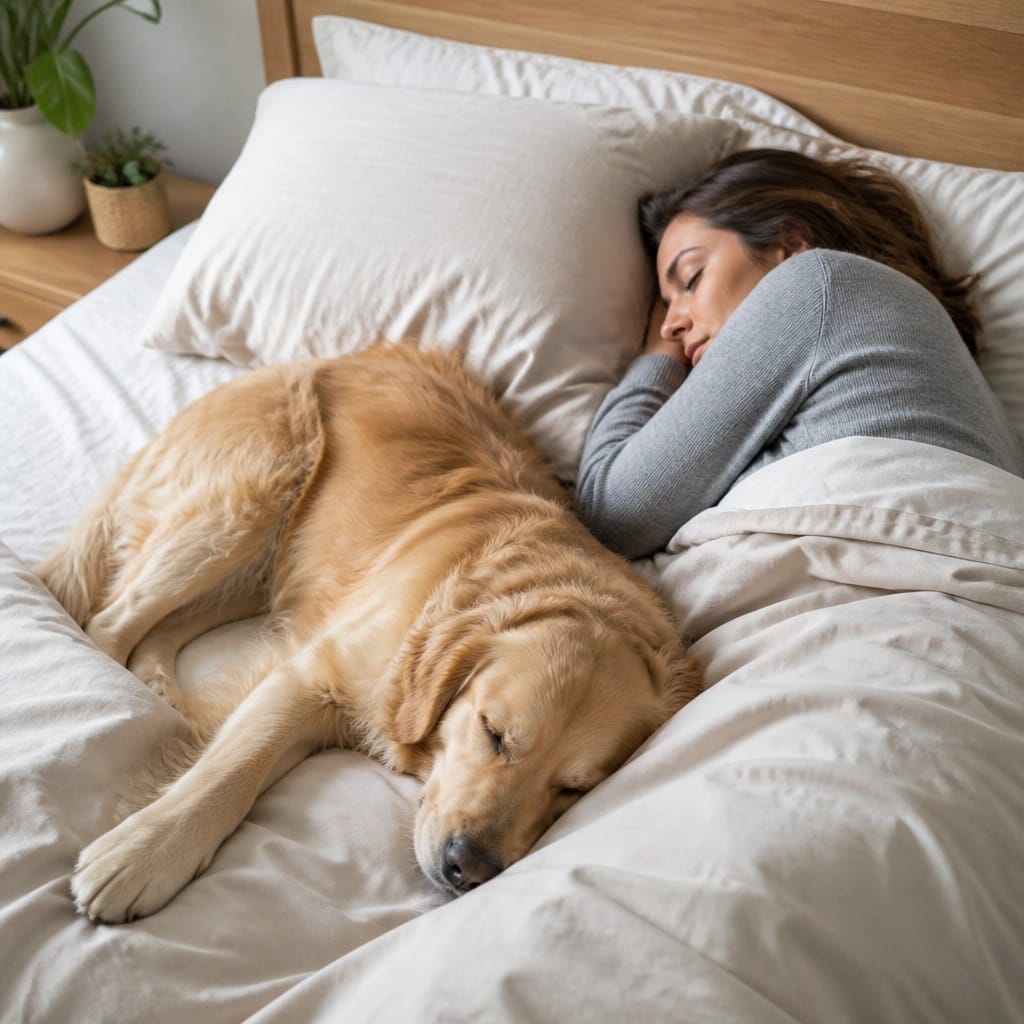
Sharing your bed with a dog isn’t the same as sharing it with another person. Dogs move differently. They shift positions more often, and many have a habit of migrating toward the middle during the night.
The space your dog actually occupies on the bed is almost always bigger than its body. A 30-pound spaniel that curls into a tight ball might take up only 20 inches of width. But the same dog sprawled on its side with legs extended can easily command 36 inches.
This is why a Full or even a Queen can feel cramped with a single medium-sized dog aboard. Understanding why your dog prefers your bed is the first step toward finding a size that works for both of you. If you’ve ever wondered why your dog pushes you to the edge, their sleeping style is likely the culprit.
The Real Problem: It’s Not Just About Dog Length
Most people make the mistake of measuring their dog while it’s standing. That number rarely matches the real space needed during sleep.
How Dogs Actually Take Up Space on a Bed
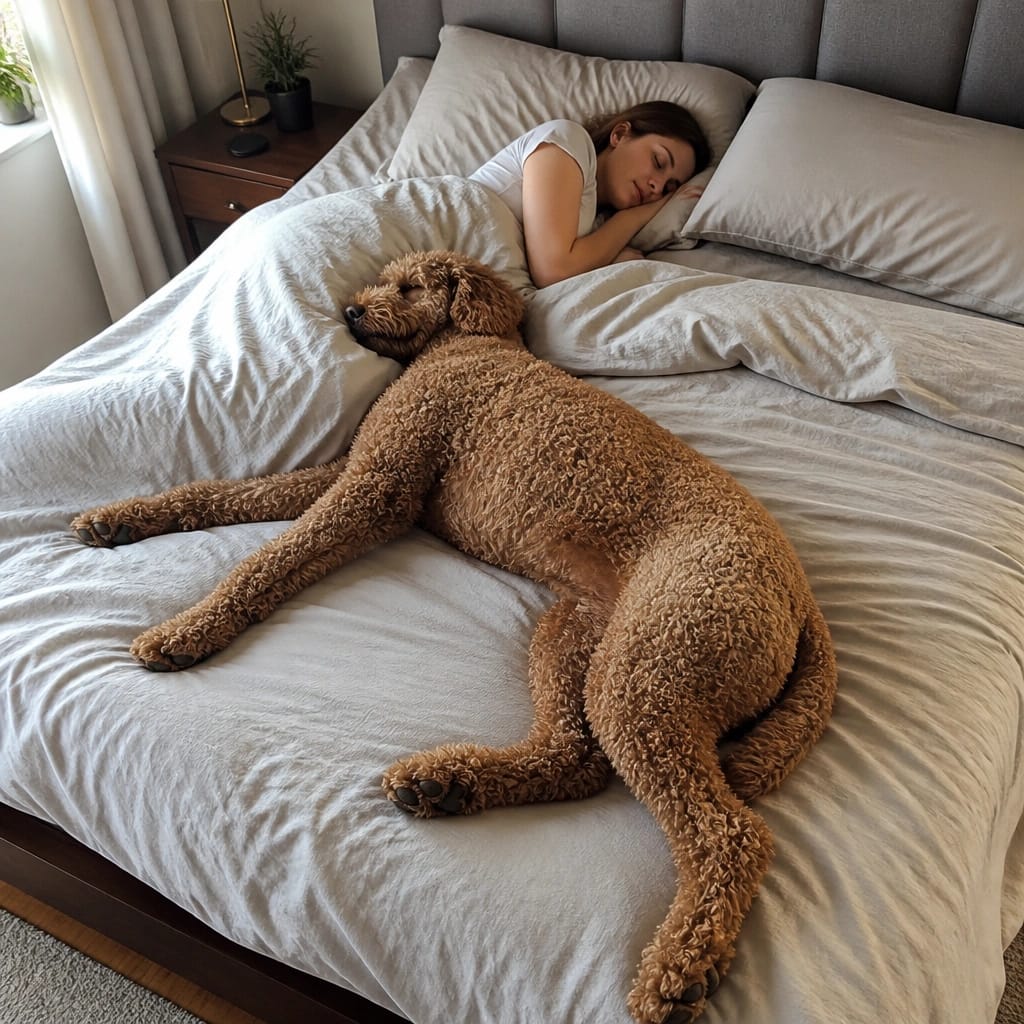
Dogs rarely lie still in one position all night. They rotate between curling, stretching, and sprawling. A dog that starts the night in a tight ball may end up diagonal across the entire mattress by morning.
We’ve seen cases where a 40-pound dog effectively uses 48 inches of width when it stretches out with all four legs. That’s more than a Twin mattress offers on its own. Check your dog’s sleeping habits at night to get a realistic idea of what you’re dealing with.
For size recommendations based on weight, a solid rule of thumb is to add 50 percent to your dog’s body length as a sprawl buffer.
How Your Sleep Position Affects the Equation
Your own sleep position matters just as much as your dog’s. Back sleepers take up less space than side sleepers, who need shoulder room. Stomach sleepers often need extra length to avoid hanging feet off the end.
If you’re a side sleeper with a large dog that also sleeps on its side, your space needs increase dramatically. A comfortable night for both of you may require a significantly wider mattress than what works for a back-sleeping couple with a small curled-up dog.
Breakdown of Human Bed Sizes for Co-Sleeping
Here’s a quick look at each standard size and how it performs when a dog shares the bed.
Twin (38” x 75”), Best for a single person with a very small dog under 15 pounds. Expect the dog to sleep curled up near your feet or side. No room for any sprawl.
Full (54” x 75”), Suits a single person with a small to medium dog (under 30 pounds) or two very small dogs. Good if you’re okay with close contact. A large dog will crowd you quickly.
Queen (60” x 80”), The most common compromise. Works for a couple with a dog under 25 pounds, or a single person with a large breed. Still tight when two adults share with a medium or large dog that sprawls.
King (76” x 80”), Ideal for two adults with a medium to large dog. Provides enough personal space for each person while leaving room for the dog to stretch, though a giant breed may still push boundaries.
California King (72” x 84”), Best for tall people plus a large dog. Extra length helps if your dog sleeps lengthwise, but the reduced width compared to a standard King can be a downside if the dog sleeps sideways.
If you’re deciding between puppy versus adult sizing, remember that a growing dog will change its space needs over time. What works today might not work next year.
Side-by-Side Comparison: Which Size Fits Which Household
The table below shows how each bed size stacks up for common dog-owner scenarios.
| Bed Size | Usable Width (approx) | Typical Dog | Best For | Trade-Off |
|---|---|---|---|---|
| Twin | 38” | Under 15 lbs | Single + small dog | No room to move |
| Full | 54” | Under 30 lbs | Single + medium dog | Cramped for two adults |
| Queen | 60” | Under 25 lbs | Couple + small/medium dog | Large dog will push you |
| King | 76” | Under 70 lbs | Couple + large dog | Needs big bedroom |
| Cal King | 72” (width) | Under 70 lbs | Tall people + large dog | Less width than King |
The International Sleep Products Association publishes these dimensions as the standard for North America. If you’re in a smaller bedroom, consider different sleeping arrangements like a separate dog bed next to yours to free up space.
Best Bed Size for Your Specific Situation
Single Person With a Small Dog (Under 25 lbs)
A Full size is usually plenty. Your dog will likely sleep curled up or next to your legs. A Twin works but leaves almost no extra space.
Single Person With a Large Breed (Over 50 lbs)
Go with a Queen minimum, but a King is much better if your dog sprawls. A single person plus a 70-pound Labrador that stretches out needs at least 66 inches of width.
Couple With a Small or Medium Dog
Queen works if your dog sleeps close to one person and doesn’t move much. But many owners find a King gives everyone more comfort and fewer middle-of-the-night adjustments.
Couple With a Large Dog
You need a King. Full stop. A large breed like a Golden Retriever or German Shepherd will take up the middle of the bed, leaving you both hanging on the edges if you try a Queen.
Two People and Two Dogs
A California King or standard King is the baseline. Even then, you may want to consider a separate dog bed for one of the dogs to avoid overcrowding. Think about comfort and support needs for everyone involved.
Someone With a Puppy That Will Grow
Buy for the adult size, not the puppy size. A Great Dane puppy fits on a Twin today but will need a King-sized portion of the bed in a year. Save yourself the upgrade headache.
Mistakes People Make When Choosing a Co-Sleeping Bed
The most common error is ignoring your own sleep position. If you’re a side sleeper who needs shoulder room, a Full or even a Queen with a medium dog will leave you cramped. Another frequent mistake is forgetting about edge support.
A mattress with weak edges lets your dog’s weight roll you toward the center, which defeats the purpose of a wider bed.
Underestimating the sprawl factor is also big. A 40‑pound dog can take up 48 inches when fully stretched. That’s more than a Twin mattress offers alone.
Always add that 12‑to‑18‑inch buffer to your dog’s body length.
Practical Steps to Find Your Right Size
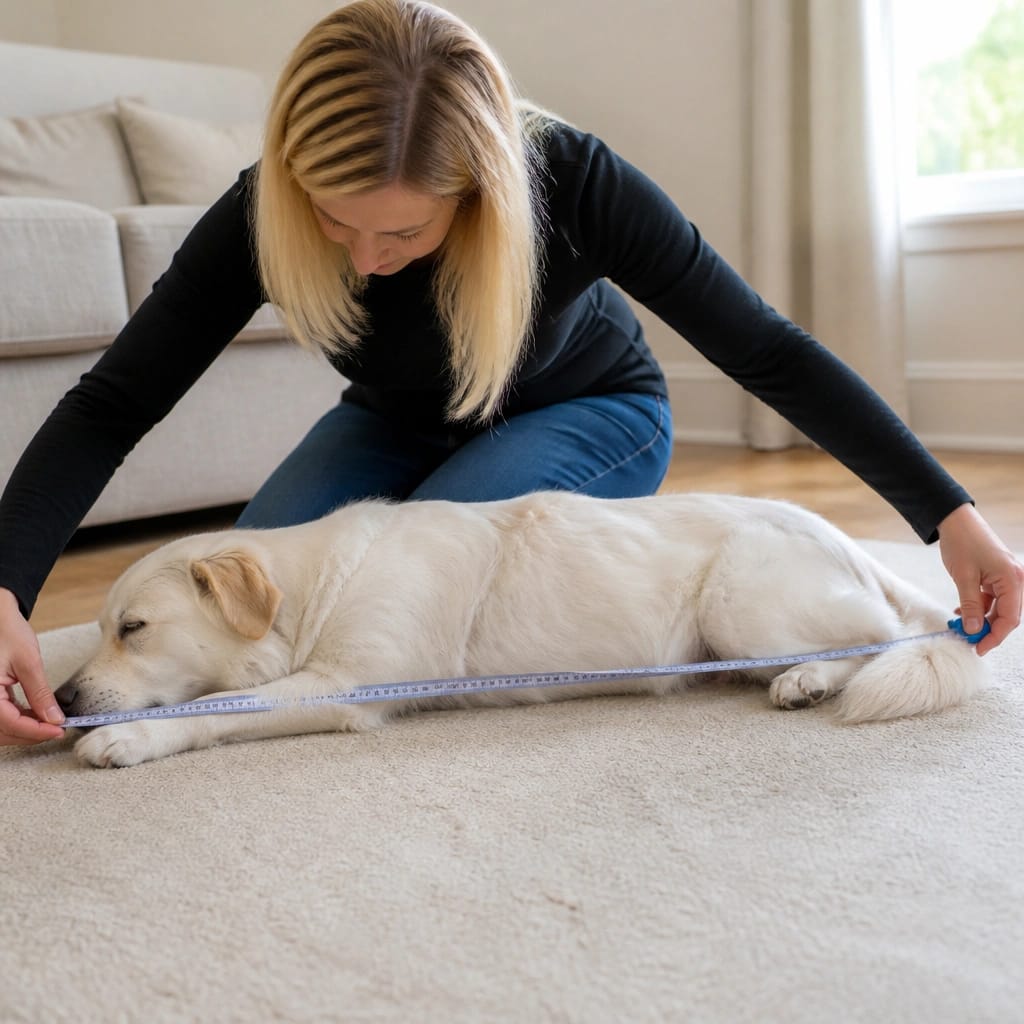
Start by measuring your dog’s real sleeping length. Wait until your dog is fully relaxed and stretched out on the floor, then measure from the nose to the base of the tail. That’s the true length you need to account for.
Add a sprawl buffer of 12 to 18 inches depending on how much your dog shifts at night. Then measure your own space needs. A side sleeper typically needs 30 to 36 inches of width.
A back sleeper needs about 24 inches. Add your dog’s adjusted length and your personal width together. Compare that total to the standard mattress sizes listed earlier.
Don’t forget to measure your bedroom. A King mattress is 76 inches wide and 80 inches long. Make sure the room can fit it without blocking doors or windows.
You can also consider different placement strategies to free up floor space.
What About Alternatives to Upsizing?
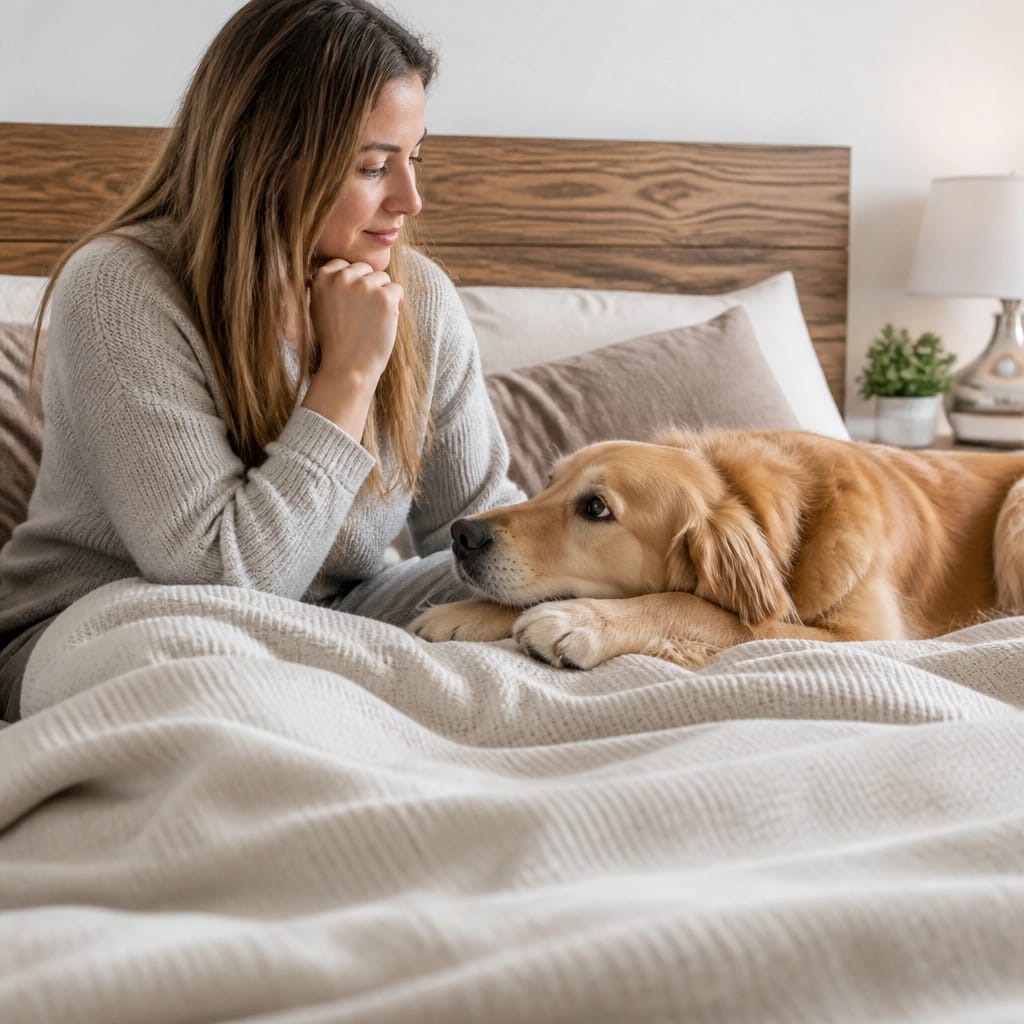
Moving up a bed size isn’t always possible due to room size or budget. A separate dog bed next to yours is a solid alternative. Many owners find their dog prefers a dedicated bed with a familiar scent placed right beside the human mattress.
This keeps everyone close without sacrificing comfort.
Another option is a bed bumper or foam extension that adds a few inches of sleeping surface on one side. These aren’t as common but can help with smaller dogs that just need a little extra room. For anxious dogs that need to feel secure, a calming donut bed next to you might work better than a bigger human bed.
Frequently Asked Questions
Can a 70 lb dog sleep on a Queen bed with two adults?
It’s possible but rarely comfortable. A Queen gives 60 inches of width, which means each adult gets about 22 inches if the dog takes the middle. Most adults need at least 30 inches for proper rest.
A King is strongly recommended.
Is a King bed too big for a small bedroom?
A standard King mattress is 76 by 80 inches. That requires at least 10 by 10 feet of floor space to avoid feeling cramped. If your room is smaller, consider a Queen with a separate dog bed alongside.
Should I buy a dog bed for the human bed instead?
That depends on your dog’s preference. Some dogs love having their own bed on the floor beside yours. Others will always migrate to your mattress.
You can try placing a comfortable dog bed near your side of the bed and see if your dog uses it.
How do I keep my dog from shifting into my space?
Reinforce where your dog lies by using a designated blanket or mat. Some owners place a rolled towel along the center as a visual boundary. Consistent training helps, but many dogs still move during the night.
Does mattress firmness affect how much room the dog takes?
Yes. A softer mattress lets the dog sink in and spread out more, often taking up extra width. Firmer mattresses with strong edge support keep the dog in a more contained space, preserving room for you.
Final Verdict: Start With Queen, Adjust Based on Your Dog
For most couples with a small to medium dog, a Queen is the bare minimum that works. Single people with a large breed should jump to a King. If you’re already feeling cramped, measure both your dog’s sprawl and your own sleep position.
Then size up accordingly.
A good night’s sleep matters for both you and your dog. Getting the bed size right is the single most important factor. If your dog constantly pushes you to the edge, it’s time to upgrade.
Your back will thank you.
When to Consider a Separate Dog Bed
Not every sleeping arrangement needs a bigger human bed. If your dog is a restless sleeper that constantly shifts positions, a dedicated dog bed on the floor beside you can be a smart alternative. Many owners find their dog uses the separate bed for part of the night and only joins them later.
This cuts down on space competition while keeping your dog close.
Choosing the Right Mattress Support for Co-Sleeping
Firmness matters more than most people realize. A mattress that is too soft lets your dog’s weight create a dip, which rolls you toward the center. Look for a mattress with strong edge support and medium‑firm feel if you share with a dog.
Innerspring or hybrid designs typically offer better motion isolation than all‑foam options.
Safety and Accessibility for Small or Senior Dogs
A bed that is too high off the floor can be dangerous for a small dog or an older dog with joint issues. A platform bed with a low profile (under 12 inches) helps your dog get on and off without jumping, which reduces strain. If you already have a tall bed, consider adding a pet ramp or a set of stairs to prevent injuries.
Seasonal Considerations for Shared Sleeping
In summer, sharing a bed with a dog can trap heat and make both of you uncomfortable. A breathable mattress protector and lightweight bedding help regulate temperature. In winter, your dog’s body heat can be a welcome addition.
Adjustable comfort layers or a dual‑zone electric blanket let each of you stay at your preferred warmth.
How to Make a Smaller Bed Work
If you cannot upsize due to room or budget constraints, focus on training your dog to sleep in a specific spot. Use a designated blanket or mat to mark the dog’s area. Some owners place a rolled towel as a boundary.
With consistent practice, many dogs learn to stay in their zone. It won’t solve extreme sprawl, but it can make a Queen work for a couple with a small to medium dog.


