

Dog Bed Dimensions Explained: Length, Width, Height and Depth
If you’ve ever bought a dog bed that looked perfect online only to find your dog hanging off the edges, you know dimensions matter more than you’d think. That’s exactly why Dog Bed Dimensions Explained: Length, Width, Height and Depth is the guide you need before you spend another cent.
Our research shows that as of 2026, most bedding manufacturers still rely on a simple nose to tail plus allowance formula. Getting these four numbers right means the difference between a bed your dog uses and one they ignore. Let’s walk through each measurement so you never guess again.
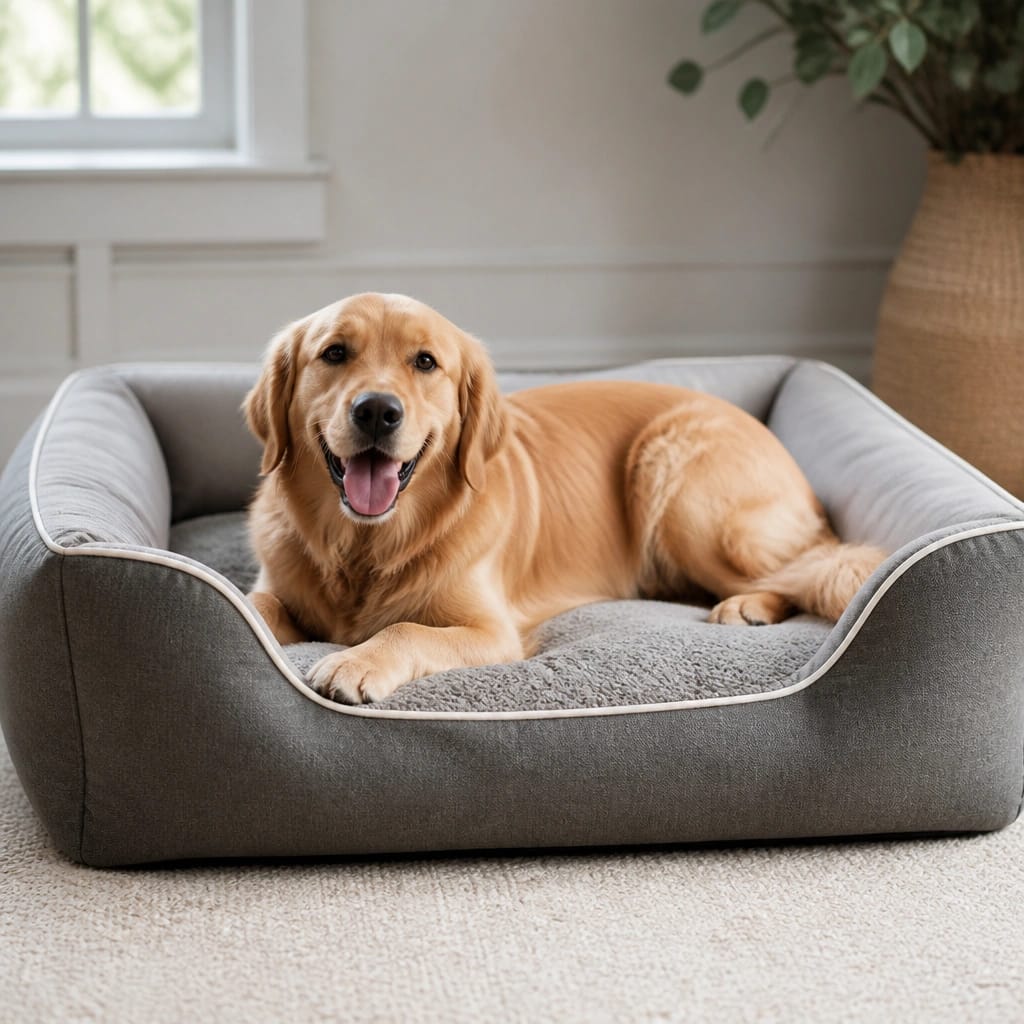
Dog bed dimensions cover four measurements: length, width, height, and depth. Length runs from nose to tail. Width gives room to sprawl or curl. Height is the foam thickness. Depth is the bolster or raised edge height. Each measurement changes how the bed fits your dog.
Image source: Wikimedia Commons / U.S. Department of Agriculture
Why Bed Dimensions Actually Matter for Your Dog’s Sleep
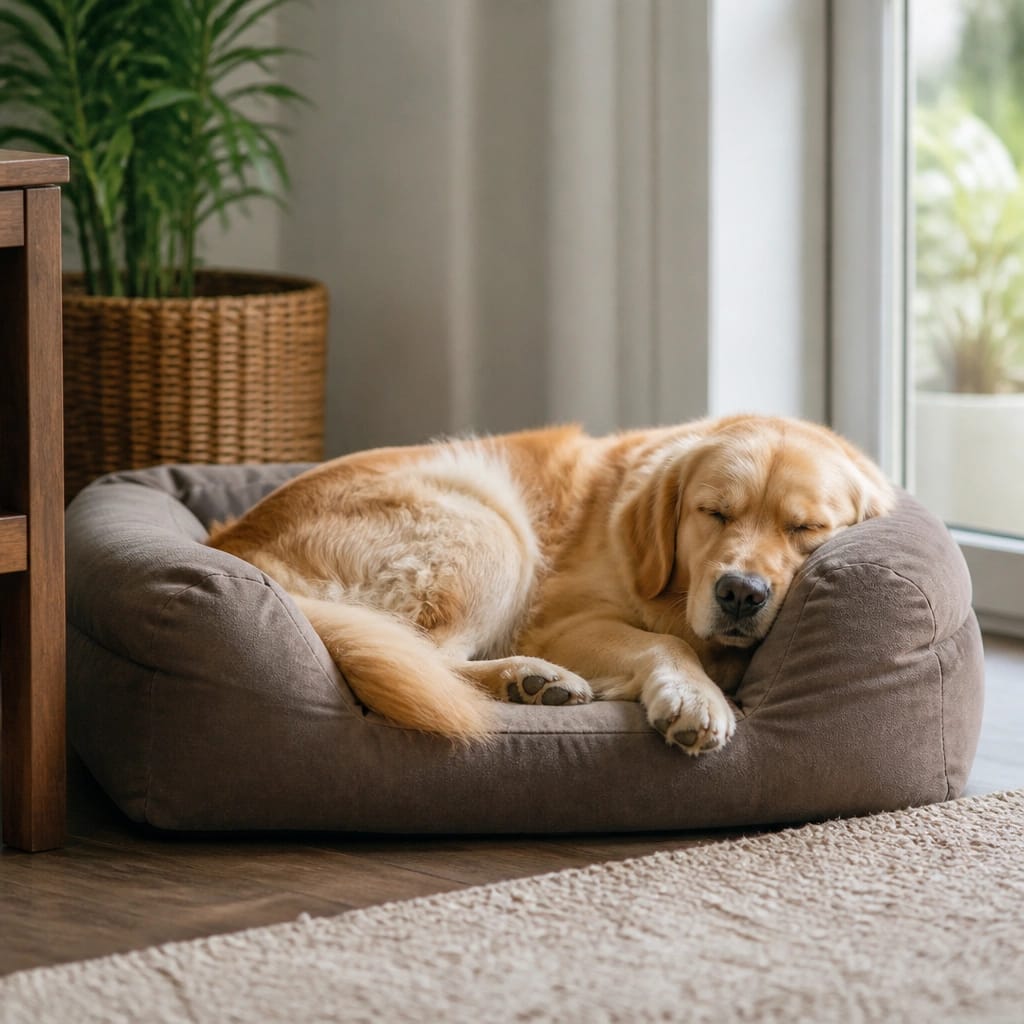
Wrong sized bedding is a leading cause of poor sleep for dogs. If the bed is too small, your dog can’t fully stretch or curl comfortably. If it’s too big for a crate, the bed bunches up and becomes uneven.
Good dimensions support proper joint alignment and help regulate body temperature. A well fitted bed also reduces anxiety because your dog feels secure in a space that fits their body. According to the American Kennel Club breed guidelines, size varies widely even within the same weight class.
Dogs with correctly sized beds show fewer sleep disruptions. They also spend less time circling and digging before settling down. Your dog’s sleeping habits are often a direct signal that the size is wrong.
The Three Measurements You Need to Understand
Length – The Nose-to-Tail Rule
Length is the most straightforward measurement. Measure from the tip of your dog’s nose to the base of their tail. Add 4 to 6 inches for dogs who curl.
Add up to 12 inches for dogs who stretch out completely.
This number is your minimum bed length. Anything shorter and your dog will hang off the edge. Many manufacturers list length under “usable sleeping surface,” so check that number specifically.
Width – Room to Stretch or Curl
Width matters most for sprawlers and side sleepers. If your dog stretches their legs out while sleeping, measure from paw to paw. Add 4 inches minimum for a comfortable margin.
For curlers, width is less critical than depth. A narrower bed with high sides works fine. But for full body stretchers, skimping on width leads to uncomfortable sleeping positions.
Height and Depth – Bolster Support vs Clearance
Height refers to the bed’s base thickness. Thicker foam offers better joint support, especially for older dogs. A 4 inch foam base is standard for medium breeds.
Large breeds often need 5 to 6 inches.
Depth refers to the bolster or raised edge height. A 6 inch bolster suits dogs who like to rest their head on something. If your dog prefers a flat surface, choose a bed with low bolsters or none at all.
Dogs that like to burrow need deeper beds with more substantial bolsters for security.
How to Measure Your Dog the Right Way
Measuring for Length
Start with the nose to tail measurement. Lay your dog on their side with a flexible tape measure. Record the length from nose tip to tail base.
This is your baseline.
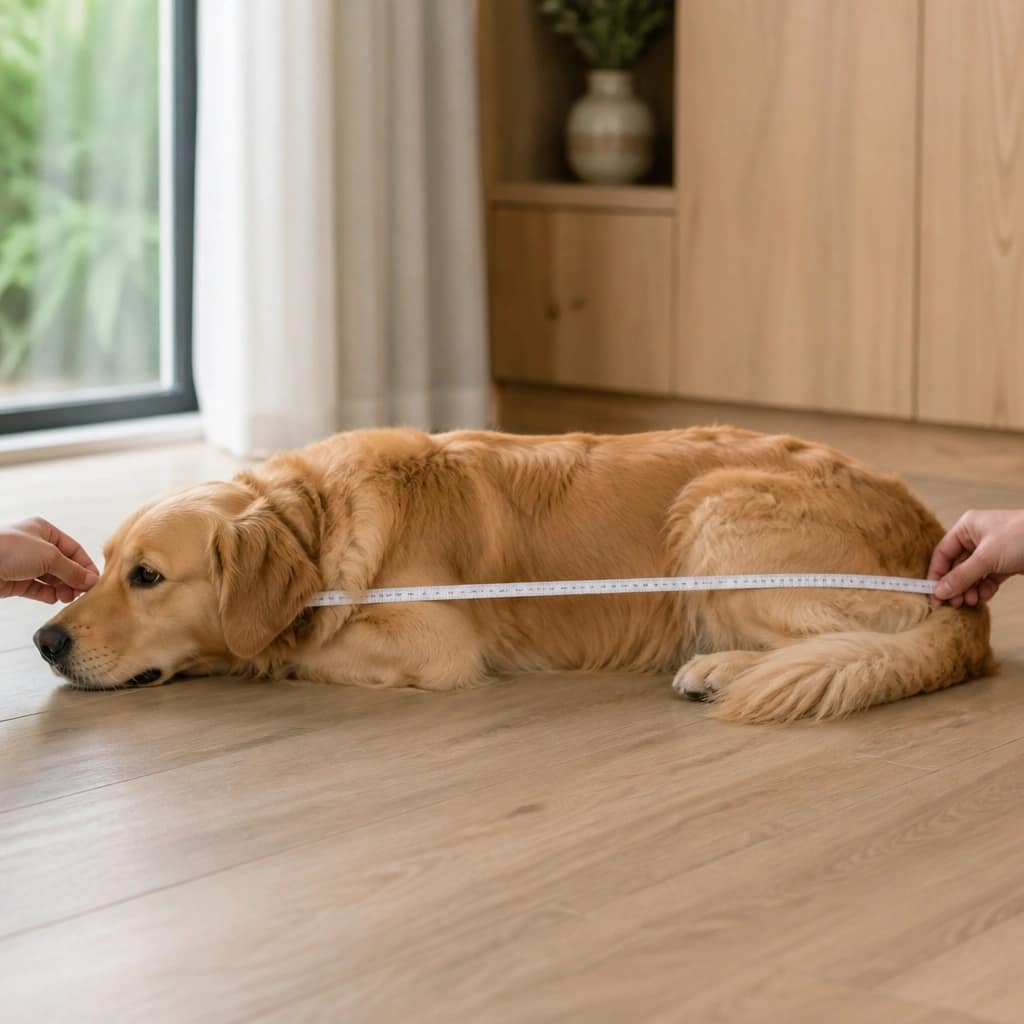
A stiff ruler or yardstick works too, but flexible tape conforms better to your dog’s body. Measure twice to be sure. One wrong reading can mean buying a bed that’s too small.
Measuring for Sleeping Position
Watch your dog sleep for a few days. Do they curl into a tight ball or stretch out like a starfish? Curlers are fine with smaller beds if the depth is right.
Sprawlers need extra width and length.
Take a photo of your dog in their most common sleeping position. Compare it to the measurement chart later. This step prevents the most common sizing mistake: buying by weight alone.
Accounting for Growth in Puppies
Puppies are a special case. They grow fast, especially large and giant breeds. Our advice is to buy a bed sized for their full grown weight, not their current size.
You can find a comprehensive guide in our article on sizing for a puppy compared to an adult dog. A bed that fits now might be too small in three months. Plan ahead to avoid buying twice.
Matching Dimensions to Sleeping Style
The Curler
If your dog curls up, they need a bed with good depth or high bolsters. A donut bed works well here because the raised edges mimic the feeling of being held. The inside diameter must be wider than your dog’s curled body.
Our calming donut dog bed guide explains why these beds suit nervous sleepers. Curlers also benefit from deeper foam that hugs their joints.
The Sprawler
If your dog sprawls, they need length and width. A flat mat or cot is often better than a deep bolstered bed. The open space lets them stretch without bumping into sides.
Measure your dog’s full stretch length from nose tip to tail tip. Add 6 to 12 inches. That’s your minimum bed length.
Sprawlers also need width equal to or greater than their paw to paw span.
The Leaner
If your dog leans against walls or furniture, they need a bed with a solid bolster. A high back or edge gives them something to rest against. This is common in dogs with anxiety or a need for security.
Our bolster dog bed guide covers the best options for leaners. The bolster height should match your dog’s shoulder height for proper head support.
Choosing Between Bed Types by Dimension
Flat Mats and Cots
Flat mats and cots have no raised edges. They’re best for sprawlers and hot sleepers. Look for a size that matches or exceeds your dog’s full stretch length.
Cots offer airflow underneath, which helps with temperature regulation. They also lack bolsters, so they take up less space in a crate. If your dog doesn’t need head support, a flat mat is a smart choice.
Bolstered Beds and Donuts
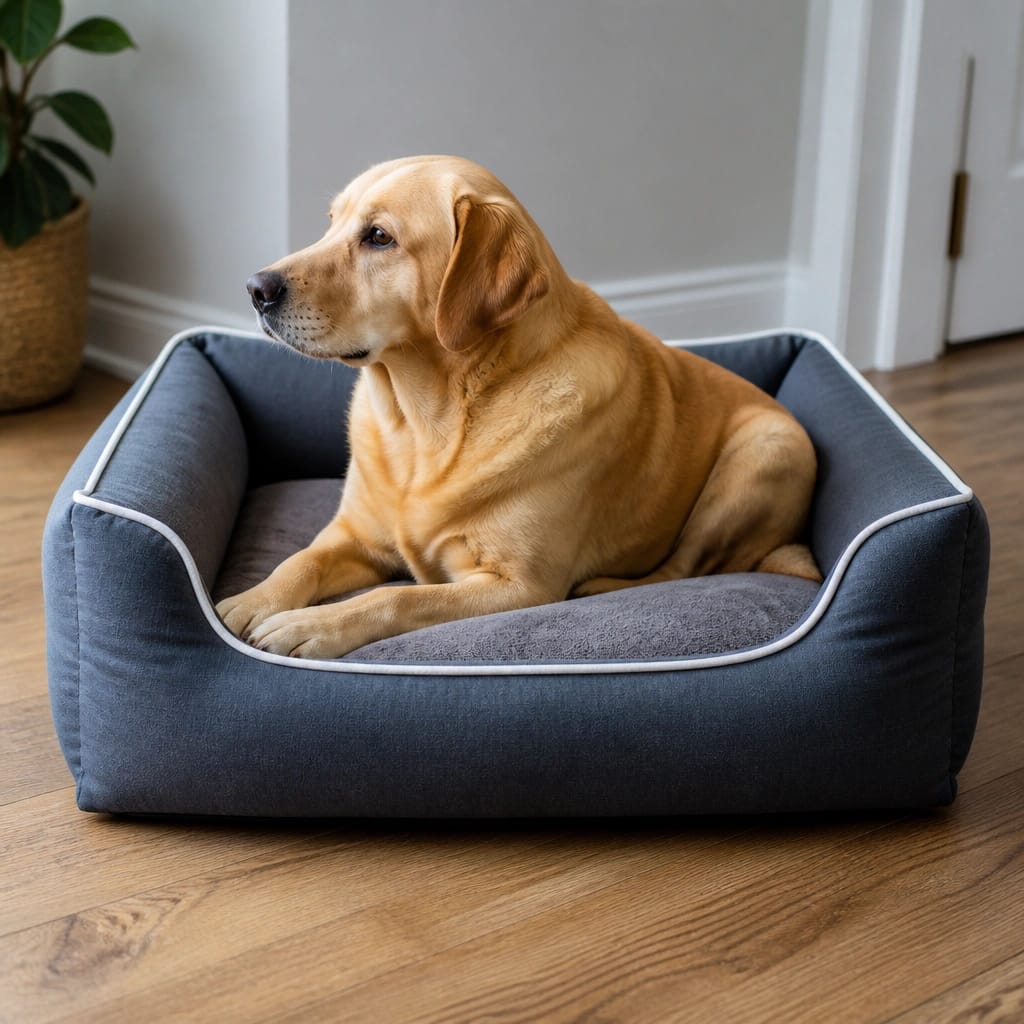
Bolstered beds and donuts have raised sides. Depth here is crucial. For a donut, the inside diameter must be wider than your dog’s curled body.
For a bolstered bed, the bolster height should match your dog’s shoulder height so they can rest their head.
Our type of bed for anxiety guide covers when bolstered beds make sense. Dogs that feel safer with walls around them do well here.
Orthopedic Beds with Thick Foam
Orthopedic beds focus on height or thickness. A 4 inch foam base is standard for medium dogs. Large breeds often need 5 to 6 inches.
Thicker foam supports joints better, but watch the total height for crate fit.
If your dog has joint issues, proper head and neck support becomes even more important. Orthopedic beds with a contoured base offer additional pressure relief for senior dogs.
Quick Reference: Dog Bed Dimensions by Dog Size
| Dog Size | Nose to Tail Length | Recommended Bed Length | Recommended Bed Width | Recommended Foam Height |
|---|---|---|---|---|
| Small (under 25 lbs) | 12 to 18 inches | 18 to 24 inches | 18 to 20 inches | 2 to 3 inches |
| Medium (25 to 50 lbs) | 18 to 24 inches | 24 to 30 inches | 20 to 24 inches | 3 to 4 inches |
| Large (50 to 75 lbs) | 24 to 30 inches | 30 to 36 inches | 24 to 28 inches | 4 to 5 inches |
| Extra Large (75+ lbs) | 30 to 36 inches | 36 to 48 inches | 28 to 36 inches | 5 to 6 inches |
Crate Bed Dimensions – The Exact Fit Rule
Crate beds must fit exactly inside the crate. The bed should sit flat against all four walls without bunching. Measure the crate interior width and length before buying.
Image source: Wikimedia Commons / U.S. Department of Agriculture
Common crate sizes include 24, 30, 36, 42, and 48 inches in length. Match your bed to these dimensions. A bed that’s too large will buckle and create uneven sleeping surfaces.
For crate training, crate pad vs crate mat explains the differences in thickness and support. Thin pads work for travel. Thicker mats offer more comfort for overnight crating.
Decision Guide: Walk Through Your Dog’s Numbers
Step 1: Nose-to-Tail Length + Allowance
Take your dog’s nose to tail measurement. Add 4 to 12 inches depending on sleeping style. Curlers need 4 to 6 inches.
Sprawlers need 8 to 12 inches.
Write this number down. It’s your minimum bed length. Compare it to the usable sleeping surface listed on any bed you consider.
Step 2: Check Width Against Sprawl Habits
If your dog sleeps on their side with legs out, measure paw to paw. Add 4 inches. If your dog curls, width is less critical.
Focus on depth instead.
Our dogs love to burrow guide explains why some dogs prefer deep, enclosed spaces. Their width needs differ from sprawlers.
Step 3: Decide on Bolster Height Based on Head Support
If your dog rests their head on things, choose a bed with a bolster matched to their shoulder height. If they sleep flat, skip the bolster. Bolsters that are too high force the neck into an uncomfortable angle.
For dogs with arthritis, consider how getting in and out works. Where to place a dog’s bed in the house covers positioning for dogs who struggle to climb.
Common Mistakes That Wreck the Fit
Buying by Weight Alone
Weight is not a reliable sizing metric. Two dogs at 50 pounds can have completely different body lengths. A short, stocky bulldog needs a different bed than a long, lean greyhound.
Always measure your dog directly. Our dog bed size chart by weight is a starting point, not a final answer. Use it alongside actual measurements.
Ignoring the Bolster Height
Bolster height changes how the bed fits. A high bolster on a narrow bed cramps a sprawler. A low bolster offers no support for a leaner.
Match the height to your dog’s shoulder line.
If your dog already has a bed but avoids it, the bolster might be the issue. Check whether they can comfortably rest their head.
Forgetting the Crate’s Interior Width
Crate interior width varies by manufacturer. A 36 inch crate from one brand might be 35 inches inside. Measure the actual space, not the label size.
A bed that’s half an inch too wide won’t lay flat. It will push up against the sides and create uneven pressure points. For crate sleepers, crate pad vs crate mat helps you choose the right thickness.
When to Size Up (and When Not To)
Giant Breeds and Custom Needs
Giant breeds like Great Danes and Mastiffs often exceed standard bed sizes. They need beds 48 inches or longer. Some manufacturers offer custom sizes.
For giant breeds, foam thickness matters even more. They need 5 to 6 inches of support to prevent joint soreness. Check that the bed has a non slip base so it stays in place.
Senior Dogs and Joint Support
Senior dogs benefit from thicker foam and lower entry points. A bed with a 2 inch foam base isn’t enough. Look for 4 to 6 inches of orthopedic foam.
Lower bolsters help them climb in without strain. If your senior dog has trouble getting up, why they sleep on the floor instead of their bed explains how poor fit can cause avoidance.
Puppy Beds That Grow with Your Dog
Some beds are designed to expand or include removable layers. These work for the first year but rarely last into adulthood. A better strategy is buying an adult sized bed from the start.
Puppies also chew. Choose chew proof materials if your dog is destructive. A durable bed that fits correctly lasts through the teething stage.
Frequently Asked Questions
How do I measure my dog for a bed if they won’t stay still?
Use a flexible tape measure while your dog is lying down. If they refuse, measure their bed or crate they currently use. Add a few inches.
You can also measure their height by checking how much space they take up on a known surface.
Is there a difference between bed height and bed depth?
Yes. Height refers to the foam or mattress thickness. Depth refers to the bolster or raised edge height.
Height supports joints. Depth supports head and neck. They work together but serve different purposes.
Do I need to account for my dog’s tail when measuring?
Measure from the tip of the nose to the base of the tail. Do not include the tail itself. The tail adds length but doesn’t determine where the body rests.
The body from nose to tail base is what touches the bed.
What size bed does a French Bulldog need?
French Bulldogs are short but broad chested. Measure their nose to tail length, which is typically 15 to 18 inches. Add 4 to 6 inches for a total of 19 to 24 inches.
Our French Bulldog bed guide covers specific needs for brachycephalic breeds.
How much space should a dog have in a crate with a bed?
The dog should be able to stand up, turn around, and lie flat without hitting the sides. The bed should sit flat against all four walls. If the bed bunches up, go down a size or measure your crate interior more carefully.
Can a bed be too big for a dog?
Yes. A bed that’s too large can feel insecure, especially for dogs that like to nest. It also takes up excessive floor space.
The goal is a bed that matches your dog’s body plus a reasonable allowance, not the entire room.
What to Do Next: Measure Once, Buy Right
Grab a flexible tape measure and your dog’s favorite treat. Measure nose to tail base, then add your allowance. Check the bed’s usable sleeping surface against that number.
Match width to how your dog actually sleeps. Pick a bolster height that supports their head without crowding them.
That’s it. You now know exactly what to look for. No more guessing.
No more returns. Your dog gets a bed that fits them perfectly, and they’ll actually use it.
Maintaining the Right Fit Over Time
Foam compresses with use. Check your dog’s bed every six months for sagging. If the center dips more than an inch, the support is gone.
Replace the bed before your dog starts sleeping on the floor.
Washable covers help the bed last longer. But the foam core wears out regardless of how clean the cover looks. Our guide on removing urine smell from memory foam can extend the life of a still supportive bed.
Signs Your Bed Needs Replacing
Your dog avoids the bed for no obvious reason. They start sleeping on tile or hardwood instead. That’s a sign the bed no longer fits or supports them properly.
Check for visible wear like broken seams or flattened bolsters. A bed that’s lost its shape won’t provide the right dimensions anymore. Replace it before your dog develops sore spots.
Special Considerations for Multi Dog Homes
Two dogs sharing one bed need extra width. Add both dogs’ paw to paw spans together. You need a bed wide enough for both to stretch without touching.
If they prefer separate spaces, measure the largest dog and buy two beds. Our indoor vs outdoor bed guide helps if one dog stays outside more often.
When to Consult a Veterinarian
If your dog has joint pain or mobility issues, a properly sized bed supports recovery. But dimensions alone don’t treat medical conditions. A vet can recommend specific foam density and thickness for your dog’s condition.
Senior dogs with arthritis may need a thicker base than standard sizing suggests. Our heated bed option can also help with stiffness in cold weather.
Final Tips for a Perfect Fit
Measure your dog every year. Weight changes and aging shift their needs. A bed that fit last year might be wrong today.
Always check the manufacturer’s usable surface dimensions, not the overall product size. That’s the space your dog actually sleeps on. Buy right once and your dog will thank you with better sleep.


