

How Bolsters Change Dog Bed Measurements?
If you’ve ever looked at a bolster dog bed and wondered why the dimensions listed don’t match what your dog actually fits into, you’re not alone. How Bolsters Change Dog Bed Measurements is one of the most overlooked details when buying a bed, and it’s the exact reason many owners end up with a bed that looks huge on paper but feels cramped in real life. The raised sides aren’t just for comfort, they physically shrink the flat surface your dog can actually lie on.
Industry standards for dog bed sizing are inconsistent across brands. As of 2026, most manufacturers list the outer footprint, not the inner sleeping area. That gap can be 4 to 8 inches depending on bolster height and fill density.
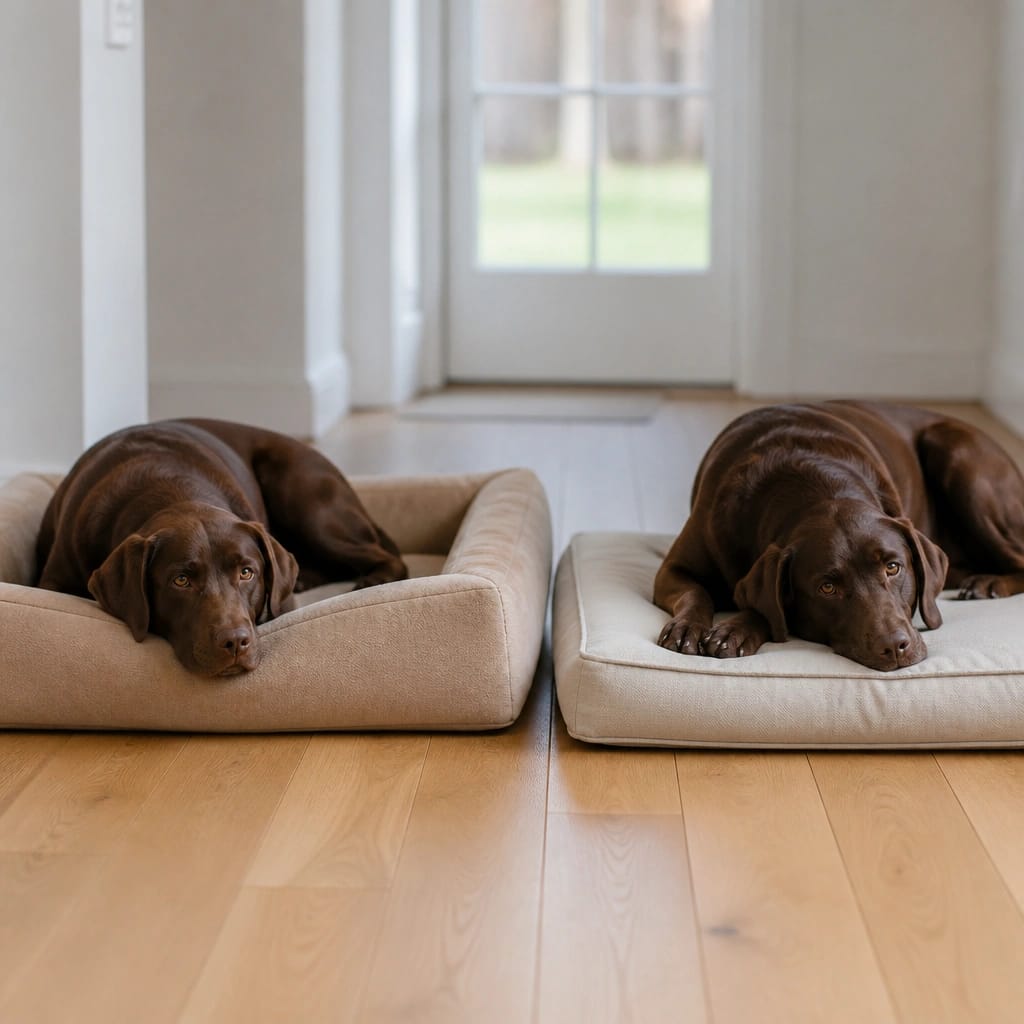
Once you understand how bolsters eat up that space, you’ll never misread a size chart again. Let’s break down exactly what changes and how to measure correctly.
Bolsters reduce the usable sleeping area of a dog bed. The raised sides take up inches from the inner surface. Outer dimensions don’t tell you how much room your dog actually has.
You need seam to seam measurements. Always subtract twice the bolster height from the outer width. That gives the true flat space.
Why Bolster Beds Confuse Every Measurement
The confusion starts with how beds are labeled. Most product pages show the overall length and width. A bed might say “36 x 28 inches” but that includes the bolsters.
The inner mattress pad where your dog’s body actually rests could be 28 x 20 inches. That’s a massive difference for a medium sized dog.
Think of it like a couch with armrests. The total width includes the arms, but the seat cushion is narrower. Bolster beds work the same way.
The higher and thicker the bolsters, the more they cut into the available floor space. A dog that curls up tightly might be fine with a smaller inner area. A dog that stretches out needs to account for every lost inch.
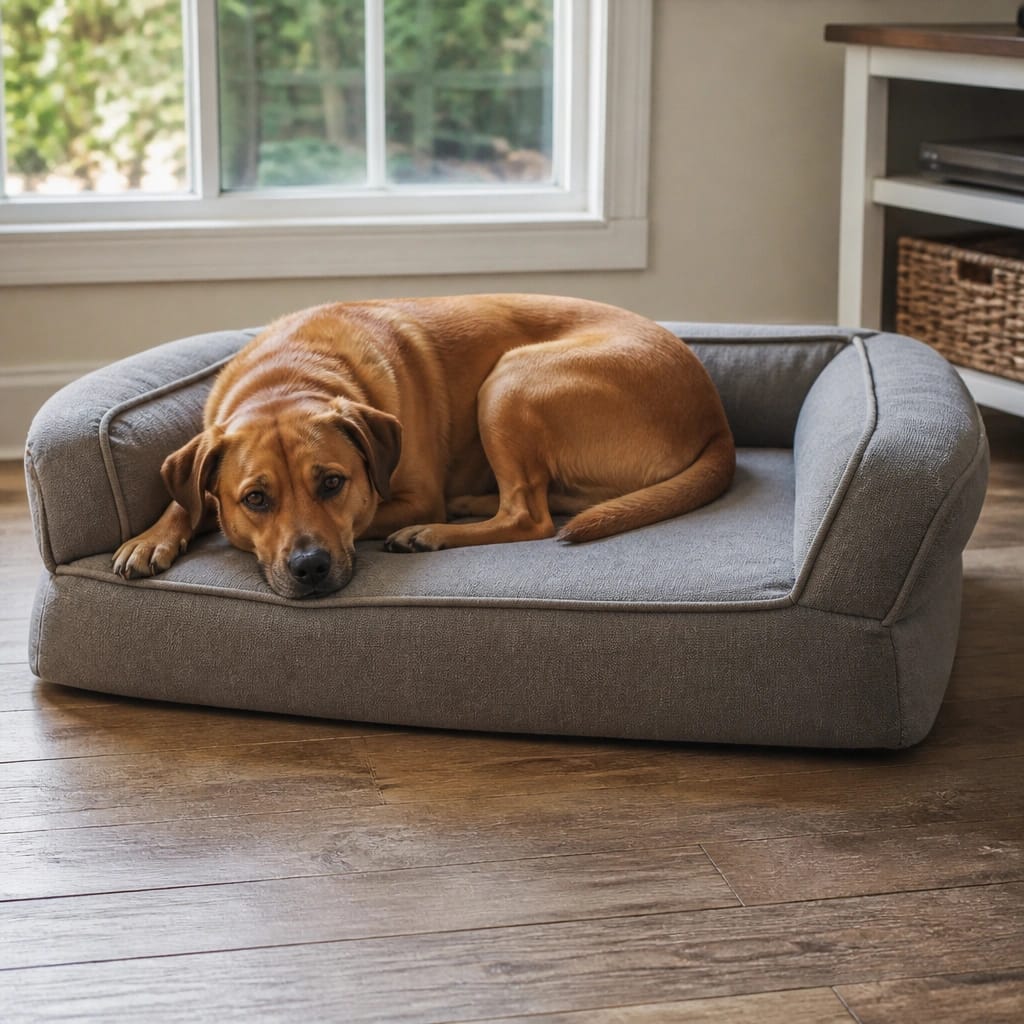
How Bolsters Actually Change the Usable Sleeping Area
The usable sleeping area is essentially the flat base of the bed, measured from the inside edge of one bolster to the inside edge of the opposite bolster. This is sometimes called the “seam to seam” measurement. Some brands publish it.
Many do not.
What shrinks and what doesn’t
- Outer width and length, unchanged by bolsters; they are the total footprint.
- Inner width, reduced by the combined height of both bolsters. For example, a 30‑inch wide bed with 6‑inch bolsters on each side leaves roughly 18 inches of flat space.
- Inner length, similar reduction if the bed has bolsters at both ends (sofa style) or a full round bolster (donut style). If only one side has a bolster (headrest style), only that dimension is reduced.
Why you need to check both dimensions
A dog that sleeps stretched out needs enough inner length. A dog that curls needs enough inner width (or diameter for round beds). Both numbers are critical.
If you only look at outer dimensions, you might pick a bed that forces your dog’s head to rest on the bolster instead of the flat surface, which can cause neck strain over time.
Step 1: Measure Your Dog First (Not the Bed)
Before you even browse beds, measure your dog in two positions. This gives you a target for the inner dimensions you’ll need.
How to measure
- Length, from the tip of the nose to the base of the tail (not including tail) while your dog is standing or lying flat.
- Curled diameter, measure across the tightest circle your dog can curl into. This is crucial for donut beds.
- Height at shoulder, optional but helpful for choosing bolster height. A dog with a 12‑inch shoulder can handle a 6‑inch bolster; a Chihuahua might struggle with anything over 4 inches.
Add 4 to 6 inches to your dog’s length for a comfort buffer. That total becomes the minimum inner dimension you’re looking for. If your dog sleeps stretched out, the inner length needs to match that buffered number.
If they curl, the inner width of a bolster bed should be at least the curled diameter plus a few inches.
A good reference point for breed sizes can be found through the American Kennel Club’s size guidelines, which help you confirm typical lengths for your dog’s breed.
Step 2: Decide Your Dog’s Sleeping Position
Your dog’s default sleeping posture directly determines how much the bolsters will affect them. There are three main patterns.
Curled up (donut position)
These dogs fit inside the bolsters naturally. The raised sides provide a cozy nest. Inner diameter matters most.
A curled dog compresses the bolsters symmetrically, so the usable area stays close to the seam to seam measurement. This is the ideal match for a bolster bed.
Stretched out (side lying or sploot)
These dogs need more linear space. They often push against one bolster while lying flat. If the inner length is too short, their head or legs hang over the edge.
That’s fine for some dogs, but if they consistently slide off, the bolsters are too restrictive.
Sprawler (belly down, legs out)
This position eats up both width and length fast. Bolster beds are usually not the best choice. A flat mat or low profile bed gives them room to spread without hitting sides.
Knowing your dog’s habit helps you skip the wrong bed styles entirely. If your dog mostly curls, go with a higher bolster. If they stretch, stick to low bolsters or no bolsters at all.
Step 3: Pick the Right Bolster Style for That Position
Bolsters come in different shapes, and each shape changes measurements differently.
Three sided (sofa style)
Two side bolsters plus one headrest. The inner length is reduced by the headrest, inner width reduced by side bolsters. Good for dogs that lean against something while lying flat.
The open front allows easy entry.
Four sided (donut or round)
Continuous round bolster. Measurements are from seam to seam across the center. For round beds, the inner diameter is roughly the bed’s total diameter minus twice the bolster height.
A 30‑inch donut bed with 6‑inch bolsters gives about 18 inches of sleeping circle. That’s tight for a medium dog that curls.
Two sided (L shaped or corner bed)
Bolsters on two adjacent sides. Inner length and width each lose one bolster dimension. Best for corner placement where the dog can lean into the walls.
Single headrest (couch style)
One bolster at the head. Only the length dimension is reduced. This is the most space efficient for dogs that stretch out, because the width stays full.
Most dogs with anxiety or noise phobia tend to prefer a headrest to lean against while still having open space.
Matching the style to your dog’s sleeping position is the fastest way to avoid measurement headaches later. If you’re unsure, a single headrest bed is the safest bet for a stretchy dog, while a donut bed suits a natural curler.
Step 4: Account for Bolster Compression (The Squish Factor)
Bolsters aren’t solid blocks. Most are filled with polyfill, shredded foam, or memory foam. When a dog lies down, the bolster compresses under their weight.
That compression effectively adds a couple of inches of usable space.
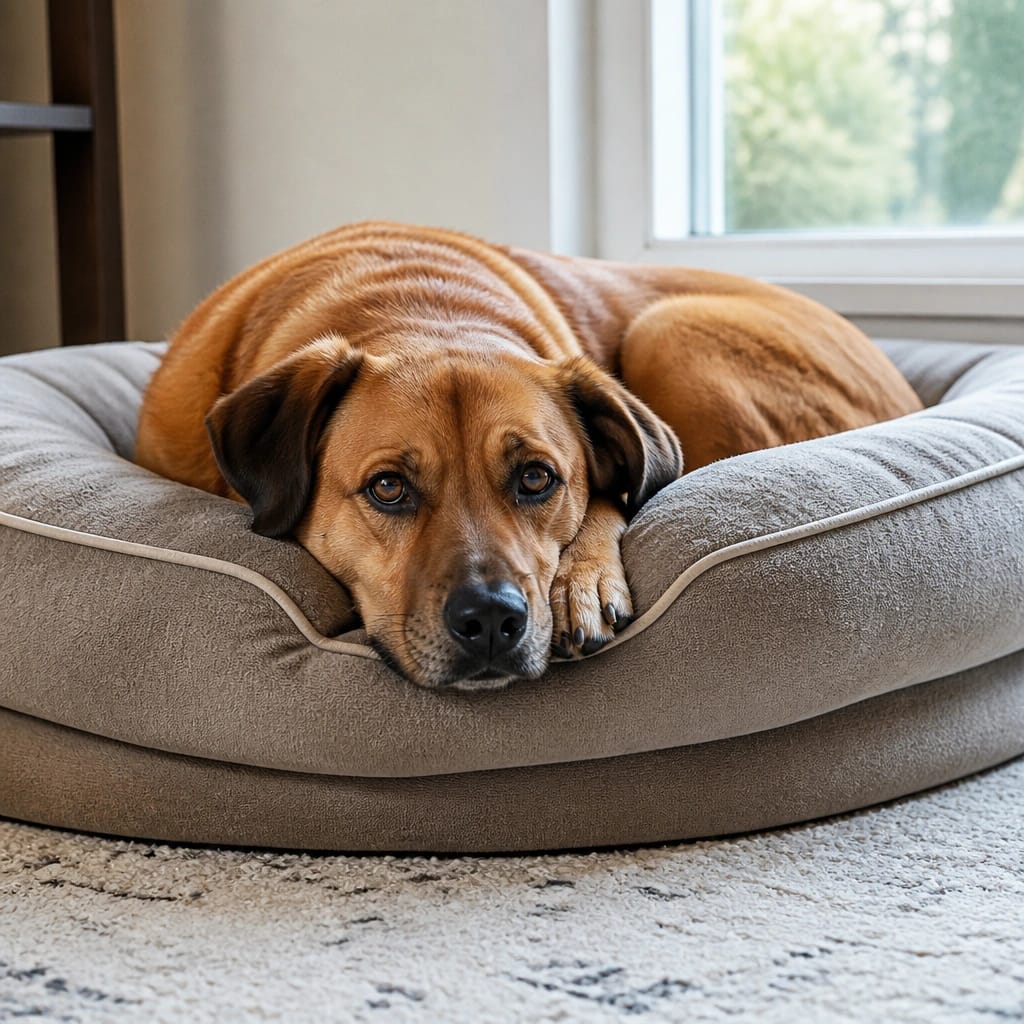
A 70‑pound dog on a medium‑density bolster can squish it down by 1.5 to 2 inches. That means a seam‑to‑seam width of 20 inches might become 22 inches with the dog’s weight. The softer the fill, the more compression you get.
But don’t rely on squish alone. A firm foam bolster compresses very little. If you have a heavy dog and a firm bolster, measure conservatively.
The image below shows how a dog’s body pushes the foam down, effectively widening the inner area.
Step 5: Match the Bed to Your Crate or Floor Space
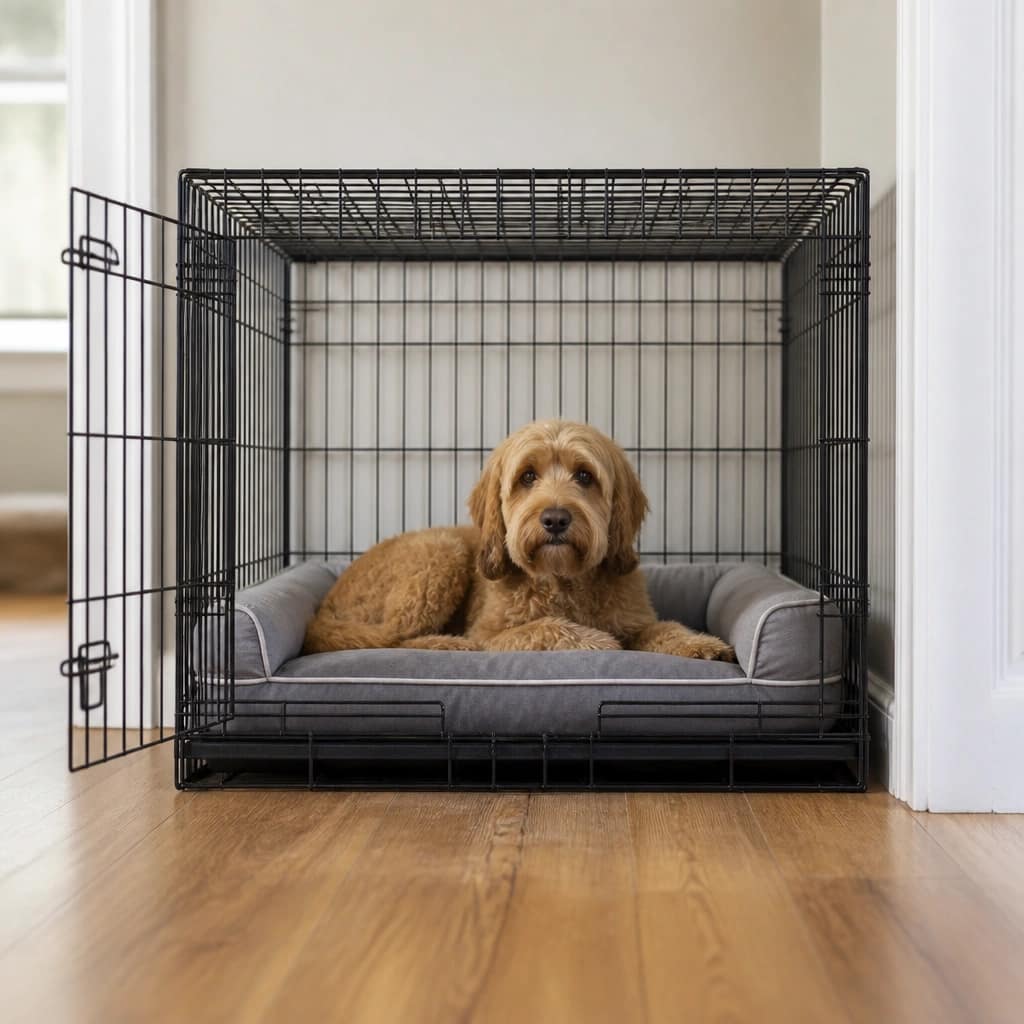
If the bed goes inside a crate, the outer dimensions must fit. Measure the crate interior length and width. Subtract an inch from each side for clearance.
That gives the maximum outer bed size.
Now check the inner dimensions against your dog’s needs. A crate bed that fits perfectly outer‑wise but offers only 12 inches of inner width is useless for a medium dog. You may need to downsize the crate or choose a different bed shape.
For floor placement, you have more flexibility. A bed that’s slightly larger than necessary is fine. Just remember the outer footprint is what occupies floor space, not the sleeping area.
Our bed size chart by weight can help you match typical breed sizes to common bed dimensions.
Common Measurement Mistakes Dog Owners Make
The biggest mistake is trusting outer dimensions alone. Owners see “36 inches” and think their 30‑inch dog fits easily. They forget the bolsters eat 6 to 8 inches.
Other common errors include ignoring sleeping position, assuming all bolsters compress the same, and forgetting to measure the dog first. Many owners also skip checking the seam‑to‑seam measurement in product descriptions. If it’s not listed, contact the manufacturer.
Another frequent issue is buying a bed that matches the dog’s length exactly with no buffer. A dog needs a few inches of clearance in every direction, especially if they shift positions during sleep.
When Bolsters Help You Size Up (Without Wasting Space)
Bolsters can actually let you buy a larger bed for a small space. Here’s why: a 30‑inch flat bed offers 30 inches of sleeping area. A 30‑inch bolster bed offers maybe 22 inches.
To get 30 inches of usable space with bolsters, you’d need an outer size around 38 to 40 inches.
That sounds like wasted floor space. But a bolster bed also provides head support and a nesting feel. For a dog that curls, the bolsters are a feature, not a drawback.
You’re adding comfort, not losing space.
So if your dog is a curler and you have room, sizing up one level can give both the cozy sides and enough inner room. This is especially helpful for dogs that love to burrow and want to press against something soft.
When a Flat Bed Makes More Sense Than a Bolster Bed
Flat beds are better for dogs that stretch out, have mobility issues, or overheat easily. Without bolsters, every inch of the listed dimensions is usable. A 36‑inch flat bed gives full 36 inches of sleeping space.
Senior dogs or dogs with arthritis may struggle to step over high bolsters. A flat orthopedic bed offers easier access and full joint support. The tradeoff is no headrest or sense of enclosure.
Our bolster dog bed guide covers more specifics on when each style works best.
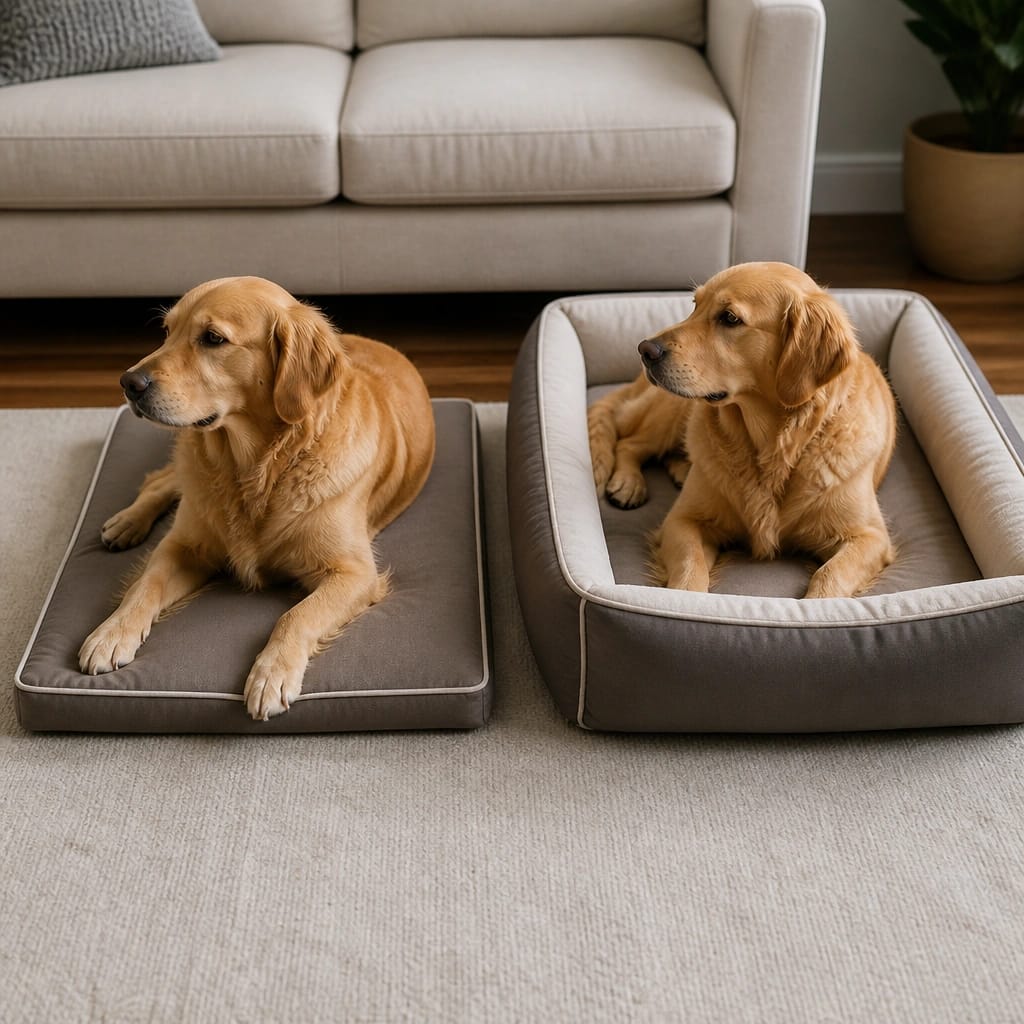
The image below shows a flat bed next to a bolster bed of the same outer size. Notice how much more open the flat bed looks.
Quick Decision Flowchart: Bolster or No Bolster?
Pick a bolster bed if your dog curls up, leans against furniture, or likes nesting. Pick a flat bed if your dog stretches out, has joint issues, or runs hot. For puppies that will grow, consider a flat bed so bolsters don’t become restrictive as they get bigger.
If you’re still unsure, a dog sofa couch style bed offers a single headrest that works for both positions.
Frequently Asked Questions
How much usable space do bolsters actually take up?
Most bolsters reduce the inner width by 4 to 8 inches total, depending on height and fill. A 6‑inch bolster on each side removes 12 inches from the outer width.
Can I machine wash a bolster bed?
Many have removable covers. The bolster itself is usually hand wash or spot clean. Check the tag.
Our guide on how to get dog urine smell out of a memory foam bed covers cleaning tips.
What if my dog chews the bolsters?
Choose a bed with chew proof materials and reinforced seams. Replace damaged bolsters promptly.
How do I measure a round bolster bed?
Measure the outer diameter. Subtract twice the bolster height. That gives the inner diameter your dog can actually sleep in.
What to Do Next: Your Measurement Checklist
Measure your dog’s length and curled diameter. Check your floor or crate space. Look for seam‑to‑seam dimensions in product specs.
Subtract bolster height from both width and length. Add 4 to 6 inches of comfort buffer. Choose a bed that fits both the dog and the space.


