

How Much Extra Space Should a Dog Have in Their Bed?
You walk into the living room and find your dog curled into a tight ball on a bed that looks more like a pillow. Or maybe they’re sprawled out with legs dangling over the edge. Either way, something feels off.
The question “How Much Extra Space Should a Dog Have in Their Bed?” isn’t just about comfort — it’s about whether your dog will actually use the bed you bought them. Get it right, and they’ll sleep soundly. Get it wrong, and you’ve got an expensive floor decoration.
Manufacturer specifications and canine sleep studies tell us the answer depends on one thing: how your dog sleeps. A curler needs less extra space than a full-body stretcher. As of 2026, most sizing guides still recommend a one-size-fits-all “add 6 inches” rule.
But that’s like saying every person needs the same size shoe. Let’s break down what your dog really needs.
Most dogs need between 4 and 12 inches of extra space beyond their body length. The exact amount depends on their preferred sleeping position. Curled sleepers need 4-6 inches. Stretched and sprawled sleepers need 8-12 inches. Measure your dog while they sleep, not while they stand. That gives you the true baseline for choosing the right bed size.
Why Bed Size Matters More Than You Think
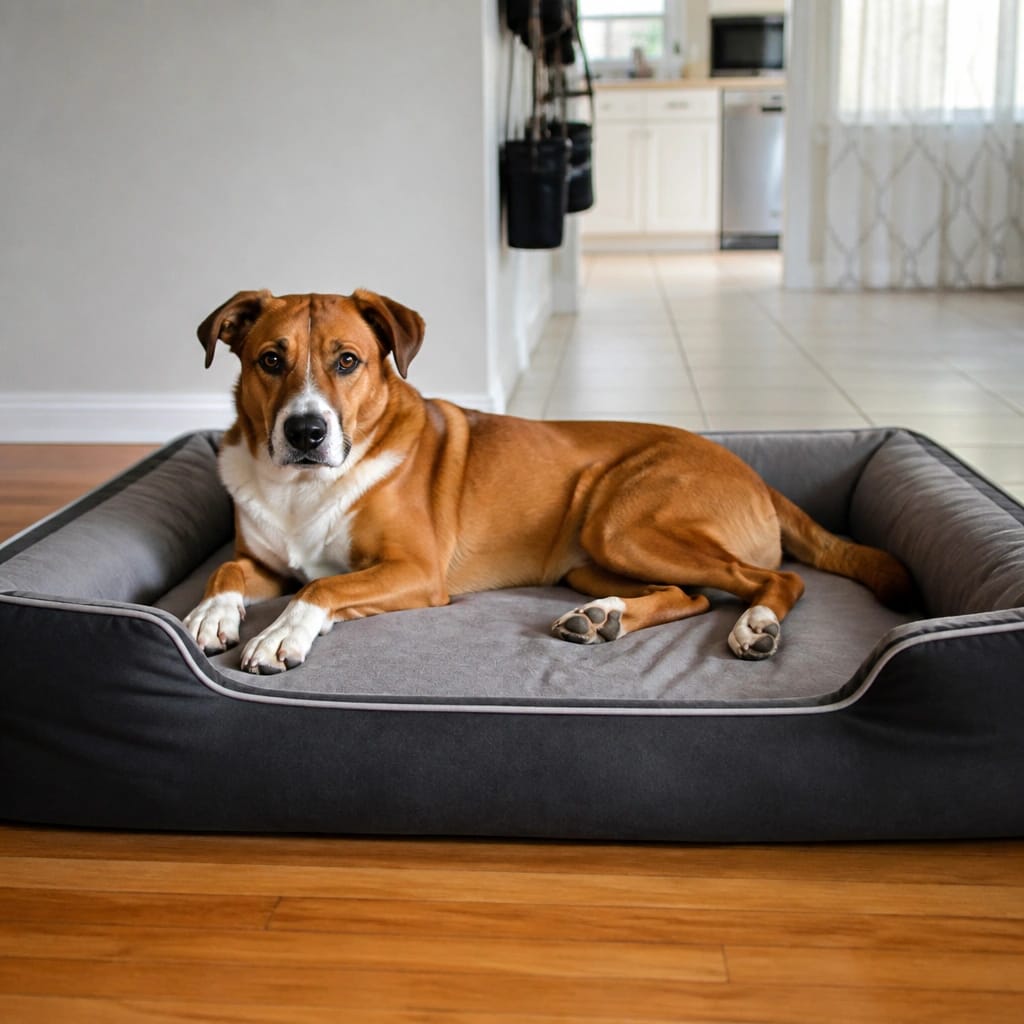
A bed that’s too small forces your dog to sleep in positions that can strain joints over time. You’ll see them hang off the edge, shift around all night, or simply abandon the bed altogether. That’s not just wasted money; it’s a missed opportunity for proper rest.
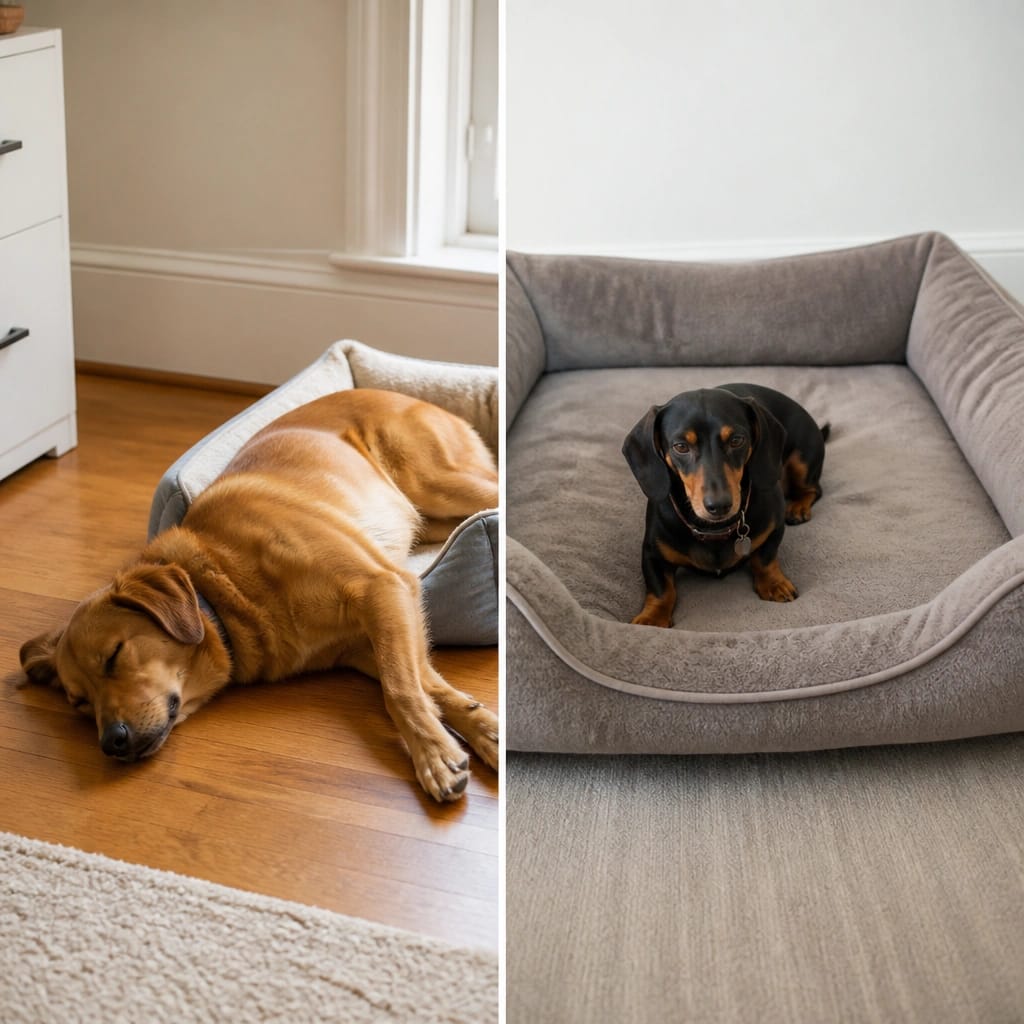
A bed that’s too large creates its own problems. Some dogs feel insecure in a vast open space, especially if they naturally prefer to curl or nest. They may sleep next to the bed instead of on it.
Getting the extra space right solves both issues at once.
Our research across canine behavior studies confirms that dogs sleep better when the bed matches their body size and sleeping style. The right fit means deeper sleep, less nighttime wakefulness, and fewer joint complaints, especially in older dogs.

The Simple Rule: How Much Extra Space Your Dog Actually Needs
Here’s the rule in plain terms: measure your dog’s body length from nose to base of tail while they’re sleeping naturally. Then add extra space based on how they sleep.
- Curled sleepers: Add 4 to 6 inches
- Stretched sleepers: Add 8 to 12 inches
- Sprawlers and side-sleepers: Add 6 to 10 inches
This range covers nearly every dog. If your dog switches positions throughout the night, go with the larger number. That way they can stretch out when they want and still feel snug when they curl.
Keep in mind that bolsters eat into usable space. A bed with high bolsters might have a flat sleeping area several inches smaller than its overall dimensions. Check the product’s “usable sleeping surface” specs, not just the overall size.
Step 1: Identify Your Dog’s Sleeping Position
You can’t size a bed without knowing this. Spend a few nights watching your dog settle in. Snap a photo if it helps.
Look for these patterns:
- Curler: Tucks nose to tail, forms a tight circle. Common in small breeds and dogs that like to nest.
- Stretcher: Lies flat on one side, front legs extended forward, back legs behind. Labs and retrievers do this often.
- Sprawler: Lies on belly, all four legs splayed out like a frog. Puppies and warm-weather dogs love this.
- Side-sleeper: Lies on one side with legs relaxed, not fully extended. Very common and often mixed with stretching.
Once you know which category your dog fits, the rest gets easier.
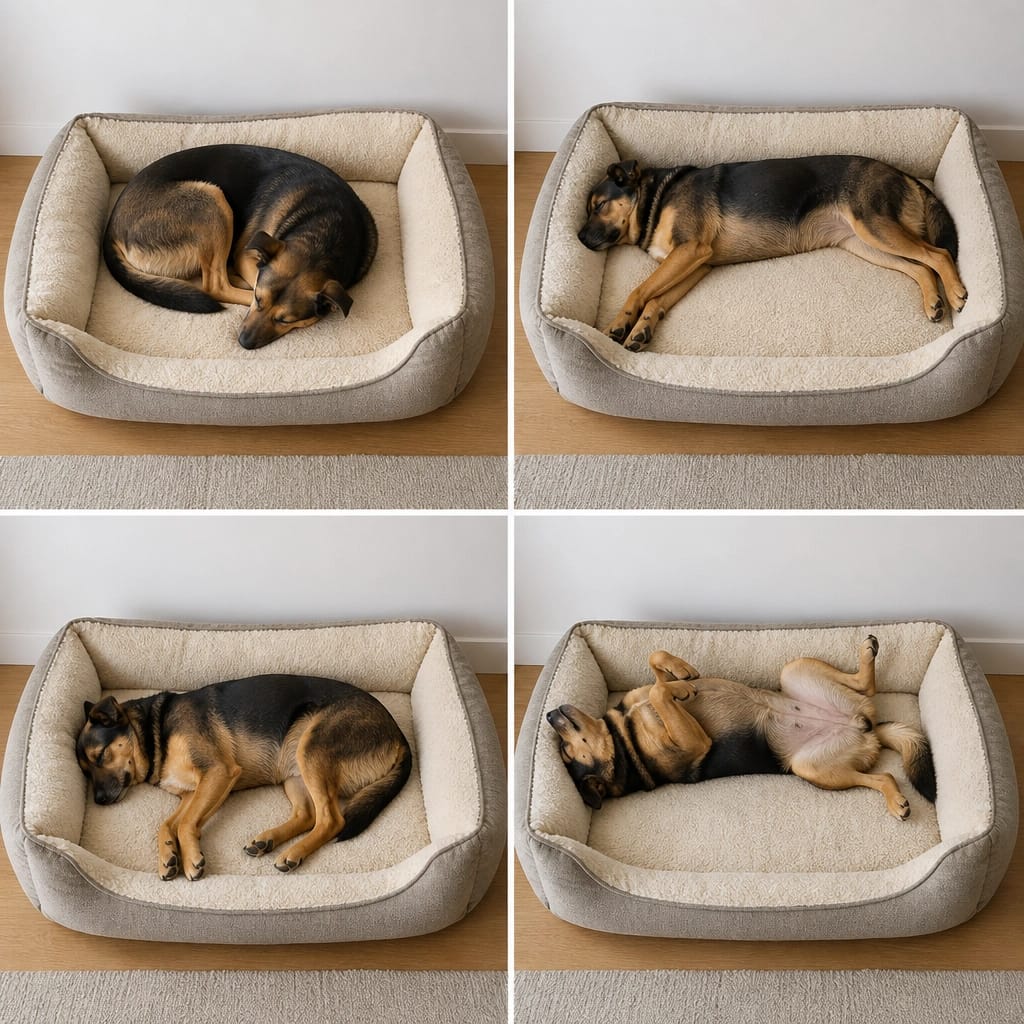
This illustration shows the four main sleeping positions so you can match your dog’s habit to the right extra-space recommendation.
Step 2: Measure Your Dog the Right Way
Most people measure their dog while standing. Don’t. A standing dog’s length isn’t the same as a sleeping dog’s length, especially for stretchers and sprawlers.
Here’s the process that works:
- Wait until your dog is fully asleep in their typical position.
- Use a soft tape measure or a piece of string.
- Measure from the tip of the nose to the base of the tail (where the tail meets the body).
- For stretchers: include the full length of the front legs extended forward.
- For sprawlers: measure the widest point of the sprawl.
Write that number down. That’s your dog’s sleeping length.
For bolster beds, also measure your dog’s height at the shoulder when they’re standing. The bolster should be at least as tall as that measurement so they have a comfortable headrest.
This measurement directly connects to proper bed sizing. If you’re unsure about the difference between puppy and adult sizing, our article on what size bed a puppy needs versus an adult dog covers that transition in detail.
Step 3: Match Extra Space to Position and Bed Style
Now apply the rule. Take your dog’s sleeping length and add the appropriate extra space.
- Curled up (4-6 inches extra): A dog with a 20-inch sleeping length needs a bed with at least 24-26 inches of usable space. Flat beds and donut beds work well here.
- Stretched out (8-12 inches extra): That same 20-inch dog needs 28-32 inches. Bolster beds are great because they provide a defined edge and head support.
- Sprawled or side-sleeping (6-10 inches extra): Aim for 26-30 inches. A flat mat or low-profile bed gives them room to spread without bumping into bolsters.
For crate beds, subtract 2-4 inches from the crate’s interior dimensions to allow for airflow and easy removal. If your dog is a stretcher, choose a crate that’s long enough to accommodate the bed plus the extra space.
If your dog likes to burrow or nest, consider a cave-style bed that offers a smaller, cozy interior. That changes the extra-space calculation because the dog can compress the bed. But for standard flat and bolster beds, stick to the rule.
One more note: if you’ve noticed your dog sometimes sleeps on the floor instead of their bed, check the size. A bed that’s too large or too small is a common reason dogs reject it.
What Happens When You Get the Size Wrong
Too Small
A cramped bed forces your dog into unnatural positions all night. You might notice them hanging off the edges or shifting around constantly. Over time, that can aggravate existing joint issues especially in older dogs.
Some dogs simply refuse to use a bed that’s too small and opt for the floor instead.
Too Large
Oversized beds can make a dog feel exposed and insecure. This is common with breeds that naturally like to den or curl up tight. They may sleep next to the bed instead of on it, defeating the purpose entirely.
Large beds also take up more floor space than necessary without any benefit.
The Puppy Problem: Buy for Now or for Grown Size?
Puppies grow fast. A bed that fits perfectly at 12 weeks might be too small by 6 months. But buying an adult-sized bed for a puppy can leave them feeling lost in a giant space.
The best approach is to buy a bed that fits their current sleeping length plus the correct extra space. Then plan to size up as they grow. If you want a single bed that lasts, choose one with an adjustable fill or a modular design.
Some owners use a cheap temporary bed for the first few months and invest in the permanent size later.
Our guide on what size bed a puppy needs versus an adult dog gives timelines for common breeds.

Common Mistakes Owners Make When Sizing
- Measuring the dog while standing: A standing dog is shorter than a sleeping dog. Always measure them asleep.
- Ignoring bolster depth: Bolsters can reduce the usable flat area by 4 to 6 inches. Check the product’s “sleeping surface” dimensions.
- Buying by weight alone: Two dogs of the same weight can have very different body lengths. A stocky bulldog needs less length than a lanky greyhound.
- Forgetting the sleeping position rule: A curler who buys for a stretcher ends up with a bed that feels too open.
- Not accounting for future growth in puppies: A bed sized for a 3-month-old puppy will be useless at 8 months.
One more common issue: if your dog chews or scratches their bed excessively, review our article on why dogs dig or scratch at their bed, that behavior sometimes signals a fit problem.
Quick Reference: Extra Space by Sleeping Style
| Sleeping Style | Extra Space to Add | Best Bed Type |
|---|---|---|
| Curled up | 4 to 6 inches | Donut bed, flat mat |
| Stretched out | 8 to 12 inches | Bolster bed, large flat bed |
| Sprawled or side-sleeping | 6 to 10 inches | Low-profile flat bed, bolster bed |
This table works for most dogs. If your dog switches positions at night, use the larger number for stretches and the smaller for curls. When in doubt, size up rather than down.
Frequently Asked Questions
Can I just add 6 inches to my dog’s length and be fine?
Not always. Six inches works for many curled sleepers, but stretchers need more room. Always check your dog’s sleeping position first.
How do I measure a dog that moves around at night?
Observe them for several nights. Note the most common position. If they switch frequently, use the stretched measurement since that requires the most space.
Do bolster beds need different extra space than flat beds?
Yes. Bolsters eat into usable area. A bolster bed with 30-inch overall dimensions might have only 24 inches of flat space.
Factor that into your calculation.
What if my dog sleeps half on the bed and half off?
That’s a clear sign the bed is too small. Measure your dog’s sleeping length, add the correct extra space, and buy a new bed.
Should I buy a bigger bed for a dog that likes to burrow?
Burrowing dogs often prefer a snugger fit. A cave or hooded bed gives them the den feeling with less extra space. Standard beds can be sized normally.
Your Next Step: Measure, Observe, Choose
You now have everything you need to get the size right. Watch your dog sleep tonight. Note their position.
Measure them while they’re relaxed. Add the correct extra space from the table above.
Then check the bed’s usable sleeping surface dimensions, not just the overall size. If the numbers line up, you’ve found the right fit. If not, adjust up or down based on their sleeping style.
A correctly sized bed means better rest, less waste, and a bed your dog actually uses. That’s the whole goal.


