

How to Set Up Multiple Dog Beds Without Wasting Space
Figuring out how to set up multiple dog beds without wasting space is a real puzzle when you share your home with more than one dog. You want every pup to have a comfy spot, but a living room littered with oversized beds can feel cramped and cluttered. The trick isn’t buying fewer beds.
It’s choosing the right sizes and placing them in spots that make the most of your square footage. As of 2026, manufacturers have started offering more space-conscious designs, making it easier than ever to fit two or three beds into a single room.
Let’s be realistic about what “saving space” actually means. Aggregate feedback from multi-dog households shows the biggest culprit isn’t the bed itself. It’s the empty margin around a bed that’s too large for the dog or dropped into a high-traffic zone.
Our approach starts with mapping your floor plan, matching bed dimensions to your dog’s actual measurements, and following a simple decision tree to find the perfect home for every single bed.
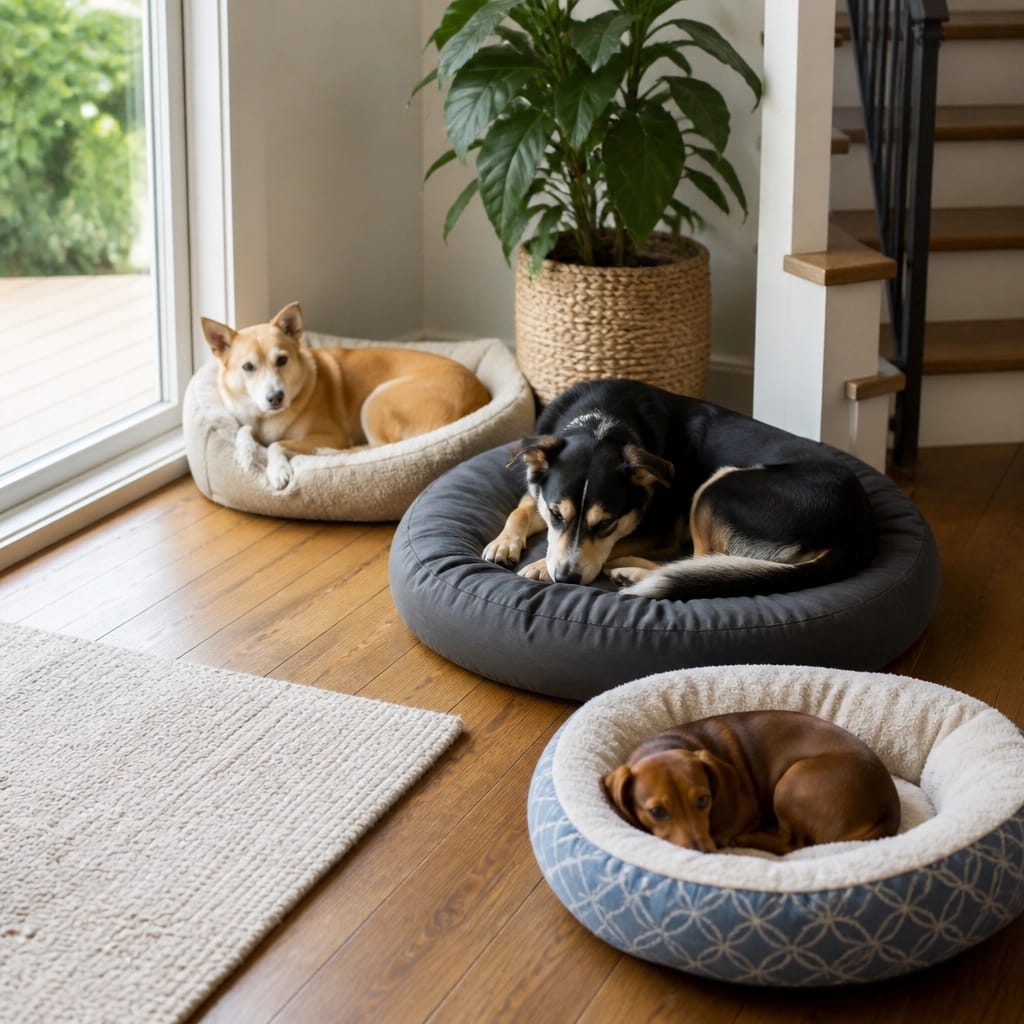
Start by mapping your floor plan and identifying dead zones like corners, under windows, or beside sofas. Measure your dog from nose to tail base and add to inches to find the ideal bed size. Choose a bed shape based on your dog’s sleeping posture. Place beds in low-traffic, quiet areas to encourage use. Use lightweight, foldable mats for rooms where floor space changes daily. Finally, if dogs share a room comfortably, one large bed can replace two smaller ones.
Why This Setup Matters More Than You Think
Getting it right saves more than square footage. It saves your sanity. When each dog has a clearly defined spot, you avoid the territorial tussles and the “that’s my bed!” drama that comes from unclear boundaries.
A poor layout means beds get pushed into walkways, tripped over constantly, or ignored because they’re in a loud, high-traffic area. Our research shows that thoughtful placement dramatically boosts how often a dog actually uses their bed. It becomes their safe zone, not just another piece of furniture you step around.
Taking the time to map everything out first also saves you money. You buy the right beds once and stop wasting cash on oversized models that don’t fit your space or your dog. It’s a win for your floor plan and your wallet.
Getting the layout right starts with figuring out the ideal placement in your home.
How to Map Your Floor Plan First
Before you buy anything, grab a measuring tape and a notebook. You need to know exactly what you’re working with.
Measuring Your Available Space
Measure the length and width of every room where a bed might go. Note the dimensions of your furniture. A bed needs clear space around it.
It shouldn’t block a doorway or stick out into a walking path.
Write down the measurements of potential spots. A corner beside the sofa. An alcove under the stairs.
The space at the foot of your bed. Be precise. A spot that looks big enough might only be inches by 24 inches.
Before committing to a size, spend time checking a dedicated size chart for your breed.
Identifying Dead Zones and Traffic Paths
Walk through your home and note where people walk most. High-traffic zones are terrible for dog beds. Dogs instinctively want quiet, safe spots where they won’t be stepped on.
Look for dead zones instead. These are spaces that are normally hard to furnish. A wide hallway corner.
The gap between a wall and a low bookshelf. The open area under a desk or side table.
These forgotten spots are perfect for a small dog bed. They keep the bed out of the way and turn wasted square footage into a cozy den. The American Kennel Club notes that dogs naturally seek quiet, draft-free areas for rest, making these dead zones ideal candidates for a bed.
What to Consider Before Choosing a Bed Shape
Not all beds are created equal. The right shape depends entirely on your dog.
Your Dog’s Sleeping Posture
Does your dog curl up into a tight ball? A donut bed with raised edges gives them a sense of security and saves space because the bed is naturally smaller.
Does your dog sprawl out flat on their side? They need a flat, rectangular mat or a low-profile cot. Donut beds waste space for a sprawler because they force the dog into the center, leaving the raised edges unused.
Does your dog like to rest their head on something? A bolster bed or a bed with a headrest is ideal for their comfort. For dogs who love to curl up tightly, check out our guide to donut beds for more details on sizing and fit.
Your Dog’s Size vs. Bed Size
This is where most people go wrong. They buy a bed that’s way too big “for comfort.” But a bed that’s too large takes up more floor space than necessary and wastes valuable room.
Measure your dog from the tip of their nose to the base of their tail. Add to inches. That’s the minimum bed length they need.
A bed that’s exactly this size is perfectly efficient.
For a large breed dog that measures inches long, a -inch bed is plenty. You don’t need a -inch bed unless they stretch out massively. This is especially important when deciding how much room a growing puppy will need versus an adult dog.
The Main Decision Tree: Where to Put Each Bed
Let’s turn this into a simple if-then system. Find your situation below and follow the branch that fits.
Branch 1: You Have a Single Room for Two Dogs
If your dogs cuddle together and share toys, one large bed in a corner might work perfectly. Use a rectangular bed that fits flush against both walls to maximize surface area without wasting floor space.
If your dogs prefer personal space, buy two smaller beds. Place them side by side with a few inches of gap between them. Alternatively, put them on opposite sides of the room.
Each dog gets their own defined zone, which reduces conflict. Senior dogs often prefer the support of a bolster bed for their own space, as the raised edges provide neck and joint support.
Branch 2: You Have Multiple Rooms and Portable Needs
If your dogs follow you from room to room throughout the day, don’t buy three bulky beds. Buy two lightweight, foldable mats instead. You can roll them up and carry them easily.
This strategy gives your dog a comfy spot in any room without cluttering every single room with a permanent bed. It’s a simple solution for homes where floor space is at a premium. For dogs that spend time both indoors and out, look at choosing between options for different surfaces to ensure durability.
Branch 3: You Want to Use Crate Space as a Bed Zone
If your dog is already crate trained, the crate itself is a built-in bed zone. You don’t need a separate bed in the living room if the crate is already in a common area.
Just add a comfortable crate pad inside. This eliminates the need for a second floor bed entirely and keeps the floor space open. Understanding the difference between a crate pad and a mat helps you choose the right thickness and support for your dog.
Branch 4: You’re Working with Corners, Under-Desks, or Hall Alcoves
These spots are prime real estate for a dog bed. A corner bed fits perfectly into a -degree angle. It uses space that is normally completely wasted.
A round or oval bed works great for tight alcoves. Measure the width of the alcove and buy a bed that fits snugly. It will look built-in and intentional, not like an afterthought.
How Many Beds Do You Actually Need?
A common mistake is simply buying too many beds. Every dog needs their own bed, but they don’t need a bed in every single room of the house.
The general rule for a multi-dog home is one bed per dog, plus one extra. This covers you for different rooms and different times of day.
For two dogs, that means three total beds. One in the main living area. One in the bedroom.
One in a crate or quiet den for alone time.
For three dogs, four beds total. This prevents any dog from feeling left out and gives them options if they want space from each other.
You can always supplement with a portable mat for rooms where the dogs occasionally follow you. This keeps the permanent bed count low and the floor space open.
Bed Placement Mistakes That Waste the Most Space
Even with the perfect bed size, poor placement can ruin your layout. Here are the most common errors we see in multi-dog homes.
Blocking a primary walkway. A bed that sticks out into a hallway or door opening gets tripped over and ignored. Your dog won’t use a bed they feel in danger on. Keep beds at least 18 inches away from main traffic paths.
Putting beds in noisy or high-traffic zones. Dogs want quiet, low-traffic spots. A bed next to the front door or right in the middle of the kitchen will likely stay empty. Dogs that avoid their bed often need it moved to a calmer corner.
Using one oversized bed when two smaller ones fit better. That giant round bed looks plush but eats up an entire corner. Two smaller rectangular beds placed flush against walls can fit the same surface area with less wasted floor space.
Forgetting about vertical clearance. A bed under a low table or desk might seem clever until your dog hits their head standing up. Measure the height of any overhead furniture before committing to a spot.
Smart Layout Examples for Common Floor Plans
Let’s look at a few real-world setups that work. These aren’t theoretical. They’re based on layouts that multi-dog owners consistently report as successful.
The living room corner setup. Place one rectangular bed flush against the wall on the left side of a corner. Place the other on the right side. They meet at a 90-degree angle, creating an L-shape.
This uses the corner fully and leaves the center of the room open. This is the most common solution for two medium-sized dogs in apartments.
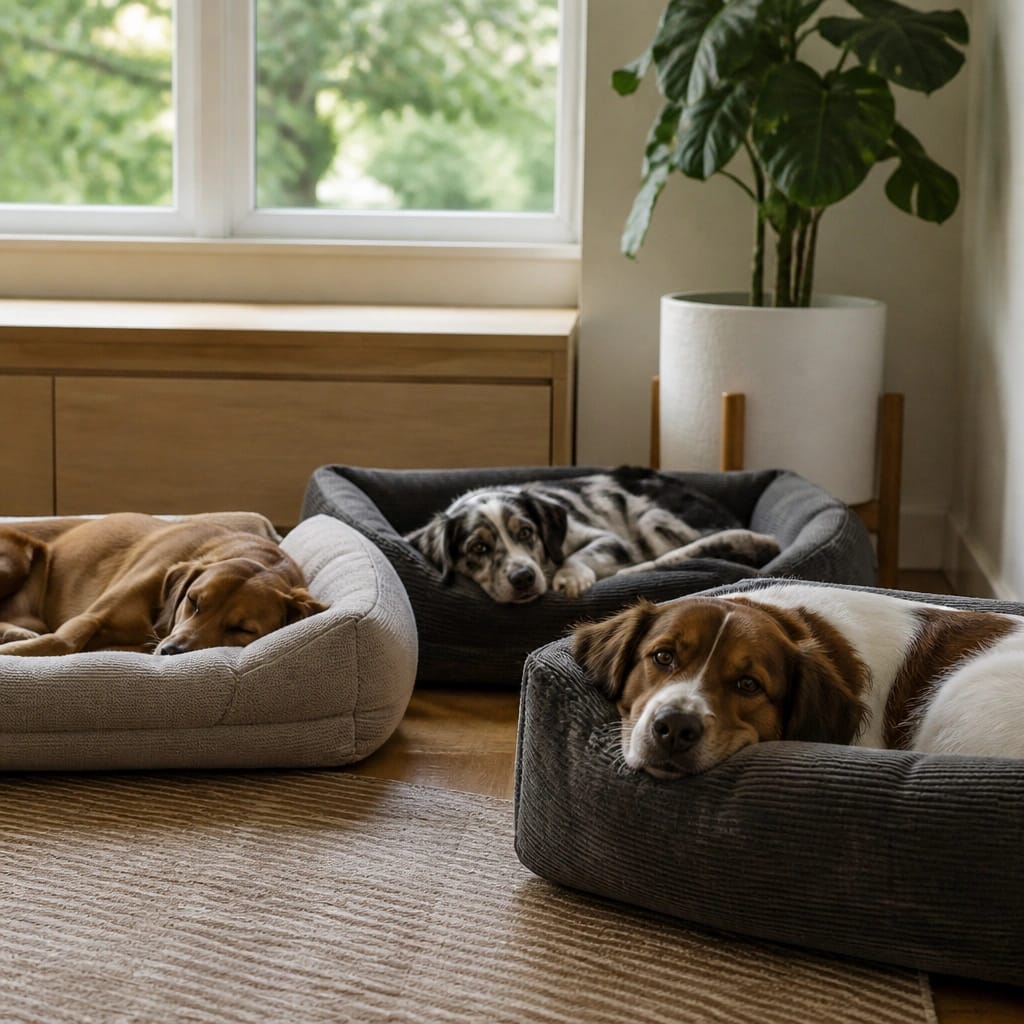
The under-window alcove. If you have a window alcove that’s 36 inches wide and 24 inches deep, you can fit two small flat beds side by side. They stay tucked away, out of foot traffic, and each dog gets their own defined space. The window above gives them a view, which many dogs enjoy.
The sofa-adjacent zone. The space directly beside a sofa is often dead space anyway. Place a long rectangular bed there that runs the length of the sofa. It’s protected, out of the walkway, and gives your dog a spot right next to you without cluttering the floor.

Image source: Openverse / Johann Melchior Füssli, Swiss, 1677, 1736 and Johann Jakob Scheuchzer, Swiss, 1672, 1733
Consider how your dog’s natural sleeping habits might influence whether they prefer an open corner or a more enclosed space.
How to Rotate Beds Without Losing Floor Space
You don’t need a permanent bed in every room to give your dog options. Rotation keeps your home flexible and your floor space open.
Keep one permanent bed in the dog’s primary sleeping area. This is their main bed, the one they sleep on at night. Use portable mats for secondary zones.
Roll them up during the day when they’re not needed. This way, the living room stays open when you have guests.
If you have two dogs and one permanent bed in the living room plus one in the bedroom, that’s enough for most days. Rotate the mats to the office or kitchen only when the dogs are with you there. This strategy keeps your permanent bed count low and your options open.
When to Go Vertical: Wall-Mounted and Shelf Beds
Wall-mounted beds are a legitimate space-saving solution for smaller homes. The key is choosing a model that’s clearly marketed for dogs, not repurposing a human shelf.
These beds mount to the wall at a low height. Use them in a hallway corner or above a low piece of furniture. The bed folds down or remains fixed.
Either way, it frees up floor space completely.
Shelf beds work best for smaller dogs who can jump up easily. They need proper anchor bolts to support the dog’s weight. Not all walls are suitable, so check for studs before drilling.
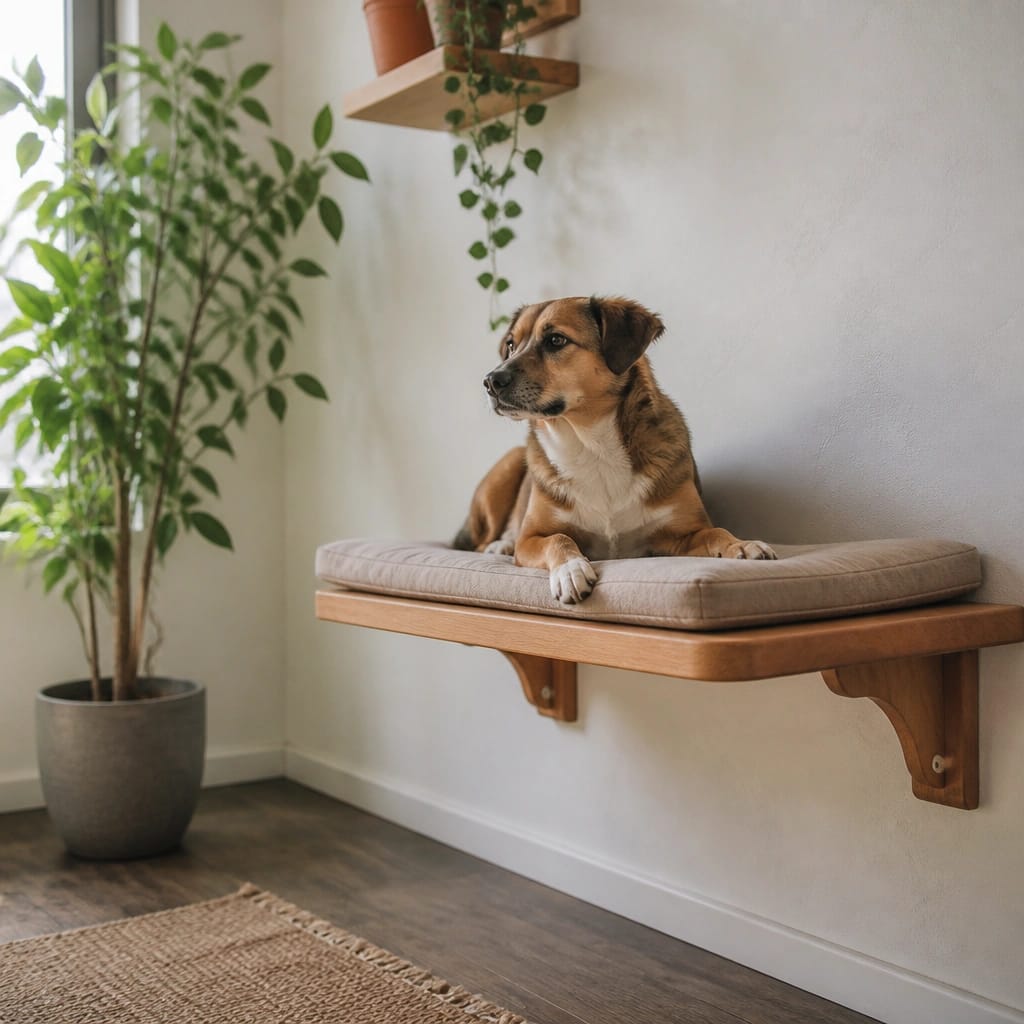
For small breeds especially, a wall-mounted option can work beautifully alongside a dedicated calming bed in another room.
Keeping Everything Clean Without Extra Room
Multiple beds mean more laundry. Without a good cleaning system, the beds take up mental space even when the floor is clear.
Look for beds with removable, machine-washable covers. If the cover zips off, you can wash it without moving the whole bed. This is a must for multi-dog homes.
Use a waterproof liner underneath the cover. This protects the foam core from accidents, drool, and muddy paws. It extends the bed’s life and prevents odors from building up.
Have a weekly rotation schedule. Wash one bed on Monday, the second on Wednesday, the third on Friday. This keeps everything fresh without overwhelming your laundry routine.
If accidents happen frequently, it helps to know how to remove urine smell from foam beds without damaging the bed.
Frequently Asked Questions
How many dog beds do I need for two dogs?
One bed per dog plus one extra is the standard recommendation. For two dogs, that’s three beds total. One in the main living area, one in the bedroom, and one in a crate or quiet room.
You can supplement with a portable mat for rooms the dogs only visit occasionally.
Can I use one large bed for two dogs?
Yes, if both dogs are comfortable sharing space and sleep close together. Use a rectangular bed that fits flush against walls to maximize surface area. If your dogs prefer personal space or show any signs of resource guarding, buy two separate smaller beds instead.
What’s the best dog bed shape for small spaces?
Rectangular beds fit flush against walls and corners better than round or oval beds. They maximize usable surface area without wasted margin. For tight corners, a square bed works well.
For alcoves, measure the width and buy a bed that fits snugly.
Should I put dog beds in crates?
Yes. A comfortable crate pad turns the crate into a dedicated bed zone. This eliminates the need for a separate bed in the living room if the crate is already in a common area.
Choose a pad that fits the crate snugly with no curling edges.
How do I keep multiple dog beds clean?
Choose beds with removable, machine-washable covers and waterproof liners underneath. Create a weekly rotation schedule to wash one or two beds per week. Use a lint roller or vacuum attachment for quick maintenance between washes.
Final Decision Guide: Choose Your Setup in 3 Steps
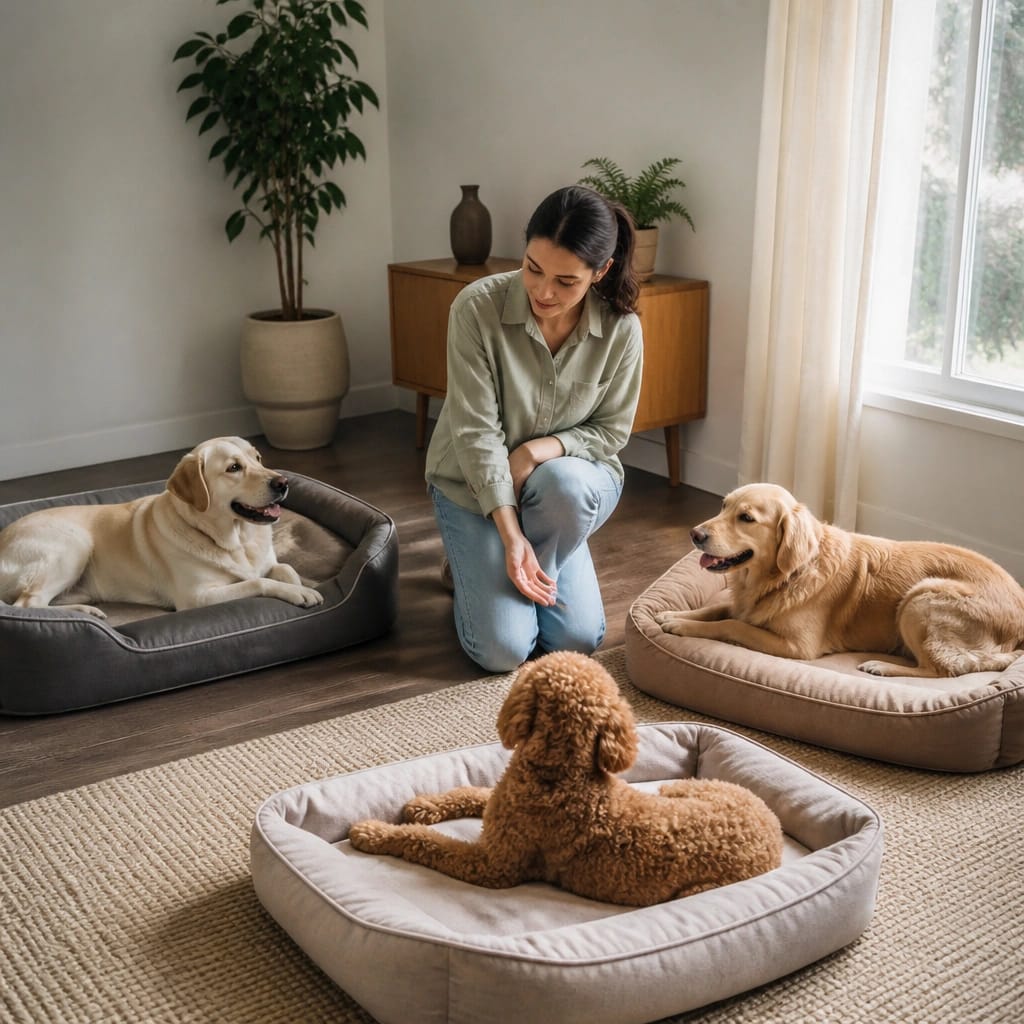
You’ve got the information now. Here’s how to apply it in three simple steps.
Step 1: Map your space. Measure every room where a bed might go. Identify corners, alcoves, and low-traffic zones. Mark the dimensions of each potential spot.
Step 2: Measure your dogs. Nose to tail base plus 6 inches. That’s your minimum bed length. Match this to the spots you measured.
If a spot is tight, go with a smaller bed or a different shape.
Step 3: Choose your branch. If your dogs share space well, one large rectangular bed in a corner works. If they need distance, two smaller beds on opposite sides of the room. If floor space is extremely limited, go vertical with a wall-mounted bed.
Start with one setup and give it a week. Watch where your dogs naturally settle. If a bed stays empty, move it to a different spot.
Dogs will tell you when you’ve got it right. Pay attention, adjust, and enjoy the open floor space.
Some dogs are picky about sleep surfaces, and understanding why yours chooses certain spots can help you refine your setup even further.
You’ve already done the hard work. The rest is just observation and small tweaks. Every dog is different, and every home has its own quirks.
But with the right measurements, the right bed shapes, and the right placement strategy, you can give every dog their own comfortable spot without sacrificing your living space.
Start with the decision tree. Pick your branch. Make the move.
Your dogs will thank you.
And once you see how much easier your evenings feel with a clear, uncluttered floor, you’ll wonder why you didn’t map it all out sooner. A little planning goes a long way. Better yet, it gives every dog a place that’s truly theirs.
That’s the whole point. You’re not just arranging dog beds. You’re designing a home that works for everyone in it.
A floor plan that gives your dogs comfort and you the space to move freely. That’s a win for the whole household. Now go measure those corners and make it happen.
Bed Placement Mistakes That Waste the Most Space
You’ve mapped the floor plan and picked the right sizes. But a few common slip-ups can still wreck your layout.
Putting a bed in a high-traffic zone. A bed in the middle of a busy walkway gets tripped over and ignored. Keep beds at least 18 inches away from main paths. Your dog won’t use a spot that feels unsafe.
Forgetting to measure door clearance. A bed placed right behind a door prevents it from opening fully. That wastes both the bed spot and the room’s usability. Measure the door’s swing arc before you drop a bed there.
Smart Layout Examples for Common Floor Plans
Let’s look at setups that actually work in real homes. These are based on layouts that multi-dog owners report as successful.
The L-shaped corner. Place two rectangular beds flush against adjacent walls. They form an L shape that uses the full corner. This leaves the center of the room open and gives each dog their own zone.
The under-window strip. If you have a window alcove 36 inches wide, you can fit two small flat beds side by side. They stay tucked out of foot traffic and give each dog a view. Many dogs love watching the world from their bed.
The sofa-side slot. The space beside a sofa is often dead space. Place a long rectangular bed there that runs the length of the couch. It’s protected, out of the walkway, and gives your dog a spot right next to you.
How to Rotate Beds Without Losing Floor Space
You don’t need a permanent bed in every room. Rotation keeps your home flexible.
Keep one permanent bed in the dog’s main sleeping area. Use lightweight, foldable mats for secondary zones. Roll them up during the day when not needed.
This keeps the living room open for guests.
For two dogs, have one permanent bed in the living room and one in the bedroom. That covers most days. Grab a mat for the office or kitchen only when the dogs are there with you.
When to Go Vertical: Wall-Mounted and Shelf Beds
Wall-mounted beds free up floor space entirely. They mount at a low height to the wall. Use them in a hallway corner or above a low piece of furniture.
These work best for smaller dogs that can jump up easily. Check for studs before drilling. Use proper anchor bolts to support the dog’s weight.
Not every wall is suitable, so assess carefully.
For very tight spaces, a wall-mounted bed combined with a floor bed in another room covers all your dog’s needs. This keeps the floor clear without sacrificing comfort.
Keeping Everything Clean Without Extra Room
Multiple beds mean more laundry. Without a cleaning system, the task feels overwhelming.
Choose beds with removable, machine-washable covers. If the cover zips off, you wash it without moving the whole bed. This is a must for multi-dog homes.
Use a waterproof liner underneath the cover. It protects the foam from accidents, drool, and muddy paws. It extends the bed’s life and prevents odors from building up.
Create a weekly rotation. Wash one bed on Monday, the second on Wednesday, the third on Friday. This keeps everything fresh without a massive laundry day.
Final Decision Guide: Choose Your Setup in 3 Steps
You’ve got all the information. Now apply it in three movements.
Step 1: Map your space. Measure every room where a bed might go. Identify corners, alcoves, and low-traffic zones. Note the dimensions of each potential spot.
Step 2: Measure your dogs. Nose to tail base plus 6 inches. That’s your minimum bed length. Match this to the spots you measured.
If a spot is tight, go with a smaller bed or a different shape.
Step 3: Choose your branch. If your dogs share space well, one large rectangular bed in a corner works. If they need distance, two smaller beds on opposite sides of the room. If floor space is extremely limited, go vertical with a wall-mounted bed.
Start with one setup and give it a week. Watch where your dogs naturally settle. If a bed stays empty, move it to a different spot.
Dogs tell you when you’ve got it right. Pay attention, adjust, and enjoy the open floor space.
Frequently Asked Questions
How many dog beds do I need for two dogs?
One bed per dog plus one extra is the standard. For two dogs, that’s three beds total. One in the main living area, one in the bedroom, and one in a crate or quiet room.
Supplement with a portable mat for rooms the dogs only visit occasionally.
Can I use one large bed for two dogs?
Yes, if both dogs are comfortable sharing space. Use a rectangular bed that fits flush against walls to maximize surface area. If your dogs prefer personal space or show resource guarding, buy two separate smaller beds instead.
What’s the best dog bed shape for small spaces?
Rectangular beds fit flush against walls and corners better than round or oval beds. They maximize usable surface area without wasted margin. For tight corners, a square bed works well.
For alcoves, measure the width and buy a bed that fits snugly.
How do I keep multiple dog beds clean?
Choose beds with removable, machine-washable covers and waterproof liners underneath. Create a weekly rotation schedule. Wash one or two beds per week.
Use a lint roller or vacuum attachment for quick maintenance between washes.
Should I put dog beds in crates?
Yes. A comfortable crate pad turns the crate into a dedicated bed zone. This eliminates the need for a separate bed in the living room if the crate is already in a common area.
Choose a pad that fits the crate snugly with no curling edges.
That covers the essentials. You now have a clear plan for fitting multiple dog beds into your home without cluttering your space. Measure first, choose the right shapes, pick strategic spots, and rotate where needed.
Your dogs get comfort. You get your floor back.
It really is that simple. A little planning upfront saves you from tripping over beds every day. Your dogs will settle into their spots faster, and you’ll wonder why you didn’t do it sooner.
Now go grab that measuring tape. Your home is about to feel a whole lot bigger.
The Quick Answer: Less Space, More Beds
The secret to fitting multiple dog beds in a small home is strategic placement, not buying fewer beds. Map your floor plan first. Identify dead zones like corners and alcoves.
Measure your dog from nose to tail base and add 6 inches for the ideal bed length. Match the bed shape to your dog’s sleeping style. Curlers need donut beds.
Sprawlers need flat mats. Place beds in low-traffic, quiet areas. Use lightweight mats for rooms where floor space changes daily.
This approach gives every dog a comfy spot without cluttering your home.


